The Tesla Model X remains one of the very few all-electric SUVs offering three-row, seven-passenger seating with genuine long-range capability. For families who need to carry more than five people without resorting to a minivan or a plug-in hybrid, the 7 seater Tesla Model X occupies a nearly uncontested niche. But at a starting price above $80,000, does the math work — and can you actually fit adults in that third row?
This review covers the current 2026 Model X lineup with a focus on the seven-seat configuration, including real-world range expectations, DC fast-charging performance, interior dimensions, tax-credit eligibility, and how it stacks up against the closest alternatives.
Quick Verdict: Who Should Consider the 7 Seater Tesla Model X?
Choose the 7 seater Tesla Model X if:
- You regularly carry 5–7 passengers and need 300+ miles of electric range
- You want access to the Tesla Supercharger network for hassle-free road trips
- You value performance (3.8-second 0–60 in Long Range AWD) in a family hauler
- You can charge at home with a Level 2 setup
Look elsewhere if:
- Third-row occupants will regularly be adults on long trips — space is tight
- Your budget is under $70,000
- You need maximum cargo volume behind the third row (consider a minivan or the Rivian R1S)
Range and Efficiency: EPA Numbers vs. Real-World Reality
The 2026 Tesla Model X Long Range AWD carries an EPA-estimated range of 335 miles on its 100 kWh (usable) battery pack. That figure places it near the top of the three-row electric SUV segment. Efficiency is rated at approximately 102 MPGe combined, translating to about 33 kWh per 100 miles — reasonable for a 5,100-pound vehicle with all-wheel drive.
EPA Range: 335 miles (Long Range AWD)
Real-World Expectations:
- Highway driving (70–75 mph): Expect approximately 270–290 miles. Aerodynamic drag hits the Model X's tall profile hard at sustained speed.
- Cold weather (below 32°F): Range can drop 20–30%, yielding roughly 235–270 miles depending on cabin heating demands and whether the battery is preconditioned.
- City/commuter driving: Closer to or slightly above the EPA estimate, thanks to regenerative braking recapturing energy in stop-and-go traffic.
Source: fueleconomy.gov
The Model X uses an NMC (nickel manganese cobalt) lithium-ion battery chemistry, which offers higher energy density than LFP — important for fitting 100 kWh into this platform. Tesla's thermal management system, including a heat pump standard on all trims, helps mitigate cold-weather losses compared to resistive-heating competitors.
Charging Performance: DC Fast, Level 2, and Supercharger Access
Charging speed is a top concern for any EV buyer, especially for a vehicle used on family road trips. Here is exactly what the 2026 Model X delivers:
| Charging Level | Max Power / Rate | Speed / Time |
|---|---|---|
| DC Fast Charging (Supercharger V3/V4) | Peak 250 kW | 10–80% in approximately 30 minutes |
| Level 2 (Tesla Wall Connector, 48A) | 11.5 kW | ~34 miles of range per hour |
| Level 1 (120V household outlet) | ~1.4 kW | ~3–4 miles of range per hour |
Charging curve reality: The Model X peaks at 250 kW only when the battery is preconditioned (automatically triggered when you navigate to a Supercharger) and at a low state of charge (roughly 5–25% SoC). Above 50%, the rate tapers significantly — expect sustained rates closer to 100–120 kW in the mid-range, and below 50 kW past 80%. That 10–80% time of ~30 minutes is achievable, but an 80–100% top-off adds another 25–30 minutes.
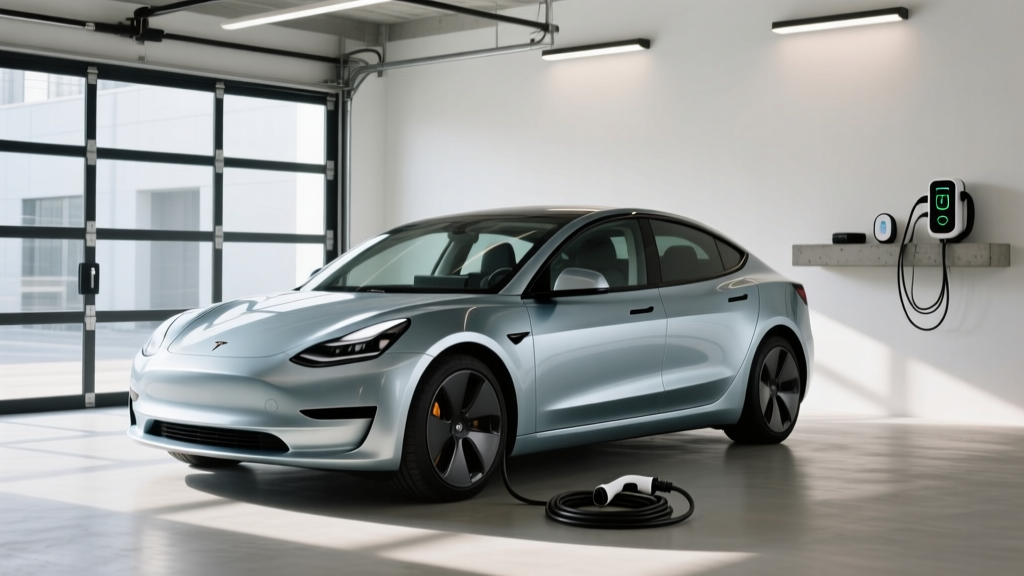
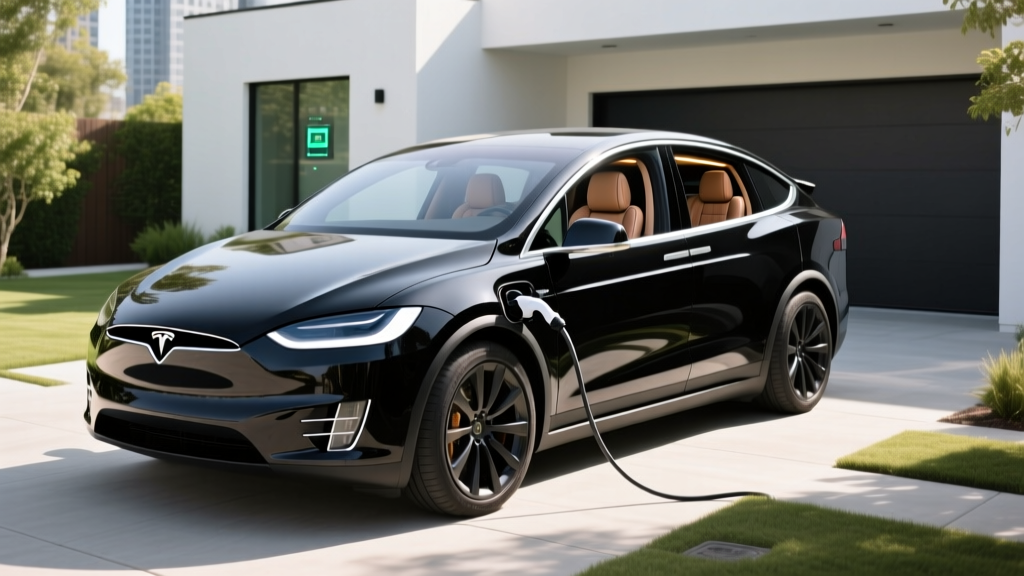
For home charging, the Tesla Wall Connector at 48 amps (requiring a 60-amp circuit) delivers about 34 miles of range per hour of charging. Most owners find an overnight charge easily replenishes a full day's driving. Installation typically costs $500–$2,000 depending on your electrical panel's capacity and the run distance from panel to garage — a licensed electrician should assess whether a 200-amp panel upgrade is needed.
The Model X also supports the NACS (North American Charging Standard) connector natively, giving access to the full Tesla Supercharger network — over 6,000 V3/V4 stalls in North America as of 2026. With an adapter, CCS stations (Electrify America, EVgo) are also accessible, though NACS availability continues to expand.
Performance and Drivetrain
| Specification | Long Range AWD | Plaid |
|---|---|---|
| Drivetrain | Dual-Motor AWD | Tri-Motor AWD |
| Horsepower | 670 hp | 1,020 hp |
| 0–60 mph | 3.8 seconds | 2.5 seconds |
| Top Speed | 155 mph | 163 mph |
| EPA Range | 335 miles | 326 miles |
| Towing Capacity | 3,500 lbs | 3,500 lbs |
Even the "base" Long Range AWD is extraordinarily quick for a 5,100-pound seven-seat SUV. The dual-motor setup provides confident all-weather traction and seamless torque delivery. The Plaid's tri-motor configuration is absurd in a family vehicle context — 2.5 seconds to 60 mph is supercar territory — but the trade-off is slightly reduced range and a $20,000+ price premium.
Regenerative braking is strong enough for one-pedal driving in most conditions, and the adaptive air suspension adjusts ride height automatically based on speed and terrain, improving both aerodynamics and ground clearance when needed.
Interior Space: Seven Seats, Cargo, and the Third-Row Question
The seven-seat configuration replaces the optional six-seat layout (with second-row captain's chairs) by adding a three-across second-row bench and a two-across third row. Here are the critical dimensions:
| Measurement | Value |
|---|---|
| Front Headroom | 41.7 inches |
| Second-Row Legroom | 40.9 inches |
| Third-Row Legroom | 32.7 inches |
| Third-Row Headroom | 37.1 inches |
| Cargo (behind 3rd row) | ~15 cu ft (with under-floor storage) |
| Cargo (3rd row folded) | ~44 cu ft |
| Cargo (all rear rows folded) | ~82 cu ft |
| Frunk (front trunk) | ~7 cu ft |
The honest take on the third row: At 32.7 inches of legroom, the third row accommodates children and shorter adults on trips under an hour. For adults over 5'8" on longer drives, the Rivian R1S (34.5 inches third-row legroom) or a three-row minivan will be noticeably more comfortable. The Model X's falcon-wing rear doors, however, make third-row access dramatically easier than in any competing SUV — the roof opens upward, giving standing headroom during entry and exit.
Cargo space behind the third row is the Model X's weakest practical point. At roughly 15 cubic feet, it fits a few grocery bags or two small suitcases but not a full family's luggage. Folding the third row opens up 44 cubic feet, and the front trunk (frunk) adds another 7 cubic feet for items you want separated from the cabin.
Pricing, Trims, and Federal Tax Credit Eligibility
| Trim | Base MSRP | Estimated Federal Credit | Effective Price |
|---|---|---|---|
| Long Range AWD (7-seat) | $81,630 | $0–$7,500* | $74,130–$81,630 |
| Plaid (7-seat) | $101,630 | $0–$7,500* | $94,130–$101,630 |
*Federal tax credit eligibility is not guaranteed. See details below.
The seven-seat option is a no-cost configuration choice on both trims (the alternative being six-seat with captain's chairs). Destination charges, premium paint colors ($2,000–$3,000), 22-inch wheels ($4,500), and Full Self-Driving capability ($8,000 add-on) can push a Long Range build past $95,000.
IRS §30D Federal EV Tax Credit — Key Requirements (2026):
- MSRP cap: SUVs must have a base MSRP at or below $80,000. The Model X Long Range at $81,630 exceeds this cap and is not eligible for the new-vehicle §30D credit.
- Buyer income limits: Modified AGI must not exceed $300,000 (joint), $225,000 (head of household), or $150,000 (single).
- Battery sourcing: Critical minerals and battery components must meet escalating domestic-content thresholds — moot here since the MSRP cap already disqualifies the vehicle.
- Point-of-sale transfer: Eligible buyers can transfer the credit to the dealer for an upfront price reduction — but again, only if the vehicle qualifies.
Source: IRS.gov — Clean Vehicle Credits
Bottom line on tax credits: The Model X's MSRP places it above the $80,000 SUV cap, meaning it does not qualify for the $7,500 federal credit for new vehicles. Buyers should check their state for additional incentives — California's CVRP, for example, has its own income and price caps that also typically exclude the Model X. Some buyers may benefit from leasing structures where the lessor claims a commercial clean-vehicle credit (§45W) and passes savings through, but consult a tax professional for specifics.
Technology, Safety, and Driver Assistance
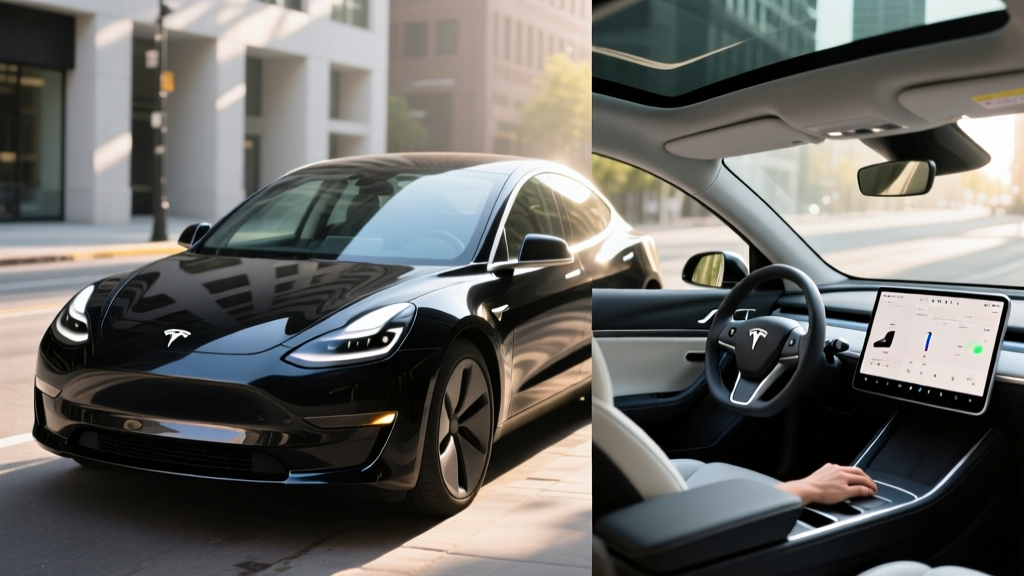
The Model X's 17-inch center touchscreen remains the command hub for virtually all vehicle functions — climate, navigation, media, vehicle settings, and even the glovebox release. The screen tilts toward the driver or passenger and supports gaming (including Cyberpunk 2077-level titles while parked). A secondary 8-inch rear touchscreen controls climate and entertainment for second- and third-row passengers.
Standard driver-assistance features include:
- Tesla Autopilot (SAE Level 2): Adaptive cruise control, lane centering, automatic emergency braking, blind-spot monitoring
- Enhanced Autopilot ($6,000 option): Auto lane change, Autopark, Summon, Navigate on Autopilot
- Full Self-Driving (Supervised) ($8,000 option): Traffic light/stop sign recognition, city street navigation — still requires active driver supervision at all times
Important — SAE Automation Level: Tesla Autopilot and FSD (Supervised) are classified as SAE Level 2 driver-assistance systems. The driver must remain fully attentive, with hands on or near the wheel and eyes on the road. These systems do not make the Model X self-driving. Only Level 4 services (e.g., Waymo robotaxis in designated areas) operate without a human driver.
Safety ratings from NHTSA have historically awarded the Model X 5 stars overall. Standard active safety features include automatic emergency braking, side collision warning, and emergency lane departure avoidance.
Notable Drawbacks:
- Panel fit and interior material quality still lag behind luxury competitors (BMW iX, Mercedes EQS SUV)
- Yoke steering wheel (optional) is polarizing and impractical for low-speed maneuvering
- No Apple CarPlay or Android Auto — Tesla's proprietary infotainment only
- Falcon-wing doors can struggle in tight parking garages with low clearance (though ultrasonic sensors help)
Warranty Coverage
| Coverage Area | Term |
|---|---|
| Basic Vehicle Limited Warranty | 4 years / 50,000 miles |
| Battery & Drive Unit (Long Range) | 8 years / 150,000 miles |
| Battery & Drive Unit (Plaid) | 8 years / 150,000 miles |
| Battery Capacity Retention Threshold | Minimum 70% over warranty period |
Tesla's 8-year/150,000-mile battery and drive unit warranty is competitive with the industry standard. The 70% capacity retention threshold means if your battery degrades below that level within the warranty period, Tesla will repair or replace it. Real-world data from Tesla's fleet suggests NMC packs in the Model X typically retain 85–90% capacity at 100,000 miles under normal use — well above the threshold.
How the 7 Seater Tesla Model X Compares
| Specification | Tesla Model X LR AWD | Rivian R1S (Dual Max) | Kia EV9 GT-Line AWD |
|---|---|---|---|
| Base MSRP | $81,630 | $84,900 | $73,900 |
| EPA Range | 335 mi | 410 mi | 270 mi |
| 3rd-Row Legroom | 32.7 in | 34.5 in | 32.0 in |
| 0–60 mph | 3.8 sec | 4.5 sec | 5.0 sec |
| Max DC Charge | 250 kW | 220 kW | 236 kW |
| Federal Tax Credit | Not eligible (MSRP cap) | Not eligible (MSRP cap) | Up to $7,500* |
| Towing Capacity | 3,500 lbs | 7,700 lbs | 5,000 lbs |
*Kia EV9 eligibility depends on battery sourcing and buyer income. Verify on IRS.gov before purchasing.
The Rivian R1S offers more range, better third-row space, and far superior towing — but starts higher and also misses the tax credit. The Kia EV9 is the value play, potentially eligible for the full $7,500 credit, but sacrifices 65+ miles of range compared to the Model X. Neither competitor matches the Supercharger network advantage, though both are gaining NACS compatibility.
Pros
- Class-leading 335-mile EPA range for a 7-seat EV
- Supercharger network access for stress-free road trips
- Falcon-wing doors make third-row access best in class
- Outstanding performance (3.8s 0–60 even in Long Range)
- Heat pump standard for better cold-weather efficiency
- Over-the-air updates continually add features
Cons
- Third-row legroom (32.7 in) tight for adults
- Limited cargo behind third row (~15 cu ft)
- Not eligible for $7,500 federal tax credit (MSRP exceeds cap)
- Interior materials don't match luxury-brand competitors
- No Apple CarPlay or Android Auto
- High starting price ($81,630+) with options adding up fast
Frequently Asked Questions
What is the real-world range of the 7 seater Tesla Model X?
The EPA rates the Model X Long Range AWD at 335 miles. In real-world highway driving at 70–75 mph, expect roughly 270–290 miles. In cold weather (below freezing), range can drop to 235–270 miles. City driving with regenerative braking often yields results close to the EPA figure.
How fast does the Model X charge on DC fast chargers and at home?
On a Tesla V3/V4 Supercharger, the Model X peaks at 250 kW and charges from 10–80% in approximately 30 minutes with battery preconditioning. At home on a Level 2 Tesla Wall Connector (48 amps / 11.5 kW), it adds about 34 miles of range per hour — enough to fully recharge overnight.
Does the Tesla Model X qualify for the federal EV tax credit?
No. Under current IRS §30D rules, the Model X's MSRP ($81,630 for Long Range) exceeds the $80,000 cap for SUVs, making it ineligible for the $7,500 new-vehicle credit regardless of buyer income or battery sourcing. Check your state for additional incentives that may apply.
Is the 7 seater Tesla Model X worth buying vs. the Rivian R1S or Kia EV9?
It depends on priorities. The Model X wins on charging infrastructure (Supercharger network), performance, and range efficiency. The Rivian R1S is better for towing (7,700 lbs), third-row space, and off-road capability. The Kia EV9 is the budget pick with potential tax-credit eligibility but significantly less range. For families who road-trip frequently and value charging convenience, the Model X remains compelling despite its price.
Can adults fit comfortably in the Model X third row?
Short answer: for brief trips, yes. At 32.7 inches of legroom, adults over 5'8" will find the third row cramped beyond 30–45 minutes. Children and smaller adults fare better. The falcon-wing doors make getting in and out far easier than in any rival SUV, which partially offsets the tight dimensions.
What is the battery warranty on the Model X?
Tesla covers the battery and drive unit for 8 years or 150,000 miles, whichever comes first. The warranty guarantees a minimum of 70% capacity retention over that period. Real-world fleet data suggests most Model X batteries retain 85–90% capacity at 100,000 miles.