If you are searching for an electric SUV that seats seven without compromising on range or performance, the shortlist is surprisingly small. The 2026 Tesla Model X remains one of the only premium battery-electric vehicles offering three rows of seating, 300+ miles of EPA-rated range, and access to the Supercharger network. But with a starting price hovering near $80,000 and increasing competition from three-row electric SUVs like the Rivian R1S and Kia EV9, does the Model X still earn its place in the family garage?
We've spent time with the current-generation Model X to evaluate its real-world range, charging behavior, third-row practicality, and total ownership cost. Here's what buyers need to know before signing the order sheet.
Range, Battery, and Real-World Efficiency
The 2026 Tesla Model X Long Range AWD carries a 100 kWh battery pack (approximately 95 kWh usable) using NMC (nickel manganese cobalt) chemistry. Tesla does not publish exact usable capacity, but teardown data and charging analysis consistently place it in this range. The EPA rates the Long Range AWD at 320 miles on a full charge when equipped with 20-inch wheels; stepping up to 22-inch turbines drops that figure to roughly 300 miles.
Efficiency lands at 100 MPGe combined (33 kWh/100 mi) per fueleconomy.gov. That's respectable for a 5,100-pound SUV, though smaller two-row EVs like the Model Y achieve notably better efficiency figures.
| Spec | Value |
|---|---|
| EPA Range (20" wheels) | 320 miles |
| Battery (usable, chemistry) | ~95 kWh, NMC |
| Efficiency | 100 MPGe / 33 kWh/100 mi |
| Peak DC Fast Charge | 250 kW |
| 10–80% DC Charge Time | ~30 minutes |
| Level 2 Home Charge Rate | 11.5 kW (~34 mi/hr) |
| 0–60 mph | 3.8 seconds |
| Horsepower | 670 hp (dual motor) |
| Drivetrain | Dual Motor AWD |
| Towing Capacity | 5,000 lbs |
| Seating | 5, 6, or 7 passengers |
| Battery Warranty | 8 years / 150,000 miles |
| Base MSRP | $79,990 |
Charging Speed: DC Fast, Level 2, and Home Setup
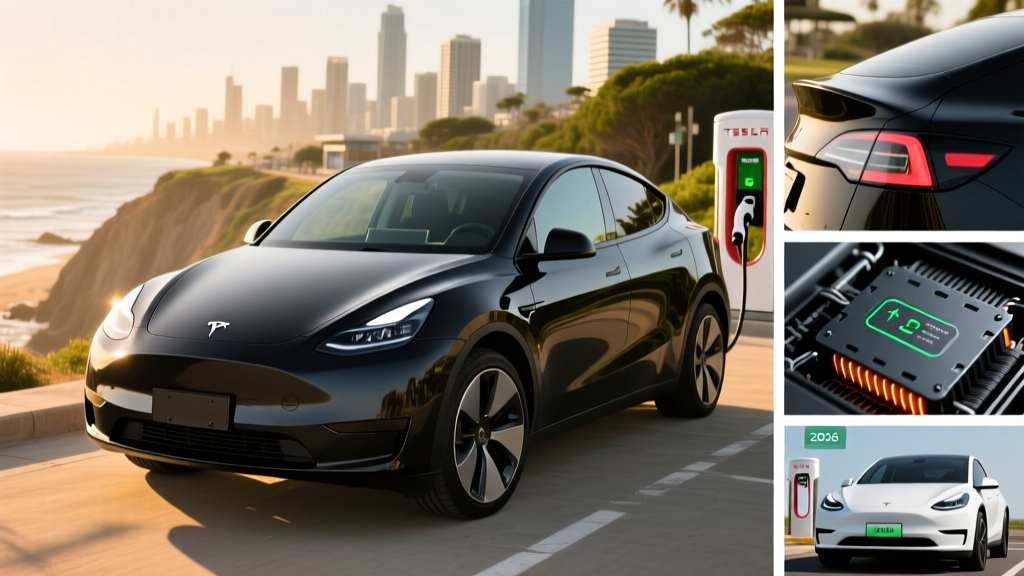
Charging infrastructure is where Tesla retains a significant advantage. The Model X uses the NACS (North American Charging Standard) connector natively, granting seamless access to Tesla's Supercharger network — over 6,000 stations and 60,000+ stalls across North America as of early 2026.
| Charge Level | Power / Voltage | Rate (mi/hr) | Notes |
|---|---|---|---|
| Level 1 (120V outlet) | ~1.4 kW | ~3–4 mi/hr | Emergency/trickle only |
| Level 2 (240V, 48A) | 11.5 kW | ~34 mi/hr | Full charge in ~9 hours |
| DC Fast (Supercharger V3/V4) | Up to 250 kW | Up to ~175 mi/hr peak | 10–80% in ~30 min |
On a V3 Supercharger (250 kW peak), the Model X charges from 10% to 80% in approximately 30 minutes. The charge curve is front-loaded: you'll see peak rates near 250 kW only between roughly 10–30% state of charge (SoC), after which the rate tapers progressively. By 60% SoC, expect ~150 kW; by 80%, it drops below 70 kW. This tapering is standard for NMC packs and is managed by Tesla's thermal preconditioning system, which warms the battery en route to a charger to maximize initial charge speed.
At home, a Tesla Wall Connector on a 60-amp circuit delivers 11.5 kW, adding about 34 miles of range per hour. An overnight charge from 20% to 100% takes roughly 8–9 hours. For most owners, plugging in each evening means starting every day with a full battery — the single biggest convenience advantage of EV ownership.
Performance and Driving Dynamics
The Long Range AWD pairs dual electric motors producing a combined 670 horsepower, launching the Model X from 0–60 mph in 3.8 seconds. That is sports-sedan acceleration in a three-row family SUV. The Plaid variant (tri-motor, 1,020 hp, 2.5-second 0–60) exists for those who want excess, but the Long Range is the volume seller and the rational pick for family duty.
Ride quality has improved over earlier Model X generations, with the current adaptive air suspension absorbing highway imperfections competently. Steering is precise but light, and the low center of gravity (battery pack under the floor) keeps body roll controlled through corners. The Model X doesn't feel as athletic as a BMW iX, but it handles its mass better than most three-row SUVs.
Towing capacity is rated at 5,000 pounds when properly equipped — enough for a small boat, utility trailer, or light camper. Note that towing cuts range roughly in half; plan for 150–170 miles between charges when pulling a loaded trailer.
Interior Space: Third Row, Cargo, and the Seven-Seat Question
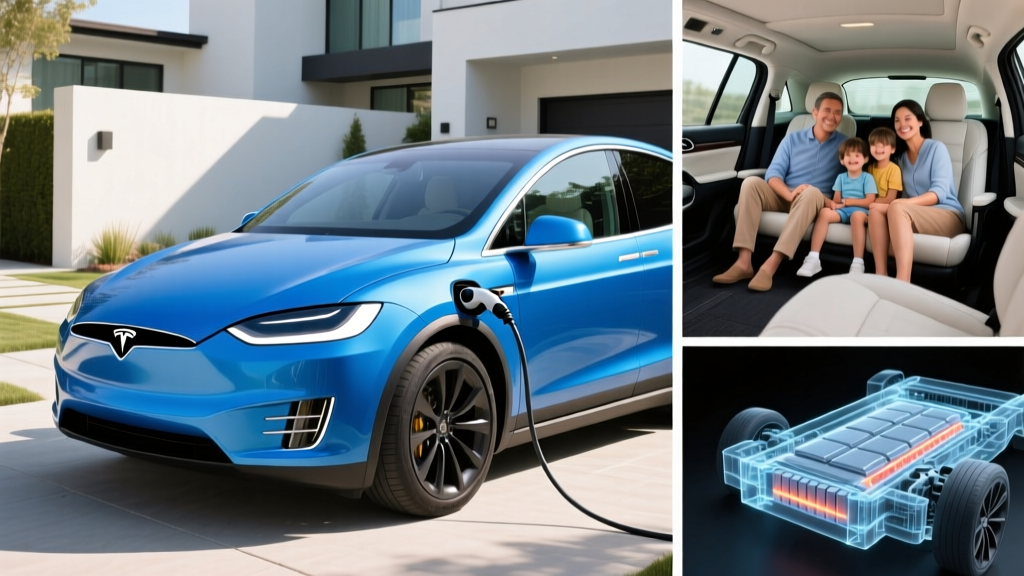
The keyword bringing you here is "Tesla SUV seats 7" — so let's address the third row directly. The Model X offers three seating configurations: 5-seat (two rows), 6-seat (second-row captains chairs with center aisle), and 7-seat (second-row bench). The 7-seat layout adds a small two-place third row.
Third-row dimensions are the Model X's most debated feature:
- Third-row legroom: ~32.7 inches — adequate for children and shorter adults on trips under an hour, but tight for six-foot passengers
- Third-row headroom: ~37.1 inches — helped by the panoramic glass roof, though the sloping roofline cuts into space toward the rear
- Cargo behind third row: ~15.8 cubic feet — enough for a few grocery bags or two small suitcases
- Cargo behind second row (third row folded): ~41.1 cubic feet
- Total cargo (both rear rows folded): ~81.5 cubic feet
- Frunk (front trunk): ~6.7 cubic feet — useful for charging cables or a backpack
For families with young children, the 7-seat layout works well: boosters and car seats go in the second row, and older kids or adults use the third row for short trips. If you regularly need to carry six or seven adults, the Rivian R1S offers a more spacious third row, and the Kia EV9 provides better cargo volume behind its third row at a significantly lower price.
The Model X's interior materials and build quality have improved since Tesla's 2021 refresh, with ventilated front seats, a 17-inch center touchscreen, a rear-seat entertainment display, and a yoke-style or round steering wheel (buyer's choice). However, some competitors — notably the BMW iX and Mercedes EQS SUV — offer more luxurious interiors at similar price points.
Pricing, Trims, and Federal Tax Credit Eligibility
The 2026 Model X lineup is straightforward:
| Trim | Base MSRP | Federal §30D Credit Eligible? | Est. Net Price (if eligible) |
|---|---|---|---|
| Long Range AWD (5-seat) | $79,990 | Subject to sourcing/income rules | ~$72,490 |
| Long Range AWD (7-seat) | $81,990 | Subject to sourcing/income rules | ~$74,490 |
| Plaid (5-seat) | $94,990 | Subject to sourcing/income rules | ~$87,490 |
Federal tax credit reality check: Under current IRS §30D rules, the Model X qualifies as an SUV for the MSRP cap ($80,000 limit for SUVs). The Long Range AWD base price sits just under that threshold, but adding the 7-seat configuration, premium paint, 22-inch wheels, or FSD can push the sticker above $80,000 and disqualify it from the credit. Key eligibility requirements include:
- Buyer income caps: Modified AGI ≤ $300,000 (joint), $225,000 (head of household), $150,000 (single)
- MSRP cap: ≤ $80,000 for SUVs (includes destination fee and dealer-installed options)
- Battery sourcing: Critical minerals and battery components must meet phased-in domestic/free-trade sourcing thresholds — verify current-year compliance on the IRS qualified vehicles list before ordering
- Point-of-sale transfer: Eligible buyers can transfer the credit to the dealer at purchase, reducing the upfront price rather than waiting for a tax refund
Always confirm the Model X's current credit status on fueleconomy.gov before placing an order, as battery sourcing compliance can shift with supply-chain changes.
Driver Assistance and Technology
Every Model X comes with Tesla's Basic Autopilot, which includes adaptive cruise control, lane-keeping assist, and automatic emergency braking. This is a SAE Level 2 driver-assistance system — the driver must remain attentive, with hands on the wheel and eyes on the road at all times.
The optional Full Self-Driving (Supervised) package ($8,000 as of 2026) adds features like automatic lane changes, navigation-guided on/off-ramp transitions, and city-street traffic-light recognition. While FSD has improved substantially, it still requires active supervision and occasional intervention. Treat it as an advanced convenience feature, not a replacement for an attentive driver.
The 17-inch center touchscreen runs Tesla's proprietary infotainment OS, which includes navigation with real-time Supercharger routing, streaming media (Netflix, YouTube while parked), gaming, and over-the-air software updates that regularly add features. A secondary 8-inch screen serves rear passengers for climate controls and entertainment. Wireless phone charging, HEPA air filtration with Bioweapon Defense Mode, and a 22-speaker audio system round out the tech suite.
Warranty and Long-Term Ownership
Tesla covers the Model X with:
- Basic vehicle warranty: 4 years / 50,000 miles
- Battery & drive unit warranty: 8 years / 150,000 miles, whichever comes first, with minimum 70% battery capacity retention guaranteed over that period
The 8-year/150,000-mile battery warranty is competitive within the premium EV segment. NMC chemistry typically sees 10–15% degradation over 150,000 miles under normal use, meaning most owners will stay well within the retention threshold. Tesla's over-the-air battery management updates occasionally unlock small efficiency improvements or adjust charge curves to preserve long-term health.
Insurance costs for the Model X run higher than average for the SUV segment — expect quotes 20–40% above comparable gas-powered luxury SUVs, driven by repair costs, aluminum body panels, and high performance. Get quotes before ordering.
Model X vs. the Three-Row EV Competition
The 7-seat electric SUV market has grown. Here's how the Model X stacks up against key rivals:
| Spec | Tesla Model X LR | Rivian R1S Dual | Kia EV9 GT-Line AWD | |
|---|---|---|---|---|
| EPA Range | 320 mi | ~340 mi (Max Pack) | 270 mi | |
| Base MSRP | $79,990 | $79,900 | $73,900 | |
| Third-Row Usability | Tight (kids/short trips) | Good for adults | Good for adults | |
| DC Fast Charge Peak | 250 kW | 200 kW | 210 kW (800V) | |
| 0–60 mph | 3.8 sec | 4.5 sec | 5.0 sec | |
| Charging Network | Supercharger (native) | NACS + Tesla access | CCS → NACS adapter |
Choose the Model X if: You prioritize acceleration, Supercharger convenience, and tech-forward features, and your third-row passengers are mostly children or occasional riders.
Choose the Rivian R1S if: You need genuine adult-sized third-row seating, want off-road capability, and value a more rugged, adventure-oriented design.
Choose the Kia EV9 if: Budget matters most, you want a usable third row, and you're comfortable with CCS charging (or using a NACS adapter for Tesla Supercharger access).
Pros, Cons, and Final Verdict
- 320-mile EPA range is among the best for any 3-row EV
- Supercharger network access — still the most reliable DC fast-charging ecosystem
- 3.8-second 0–60 mph is astonishing for a 7-seat SUV
- Over-the-air updates continuously improve the vehicle
- Falcon Wing rear doors ease car-seat installation and third-row access
- Strong battery warranty (8 yr / 150,000 mi)
- Third row is tight — best for children, not adults on long trips
- MSRP easily exceeds the $80,000 §30D tax credit cap with options
- Insurance premiums are above segment average
- Interior luxury doesn't match BMW iX or Mercedes EQS SUV at this price
- Yoke steering is polarizing and not to everyone's taste
- Cargo space behind the third row (15.8 cu ft) is modest
The 2026 Tesla Model X remains the default answer when someone asks, "Which electric SUV seats 7 and goes 300+ miles?" Its combination of range, Supercharger access, and performance is unmatched in the segment. But the third row is a compromise, and buyers who regularly carry six or seven adults should cross-shop the Rivian R1S and Kia EV9. If your family's needs align with the Model X's strengths — and you configure it to stay within the tax credit's MSRP cap — it's a compelling, future-proof family hauler.
Frequently Asked Questions
What is the real-world range of the Tesla Model X?
The EPA rates the 2026 Model X Long Range AWD at 320 miles (20-inch wheels). In real-world highway driving at 70–75 mph, expect 270–290 miles. In winter conditions below 30°F, plan for 230–250 miles. Preconditioning the battery and using seat heaters instead of cabin heat can help recover some lost range.
How fast does the Model X charge at home and on the road?
At home on a Level 2 Tesla Wall Connector (11.5 kW / 48A), the Model X gains roughly 34 miles of range per hour, with a full charge taking about 9 hours. On a V3 Supercharger (250 kW peak), it charges from 10% to 80% in approximately 30 minutes, though the charge rate tapers significantly above 60% SoC.
Does the 2026 Tesla Model X qualify for the $7,500 federal EV tax credit?
It can, but eligibility depends on several factors. The Model X qualifies under the $80,000 SUV MSRP cap in base Long Range AWD trim, but adding the 7-seat option, premium paint, larger wheels, or FSD can push the price above the cap. Buyer income limits ($300K joint / $150K single) and battery sourcing requirements also apply. Always check the current IRS qualified vehicle list before ordering.
Is the Model X third row practical for adults?
For short trips around town, yes — adults under 5'10" can sit comfortably for 20–30 minutes. For road trips over an hour, the 32.7 inches of legroom and sloping roofline make the third row uncomfortable for full-size adults. Children and teens are the ideal third-row passengers. If adult third-row use is a priority, the Rivian R1S or Kia EV9 are better choices.
How does the Model X compare to the Rivian R1S for families?
The Model X wins on acceleration (3.8 vs 4.5 seconds), charging infrastructure (native Supercharger access), and software. The R1S wins on third-row and cargo space, off-road capability, and a more adventure-oriented design. Both start near $80,000. If your family skews toward road trips and outdoor gear, the R1S has the edge; if daily commuting and tech matter more, the Model X is stronger.
What is the battery warranty on the Tesla Model X?
Tesla covers the Model X battery and drive unit for 8 years or 150,000 miles, whichever comes first, guaranteeing a minimum of 70% capacity retention over that period. This is consistent with premium EV competitors and provides strong long-term ownership confidence.