The Tesla Model X has occupied a unique niche since its debut: a premium electric SUV with falcon-wing rear doors, serious performance credentials, and the flexibility to seat up to seven. But for buyers who prioritize second-row comfort and easy third-row access, the 6-seat Tesla Model X with its individual captain's chairs is the configuration that makes the most sense. For 2026, Tesla continues to refine the platform with incremental software and efficiency updates, though the fundamental architecture remains the one introduced with the 2021 refresh.
This review covers the 6-seat Model X in depth — real-world range, charging behavior, pricing after federal incentives, and whether it still holds up against a growing field of three-row electric SUVs. If you're cross-shopping the Rivian R1S, Kia EV9, or Mercedes EQB, the data below will help you decide.
Quick Verdict: Who Should Buy the 6-Seat Model X?
The 6-seat Model X is best suited for families who want a premium electric SUV with genuine third-row usability, access to Tesla's Supercharger network, and class-leading performance. The captain's-chair second row provides individual armrests, more shoulder room, and a walk-through aisle to the third row — a meaningful upgrade over the bench for daily school runs and long road trips alike.
However, at a starting MSRP above $79,000 (before any incentives), the Model X is one of the most expensive mainstream electric SUVs available. Buyers who don't need the falcon-wing doors or the 3.8-second 0-60 time may find better value in competitors. Here's what you need to know before configuring yours.
Range, Battery & Efficiency
| Attribute | Specification |
|---|---|
| EPA Estimated Range | 335 miles (Long Range AWD) |
| Battery Capacity (Usable) | ~100 kWh (NMC chemistry) |
| Battery Chemistry | Nickel Manganese Cobalt (NMC) |
| Drivetrain | Dual-Motor All-Wheel Drive |
| Efficiency (EPA Combined) | 101 MPGe / 33 kWh per 100 miles |
| 0–60 mph | 3.8 seconds |
| Horsepower | 670 hp (combined) |
| Top Speed | 155 mph |
| Battery Warranty | 8 years / 150,000 miles (70% minimum retention) |
The EPA rates the Model X Long Range AWD at 335 miles. In our experience and consistent third-party testing, expect approximately 270–295 miles in mixed highway driving at 70–75 mph. In cold weather (below 32°F), range can drop to 220–250 miles due to cabin heating demands and increased battery resistance, even with the Model X's heat pump. City driving with frequent regenerative braking opportunities can push closer to the EPA figure or slightly above. The Plaid variant, with its tri-motor setup and performance tuning, drops to an EPA-estimated 311 miles.
The Model X uses an NMC (nickel manganese cobalt) battery pack, which offers higher energy density than LFP chemistry — important in a large, heavy SUV where maximizing range per kilogram matters. The trade-off is that NMC cells are more sensitive to sustained high states of charge; Tesla recommends daily charging to 80–90% and reserving 100% for trips, which effectively gives you a daily usable range of roughly 270–300 miles from a full charge cycle.
Charging Speed: DC Fast & Home Level 2
Charging speed is where the Model X's 4680-cell architecture (in applicable builds) and Tesla's thermal management system show their strength. Here's the breakdown by charging level:
| Charging Level | Max Power (kW) | Speed (Miles of Range Added) | Time |
|---|---|---|---|
| Level 1 (120V / 12A) | ~1.4 kW | ~3–4 miles per hour | Overnight: ~40 mi |
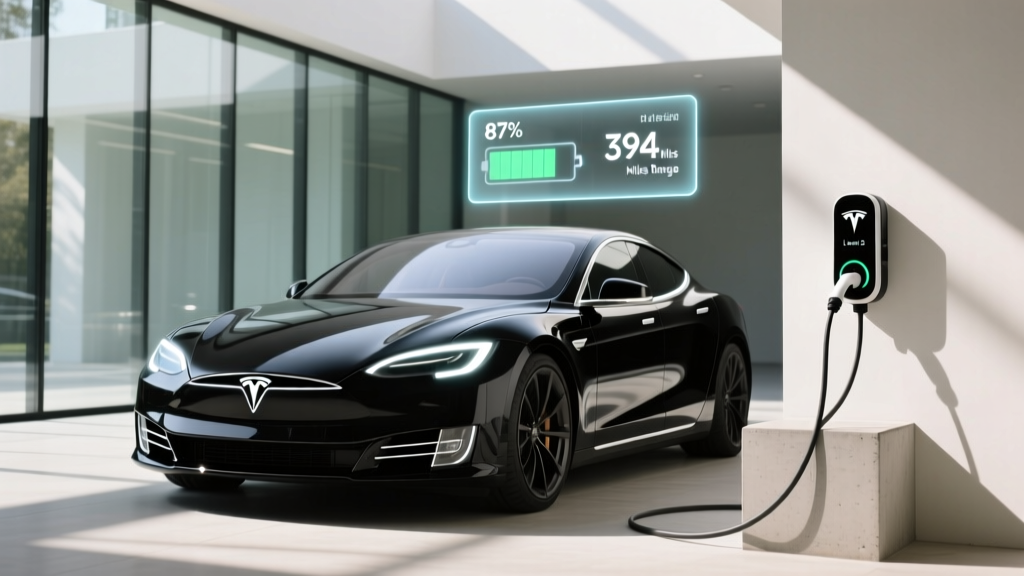
| Level 2 (240V / 48A, Wall Connector) | 11.5 kW | ~34 miles per hour | 0–100%: ~9.5 hours |
| DC Fast Charge (V3 Supercharger) | 250 kW peak | ~175 miles in 15 min | 10–80%: ~30 minutes |
| DC Fast Charge (V4 Supercharger) | 250+ kW (cable-dependent) | Similar to V3 for Model X | 10–80%: ~28–32 min |
Understanding the charge curve: The 250 kW peak rate applies only at lower states of charge (roughly 10–30% SoC) when the battery is properly preconditioned. As the battery fills past 50%, the charge rate tapers significantly — expect 100–120 kW in the 50–70% range, and below 50 kW above 80%. This is normal lithium-ion behavior, not a deficiency. The 10–80% time of approximately 30 minutes is competitive for a 100 kWh pack, though newer 800V architectures from Hyundai/Kia and Porsche can achieve faster 10–80% times with smaller packs.
Home charging note: The Model X accepts up to 11.5 kW on Level 2 via Tesla's Wall Connector on a 60-amp circuit. For most owners, this means a full overnight charge is easily achievable. Installation costs for a 240V/60A circuit typically range from $500 to $2,500 depending on panel proximity and whether a service upgrade is needed. Tesla's Wall Connector retails for approximately $475.
One significant advantage: the Model X uses the NACS (North American Charging Standard) connector natively, meaning full, unrestricted access to Tesla's Supercharger network — the most reliable and extensive DC fast-charging network in the U.S., with over 25,000 stalls as of 2026. Competitors using CCS require adapters (now widely available) and may experience software handshake issues at some Tesla stalls.
Performance & Driving Dynamics
The dual-motor Long Range Model X produces 670 combined horsepower and hits 60 mph in 3.8 seconds — a remarkable figure for a three-row SUV weighing over 5,100 pounds. The Plaid variant, with its tri-motor setup producing 1,020 hp, drops that to 2.5 seconds, making it one of the quickest production SUVs ever built.
Driving dynamics benefit from the low center of gravity inherent to skateboard-style battery placement. Body roll is well-controlled for the segment, and the air suspension provides adjustable ride height — useful for clearing steep driveways, reducing drag on the highway, or leveling the vehicle when towing. The Model X is rated to tow up to 5,000 pounds when properly equipped.
Regenerative braking is strong enough for one-pedal driving in most conditions, though Tesla has removed the adjustable regen setting in recent model years. The system defaults to a firm regen profile that most owners adapt to quickly.
Interior: The 6-Seat Advantage
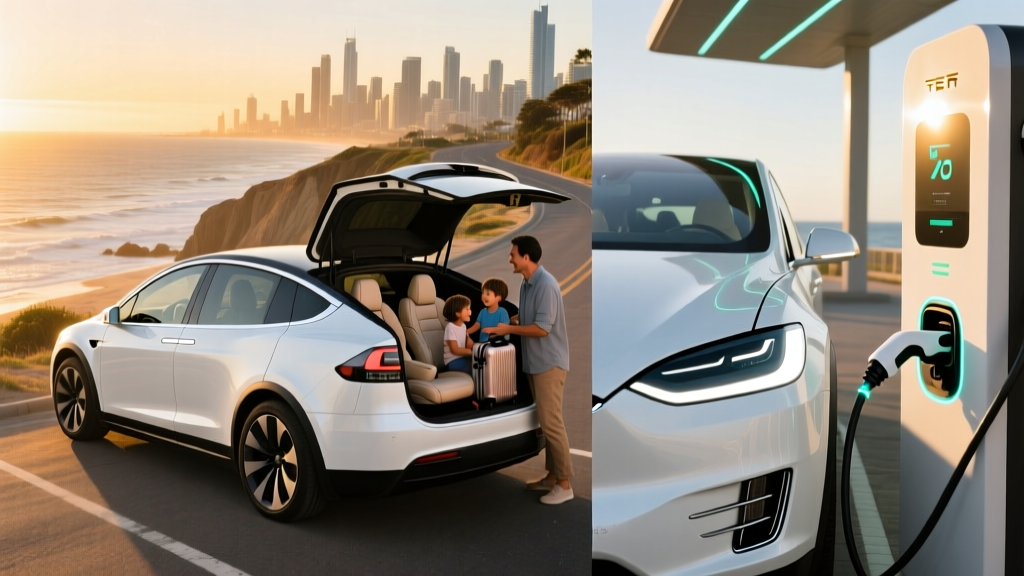
The 6-seat configuration replaces the standard second-row bench with two individual captain's chairs. Here's why that matters in practice:
- Walk-through access: A center aisle between the captain's chairs lets passengers reach the third row without folding or sliding the second row — a major convenience advantage for families with children in car seats.
- Individual comfort: Each captain's chair has its own armrests and more lateral support than the bench, making long road trips noticeably more comfortable for second-row occupants.
- Third-row usability: The Model X third row fits adults up to about 5'8" for short trips. Legroom is approximately 32.7 inches in the third row — tighter than a minivan but competitive with other three-row SUVs.
| Measurement | Specification |
|---|---|
| Front Headroom | 41.7 inches |
| Second-Row Headroom | 40.9 inches |
| Third-Row Legroom | 32.7 inches |
| Cargo (Behind 3rd Row) | ~15.0 cu ft (seats up) |
| Cargo (3rd Row Folded) | ~44.0 cu ft |
| Cargo (All Rear Rows Folded) | ~81.0 cu ft |
| Front Trunk (Frunk) | ~6.7 cu ft |
The falcon-wing rear doors remain the Model X's signature feature. They open vertically with dual hinges, providing standing-height access to the second and third rows — invaluable when loading children into car seats in a tight parking spot. However, they require overhead clearance (approximately 8 feet to fully open) and can be slow to operate in cold weather. The doors also add complexity and have historically been a source of warranty claims, though reliability has improved significantly since the 2021 refresh.
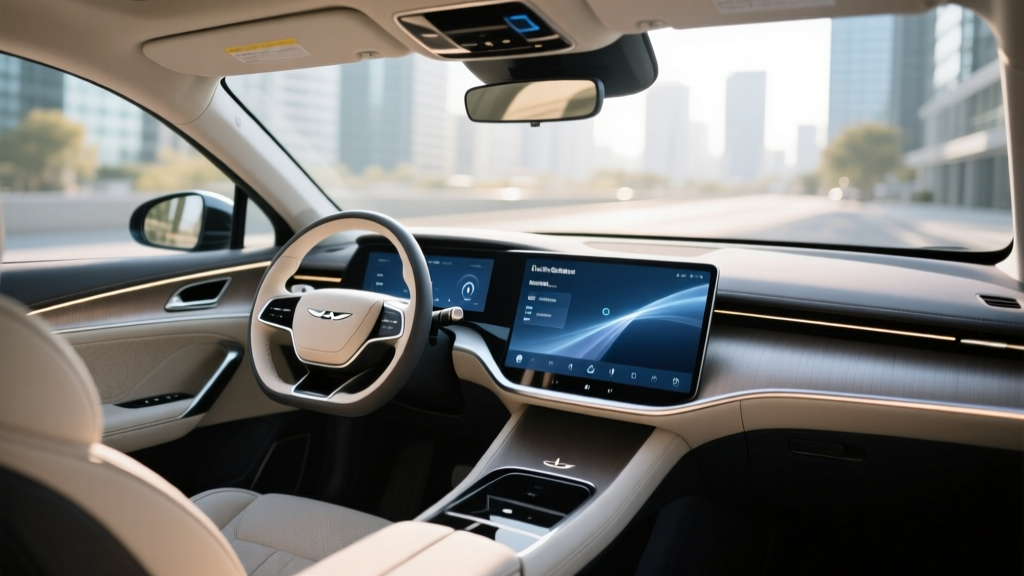
The 17-inch landscape touchscreen dominates the dash and controls virtually all vehicle functions, including climate, navigation, media, and vehicle settings. A rear 8-inch touchscreen provides second-row passengers with climate and entertainment controls. The yoke-style steering wheel is standard (a conventional round wheel is available by request at no charge). Gaming capability on the main screen (while parked) is genuinely impressive, with support for AAA titles via the built-in GPU.
Pricing, Trims & Federal Tax Credit
| Trim | Base MSRP | Est. As-Tested* | Federal §30D Credit Eligible? |
|---|---|---|---|
| Long Range AWD (6-seat) | $79,990 | $85,000–$95,000 | Up to $7,500 — subject to income, sourcing, and MSRP caps |
| Plaid AWD (6-seat) | $94,990 | $100,000–$110,000 | Up to $7,500 — subject to same rules |
*As-tested pricing includes common options such as premium paint ($1,500–$2,500), 22-inch wheels ($4,500), Full Self-Driving capability ($8,000), and destination fees.
Federal tax credit details (§30D): The Model X qualifies as an SUV under IRS MSRP cap rules, which set the limit at $80,000 for SUVs. This means the Long Range base MSRP of $79,990 clears the cap, but adding options that push the vehicle's MSRP above $80,000 can eliminate eligibility. The Plaid, at $94,990 base, exceeds the cap and does not qualify for the federal credit. Additionally, buyers must meet income limits ($300,000 joint / $150,000 individual MAGI) and the vehicle must satisfy critical-mineral and battery-component sourcing requirements, which Tesla has largely met for U.S.-built vehicles as of 2026. Per IRS guidelines, the credit can now be transferred to the dealer at point of sale, effectively reducing your purchase price upfront.
- ✅ MSRP at or below $80,000 SUV cap (base trim only)
- ✅ Buyer MAGI: ≤$300,000 (joint) or ≤$150,000 (individual)
- ✅ Assembled in North America (Fremont, CA)
- ⚠️ Critical-mineral & battery-component sourcing: verify current-year compliance on fueleconomy.gov
- ⚠️ Point-of-sale transfer available — reduces out-of-pocket at delivery
Tech, Driver Assistance & Safety
The Model X comes standard with Tesla's Autopilot suite, which includes Traffic-Aware Cruise Control and Autosteer (lane-centering). This is an SAE Level 2 driver-assistance system — you must remain attentive and keep your hands on the wheel at all times.
Tesla's Autopilot and optional Full Self-Driving (Supervised) are SAE Level 2 systems. The driver is responsible for all vehicle operation at all times. Level 4 autonomy (true driverless operation in defined areas) is currently only available through commercial robotaxi services like Waymo in select cities. Do not rely on FSD as a substitute for active driving.
The optional Full Self-Driving (Supervised) package ($8,000 as of 2026) adds features like automatic lane changes, Navigate on Autopilot (highway on/off-ramp handling), traffic-light and stop-sign recognition, and enhanced parking assist. FSD has improved substantially in recent years but still requires constant supervision and can behave unpredictably in construction zones, complex intersections, and adverse weather.
Standard tech highlights include:
- 17-inch front + 8-inch rear touchscreens with 22-speaker audio
- Over-the-air software updates (frequent, adding features post-purchase)
- Sentry Mode (360° dashcam recording while parked)
- Dog Mode / Camp Mode / Party Mode climate presets
- HEPA air filtration with Bioweapon Defense Mode
Safety ratings: The Model X earned a 5-star overall rating from NHTSA across all crash-test categories. NHTSA data shows strong performance in frontal, side, and rollover tests, aided by the rigid battery structure and low center of gravity.
Ownership Costs & Warranty
The Model X is covered by Tesla's standard warranty:
- Vehicle Limited Warranty: 4 years / 50,000 miles
- Battery & Drive Unit Warranty: 8 years / 150,000 miles (minimum 70% capacity retention)
The 150,000-mile battery warranty is more generous than the 100,000–120,000-mile coverage offered by many competitors, reflecting Tesla's confidence in its NMC pack longevity. Real-world degradation data from Tesla's fleet suggests most Model X packs retain approximately 88–92% capacity after 100,000 miles — well above the warranty threshold.
Operating costs favor the Model X significantly over comparable gas-powered luxury SUVs. At the U.S. average electricity rate of ~$0.16/kWh and the Model X's consumption of 33 kWh/100 miles, fuel cost works out to approximately $5.28 per 100 miles. A comparable gas SUV getting 20 MPG at $3.50/gallon costs $17.50 per 100 miles — a savings of roughly $12 per 100 miles, or about $1,800 per year at 15,000 miles driven.
Insurance is a notable cost factor. The Model X typically carries premiums 25–40% higher than similarly priced gas SUVs, due to repair cost data and Tesla's proprietary parts ecosystem. Get quotes before ordering — annual premiums of $3,000–$4,500 are common depending on location and driving record.
Model X vs. Competitors: Is It Worth It?
| Spec | Tesla Model X LR | Rivian R1S (Dual-Motor) | Kia EV9 (GT-Line AWD) |
|---|---|---|---|
| EPA Range | 335 mi | ~321 mi (Large Pack) | 270 mi |
| 0–60 mph | 3.8 sec | 5.0 sec | 5.0 sec |
| DC Fast Charge (peak) | 250 kW | 200+ kW | 236 kW (800V) |
| 10–80% Time | ~30 min | ~35 min | ~24 min |
| Base MSRP (6-seat equiv.) | $79,990 | $79,900 | $60,590 |
| §30D Credit Eligible | Yes (base LR) | Yes (select configs) | Yes (select configs) |
| Towing Capacity | 5,000 lbs | 7,700 lbs | 5,000 lbs |
| Charging Network | NACS (Supercharger native) | NACS (adapter/2025+ native) | CCS (adapter included) |
- You want the most proven Supercharger network for cross-country road trips
- Performance matters — 3.8s 0-60 in a three-row SUV is unmatched at this price
- Falcon-wing doors solve a real problem for your car-seat-loading routine
- You value OTA updates that meaningfully improve the vehicle over time
- Budget is a priority — the Kia EV9 offers three rows and 270 miles for $20K less
- You need serious towing — the Rivian R1S handles 7,700 lbs
- You want faster DC charging — the EV9's 800V architecture charges 10-80% in ~24 minutes
- You prefer traditional dealer service and a conventional SUV design
- 335-mile EPA range — longest in the three-row EV SUV segment
- Native NACS / Supercharger access — most reliable road-trip charging
- Class-leading performance (3.8s 0-60, Plaid at 2.5s)
- Falcon-wing doors provide unmatched car-seat loading access
- 8-year/150,000-mile battery warranty exceeds most competitors
- Continuous OTA improvements post-purchase
- High starting price — $79,990 before options or credit
- Plaid trim exceeds $80K MSRP cap, eliminating §30D credit
- Falcon-wing doors require overhead clearance and add mechanical complexity
- Insurance premiums significantly above segment average
- No 800V architecture — DC charging slower than Kia EV9 or Hyundai Ioniq 9
- Yoke steering wheel is polarizing; round wheel requires special request
Frequently Asked Questions
What is the real-world range of the 6-seat Tesla Model X?
The EPA rates the Model X Long Range AWD at 335 miles. In real-world highway driving at 70–75 mph, expect approximately 270–295 miles. In cold weather (below freezing), range typically drops to 220–250 miles. City driving with regen opportunities can approach or slightly exceed the EPA figure.
How fast does the Model X charge at home and on the road?
At home on a 240V/48A Tesla Wall Connector, the Model X charges at up to 11.5 kW, adding approximately 34 miles of range per hour (full charge in ~9.5 hours). On a V3 Supercharger, it peaks at 250 kW and can add roughly 175 miles in 15 minutes, with a 10–80% charge taking approximately 30 minutes.
Does the 6-seat Tesla Model X qualify for the federal EV tax credit?
The Long Range AWD at its base MSRP of $79,990 falls under the $80,000 SUV cap and can qualify for up to $7,500 under IRS §30D, provided the buyer meets income limits ($300K joint / $150K individual MAGI) and the vehicle meets critical-mineral and battery-component sourcing requirements. The Plaid trim at $94,990 exceeds the MSRP cap and does not qualify. Always verify current eligibility at fueleconomy.gov and consult a tax professional.
Is the 6-seat Model X worth buying over the Rivian R1S or Kia EV9?
It depends on your priorities. The Model X wins on range (335 vs. 321/270 miles), performance (3.8s vs. 5.0s 0-60), and Supercharger network access. The R1S wins on towing (7,700 lbs vs. 5,000) and off-road capability. The EV9 wins on price ($20K less) and DC charging speed (800V architecture). If road-trip charging confidence and performance are your top criteria, the Model X remains compelling.
What are the biggest drawbacks of the Model X?
The primary concerns are the high purchase price, elevated insurance costs, falcon-wing door complexity (overhead clearance required, slower operation in cold), and the lack of an 800V charging architecture, which means DC fast charging is slower than newer competitors. The yoke steering wheel is also divisive, though a round wheel is available on request.
How long will the Model X battery last?
Tesla warranties the battery for 8 years or 150,000 miles with a minimum 70% capacity retention threshold. Fleet data suggests most Model X packs retain 88–92% capacity at 100,000 miles. With proper charging habits (daily limit of 80–90%, avoiding prolonged storage at 100% or below 10%), the pack should outlast the typical ownership period without requiring replacement.