Quick Verdict: Is the Model X Still the Default 3-Row EV?
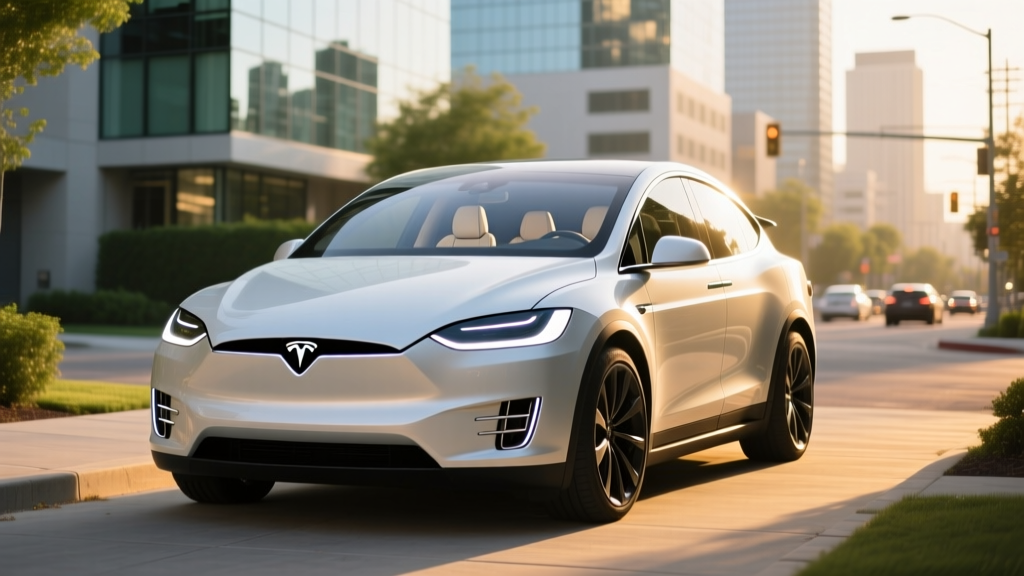
If you're searching for a 3 row seat Tesla, the Tesla Model X remains your only option in Tesla's current lineup. The Model Y's once-available third row was discontinued after the 2025 refresh, leaving the Model X as the sole Tesla capable of carrying six or seven passengers. For 2026, the Model X continues with dual-motor and tri-motor (Plaid) configurations, a 100 kWh battery pack, and access to Tesla's Supercharger network — the most reliable DC fast-charging ecosystem in North America.
But at a starting price above $77,000 and with increasingly capable three-row EV competitors from Hyundai, Kia, and Rivian, the Model X must justify its premium. This review breaks down exactly what you get — and where it falls short — for families considering the only three-row Tesla you can buy today.
Range, Efficiency, and Real-World Expectations
The 2026 Model X Long Range carries an EPA-estimated 335 miles of range from its 100 kWh usable battery pack (NMC chemistry). The high-performance Plaid variant drops to an EPA-estimated 311 miles due to its more powerful tri-motor setup and stickier tires.
EPA Estimate: 335 mi (Long Range) / 311 mi (Plaid)
Highway cruising (70-75 mph): Expect ~270–290 mi
Cold weather (below 30°F): Expect ~240–270 mi depending on cabin heating demand
Combined mixed driving: ~300–315 mi achievable with moderate regen use
The Model X's large frontal area and ~5,100-lb curb weight penalize highway efficiency more than sedans. Plan road trips around 250-mile segments to maintain a comfortable buffer.
Efficiency is rated at 101 MPGe combined (Long Range) and 98 MPGe combined (Plaid) per fueleconomy.gov. That translates to roughly 33–34 kWh per 100 miles in mixed driving — higher than a Model Y (~28 kWh/100 mi) but competitive with other large electric SUVs like the Rivian R1S and BMW iX.
| Spec | Long Range (Dual Motor) | Plaid (Tri-Motor) |
|---|---|---|
| EPA Range | 335 miles | 311 miles |
| Battery (Usable) | ~100 kWh, NMC | ~100 kWh, NMC |
| Drivetrain | Dual Motor AWD | Tri-Motor AWD |
| Horsepower | 670 hp | 1,020 hp |
| 0-60 mph | 3.8 seconds | 2.5 seconds |
| Top Speed | 155 mph | 163 mph |
| Efficiency | 101 MPGe (33 kWh/100mi) | 98 MPGe (34 kWh/100mi) |
| Towing Capacity | 5,000 lbs | 5,000 lbs |
| Seating | 5, 6, or 7 passengers | 5, 6, or 7 passengers |
| Cargo (behind 3rd row) | ~15 cu ft | ~15 cu ft |
| Cargo (all rows folded) | ~81.5 cu ft | ~81.5 cu ft |
| Base MSRP | $77,990 | $92,990 |
Charging Speed: DC Fast, Level 2, and the Supercharger Advantage
Charging speed remains one of the Model X's strongest ownership arguments, primarily because of the Tesla Supercharger network — now exceeding 6,000 stalls in North America with industry-leading uptime.
| Charging Level | Max Rate | Speed / Time | Notes |
|---|---|---|---|
| Level 1 (120V) | ~1.4 kW | ~3–4 mi/hr | Emergency/trickle only |
| Level 2 (240V home) | 11.5 kW (48A) | ~30–34 mi/hr | Full charge in ~10 hrs; Wall Connector included |
| DC Fast Charge (CCS/NACS) | 250 kW peak | 10–80% in ~32 min | Adds ~175 mi in 15 min at V3 Supercharger |
The Model X peaks at 250 kW on V3 Superchargers. In practice, the charge curve tapers significantly after 50% state of charge (SoC), dropping to ~120 kW by 65% and below 60 kW past 80%. This is why Tesla (and all EV manufacturers) quote 10–80% times rather than full charges — the final 20% can take as long as the first 70%.
At home, the Tesla Wall Connector delivers up to 11.5 kW on a 60-amp circuit (48 amps continuous). This adds roughly 30–34 miles of range per hour, meaning an overnight session (10 hours) fully replenishes the pack. Most owners who charge nightly at home rarely visit public chargers except on road trips.
Performance and Driving Dynamics
The dual-motor Long Range produces 670 horsepower and hits 0-60 mph in 3.8 seconds — absurdly quick for a three-row SUV weighing over 5,100 pounds. The Plaid's tri-motor setup delivers 1,020 horsepower and a 2.5-second 0-60 time, making it one of the fastest production SUVs ever built.
Both variants feature standard all-wheel drive with torque vectoring. Air suspension is standard, providing up to 7 inches of ground clearance adjustment — useful for steep driveways, snow, and light off-road use. The adaptive damping smooths out highway imperfections, though the Model X's size and weight are noticeable on tight city streets and winding roads.
Towing capacity is rated at 5,000 pounds for both trims, adequate for small boat trailers, bike racks, or light campers but below the Rivian R1S's 7,700-lb rating.
Interior, Cargo, and Third-Row Practicality
The Model X offers three seating configurations: 5-seat (two rows), 6-seat (with second-row captain's chairs and center console), and 7-seat (second-row bench). The 6-seat layout is the most popular for families who need third-row access, as the captain's chairs allow walk-through to the back.
Third-row dimensions are the Model X's most debated feature:
- Third-row legroom: ~32.7 inches — adequate for children and smaller adults on short trips, tight for anyone over 5'8" on longer drives
- Third-row headroom: ~38.4 inches — the panoramic glass roof helps, but taller passengers will notice the sloping roofline
- Cargo behind 3rd row: ~15 cu ft — enough for a few grocery bags or two small suitcases
- Cargo with 3rd row folded: ~40 cu ft
- Total cargo (all rows folded): ~81.5 cu ft — competitive with midsize SUVs
- Frunk (front trunk): ~6.6 cu ft — useful for charging cables and small items
The signature falcon-wing rear doors are both a feature and a liability. They provide excellent access to the second and third rows in tight parking spaces (requiring only ~12 inches of lateral clearance), but add mechanical complexity and have historically been a source of maintenance complaints. Tesla has improved the hinge and sensor systems over successive model years.
Pricing, Trims, and Federal Tax Credit Eligibility
| Trim | Base MSRP | Destination | Total Before Incentives | §30D Federal Credit | Effective Price (if eligible) |
|---|---|---|---|---|---|
| Long Range (AWD) | $77,990 | $1,995 | $79,985 | See eligibility below* | Varies |
| Plaid (AWD) | $92,990 | $1,995 | $94,985 | See eligibility below* | Varies |
*Federal EV tax credit (IRS §30D) eligibility for the Model X is complex and changes periodically. As of 2026, the credit can provide up to $7,500, but qualification depends on multiple factors. Consult the IRS clean vehicle credit page for the most current rules. Key requirements include:
- MSRP cap: SUVs must have an MSRP at or below $80,000 — this means the Long Range trim may qualify, but the Plaid (MSRP $92,990) does not
- Buyer income limits: Modified AGI must not exceed $300,000 (joint filers), $225,000 (head of household), or $150,000 (individual)
- Battery sourcing requirements: Critical minerals and battery component sourcing must meet phased-in thresholds that tighten annually — Tesla's supply chain has adapted, but verify current-year compliance on fueleconomy.gov
- Point-of-sale transfer: The credit can now be transferred to the dealer at purchase, reducing your out-of-pocket cost immediately rather than waiting for tax filing
- Final assembly: Must occur in North America (Model X is assembled in Fremont, CA — qualifies)
Bottom line on pricing: The Long Range Model X, if you meet all §30D criteria, could effectively cost around $72,485 after the maximum $7,500 credit. The Plaid is ineligible due to its MSRP exceeding the $80,000 SUV cap. Many buyers also qualify for state-level incentives (check your state's energy office for specifics) and utility rebates for home charger installation.
Tech, Driver Assistance, and Ownership Experience
The Model X continues with Tesla's minimalist interior centered on a 17-inch touchscreen (landscape orientation) and a secondary 8-inch rear display for rear-seat passengers. The infotainment system includes native navigation with real-time Supercharger routing, Netflix/YouTube streaming while parked, and a robust mobile app with remote climate control, Sentry Mode cameras, and charging management.
Driver assistance comes in two tiers:
- Basic Autopilot (standard): Traffic-aware cruise control and lane-centering — a competent SAE Level 2 system for highway use
- Full Self-Driving (Supervised) — $8,000 option: Adds automatic lane changes, navigate-on-autopilot, traffic light/stop sign recognition, and parking assist. Despite the name, FSD is still an SAE Level 2 system requiring continuous driver attention. It is not autonomous driving.
Standout features: Falcon-wing doors, HEPA air filtration (Bioweapon Defense Mode), yoke or round steering wheel options, over-the-air software updates that add features post-purchase, and the best public charging network in the industry.
Notable drawbacks: No Apple CarPlay or Android Auto, minimal physical controls (even glovebox opens via screen), panel-gap quality still inconsistent, third row is tight for adults, and the $92,990+ Plaid price is difficult to justify for a family hauler.
Warranty and Long-Term Ownership
Tesla covers the Model X with:
- Basic vehicle warranty: 4 years / 50,000 miles
- Battery & drive unit warranty: 8 years / 150,000 miles (Long Range) with a minimum 70% capacity retention guarantee
- Plaid battery & drive unit: 8 years / 150,000 miles, same 70% threshold
The 150,000-mile battery warranty is competitive with Hyundai/Kia's 10-year/100,000-mile coverage when you account for typical annual mileage. Tesla's NMC battery chemistry has demonstrated roughly 10–12% degradation over 100,000 miles based on fleet data, meaning most owners will retain 88–90% capacity well within the warranty period.
Maintenance costs are significantly lower than a comparable gas SUV — no oil changes, no transmission fluid, and regenerative braking extends pad life to 100,000+ miles. Expect to spend primarily on tires (EVs wear tires faster due to instant torque and heavy weight; budget $1,200–$1,800 per set of four), cabin air filters, and wiper fluid.
How It Compares: Model X vs. Key 3-Row EV Rivals
| Spec | Tesla Model X LR | Kia EV9 GT-Line AWD | Rivian R1S Dual-Motor | Hyundai Ioniq 9 (est.) |
|---|---|---|---|---|
| EPA Range | 335 mi | ~280 mi | ~352 mi | ~330 mi |
| Base MSRP | $77,990 | ~$63,000 | ~$79,900 | ~$58,000 |
| 3rd-Row Legroom | 32.7 in | ~32.0 in | ~33.0 in | ~34.0 in |
| DC Fast Charge Peak | 250 kW | ~210 kW | ~220 kW | ~240 kW |
| 0-60 mph | 3.8 sec | ~5.0 sec | ~5.5 sec | ~6.0 sec |
| Towing | 5,000 lbs | 4,500 lbs | 7,700 lbs | ~5,000 lbs |
| Charging Network | Supercharger (native) | NACS / Supercharger adapter | NACS / Supercharger adapter | NACS / Supercharger adapter |
- You want native Supercharger access without adapters
- Performance matters — 670 hp (or 1,020 hp Plaid) in a family SUV
- You value OTA updates and Tesla's software ecosystem
- You want falcon-wing doors for tight-space third-row access
- Budget is under $65,000 — the Kia EV9 and Hyundai Ioniq 9 offer strong value
- You need serious towing capacity — the Rivian R1S tows 7,700 lbs
- Adult-friendly third-row space is a priority — the Ioniq 9 and R1S offer more room
- You prefer physical buttons, Apple CarPlay, or a more traditional interior layout
Pros
- Best-in-class Supercharger network access
- Blistering acceleration even in base Long Range trim
- Standard air suspension and adaptive damping
- Falcon-wing doors ease tight-space access
- Strong OTA update track record adds features over time
- HEPA cabin filtration is genuinely excellent
Cons
- Third row is tight for adults on longer trips
- No Apple CarPlay or Android Auto
- Plaid trim exceeds §30D MSRP cap — no federal credit
- Panel gap and build quality inconsistencies persist
- Falcon-wing doors add mechanical complexity and repair risk
- Starting price significantly higher than Kia EV9 / Ioniq 9
Who Should Buy the 2026 Tesla Model X?
The Model X is best suited for families who need occasional third-row seating (kids and their friends, not regular adult passengers in the back), who prioritize performance and technology, and who want the simplicity of Tesla's integrated Supercharger ecosystem for road trips. If your third row will carry adults regularly, test-drive the Rivian R1S and Hyundai Ioniq 9 before committing.
For commuters and road trippers who need the cargo flexibility of a large SUV but rarely use all three rows, the Long Range Model X at ~$72,500 (after potential tax credit) is a compelling, fast, and well-supported package. For towing-heavy buyers, the Rivian R1S is the stronger choice.
Frequently Asked Questions
What is the real-world range of the Tesla Model X?
The EPA rates the 2026 Model X Long Range at 335 miles. In real-world mixed driving, expect roughly 300–315 miles. Highway-only driving at 75 mph drops this to around 270–290 miles, and cold weather (below 30°F) can reduce range to 240–270 miles. Plan road trips with ~250-mile segments to keep a safe buffer.
How fast does the Model X charge at home and on road trips?
At home on a Level 2 Tesla Wall Connector (11.5 kW), the Model X adds about 30–34 miles per hour, fully charging overnight in roughly 10 hours. On DC fast chargers, it peaks at 250 kW and charges from 10–80% in approximately 32 minutes at a V3 Supercharger. Actual speed depends heavily on battery temperature — preconditioning is critical.
How much does the Model X cost after the federal tax credit?
The Long Range starts at $79,985 (including destination). If you meet all IRS §30D requirements — income below $300K joint, MSRP under $80K, compliant battery sourcing — you may qualify for up to $7,500, bringing the effective price to ~$72,485. The Plaid trim at $94,985 exceeds the $80K SUV MSRP cap and is not eligible for the federal credit.
Is the Model X worth buying over the Kia EV9 or Rivian R1S?
It depends on priorities. The Model X wins on performance, Supercharger access, and software. The Kia EV9 wins on price ($15,000+ less). The Rivian R1S wins on towing (7,700 lbs) and third-row space. If budget is flexible and you value the Tesla ecosystem, the Model X remains compelling. If you need adult-friendly third-row seating or tow frequently, the R1S is the better fit.
Does the Tesla Model X qualify for the federal EV tax credit in 2026?
The Long Range trim may qualify for up to $7,500 under IRS §30D, provided the buyer meets income limits ($300K joint / $150K individual), the vehicle's MSRP stays under the $80,000 SUV cap, and battery sourcing requirements are satisfied. The Plaid trim does not qualify due to its MSRP exceeding the cap. Always verify current eligibility at irs.gov before purchasing, as rules and sourcing compliance can change.
Can adults sit comfortably in the Model X third row?
For short trips, yes — adults up to about 5'8" can manage. For longer drives, the 32.7 inches of legroom and sloping roofline make the third row better suited for children and teenagers. If you regularly transport adults in the third row, the Rivian R1S and Hyundai Ioniq 9 offer more generous dimensions.