The Ultimate Tesla Xmas Gift: 2026 Model X Verdict
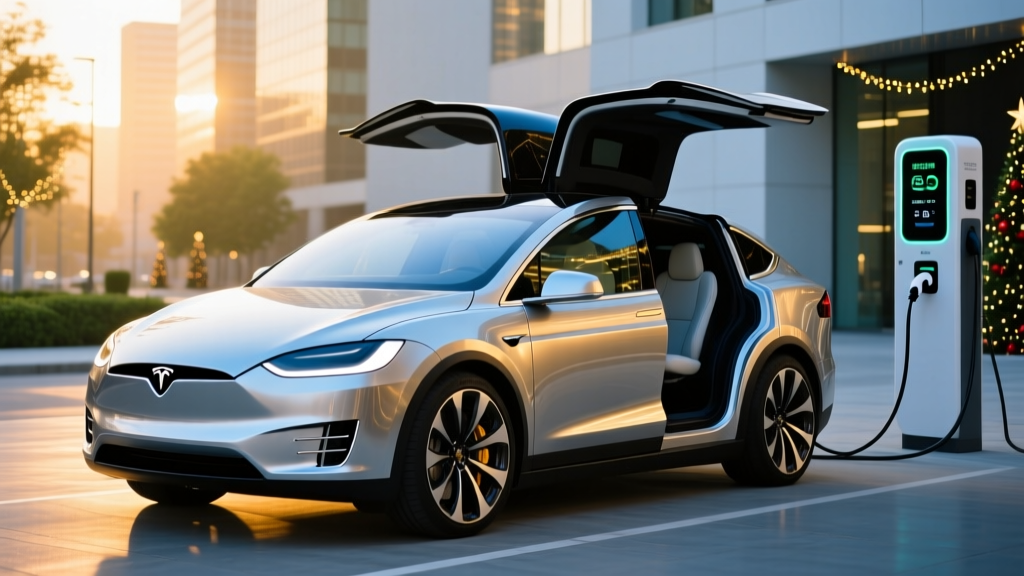
If you are browsing for a headline-grabbing holiday present—or simply using the end-of-year rush to lock in a luxury electric SUV before tax-credit rules shift—the 2026 Tesla Model X remains the benchmark three-row electric hauler. With falcon-wing rear doors, a 335-mile EPA range, and access to the most reliable DC fast-charging network in North America, it is a compelling package. But at a starting MSRP near $79,990, it demands scrutiny beyond the wow factor.
Real-World Expectation: Expect 280–300 miles on mixed highway driving at 70+ mph. In freezing winter conditions (below 30°F), plan for 220–250 miles unless you precondition the battery and cabin while plugged in.
Spec Sheet: 2026 Tesla Model X at a Glance
| Attribute | Long Range AWD | Plaid |
|---|---|---|
| EPA Range | 335 mi | 326 mi |
| Battery (usable) | ~100 kWh, NMC | ~100 kWh, NMC |
| Drivetrain | Dual-Motor AWD | Tri-Motor AWD |
| Horsepower | 670 hp | 1,020 hp |
| 0-60 mph | 3.8 sec | 2.5 sec |
| Max DC Fast Charge | 250 kW | 250 kW |
| 10-80% DC Time | ~32 min | ~32 min |
| Level 2 Home Rate | 11.5 kW (~44 mi/hr) | 11.5 kW (~44 mi/hr) |
| MPGe (combined) | 102 MPGe | 98 MPGe |
| Cargo (behind 3rd row) | 15.3 cu ft | 15.3 cu ft |
| Cargo (max, seats folded) | 85.7 cu ft | 85.7 cu ft |
| Base MSRP | $79,990 | $94,990 |
| Warranty (battery) | 8 yr / 150,000 mi | 8 yr / 150,000 mi |
Sources: fueleconomy.gov, Tesla.com 2026 spec sheets.
Real-World Range and Efficiency
The 2026 Model X Long Range carries a roughly 100 kWh (usable) NMC (nickel-manganese-cobalt) battery pack. NMC chemistry favors energy density—critical for pushing a 5,100-lb SUV past 300 miles—but it requires more careful state-of-charge management than LFP cells. Tesla recommends daily charging to 80–90% for longevity, reserving 100% for road trips.
Efficiency lands at approximately 102 MPGe combined (roughly 33 kWh/100 mi). In our experience, highway-heavy drives at 75 mph push consumption closer to 36–38 kWh/100 mi, which is where the real-world range drops below the EPA sticker. Cold weather is the bigger equalizer: without a heat pump running efficiently (the Model X does include one), sub-freezing temps sap 15–25% of range. Preconditioning while plugged in is essential—both for preserving range and for unlocking peak DC charging speeds.
Charging Speed: DC Fast and Home Level 2
| Charging Method | Power / Rate | Speed |
|---|---|---|
| Level 1 (120V outlet) | ~1.4 kW | ~4–5 miles per hour |
| Level 2 (240V, 48A Wall Connector) | 11.5 kW | ~44 miles per hour |
| DC Fast (V3 Supercharger) | Peak 250 kW | 10–80% in ~32 min |
| DC Fast (V4 Supercharger) | Peak 250 kW* | 10–80% in ~30 min |
*Note: The Model X architecture caps at 250 kW even at higher-rated V4 posts. Sustained charging above 80% tapers sharply—plan to unplug at 80% on road trips to avoid 30+ minute tail charging.
At home, a Tesla Wall Connector on a 60-amp circuit delivers 44 miles of range per hour of charging. An overnight session (8–10 hours) easily refills a depleted pack. Installation typically requires a 240V/60A circuit; budget $800–$2,000 for electrician work depending on panel proximity.
Pricing, Trims, and Federal Tax Credit Eligibility
| Trim | Base MSRP | Est. As-Tested* | §30D Credit Eligible? |
|---|---|---|---|
| Long Range AWD | $79,990 | $86,000–$92,000 | No (MSRP cap exceeded) |
| Plaid | $94,990 | $102,000–$110,000 | No (MSRP cap exceeded) |
*As-tested includes destination, FSD package, premium wheels, and six-seat config.
Here is the hard truth for holiday shoppers: the 2026 Model X does not qualify for the $7,500 federal EV tax credit under IRS §30D rules. The law caps eligible SUVs at an $80,000 MSRP, and even the base Long Range at $79,990 clears that threshold before destination fees push it over. Buyer income caps ($300K joint / $150K single) and battery critical-mineral sourcing rules further restrict eligibility for luxury EVs at this tier.
Some buyers offset cost through state-level rebates (check energy.gov for your jurisdiction), trade-in credits, or employer EV incentives—but do not build your holiday budget around the federal credit.
Performance, Tech, and Interior Space
Even the "base" Long Range Model X hits 60 mph in 3.8 seconds with 670 hp from its dual-motor setup. The Plaid's tri-motor, 1,020-hp configuration drops that to 2.5 seconds—supercar territory in a three-row SUV. Air suspension is standard, offering adjustable ride height for rough roads or highway efficiency.
Inside, the 17-inch center touchscreen handles nearly all vehicle controls (including glove-box release and mirror adjustment, which frustrates some owners). The second-row falcon-wing doors provide dramatic curb appeal and genuinely ease child-seat installation, though they add mechanical complexity. Third-row legroom is tight at 32.7 inches—best suited for children on longer trips. Cargo space behind the third row is 15.3 cu ft; fold both rear rows and you get a van-like 85.7 cu ft.
Tesla's Autopilot (standard) and Full Self-Driving Supervised ($8,000 option or $99/mo subscription) remain SAE Level 2 driver-assist systems. You must keep hands on the wheel and eyes on the road. Despite the "FSD" branding, this is not autonomous driving—only Level 4 robotaxi services like Waymo operate without driver supervision.
Warranty and Ownership Considerations
Tesla covers the Model X battery and drive unit for 8 years or 150,000 miles (whichever comes first), with a minimum 70% capacity retention guarantee. The vehicle limited warranty is 4 years / 50,000 miles. Compared to Hyundai/Kia's 10-year battery coverage, Tesla's warranty is adequate but not class-leading.
Ownership costs to weigh:
- Insurance: Expect premiums 25–40% above comparable gas SUVs due to repair costs and parts pricing.
- Tires: Heavy EVs wear tires faster; budget $1,200–$1,800 per replacement set every 25,000–35,000 miles.
- Supercharging: Free Supercharging is no longer included; budget $0.25–$0.40/kWh on road trips.
- Maintenance: Minimal—no oil changes, but cabin air filters, wiper fluid, and brake fluid checks remain.
Who Should Buy the 2026 Model X This Holiday Season?
The Model X fits a specific buyer: a family needing three rows, a large cargo hold, and road-trip-capable range, who also values performance and tech-forward design. It excels as a daily school-run hauler that can tow 5,000 lbs and still crack off 2.5-second 0-60 runs in Plaid trim.
Skip it if: You need the federal tax credit, prefer physical controls, want best-in-class third-row space (look at the Rivian R1S or Kia EV9), or your budget is under $75K.
Pros and Cons
- 335-mile EPA range beats most three-row EV rivals
- Access to Tesla Supercharger network (17,000+ stalls in North America)
- Falcon-wing doors ease child-seat loading
- Class-leading acceleration even in base trim
- Over-the-air updates continuously add features
- No federal tax credit eligibility (MSRP over $80K cap)
- Touchscreen-only controls frustrate traditionalists
- Third-row space is tight for adults
- Falcon-wing doors add repair complexity and cost
- Insurance premiums significantly above segment average
Frequently Asked Questions
What is the real-world range of the 2026 Tesla Model X?
Expect 280–300 miles on highway-heavy trips in mild weather, and 220–250 miles in freezing conditions. The 335-mile EPA figure assumes a mix of city and highway driving at moderate temperatures.
How fast does the Model X charge at home and on the road?
At home on a Level 2 Wall Connector (11.5 kW), it adds about 44 miles per hour—enough for a full overnight charge. On a V3 or V4 Supercharger, it peaks at 250 kW and reaches 10–80% in roughly 32 minutes.
Does the 2026 Model X qualify for the $7,500 federal EV tax credit?
No. IRS §30D rules cap eligible SUVs at an $80,000 MSRP, and the Model X Long Range starts at $79,990 before destination fees push it above the threshold. State incentives may still apply.
Is the Model X worth buying over the Rivian R1S or Kia EV9?
If Supercharger access, acceleration, and range are your top priorities, yes. If you need more third-row space, physical controls, or a lower price point (Kia EV9 starts under $55K), those rivals deserve a close look.
What is the battery warranty on the Model X?
Tesla covers the battery and drive unit for 8 years or 150,000 miles, whichever comes first, guaranteeing at least 70% capacity retention over that period.
Is Tesla FSD actually self-driving?
No. Full Self-Driving (Supervised) is an SAE Level 2 driver-assist system. The driver must remain engaged, hands on the wheel, and eyes on the road at all times.