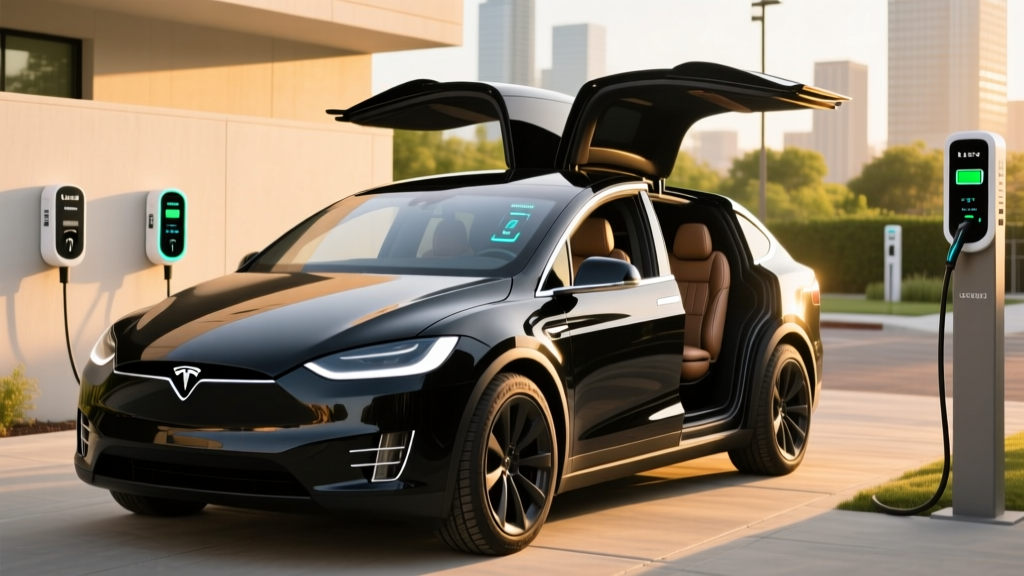
The 2019 Tesla Model X occupies a unique spot in the used electric-vehicle market. It's a three-row, all-electric SUV with falcon-wing rear doors, access to Tesla's Supercharger network, and enough range to handle road trips — all at a fraction of its original $80,000-plus sticker. But buying a six-to-seven-year-old luxury EV comes with specific considerations: battery degradation, out-of-warranty repair risk, and the reality that newer competitors have closed the gap in interior quality and charging speed. Here's everything a 2026 buyer needs to know before putting money down on a used 2019 Model X.
2019 Tesla Model X: Core Specifications at a Glance
| Specification | Standard Range | Long Range | Performance (Ludicrous) |
|---|---|---|---|
| EPA Range | 250 mi | 325 mi | 305 mi |
| Battery (usable) | ~75 kWh (NMC) | ~100 kWh (NMC) | ~100 kWh (NMC) |
| Drivetrain | Dual-Motor AWD | Dual-Motor AWD | Dual-Motor AWD |
| Horsepower | ~518 hp | ~518 hp | ~778 hp |
| 0-60 mph | 4.6 sec | 4.4 sec | 2.7 sec |
| MPGe (combined) | 93 MPGe | 96 MPGe | 89 MPGe |
| Efficiency | ~36 kWh/100mi | ~35 kWh/100mi | ~38 kWh/100mi |
| Max DC Fast Charge | ~120 kW (V2 Supercharger) | ~120 kW (V2 Supercharger) | ~120 kW (V2 Supercharger) |
| 10-80% DCFC Time | ~38 min | ~48 min | ~48 min |
| Level 2 Home Charge | 11.5 kW / ~30 mi/hr | 16.5 kW / ~44 mi/hr | 16.5 kW / ~44 mi/hr |
| Original Base MSRP | ~$83,000 | ~$92,000 | ~$104,000 |
| Battery/Drive Warranty (orig.) | 8 yr / 150,000 mi | 8 yr / 150,000 mi | 8 yr / 150,000 mi |
Note on battery chemistry: The 2019 Model X uses NMC (nickel manganese cobalt) lithium-ion cells, not the LFP (lithium iron phosphate) chemistry Tesla introduced in later Model 3/Y Standard Range vehicles. NMC offers higher energy density — essential for a heavy SUV — but is more sensitive to sustained high State of Charge (SoC). Daily charging to 80-90% is recommended, with 100% reserved for road trips.
Real-World Range: What the EPA Number Doesn't Tell You
EPA Estimate: 325 miles
Real-World Highway (70-75 mph, moderate temps): ~255-280 miles
Real-World City/Mixed: ~280-310 miles
Cold Weather (below 32°F, highway): ~210-240 miles
With Battery Degradation (6-7 yrs, ~10-15% loss): subtract 30-50 mi from figures above
The Model X Long Range's 325-mile EPA figure was class-leading in 2019, but real-world conditions tell a more nuanced story. The vehicle's 5,000+ lb curb weight and brick-like aerodynamics (despite a 0.25 Cd drag coefficient, its frontal area is enormous) mean highway efficiency suffers significantly compared to city driving where regenerative braking recaptures energy. According to fueleconomy.gov, the Long Range achieves 96 MPGe combined, translating to roughly 35 kWh per 100 miles.
Cold weather compounds range loss. The 2019 Model X lacks a heat pump (introduced in the 2021 refresh), relying instead on resistive cabin heating. In sub-freezing temperatures, expect a 25-35% range reduction on the highway. Battery preconditioning helps mitigate this when navigating to a Supercharger, but it cannot fully overcome the physics of cold NMC cells.
Critical for used buyers: a 2019 Model X in 2026 has likely accumulated 60,000-100,000+ miles. NMC battery degradation typically runs 10-15% over that span, meaning a Long Range model may realistically deliver 275-290 miles EPA-equivalent when new, dropping to perhaps 240-260 in mixed driving today. Always check the vehicle's battery health screen or request a third-party State of Health (SoH) diagnostic before purchase.
Charging Speed: Supercharger Access Is the Ace
| Charging Level | Power (kW) | Speed (miles of range per hour) | Notes |
|---|---|---|---|
| Level 1 (120V household) | ~1.4 kW | ~3-4 mi/hr | Emergency/trickle only |
| Level 2 (240V, 48A home) | 11.5-16.5 kW | ~30-44 mi/hr | Full charge overnight (~8-10 hrs) |
| DC Fast (V2 Supercharger) | Up to 120 kW peak | ~280 mi/hr at peak | 10-80% in ~38-48 min |
| DC Fast (V3 Supercharger) | ~120 kW (capped) | ~280 mi/hr at peak | 2019 Model X cannot reach V3's 250 kW |
The 2019 Model X charges at a maximum of approximately 120 kW on DC fast chargers. This is the key limitation buyers should understand: while Tesla's V3 Superchargers can deliver up to 250 kW to newer vehicles, the 2019 Model X's older battery architecture caps its intake around 120 kW regardless of the station's capability. A 10-80% session takes roughly 38 minutes for the Standard Range and 48 minutes for the 100 kWh Long Range and Performance variants.
The charge curve matters as much as peak speed. The Model X holds near-peak rates between 10-40% SoC, then progressively tapers. Charging from 80-100% is painfully slow — often adding 30+ minutes for the final 20%. For road trips, plan 30-minute stops at 20-30% SoC rather than waiting to charge to full.
On the home front, the 2019 Model X supports up to 48 amps on Level 2 (with the optional High Amperage Charger upgrade on Long Range/Performance trims, enabling 16.5 kW / 72A onboard). Most buyers will install a Tesla Wall Connector on a 60-amp circuit, delivering roughly 30-44 miles of range per hour of charging — enough to fully replenish the battery overnight. Home Level 2 installation typically costs $800-$2,000 depending on panel proximity and local electrical requirements; consult a licensed electrician for your specific setup.
One major advantage: the 2019 Model X uses Tesla's proprietary connector and has native access to the Tesla Supercharger network — over 6,000 stations and 60,000+ stalls in North America as of early 2026. With a simple Tesla-to-J1772 adapter, it can also use Electrify America, EVgo, and ChargePoint Level 2 stations, though DC fast charging on non-Tesla networks requires a CCS adapter (sold separately, ~$250).
Performance and Driving Dynamics
Even the "base" 2019 Model X Standard Range hits 0-60 mph in 4.6 seconds — quicker than most V8 sport sedans. The Performance trim with Ludicrous Mode drops that to a physics-defying 2.7 seconds, making it one of the quickest SUVs ever produced. All trims feature dual-motor all-wheel drive with torque vectoring, providing confident traction in rain and light snow.
The air suspension (standard on all 2019 trims) offers adjustable ride height: lower for highway efficiency, higher for rough roads or light off-pavement use. Towing capacity is rated at 5,000 lbs when properly equipped — adequate for a small boat or utility trailer, though range drops dramatically when towing (expect 40-50% reduction).
Driving refinement is a mixed bag. The powertrain is whisper-quiet and the acceleration effortless, but the 2019 Model X predates Tesla's significant NVH (noise, vibration, harshness) improvements. Wind noise around the falcon-wing doors and the large windshield is noticeable at highway speeds. The ride quality, while compliant, can feel busy over broken pavement — a consequence of the vehicle's weight and the air suspension's tuning priorities.
Interior, Cargo, and Technology
The 2019 Model X seats up to seven passengers in a 2-3-2 configuration (six-passenger with second-row captain's chairs was also available). Cargo space measures 26.6 cu ft behind the third row, 76.5 cu ft with the third row folded, and 88.1 cu ft total with both rear rows down. The front trunk (frunk) adds 6.5 cu ft — useful for charging cables or groceries.
Third-row legroom is tight at 32.7 inches, best suited for children on short trips. Second-row legroom is generous at 38.4 inches. The falcon-wing doors are undeniably dramatic and make third-row access easier in tight parking spaces, but they're slow to open/close and have been a source of reliability complaints — a known issue with early-production sensors and hydraulic struts.
The 17-inch center touchscreen runs Tesla's proprietary infotainment system, which received continuous over-the-air (OTA) updates through 2024. Features include built-in navigation with Supercharger routing, a web browser, streaming media, and Tesla's mobile app integration for remote preconditioning and monitoring. However, the 2019 hardware (Hardware 3 / MCU2) is now dated compared to the AMD Ryzen-based systems in current Teslas. The interface remains functional but noticeably slower.
Driver Assistance: All 2019 Model X vehicles include Autopilot as standard (adaptive cruise control + lane centering). Full Self-Driving (FSD) capability was available as a $5,000-$7,000 add-on. Important clarification: Autopilot and FSD (Supervised) are SAE Level 2 driver-assist systems. They do not make the vehicle self-driving. The driver must remain engaged, hands on or near the wheel, and eyes on the road at all times. These systems assist with steering, acceleration, and braking on highways but cannot navigate complex urban environments, construction zones, or adverse weather without intervention.
Used Pricing, Tax Credits, and Total Cost of Ownership
| Trim | Mileage Range | Used Price Range | Original MSRP |
|---|---|---|---|
| Standard Range | 60,000-90,000 mi | $28,000 - $34,000 | ~$83,000 |
| Long Range | 60,000-90,000 mi | $32,000 - $40,000 | ~$92,000 |
| Performance | 50,000-80,000 mi | $36,000 - $45,000 | ~$104,000 |
- Credit amount: 30% of sale price, up to $4,000 maximum
- Vehicle price cap: Sale price must be $25,000 or less
- Buyer income limits: AGI ≤ $75,000 (single), $112,500 (head of household), $150,000 (joint)
- Vehicle age: Must be at least 2 model years old (2019 qualifies)
- Dealer requirement: Must purchase from a licensed dealer (private sales excluded)
- One-time use: Each buyer can claim this credit once every 3 years
The used EV tax credit presents a challenge for the 2019 Model X: most examples sell above the $25,000 price cap. A high-mileage Standard Range model might squeak under the threshold, qualifying for up to $4,000 off. However, Long Range and Performance trims almost universally exceed the cap, making them ineligible. The new-vehicle §30D credit (up to $7,500) does not apply to used purchases.
Total cost of ownership remains compelling despite the credit limitation. Electricity costs for a Model X average roughly $0.04-$0.06 per mile (home charging at $0.13/kWh national average) versus $0.12-$0.16 per mile for a comparable gasoline SUV at 2026 fuel prices. Over 15,000 miles annually, that's a $1,000-$1,500 annual fuel savings. Maintenance savings are substantial: no oil changes, no transmission fluid, and regenerative braking extends pad life significantly.
Insurance is the offset: the 2019 Model X typically costs $2,200-$3,200 annually to insure depending on location and driving record — 30-50% above a comparable gasoline SUV, driven by high repair costs and Tesla's limited body-shop network.
Warranty Status and Reliability Considerations
The 2019 Model X shipped with two warranty packages:
- New Vehicle Limited Warranty: 4 years / 50,000 miles — expired for all 2019 examples by 2023
- Battery and Drive Unit Warranty: 8 years / 150,000 miles (whichever comes first), with a minimum 70% capacity retention guarantee
As of 2026, the battery/drive unit warranty is still active for most 2019 Model X vehicles — but the clock is ticking. A 2019 model's 8-year window closes in 2027. If the battery has degraded below 70% of its original capacity (measurable via the vehicle's energy screen or Tesla service diagnostic), Tesla is obligated to repair or replace it to meet the 70% threshold. However, normal degradation to 85-90% SoH is not a warranty claim.
Reliability is the 2019 Model X's most debated topic. Common issues reported by owners and tracked by NHTSA include:
- Falcon-wing door mechanisms: Sensor failures, strut leaks, and alignment issues
- Windshield: Prone to cracking due to its large size and the wrap-around design
- Half-shaft / drive unit: Early-build 2019 models had front drive unit whine and half-shaft vibration
- Touchscreen (MCU2):" Yellow-edge discoloration ("yellowing") was a known defect; some units were replaced under TSB
- Suspension: Air strut replacement at 80,000-100,000 miles ($1,500-$2,500 per corner out of warranty)
Out-of-warranty repairs on a Tesla can be expensive due to parts availability and limited independent shop expertise. Budget $2,000-$4,000 annually for maintenance and repairs once the bumper-to-bumper warranty expires — a significant line item that offsets some of the fuel savings.
2019 Model X vs. Used Competitors: Which Should You Choose?
- Class-leading EPA range (Long Range: 325 mi)
- Access to Tesla Supercharger network (60,000+ stalls)
- Brutal acceleration across all trims
- OTA updates keep software relevant
- Three-row seating + frunk + ample cargo
- Strong battery warranty coverage through 2027
- Continuous price depreciation = buyer's market
- Falcon-wing doors: expensive, slow, reliability risk
- No heat pump: significant cold-weather range loss
- DC fast charge capped at ~120 kW (slow vs. modern EVs)
- Out-of-warranty repair costs are high
- Interior quality below Mercedes/Audi/BMW rivals
- MCU2 hardware feels sluggish in 2026
- Most examples too expensive for $4,000 used EV credit
- Insurance premiums 30-50% above gas SUVs
Compared to a used 2019 Audi e-tron (204 mi EPA, 150 kW DCFC), the Model X wins decisively on range, charging infrastructure, and performance. The e-tron counters with superior build quality, a quieter cabin, and more predictable repair costs through Audi's dealer network. A used 2020-2021 Jaguar I-PACE (234 mi EPA) offers sportier handling but has a far smaller charging footprint and limited parts availability.
For families needing three rows and road-trip capability, the 2019 Model X Long Range has no direct used-EV rival. The three-row 2020+ Kia Telluride Hybrid or Toyota Highlander Hybrid offer lower running costs and better reliability, but neither provides a pure-electric experience.
Who Should Buy the 2019 Tesla Model X?
Choose the 2019 Model X if:
- You need three rows AND pure-electric range for family road trips
- You have reliable home Level 2 charging access
- You value Supercharger network access for long-distance travel
- You can budget $2,000-$4,000/yr for out-of-warranty repairs
- You want performance-SUV acceleration at a used-EV price
- You live in a cold climate and need maximum range reliability (no heat pump)
- You want the lowest total cost of ownership (insurance + repair costs are high)
- You prefer traditional luxury interior quality (consider e-tron or I-PACE)
- You need DC fast charging above 120 kW for frequent long trips
- The $25,000 used-EV credit cap matters to your budget
Frequently Asked Questions
What is the real-world range of the 2019 Tesla Model X in 2026?
A 2019 Model X Long Range with typical 10-15% battery degradation delivers approximately 240-260 miles in mixed driving, 220-240 on the highway at 70+ mph, and as low as 180-210 in cold weather below freezing. The Standard Range (75 kWh) model realistically provides 190-215 miles mixed after degradation. Always verify State of Health via the vehicle's energy screen before purchasing.
How fast does the 2019 Model X charge at home and on road trips?
At home on a Level 2 Tesla Wall Connector (48A), the Long Range adds roughly 44 miles of range per hour — a full overnight charge takes 8-10 hours. On DC fast chargers, peak rate is approximately 120 kW, delivering a 10-80% charge in about 48 minutes for the 100 kWh battery. This is noticeably slower than modern EVs that charge at 200-350 kW, but Tesla's Supercharger network reliability partially compensates.
Does the 2019 Tesla Model X qualify for any federal tax credit?
The new-vehicle §30D credit (up to $7,500) does not apply to used purchases. The §25E used EV credit offers up to $4,000 (30% of sale price), but only if the purchase price is $25,000 or less and the buyer's AGI falls within income limits ($75K single / $150K joint). Most 2019 Model X examples sell above the $25,000 cap, making them ineligible. A few high-mileage Standard Range units may qualify. Always confirm with a tax professional.
Is the 2019 Model X battery warranty still active?
Yes — the battery and drive unit warranty runs 8 years / 150,000 miles from the original in-service date. For most 2019 Model X vehicles, this coverage extends into 2027. If the battery has degraded below 70% of original capacity, Tesla will repair or replace it under warranty. However, typical degradation to 85-90% SoH does not trigger a claim.
How does the 2019 Model X compare to the refreshed 2021+ Model X?
The 2021+ "Plaid" refresh brought a heat pump (better cold-weather range), an AMD Ryzen infotainment processor, a redesigned interior with a rear entertainment screen, updated suspension tuning, and the yoke steering option. Used 2021+ Model X vehicles start around $55,000-$70,000 — a significant premium over the 2019. If budget allows, the refresh is the better long-term ownership proposition; if you need to stay under $40,000, the 2019 offers 80% of the experience at half the price.
What should I inspect before buying a used 2019 Model X?
Prioritize: (1) Battery State of Health — check the energy graph or request a Tesla service SoH report; (2) Falcon-wing door operation — open/close every door multiple times, check sensors and struts; (3) Windshield condition — look for chips or stress cracks; (4) MCU2 screen — check for yellow-edge discoloration; (5) Service history — verify whether the front drive unit or half-shafts have been replaced; (6) Remaining battery warranty months/miles. A pre-purchase inspection at a Tesla Service Center ($200-$300) is strongly recommended.