Tesla Model X 100D: The Original Long-Range Family EV Reassessed
The Tesla Model X 100D occupies a unique place in the EV landscape. Produced primarily between 2017 and 2019, it paired a 100 kWh battery pack with dual-motor all-wheel drive to deliver what was, at the time, the longest EPA-rated range of any SUV on the market. Today, it remains one of the most capable used electric family haulers available — but prospective buyers need to understand exactly what they're getting in terms of range degradation, charging infrastructure compatibility, and ownership economics in 2026.
This review covers the Model X 100D's real-world performance, charging behavior, battery longevity considerations, and whether it still makes sense against newer competitors like the Rivian R1S, Hyundai Ioniq 9, and current-generation Tesla Model X.
| Specification | Value |
|---|---|
| EPA Range | 238 miles (original sticker) |
| Battery Capacity | 100 kWh (usable ~95 kWh), NMC chemistry |
| Drivetrain | Dual-motor AWD |
| Horsepower | ~518 hp (combined) |
| 0-60 mph | 4.7 seconds |
| MPGe (combined) | 92 MPGe |
| Efficiency | 36 kWh/100 mi |
| Max DC Fast Charge | ~145 kW peak (V2 Supercharger era) |
| Level 2 Charge Rate | ~11.5 kW (48A onboard charger) |
| Cargo Volume (behind 3rd row) | 21.8 cu ft |
| Cargo Volume (max, seats folded) | 81.5 cu ft |
| Seating | 5, 6, or 7 passengers |
| Battery Warranty (original) | 8 years / 150,000 miles |
| Original Base MSRP (2017-2019) | ~$96,000 – $110,000+ depending on options |
| Used Market Price (2026) | ~$35,000 – $55,000 depending on mileage/condition |
Range and Efficiency: EPA vs. the Real World
Real-World Expectation (2026, used example): 180–215 miles depending on battery State of Health (SoH), driving style, and ambient temperature. Highway driving at 75 mph typically yields 190–205 miles on a well-maintained pack. Cold-weather range (below 32°F) can drop to 150–175 miles without preconditioning.
The Model X 100D's 100 kWh NMC (nickel-manganese-cobalt) battery was the largest pack Tesla offered in the Model X lineup before the Plaid and refreshed models arrived. When new, 238 miles of EPA range was exceptional for a 5,000+ pound SUV. But buying one in 2026 means accounting for battery degradation.
NMC chemistry typically loses 8–15% of total capacity over the first 100,000 miles, with the rate of loss slowing significantly afterward. A 2018 Model X 100D with 80,000 miles and good charging habits (regular 80% daily limits, occasional 100% for trips) might retain 88–92% of original capacity — translating to roughly 205–215 usable miles. High-mileage examples (120,000+ miles) or those frequently DC fast-charged to 100% may sit closer to 82–86% SoH, yielding 180–200 real-world miles.
Efficiency is the Model X 100D's weak point by modern standards. At 36 kWh/100 miles (92 MPGe combined per fueleconomy.gov), it consumes significantly more energy per mile than a 2026 Tesla Model Y Long Range (27 kWh/100 mi) or Hyundai Ioniq 5 (29 kWh/100 mi). The culprit is aerodynamic drag from the SUV's tall profile, the heavy falcon-wing door mechanisms, and the older-generation drive unit efficiency. This matters for your electricity bill: at the US average of $0.17/kWh, you'll spend roughly $6.12 per 100 miles driven — about 40% more than a more efficient modern EV.
Charging Speeds: Supercharger Network Advantage, With Caveats
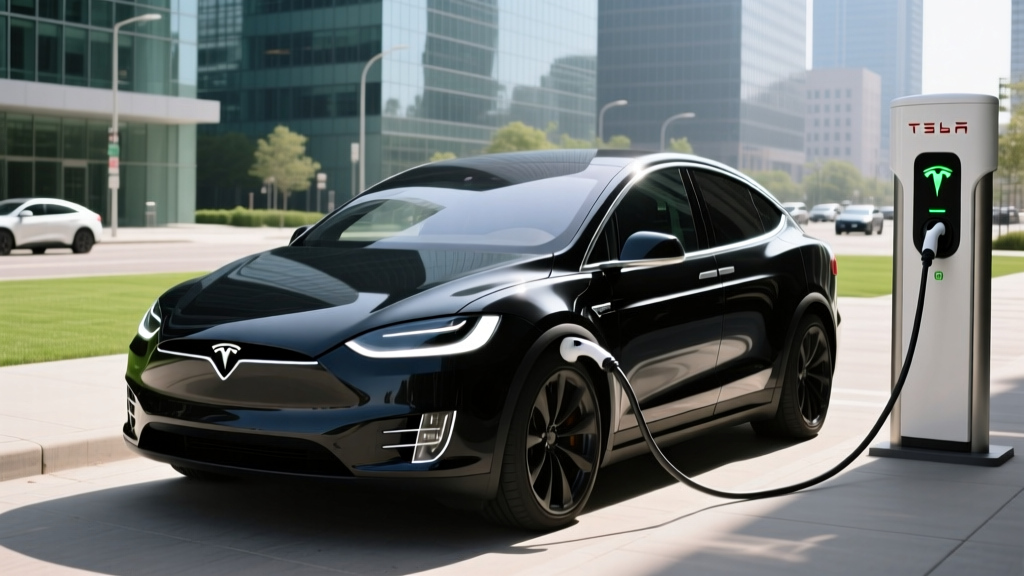
The Model X 100D charges via Tesla's proprietary connector (now being phased in as the North American Charging Standard, or NACS). This gives it native access to the Tesla Supercharger network — still the most reliable DC fast-charging ecosystem in the US as of 2026 — without any adapter.
| Charging Level | Power | Speed / Time |
|---|---|---|
| Level 1 (120V, 12A) | ~1.4 kW | ~3–4 miles per hour |
| Level 2 (240V, 48A) | ~11.5 kW | ~28–30 miles per hour; full charge in ~9 hours |
| DC Fast Charge (V2 Supercharger) | Peak ~145 kW | 10–80% in approximately 40–45 minutes |
| DC Fast Charge (V3 Supercharger) | Limited to ~145 kW (pack-limited) | No meaningful speed gain over V2 for this pack |
The 100D's battery pack is the bottleneck at DC fast chargers. While Tesla's V3 Superchargers can deliver up to 250 kW, the 100 kWh NMC pack in the 100D cannot accept that rate. Peak charge speed tops out around 145 kW, and the charge curve tapers significantly above 60% State of Charge. Expect the 10-to-80% session to take 40–45 minutes — adequate for road-trip meal breaks but noticeably slower than a modern Model X (which peaks at 250 kW and does 10–80% in roughly 25 minutes).
For home charging, the 48-amp onboard charger is a strength. At 11.5 kW on a 240V/60A circuit (Hardwired Wall Connector), you'll recover about 28–30 miles of range per hour. A full overnight charge from 20% to 90% takes roughly 6–7 hours. If your home electrical panel supports a 60A dedicated circuit (many 200A panels do), this is straightforward. Installation typically costs $800–$2,000 including a Tesla Wall Connector, depending on run length and whether a panel upgrade is needed.
CCS adapter note: If you need to use Electrify America, EVgo, or other CCS-based public chargers, Tesla sells a CCS adapter (~$250). However, the Model X 100D's Supercharger-native NACS connector means most owners rarely need it — the Tesla network covers the vast majority of US highway corridors.
Performance and Driving Dynamics
The dual-motor AWD powertrain produces approximately 518 horsepower and delivers a 4.7-second 0-60 mph time. That's genuinely quick for a three-row SUV — quicker than a 2026 BMW X5 xDrive40i or Mercedes GLE 450. The instant torque delivery makes highway merging and city driving feel effortless, and the low center of gravity (battery pack under the floor) keeps body roll surprisingly controlled for a vehicle this tall.
Ride quality is firm but compliant on the standard adaptive air suspension, which also offers adjustable ride height — useful for rough driveways or light off-road situations. The air suspension on 2017–2019 Model X vehicles is a known wear item; replacement of a single air strut runs $800–$1,500 at an independent shop, and some owners report needing replacement between 80,000 and 120,000 miles.
Regenerative braking is strong and enables effective one-pedal driving in most conditions. However, unlike newer Teslas, the 100D era did not offer adjustable regen strength — it's a fixed, aggressive setting that most owners adapt to quickly but can feel abrupt to passengers initially.
Interior, Tech, and the Falcon Wing Reality
The Model X 100D's interior is dominated by the 17-inch center touchscreen (vertically oriented on pre-refresh models), which handles navigation, climate, media, and vehicle settings. The infotainment system remains responsive thanks to periodic Tesla software updates, though the hardware generation is older — you won't get the AMD Ryzen processor found in 2022+ models. Streaming services, theater mode, and gaming are available but not as fluid as current-gen Teslas.
The signature falcon-wing rear doors are the Model X's most polarizing feature. They provide genuinely excellent access to the second and third rows in tight parking spaces (they need less lateral clearance than conventional doors). However, the hydraulic mechanisms and sensors have been a reliability concern across the 100D generation. Common issues include sensor calibration errors, hydraulic strut wear, and seal degradation leading to water ingress. Budget for at least one falcon-wing service visit during ownership.
Cargo space is generous: 21.8 cubic feet behind the third row (enough for several carry-on bags), expanding to 81.5 cubic feet with both rear rows folded. The front trunk (frunk) adds another 6.5 cubic feet — useful for charging cables and groceries.
Third-row legroom is tight at 32.7 inches — suitable for children or short trips but not comfortable for adults on longer drives. Second-row legroom is a much better 38.4 inches, especially in the six-seat configuration with individual captain's chairs.
Tax Credits, Pricing, and Ownership Costs
As a used vehicle in 2026, the Model X 100D is not eligible for the new-vehicle §30D federal tax credit (which applies only to new EV purchases with MSRP, income, and battery-sourcing requirements per IRS guidelines). However, it may qualify for the used clean vehicle credit (up to $4,000 or 30% of sale price, whichever is less) under §25E, subject to these requirements:
| Factor | Detail |
|---|---|
| Typical Used Price | $35,000 – $55,000 |
| Used EV Credit (§25E) Max | $4,000 or 30% of sale price (lesser) |
| Income Cap (Modified AGI) | $75,000 single / $150,000 married filing jointly |
| Dealer Requirement | Must purchase from a licensed dealer (private sales excluded) |
| Vehicle Price Cap | Sale price must be $25,000 or less to qualify |
| Model X 100D Eligibility | Unlikely — most examples sell above the $25,000 cap |
In practice, very few Model X 100D examples will qualify for the used EV credit because the $25,000 sale-price cap eliminates most listings. Higher-mileage or cosmetically challenged examples might dip below that threshold, but buyers should not count on this credit.
For total cost of ownership, budget for higher-than-average insurance premiums (the Model X carries elevated collision and comprehensive rates due to repair costs), potential air suspension and falcon-wing maintenance, and tire replacement (20- or 22-inch tires run $300–$500 each). On the savings side, electricity costs are roughly 50–60% lower per mile than gasoline for a comparably sized ICE SUV, and you'll never pay for oil changes, transmission fluid, or emissions service.
How It Compares: Model X 100D vs. the Alternatives
In the 2026 used-EV market, the Model X 100D competes against several alternatives at similar price points:
- 2022+ Tesla Model X (refreshed, dual motor): 348-mile EPA range, 250 kW charging, modern interior, AMD processor. Significantly more capable but starts around $65,000+ used. Worth the premium if budget allows.
- Rivian R1S (2022–2023, Dual-Motor): 316-mile EPA range, 200 kW DC charging, more rugged/off-road capable, better third-row space. Used prices around $50,000–$65,000. A strong alternative if you need genuine off-road capability.
- Hyundai Ioniq 5 (2024–2025, Long Range AWD): 290-mile EPA range, 240 kW charging (10–80% in 18 min), far more efficient, but only two rows and less cargo space. Used prices around $35,000–$42,000. Better for smaller households who prioritize charging speed.
- Kia EV9 (2024–2025, GT-Line AWD): 270-mile EPA range, three rows, 210 kW charging. Used prices around $45,000–$55,000. The strongest direct competitor for three-row family EV buyers.
The Model X 100D's advantage is the Supercharger network, the large battery (which provides a comfort buffer even with degradation), and the sheer cargo volume. Its disadvantages are age, efficiency, and the maintenance risk of complex mechanical systems.
- Native Tesla Supercharger access (NACS)
- Massive 100 kWh battery provides range buffer even with degradation
- Strong AWD performance (4.7s 0-60)
- Excellent cargo volume (81.5 cu ft max)
- Air suspension with adjustable ride height
- Continued OTA software updates from Tesla
- High energy consumption (36 kWh/100 mi)
- Slow DC fast charging by modern standards (~145 kW peak)
- Falcon-wing door reliability concerns
- Air suspension replacement costs at age/mileage
- Third row is cramped for adults
- Older infotainment hardware
- Unlikely to qualify for used EV tax credit
Autopilot and Driver Assistance: Level 2, Not Self-Driving
Most Model X 100D examples came equipped with Tesla's Enhanced Autopilot or basic Autopilot, depending on the original buyer's configuration. Basic Autopilot includes Traffic-Aware Cruise Control and Autosteer (lane centering). Enhanced Autopilot adds Navigate on Autopilot (highway on/off-ramp suggestions), Auto Lane Change, Autopark, and Summon.
Full Self-Driving (FSD) was available as an add-on but was far less capable in the 2017–2019 era than the current FSD (Supervised) system. Even if a used 100D has FSD purchased, the hardware (HW2.5 or HW3) may not support the latest neural-network-based FSD features without a computer upgrade (Tesla has offered free HW3 upgrades for FSD-equipped vehicles — check with Tesla service to confirm).
Compared to modern competitors like GM's Super Cruise or Ford's BlueCruise, the 100D-era Autopilot is less refined in lane-centering smoothness and lacks hands-free operation on mapped highways. It remains functional and useful for highway commuting but requires active driver supervision.
Who Should Buy the Tesla Model X 100D?
Buy the Model X 100D if:
- You need a three-row electric SUV on a budget under $50,000
- You prioritize Tesla Supercharger network access for road trips
- You value strong AWD performance and air suspension
- You primarily charge at home and can install a Level 2 charger
- You accept higher maintenance risk for the falcon-wing doors and air suspension
Look elsewhere if:
- You need fast DC charging for frequent long-distance travel (consider a refreshed Model X or Ioniq 5)
- You want the latest infotainment hardware and driver-assist features
- You need a comfortable adult-sized third row (consider the Kia EV9 or Rivian R1S)
- You want to qualify for a federal EV tax credit (consider a new EV under §30D rules)
Frequently Asked Questions
What is the real-world range of a used Tesla Model X 100D in 2026?
Expect 180–215 miles depending on battery State of Health, driving conditions, and temperature. A well-maintained example with ~80,000 miles typically delivers 200–210 miles in moderate weather with mixed driving. Highway-only driving at 75+ mph reduces this to ~190 miles, and cold weather (below 32°F) can push it down to 150–175 miles without preconditioning.
How fast does the Model X 100D charge at home and on the road?
At home on a 240V/48A Level 2 charger, it adds about 28–30 miles of range per hour, with a full charge taking roughly 9 hours. On DC fast chargers (including Tesla V2 and V3 Superchargers), the pack peaks at approximately 145 kW, and a 10–80% session takes about 40–45 minutes. The charge curve tapers noticeably above 60% SoC.
Does the Tesla Model X 100D qualify for any federal tax credit?
It does not qualify for the new-vehicle §30D credit since it's no longer sold new. The used clean vehicle credit (§25E, up to $4,000) requires a sale price of $25,000 or less, buyer income below $75,000/$150,000 (single/joint), and purchase through a licensed dealer. Most Model X 100D examples sell above the $25,000 price cap, making qualification unlikely. Always verify current rules at IRS.gov and consult a tax professional.
Is the Model X 100D still worth buying compared to newer EVs?
It depends on your priorities. For under $50,000, you get a large-battery, three-row AWD SUV with Supercharger access — a combination that's hard to match at this price. However, you're accepting older technology, slower charging, higher energy consumption, and elevated maintenance risk. If you can stretch to $55,000–$65,000, a used Rivian R1S or early refreshed Model X offers meaningfully better range, charging speed, and reliability.
What are the biggest maintenance concerns for a used Model X 100D?
The top three are: (1) falcon-wing door mechanisms — hydraulic struts, sensors, and seals may need service ($1,000–$3,000 depending on the issue); (2) air suspension — strut replacement runs $800–$1,500 per corner, and most examples need at least one replacement by 100,000 miles; (3) battery degradation — while the 100 kWh NMC pack is generally durable, high-mileage examples should be checked for State of Health via the Tesla app or a pre-purchase inspection. The original battery warranty (8 years/150,000 miles) has expired or is nearly expired on most 2017–2019 examples.
Can I use non-Tesla chargers with the Model X 100D?
Yes, with Tesla's CCS adapter (sold separately, ~$250). This allows you to use Electrify America, EVgo, and other CCS-equipped networks. However, the Model X 100D's NACS connector gives you native access to the entire Tesla Supercharger network, which covers most major US travel corridors. Most owners find the CCS adapter useful as a backup rather than a primary charging solution.