Quick Verdict: A Legacy Flagship With Caveats for 2026 Buyers
The Tesla Model X 100D occupies a unique space in the used EV market in 2026. Originally sold between 2017 and 2019, this dual-motor, all-wheel-drive SUV was Tesla's longest-range family hauler before the refreshed Model X Long Range arrived. With its 100 kWh battery pack, falcon-wing rear doors, and access to the Supercharger network, the 100D still turns heads — but buyers must weigh its aging battery chemistry against steep depreciation discounts.
If you're shopping for a used three-row electric SUV under $35,000, the Model X 100D deserves a serious look. But understanding its real-world range limitations, charging behavior, and long-term battery health is essential before signing any paperwork.
Range and Efficiency: EPA Numbers vs. Real-World Reality
The EPA rated the 2017–2019 Tesla Model X 100D at 238 miles of combined range on its original 100 kWh (approximately 98 kWh usable) NMC lithium-ion battery pack. Efficiency clocks in at 99 MPGe combined, or roughly 34 kWh per 100 miles, according to fueleconomy.gov.
EPA Sticker: 238 miles (when new)
Expected today with 10–15% degradation: ~200–215 miles at full charge
Highway driving (70+ mph): ~180–195 miles
Cold weather (below 32°F): ~155–175 miles (25–35% reduction typical for NMC packs without consistent preconditioning)
The Model X 100D lacks the heat pump introduced in later Tesla models, relying on resistive cabin heating — a significant range penalty in winter.
This is the single most important factor for prospective used buyers. A 100D that started life at 238 EPA miles will likely deliver 200–215 usable miles today, assuming moderate degradation. Units in hot climates (Arizona, Texas, Southern California) or those frequently charged to 100% on DC fast chargers may show greater capacity loss. Always request a battery health screenshot from the vehicle's service menu or use third-party tools like TeslaFi or Tessie to check State of Health (SoH) before purchase.
Battery Chemistry, Degradation, and Warranty
The Model X 100D uses an NMC (nickel manganese cobalt) lithium-ion battery pack manufactured by Panasonic at the Gigafactory. NMC chemistry offers high energy density — critical for fitting 100 kWh into a vehicle platform — but is more susceptible to calendar and cycle degradation than the LFP (lithium iron phosphate) chemistry Tesla later adopted in standard-range vehicles.
| Attribute | NMC (Model X 100D) | LFP (Newer Tesla SR Models) |
|---|---|---|
| Energy Density | High (~250 Wh/kg cell-level) | Moderate (~170 Wh/kg) |
| Typical Degradation at 7 yrs | 10–18% | 5–10% |
| Recommended Daily SoC | 80% (to preserve longevity) | 100% (LFP tolerates full charge) |
| Cold-Weather Performance | Moderate range loss | Greater range loss, slower cold charging |
| Cycle Life (to 80% SoH) | ~1,000–1,500 cycles | ~2,500–3,500 cycles |
Tesla's original battery warranty for the Model X 100D was 8 years or 150,000 miles (whichever comes first), with a guaranteed minimum capacity retention of 70%. For a 2017 model, that warranty window has now closed. A 2018 or 2019 unit may still have limited warranty coverage through early 2027, but buyers should plan for the possibility of out-of-warranty battery replacement, which Tesla currently prices between $18,000 and $25,000 for the 100 kWh pack depending on refurbishment availability.
Charging Speeds: DC Fast Charging and Home Level 2
The Model X 100D supports DC fast charging at a peak rate of approximately 145 kW via its CCS adapter or native Supercharger connector (depending on model year and retrofit status). While 145 kW is modest compared to modern 250+ kW EVs, Tesla's Supercharger network reliability and route integration partially offset the slower peak rate.
| Charging Level | Power (kW) | Speed / Notes |
|---|---|---|
| Level 1 (120V household) | ~1.4 kW | ~3–4 miles/hour — emergency only |
| Level 2 (240V, 48A home charger) | 11.5 kW | ~30–34 miles/hour; full charge in ~9 hours |
| DC Fast Charge (Supercharger V2) | Peak 145 kW | 10–80% in approximately 40–45 minutes |
| DC Fast Charge (Supercharger V3) | ~150 kW (adapter-limited) | 10–80% in ~38–42 min; NACS native or CCS adapter required |
A critical ownership note: the Model X 100D's charge curve tapers significantly above 80% State of Charge. Charging from 80% to 100% on DC can add another 25–30 minutes. For road trips, plan stops at 10–80% to minimize time at the charger. At home on a 48-amp Level 2 Wall Connector, overnight charging from 20% to 80% takes roughly 5–6 hours — ideal for daily use.
Performance, Drivetrain, and Driving Dynamics
The 100D designation means dual motors, one front and one rear, providing all-wheel drive with a combined output of approximately 417 horsepower and 487 lb-ft of torque. The 0–60 mph sprint takes 4.9 seconds — quick for a 5,400-pound three-row SUV, though far from the Plaid variant's 2.5-second demolition.
| Spec | Value |
|---|---|
| EPA Range (original) | 238 miles |
| Battery (usable) | ~98 kWh NMC |
| Drivetrain | Dual-motor AWD |
| Horsepower | 417 hp |
| Torque | 487 lb-ft |
| 0–60 mph | 4.9 seconds |
| Top Speed | 155 mph |
| Towing Capacity | 5,000 lbs |
| Efficiency | 99 MPGe / 34 kWh/100 mi |
On the road, the Model X 100D delivers composed highway manners and confident acceleration for merging and passing. Air suspension (standard) adjusts ride height automatically and provides a comfortable ride, though replacement air struts cost $1,500–$2,500 per corner — a known expense for high-mileage examples. The electro-mechanical steering is precise but numb, typical of the era.
Interior Space, Cargo, and Technology
The Model X offers three rows of seating in either a 5-, 6-, or 7-passenger configuration. Cargo volume is generous for the class:
- Behind third row: 21.8 cu ft
- Behind second row (third row folded): 76.5 cu ft
- Maximum (all rear seats folded): 81.3 cu ft
- Front trunk (frunk): 6.6 cu ft
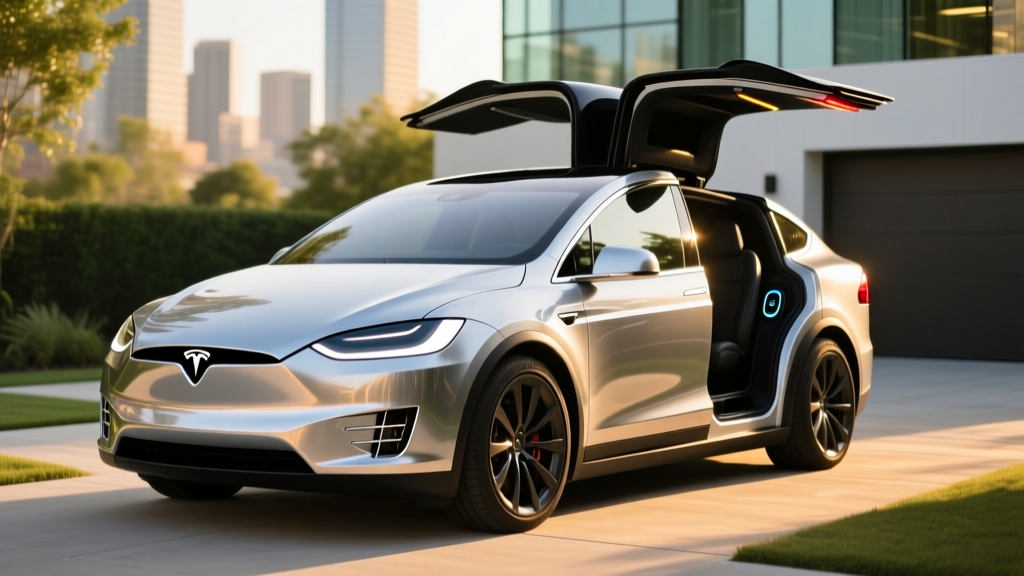
Second-row legroom measures 38.4 inches; third-row legroom is a tight 29.8 inches — suitable for children only on longer trips. The falcon-wing rear doors open vertically with sensor-based obstacle detection, making car-seat loading easier in tight garages, though the complex hinge and sensor mechanisms are a known maintenance item.
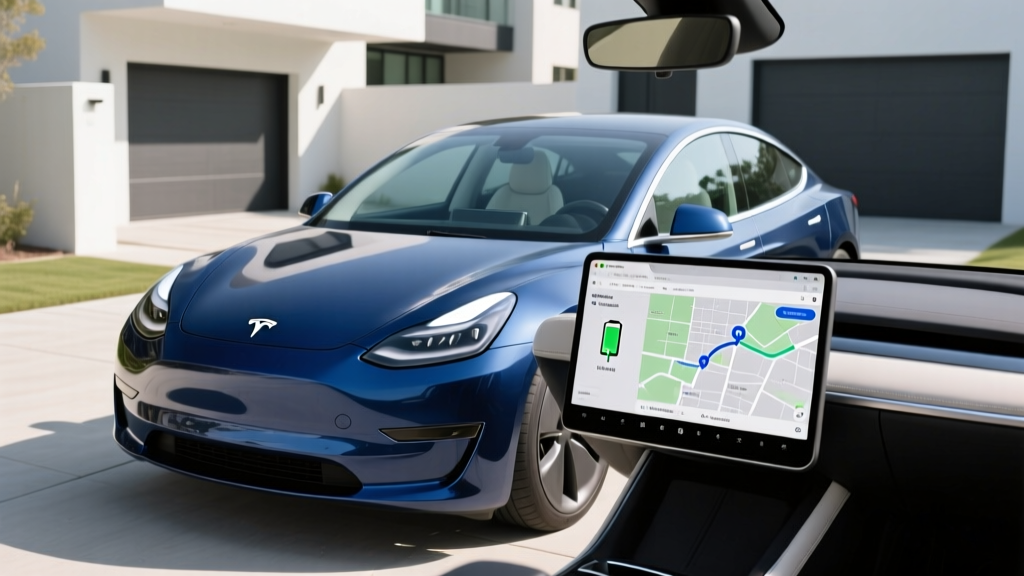
The 17-inch portrait touchscreen remains the central hub for all vehicle functions, running Tesla's continuously updated software. Standard tech on the 100D includes:
- Over-the-air software updates (still supported in 2026)
- Enhanced Autopilot (SAE Level 2 driver-assist with adaptive cruise and lane centering)
- HEPA cabin air filtration with Bioweapon Defense Mode
- Navigation with real-time Supercharger routing
- Streaming media, gaming, and Tesla Theater
Tesla's Autopilot and optional Full Self-Driving (FSD Supervised) on the Model X 100D are SAE Level 2 driver-assistance systems. The driver must remain fully engaged, hands on the wheel, eyes on the road at all times. These systems do not make the vehicle autonomous. Only Level 4 services like Waymo operate without driver supervision in geofenced areas.
Used Pricing, Tax Credits, and Value in 2026
The Model X 100D originally carried an MSRP of approximately $96,000–$110,000 depending on options (Enhanced Autopilot, premium interior, larger wheels). In the 2026 used market, expect pricing in the following ranges:
| Condition / Mileage | Typical Price Range | Federal Used-EV Credit (§25E) |
|---|---|---|
| Excellent, under 50k miles | $32,000–$38,000 | Up to $4,000 (30% of sale price, max $4,000) |
| Good, 50k–80k miles | $25,000–$32,000 | Up to $4,000 |
| Fair, 80k–120k miles | $18,000–$25,000 | Up to $4,000 |
The §25E Used Clean Vehicle Credit (not the §30D new-vehicle credit) applies to the Model X 100D when purchased from a licensed dealer. Key requirements per IRS guidelines:
- Sale price must be $25,000 or less to qualify for the full $4,000 credit
- Buyer income caps: $75,000 single / $112,500 head of household / $150,000 joint
- Vehicle must be at least 2 model years old (easily met)
- Must purchase from a licensed dealer (private-party sales excluded)
- Credit is non-refundable — you must have tax liability to benefit
- Can only claim a used-EV credit once every 3 years
This means the sweet spot for maximum value is finding a Model X 100D priced at or just under $25,000 from a dealer, netting an effective price as low as $21,000 after the credit. Units above $25,000 receive no federal credit, though state incentives may apply — check your local DMV and energy office for current programs.
How It Stacks Up Against Key Competitors
At similar used price points ($20,000–$35,000), the Model X 100D competes with several three-row and large SUV alternatives:
| Attribute | Tesla Model X 100D (2017–2019) | Jaguar I-PACE (2019–2020) | Audi e-tron (2019–2020) |
|---|---|---|---|
| EPA Range (new) | 238 mi | 234 mi | 204 mi |
| Battery | 100 kWh NMC | 90 kWh NMC | 95 kWh NMC |
| Third Row | Yes (optional) | No | No |
| DC Fast Charge (peak) | 145 kW | 105 kW | 150 kW |
| 0–60 mph | 4.9 sec | 4.5 sec | 5.5 sec |
| Charging Network | Tesla Supercharger (NACS) | CCS (EA, etc.) | CCS (EA, etc.) |
| OTA Updates | Yes (ongoing) | Limited | Limited |
- You need three-row seating in an electric SUV
- Supercharger network access is a priority for road trips
- You value continuous OTA software improvements
- You can find one under $25,000 to capture the §25E used-EV credit
- You want newer battery chemistry with less degradation risk
- Faster DC charging (200+ kW) matters for your driving patterns
- You prefer a traditional dealer service network over Tesla's mobile-ranger model
- Third-row seating is unnecessary — the I-PACE and e-tron are more refined 5-seaters
Pros, Cons, and Who This EV Suits Best
- Spacious three-row cabin with up to 81.3 cu ft cargo volume
- Tesla Supercharger network — still the most reliable DC charging ecosystem
- Over-the-air updates keep software current in 2026
- Standard air suspension and dual-motor AWD
- Available at steep depreciation — potential $21k effective price with credit
- 5,000-lb towing capacity for light trailer duty
- NMC battery degradation reduces real-world range to ~180–215 mi
- No heat pump — significant winter range penalty
- Falcon-wing doors are expensive to repair ($2,000+ per actuator)
- Peak 145 kW DC charging is slow by 2026 standards
- Out-of-warranty battery replacement costs $18,000–$25,000
- Insurance premiums run 20–40% higher than comparable gas SUVs
Best suited for: Families needing three-row electric transport on a budget, Tesla enthusiasts who want Supercharger access, and buyers with reliable home Level 2 charging who can accept a ~200-mile daily range. The 100D is less ideal for high-mileage commuters exceeding 150 miles daily round-trip, cold-climate buyers without garage parking, or anyone unwilling to absorb potential out-of-warranty repair costs.
Frequently Asked Questions
What is the real-world range of the Tesla Model X 100D in 2026?
Expect 200–215 miles on a full charge for a well-maintained example with 10–15% battery degradation. Highway driving at 70+ mph drops this to roughly 180–195 miles. In freezing weather, plan for 155–175 miles due to the resistive cabin heater and lack of a heat pump.
How fast does the Model X 100D charge at home and on the road?
On a 48-amp Level 2 home charger, the 100D adds about 30–34 miles per hour, fully replenishing from 20% to 80% in roughly 5–6 hours. On a Tesla V3 Supercharger, DC fast charging peaks around 145–150 kW, reaching 10–80% in approximately 38–45 minutes.
Does the Model X 100D qualify for any federal tax credit?
It does not qualify for the §30D new-vehicle credit (it's used). However, it may qualify for the §25E Used Clean Vehicle Credit of up to $4,000 if purchased from a licensed dealer for $25,000 or less, subject to buyer income limits. Consult a tax professional and review current IRS §25E guidelines.
How much does a used Model X 100D cost in 2026?
Dealer-listed examples range from approximately $18,000 (high-mileage, fair condition) to $38,000 (low-mileage, excellent condition). The credit-eligible sweet spot is $25,000 or below, bringing the effective price to around $21,000 after the federal used-EV credit.
Is the Model X 100D worth buying versus newer electric SUVs?
It depends on your priorities. For three-row seating and Supercharger access under $30,000, few alternatives exist. But if you need only two rows, a newer Hyundai Ioniq 5, Kia EV6, or Tesla Model Y offers faster charging, newer batteries, and better range at a similar price point — though none offer a third row.
What should I check before buying a used Model X 100D?
Request a battery health report (State of Health percentage from the service menu), verify air suspension functionality, inspect falcon-wing door actuators and sensors, check for MCU1 vs. MCU2 infotainment (MCU2 is strongly preferred for performance and feature support), and review service records for coolant flushes and drive-unit history.