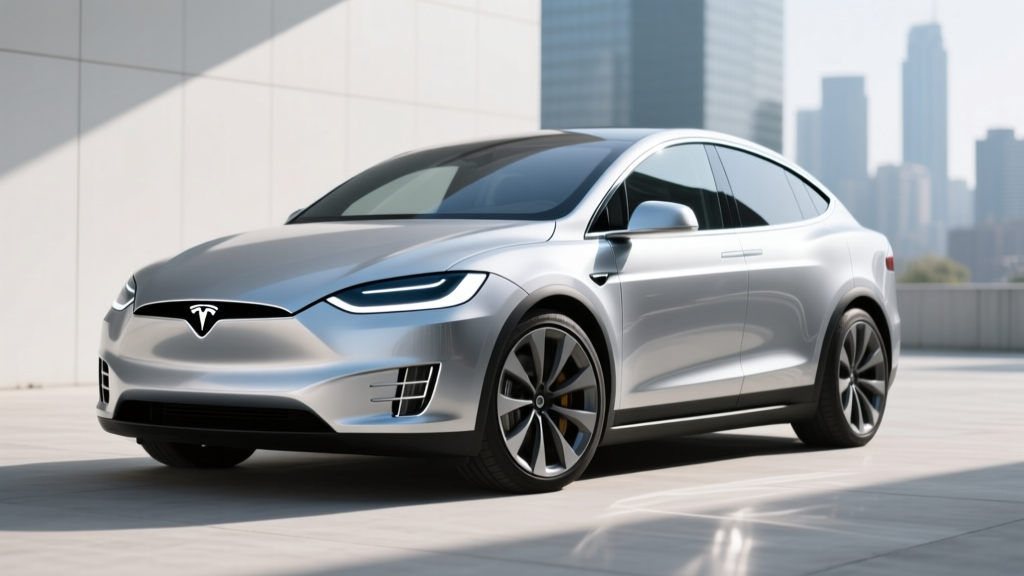
The Tesla Model X has always occupied a strange niche: a three-row family SUV that can outrun most sports cars off the line. But with the EV market maturing rapidly, buyers are asking more practical questions alongside the performance ones. If you've been searching how fast is the Tesla Model X, the short answer is blistering — 2.5 seconds to 60 mph in Plaid trim. The longer answer involves charging speed, real-world range, ownership economics, and whether this falcon-wing SUV still makes sense against newer three-row rivals.
Below, we break down every spec that matters to an actual buyer: acceleration, efficiency, charging curves, interior space, warranty, and the federal tax credit picture as of 2025. All figures reflect the current production Model X lineup.
How Fast Is the Tesla Model X? Performance by Trim
Tesla sells the Model X in two configurations: the dual-motor Long Range and the tri-motor Plaid. Both are all-wheel drive, and both are absurdly quick for a vehicle with a 5,185-pound curb weight. Here's how they stack up on paper and in real-world driving.
| Spec | Model X Long Range | Model X Plaid |
|---|---|---|
| Drivetrain | Dual-motor AWD | Tri-motor AWD |
| Horsepower | 670 hp | 1,020 hp |
| 0-60 mph | 3.8 sec | 2.5 sec |
| Top Speed | 149 mph | 163 mph |
| Quarter Mile | ~11.9 sec | ~9.9 sec |
The Long Range's 3.8-second 0-60 is already faster than a Porsche Cayenne Turbo GT. The Plaid's 2.5 seconds puts it in hypercar territory — roughly matching a Bugatti Veyron — while seating up to seven passengers and offering over 300 miles of range. Tesla's instant electric torque delivery means these numbers are repeatable without launch-control warmup routines. On public roads, the Plaid's acceleration is genuinely difficult to use legally; even a partial throttle application pins you into the seat.
EPA Range, Efficiency, and Real-World Expectations
Speed means little if you can't go the distance. The Model X Long Range carries an EPA-estimated 335 miles of range, while the Plaid drops to 326 miles due to its more aggressive powertrain calibration and added weight from the third motor.
EPA Estimate: 335 mi (Long Range) / 326 mi (Plaid)
Highway (70-80 mph): Expect ~270-290 mi due to aerodynamic drag at sustained speed. The Model X's 0.24 Cd is good for an SUV, but tall profiles always lose efficiency on the interstate.
Cold Weather (below 32°F): Range drops 20-30%, meaning a winter road trip could yield as little as 220-240 mi before needing a charge. Tesla's heat pump mitigates cabin energy draw but can't fully offset battery chemistry slowdown.
City/Commuting: Regenerative braking recovers energy, often matching or slightly exceeding the EPA figure in stop-and-go traffic.
Efficiency ratings from fueleconomy.gov put the Model X Long Range at 100 MPGe combined, translating to roughly 34 kWh per 100 miles. The Plaid dips to 98 MPGe combined. For a vehicle this large and powerful, those figures are respectable — but they're meaningfully thirstier than a Model Y Long Range (122 MPGe), which matters when you're paying per kWh at public chargers.
Battery Capacity, Chemistry, and Longevity
The current Model X uses a ~100 kWh battery pack (approximately 95 kWh usable after buffer). Tesla does not publish exact chemistry details for every model year, but the Model X and Model S have historically used NMC (nickel manganese cobalt) cells in a structural pack configuration. NMC chemistry offers higher energy density than LFP (lithium iron phosphate), which is necessary to hit 300+ miles in a heavy SUV. The trade-off is that NMC degrades slightly faster than LFP over time and prefers not to sit at 100% state of charge for extended periods.
For daily driving, Tesla recommends setting the charge limit to 80-90% for NMC packs, reserving 100% for road trips. Following this guidance, owners typically see 5-8% degradation over the first 50,000 miles, with the curve flattening afterward. Many high-mileage Model X owners report 85-90% state of health at 100,000 miles.
Charging Speed: DC Fast Charge and Home Level 2
Charging speed is where the Model X benefits from Tesla's Supercharger network — still the most reliable DC fast-charging ecosystem in the U.S. Here's what to expect at each charging level:
| Charging Level | Power / Rate | Speed (Miles Added) | Notes |
|---|---|---|---|
| Level 1 (120V household) | ~1.4 kW | ~3-4 mi/hr | Emergency/trickle only; adds ~40 mi overnight |
| Level 2 (240V home Wall Connector) | 11.5 kW (48A) | ~34 mi/hr | Full charge in ~9 hours; ideal for daily use |
| DC Fast Charge (Supercharger V3) | Peak 250 kW | ~175 mi in 15 min | 10-80% in ~30 min; tapers significantly above 80% |
| DC Fast Charge (CCS adapter, third-party) | Up to 150-170 kW typical | ~120-140 mi in 15 min | Varies by network; Electrify America, EVgo |
A critical nuance: the 250 kW peak on V3 Superchargers is not sustained. The Model X hits peak rate between roughly 10-30% state of charge, then ramps down in steps. From 10-80%, plan on about 30 minutes at a V3 stall. The charge curve is less aggressive than newer 800V architectures (Hyundai Ioniq 5, Porsche Taycan), which can sustain higher rates deeper into the charge. If you frequently road-trip, this is a meaningful difference — the Model X adds range quickly but not as quickly as the latest competition.
At home, Tesla's Wall Connector at 48 amps delivers 11.5 kW, replenishing a nearly empty pack in roughly 9 hours. Most owners who plug in nightly never need more than this. Home installation typically runs $500-$2,000 depending on panel proximity and whether a 60A circuit is available; older homes may need a $1,500-$3,000 panel upgrade.
Interior Space, Cargo, and Tech
The Model X offers seating for five, six, or seven depending on configuration. The six-seat layout with second-row captain's chairs is the most popular and provides a walk-through to the third row. Cargo volume is generous:
- Behind third row: 42.5 cu ft (with five-seat config; less with third row deployed)
- Behind second row (third row folded): 77.5 cu ft
- Behind front seats (all rows folded): 85.1 cu ft
- Front trunk (frunk): 6.6 cu ft
- Second-row legroom: 40.9 inches
- Third-row legroom: 32.7 inches (tight for adults on long trips)
The signature falcon-wing rear doors are both a feature and a liability. They open vertically, making car-seat access and curb-side loading easy in tight parking spots. But they're slower to open and close than conventional doors, can struggle in heavy rain (water drips into the cabin), and are mechanically complex — a known source of warranty claims on earlier model years.
On the tech front, the Model X includes a 17-inch center touchscreen with a motorized tilt feature, a rear-seat entertainment display, a 22-speaker audio system, and Tesla's full infotainment suite (Netflix, YouTube, arcade games while parked). Autopilot is standard and includes adaptive cruise control and lane-keeping. Full Self-Driving (Supervised) is an $8,000 add-on — but it remains an SAE Level 2 driver-assist system requiring active driver supervision at all times. It is not autonomous driving.
Pricing, Trims, and Federal Tax Credit Eligibility
The Model X is firmly a luxury vehicle, and its pricing reflects that. Here's the current MSRP breakdown:
| Trim | Base MSRP | Common Options | As-Tested Range |
|---|---|---|---|
| Model X Long Range | $79,990 | FSD, 22" wheels, six-seat | $88,000 - $95,000 |
| Model X Plaid | $94,990 | FSD, 22" wheels, six-seat | $103,000 - $110,000 |
As of 2025, the IRS §30D new clean vehicle credit has strict requirements the Model X must meet:
- MSRP Cap: SUVs must be at or below $80,000. The Long Range at $79,990 squeaks under; the Plaid at $94,990 does not qualify.
- Buyer Income Cap: Modified AGI must not exceed $300,000 (joint), $225,000 (head of household), or $150,000 (single).
- Battery Sourcing: Critical minerals and battery components must meet escalating domestic-content thresholds. Tesla's U.S.-built packs generally meet current requirements, but verify at fueleconomy.gov before purchase, as sourcing rules shift.
- Point-of-Sale Transfer: Eligible buyers can apply the up-to-$7,500 credit as a down-payment reduction at the dealer rather than waiting for a tax refund.
Bottom line: A base Model X Long Range may qualify for up to $7,500, bringing the effective price to ~$72,490. The Plaid is ineligible due to MSRP. Always confirm with a tax professional — rules change, and individual circumstances vary.
Warranty and Long-Term Ownership
Tesla covers the Model X with a competitive warranty:
- Basic Vehicle: 4 years / 50,000 miles
- Battery & Drive Units: 8 years / 150,000 miles, with minimum 70% capacity retention guaranteed
The 150,000-mile battery warranty on the Model X (and Model S) is more generous than the 120,000-mile coverage on the Model 3 and Model Y, reflecting Tesla's positioning of these as premium products. If the battery drops below 70% state of health within the warranty period, Tesla will repair or replace it. Based on fleet data, most Model X packs retain 85-92% capacity at 100,000 miles when charged responsibly (avoiding prolonged 100% or near-0% states).
Insurance costs are a real ownership factor. The Model X carries higher premiums than most luxury SUVs due to repair costs (aluminum body, falcon-wing mechanisms, sensor-dense bumper). Expect $2,500-$4,000 annually depending on your profile. Get quotes before ordering.
Tesla Model X vs. Key Competitors
The three-row electric SUV segment has grown. Here's how the Model X compares to its most relevant rivals:
| Spec | Tesla Model X LR | Rivian R1S (Dual Max) | Kia EV9 (GT-Line AWD) | BMW iX xDrive50 |
|---|---|---|---|---|
| 0-60 mph | 3.8 sec | 4.5 sec | 5.0 sec | 4.4 sec |
| EPA Range | 335 mi | 352 mi | 270 mi | 324 mi |
| Peak DC Charge | 250 kW | 220 kW | 236 kW | 150 kW |
| Third Row | Yes (tight) | Yes (usable) | Yes (spacious) | No (2-row only) |
| Base MSRP | $79,990 | $79,900 | $60,590 | $87,250 |
| Federal Credit | Up to $7,500 | Up to $7,500 | Up to $7,500 | No (over MSRP cap) |
The Model X wins on raw speed and Supercharger access. The Rivian R1S offers more rugged capability, better third-row space, and a more adventurous brand identity. The Kia EV9 is dramatically cheaper, roomier inside, and qualifies for the tax credit more easily — but it's not a performance vehicle. The BMW iX is beautifully built but has no third row and limited fast-charge speed.
- Class-leading 0-60 (especially Plaid at 2.5 sec)
- Access to Tesla Supercharger network (most reliable in U.S.)
- 335-mile EPA range is excellent for a performance SUV
- Falcon-wing doors ease car-seat and curb-side loading
- Over-the-air updates continuously add features
- 8-yr/150,000-mi battery warranty
- Plaid trim exceeds $80K MSRP cap — no federal tax credit
- Third row is cramped for adults (32.7" legroom)
- Falcon-wing doors are slow and mechanically complex
- Charging curve tapers earlier than 800V rivals
- High insurance premiums
- Panel gaps and interior fit/finish lag German competitors
Who Should Buy the Tesla Model X?
The Model X is best suited for buyers who need three rows occasionally, prioritize performance and Supercharger convenience, and can charge at home most nights. It's a compelling family hauler for tech-forward households who want to take road trips without range planning headaches. The Plaid variant is for enthusiasts who find the Long Range's 3.8-second sprint insufficient — a small but enthusiastic group.
It's a weaker choice if you regularly carry adults in the third row (look at the Rivian R1S or Kia EV9), if you want the newest 800V charging architecture, or if your budget is under $70,000 after incentives.
Frequently Asked Questions
What is the real-world range of the Tesla Model X?
The EPA rates the Long Range at 335 miles and the Plaid at 326 miles. In real-world highway driving at 70-80 mph, expect 270-290 miles. In cold weather below freezing, that can drop to 220-240 miles. City driving with regenerative braking often matches or slightly exceeds the EPA figure.
How fast does the Tesla Model X charge?
On a Tesla V3 Supercharger, the Model X peaks at 250 kW and charges from 10-80% in about 30 minutes. At home on a Level 2 Wall Connector (11.5 kW), it gains about 34 miles per hour, fully recharging in roughly 9 hours. On third-party CCS networks with an adapter, expect 150-170 kW peak.
How much does the Model X cost after the federal tax credit?
The base Long Range at $79,990 may qualify for up to $7,500 under IRS §30D rules (subject to buyer income caps and battery-sourcing requirements), bringing the effective price to approximately $72,490. The Plaid at $94,990 exceeds the $80,000 SUV MSRP cap and does not qualify for the federal credit.
Is the Tesla Model X worth it vs. the Rivian R1S or Kia EV9?
The Model X wins on acceleration, Supercharger network access, and tech features. The Rivian R1S offers better third-row space, off-road capability, and a similar price point. The Kia EV9 is far more affordable ($60,590 base), roomier, and qualifies for the tax credit more easily — but it's not a performance vehicle. Your priority — speed, space, or value — determines the winner.
Does the Tesla Model X qualify for the federal EV tax credit?
The Long Range (base MSRP $79,990) is under the $80,000 SUV cap and may qualify for up to $7,500, depending on buyer income and battery-sourcing compliance. The Plaid ($94,990) does not qualify due to MSRP. Always verify current eligibility at fueleconomy.gov and consult a tax professional before purchasing.
How fast is the Tesla Model X compared to other SUVs?
The Model X Plaid's 2.5-second 0-60 mph is the fastest of any production SUV, period. The Long Range's 3.8 seconds beats nearly every performance SUV including the Porsche Cayenne Turbo GT and Lamborghini Urus. Among electric SUVs, only the Lotus Eletre R approaches similar figures.