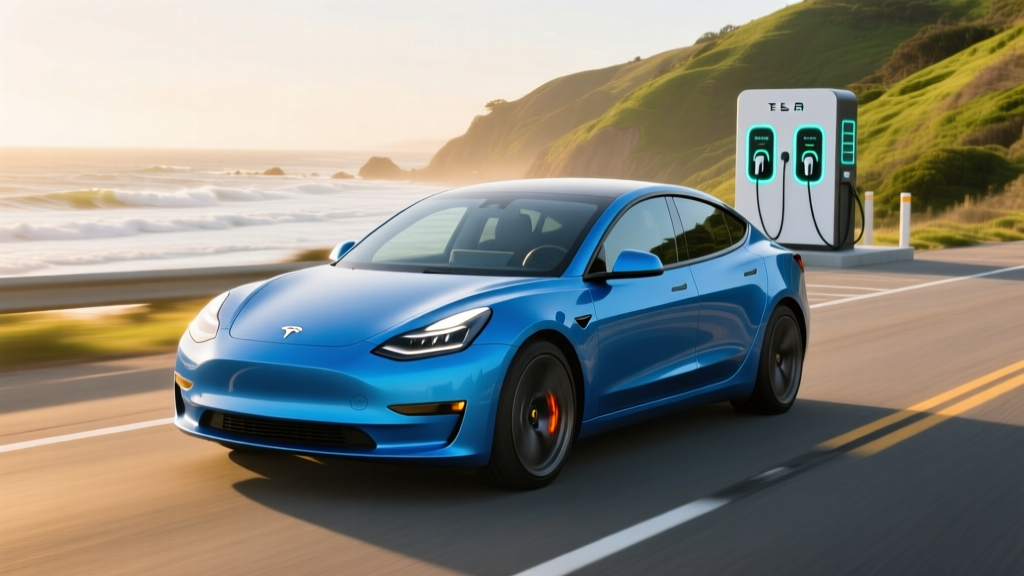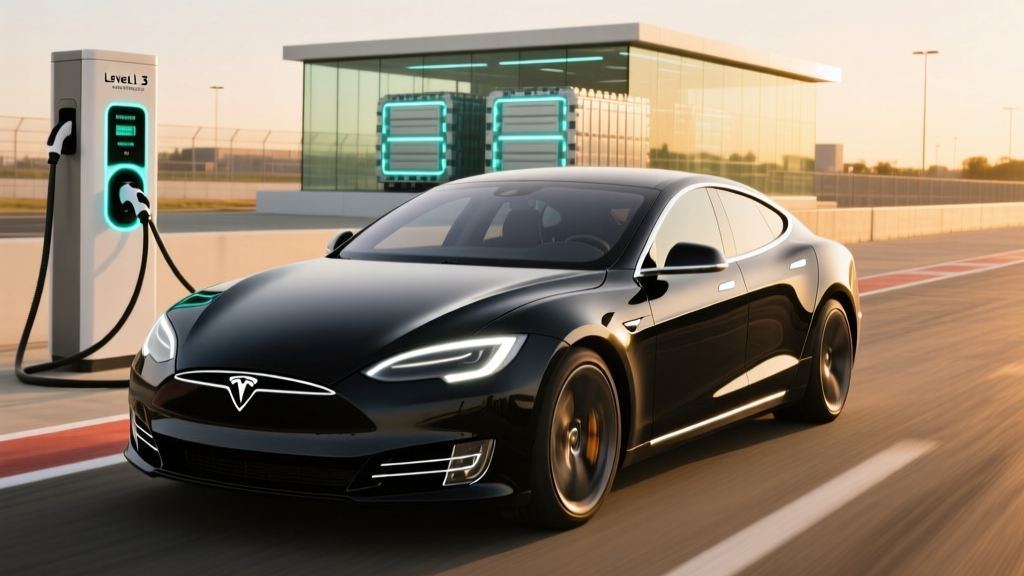
The Tesla Model S has been the benchmark luxury electric sedan for over a decade, and the 2026 model year continues to set the pace for straight-line performance. If you've searched for Tesla Model S zero to 60 times, you already know the headlines: the Long Range variant hits 60 mph in 3.1 seconds, while the tri-motor Plaid shatters physics with a 1.99-second sprint. But acceleration is only one chapter of this car's story. This review covers everything a prospective buyer actually needs — real-world range, DC fast-charging curves, home charging economics, federal tax credit eligibility, and how the Model S stacks up against rivals like the Lucid Air and Porsche Taycan in 2026.
Performance: Tesla Model S Zero to 60 and Powertrain Specs
The 2026 Model S is offered in two trims, both featuring dual-motor or tri-motor all-wheel-drive configurations. Tesla's permanent-magnet synchronous and induction motor pairing delivers instant torque with no turbo lag or shift interruption — the core reason these 0-60 times feel even more violent than the numbers suggest.
| Spec | Model S Long Range | Model S Plaid |
|---|---|---|
| 0-60 mph | 3.1 seconds | 1.99 seconds |
| Top Speed | 155 mph | 200 mph |
| Horsepower | 670 hp | 1,020 hp |
| Drivetrain | Dual-Motor AWD | Tri-Motor AWD |
| Battery Capacity | ~100 kWh (usable, NMC) | ~100 kWh (usable, NMC) |
| EPA Range | 402 miles | 359 miles |
| MPGe (combined) | 120 MPGe | 116 MPGe |
| Energy Consumption | 28 kWh/100 mi | 29 kWh/100 mi |
The Plaid's 1.99-second 0-60 time requires specific conditions: a prepped surface, drag-strip mode enabled (which conditions the battery and preheats the motors), and a full state of charge above 95%. In everyday driving from a stoplight with 80% battery, expect roughly 2.3-2.5 seconds — still supercar territory. The Long Range model's 3.1-second time is more repeatable and doesn't require special preparation.
For context on the physics: the Plaid's tri-motor setup uses two rear motors and one front motor with torque vectoring, producing roughly 1,050 lb-ft of torque. The carbon-sleeved rotors allow the motors to spin to 20,000+ RPM without disintegrating from centrifugal force — engineering that directly enables the sustained power delivery at high speeds.
Real-World Range vs. EPA Estimates
Model S Long Range: EPA 402 miles. Expect ~340-360 miles at sustained 75 mph highway speeds. In freezing temperatures (below 32°F), plan for 280-310 miles due to cabin heating demands and increased battery resistance.
Model S Plaid: EPA 359 miles. Expect ~300-320 miles highway; ~250-270 miles in cold weather. The tri-motor configuration and wider 21-inch wheels increase rolling resistance and energy draw.
The Model S Long Range's 402-mile EPA figure is among the highest of any EV sold in the US. Tesla achieves this through a combination of the large ~100 kWh NMC (nickel manganese cobalt) battery pack, an industry-leading drag coefficient of 0.208, and a heat pump that scavenges waste heat from the drivetrain for cabin heating. The heat pump is a major differentiator in cold climates — EVs without one (some older competitors) can lose 35-40% range in winter, while the Model S typically sees a 20-25% reduction.
Energy consumption of 28 kWh/100 miles (Long Range) is remarkably efficient for a 4,561-pound sedan. For comparison, the Lucid Air Grand Touring achieves 30 kWh/100 mi despite a larger battery, and the Porsche Taycan Turbo S consumes roughly 35 kWh/100 mi.
Source: EPA Fuel Economy — Tesla Model S
Charging Speed: DC Fast Charging and Home Level 2
The Model S uses Tesla's proprietary NACS (North American Charging Standard) connector, which is now the dominant EV charging connector in North America. Here's what charging looks like across all levels:
| Charging Level | Power / Voltage | Miles of Range Added | Typical Use Case |
|---|---|---|---|
| Level 1 (120V) | ~1.4 kW | ~3-4 mi/hr | Emergency trickle only |
| Level 2 (240V, 48A Wall Connector) | 11.5 kW | ~34 mi/hr | Overnight home charging (~12 hrs for full) |
| DC Fast Charge (V3 Supercharger) | Peak 250 kW | ~200 mi in 15 min | Road trips |
| DC Fast Charge (V4 Supercharger) | Peak 250 kW | ~200 mi in 15 min | Road trips (newer stations) |
The charging curve reality: The Model S peaks at 250 kW only between approximately 10-25% state of charge. By 50% SoC, the rate tapers to roughly 150 kW. By 80%, it drops to around 60-70 kW. A realistic 10-80% session at a V3 Supercharger takes approximately 28-32 minutes. Tesla's navigation system automatically preconditions the battery when you route to a Supercharger — warming it to the optimal temperature for maximum charge acceptance. Without preconditioning (e.g., arriving at a charger with a cold battery), peak rates may be limited to 100-130 kW initially, adding 5-10 minutes to the session.
At home with the Tesla Wall Connector on a 60-amp circuit (48A continuous), you'll add about 34 miles of range per hour, meaning a full overnight charge from 20% to 100% takes roughly 10-12 hours. Most owners who charge nightly never need a full charge — plugging in each evening at 50-60% SoC tops the car off by morning.
Note: While Tesla Superchargers use the NACS connector natively, the Model S can also charge at CCS-equipped public stations (Electrify America, EVgo) using a NACS-to-CCS adapter, which Tesla sells for approximately $250. Charge rates at non-Tesla DC chargers are typically limited to 150-175 kW due to adapter overhead.
Pricing, Trims, and Federal Tax Credit Eligibility
The 2026 Tesla Model S is priced as a premium luxury sedan. Here's the current lineup:
| Trim | Base MSRP | As-Tested (common config) | §30D Tax Credit Eligible? |
|---|---|---|---|
| Long Range | $74,990 | $80,490 (w/ FSD, 21" wheels) | No — exceeds MSRP cap |
| Plaid | $89,990 | $97,490 (w/ FSD, carbon interior) | No — exceeds MSRP cap |
The Model S does not qualify for the $7,500 federal EV tax credit under current IRS §30D rules. The law caps eligible sedans at an MSRP of $55,000. Since both Model S trims start well above that threshold, neither qualifies. Additionally, buyers must meet income caps ($300,000 joint / $150,000 single) and the vehicle must satisfy battery critical-mineral and component sourcing requirements.
State incentives may still apply — some states (California, Colorado, Massachusetts) offer separate rebates or tax credits for EVs regardless of MSRP. Check your state's energy office for current programs.
Interior, Cargo, and Technology
The Model S interior has evolved significantly since its 2012 debut. The current-generation "Palladium" refresh (carried into 2026) features a 17-inch landscape touchscreen, a 12.3-inch digital instrument cluster, a rear-seat 8-inch touchscreen, and a yoke-style steering wheel (a conventional round wheel is now available at no extra charge after years of customer feedback).
Passenger and cargo dimensions:
- Front legroom: 42.7 inches
- Rear legroom: 35.4 inches
- Cargo (rear trunk): 26.3 cu ft
- Frunk (front trunk): 3.1 cu ft
- Total cargo: 29.4 cu ft (expandable with rear seats folded via 60/40 split)
- Seating: 5 passengers standard (executive rear seating with center console available as an option, reducing capacity to 4)
The cargo advantage of the Model S over competitors is substantial. The Lucid Air offers 22.1 cu ft total, and the Porsche Taycan sedan provides just 14.3 cu ft (though the Taycan Cross Turismo wagon variant improves this). The Model S's hatchback design makes loading bulky items practical in a way that traditional trunk sedans cannot match.
Standout technology:
- Autopilot / FSD (Supervised): Tesla's Full Self-Driving (Supervised) is a Level 2 driver-assistance system per SAE classification. It handles highway lane changes, on/off-ramp navigation, and city street driving, but the driver must remain fully attentive with hands on the yoke/wheel and eyes on the road at all times. FSD costs $8,000 as a one-time purchase or $99/month in 2026.
- Over-the-air updates: Tesla regularly pushes software updates that add features, improve efficiency, and enhance performance — sometimes unlocking additional horsepower or range optimizations post-purchase.
- Gaming and entertainment: The 17-inch screen supports AAA-level gaming (Cyberpunk 2077, Stardew Valley) while parked, plus Netflix, YouTube, and a 22-speaker, 960-watt audio system.
- Sentry Mode and Dashcam: Continuous exterior camera recording when parked, with cloud-stored clips triggered by motion or impact.
Warranty and Battery Longevity
Tesla provides the following warranty coverage for the 2026 Model S:
- Basic Vehicle Limited Warranty: 4 years / 50,000 miles
- Battery and Drive Unit Warranty: 8 years / 150,000 miles (whichever comes first), with a minimum 70% battery capacity retention guaranteed over that period
The 150,000-mile battery warranty on the Model S is more generous than the Model 3/Y (which covers 100,000 or 120,000 miles depending on trim). Tesla's NMC battery packs in the Model S have demonstrated strong longevity in fleet data — most packs retain 88-92% capacity at 100,000 miles based on aggregated owner reports. Degradation follows a curve: approximately 5-7% loss in the first 25,000 miles, then a gradual, linear decline of roughly 1% per 15,000-20,000 miles thereafter.
Out-of-warranty battery replacement for the Model S currently ranges from $12,000 to $18,000 depending on the pack configuration and whether Tesla offers a refurbished unit. This is a meaningful long-term ownership cost to factor in for high-mileage drivers.
Pros, Cons, and Who Should Buy
Pros
- Class-leading 402-mile EPA range (Long Range)
- Supercar-level acceleration: 3.1s (LR) / 1.99s (Plaid) 0-60
- Access to Tesla Supercharger network — the most reliable DC fast-charging network in the US
- Hatchback cargo versatility with 26.3 cu ft + frunk
- Heat pump for superior cold-weather range retention
- Continuous OTA software improvements
- Strong resale value relative to luxury EV competitors
Cons
- No federal tax credit — MSRP exceeds the $55,000 sedan cap
- Starting price near $75,000 places it well above most EV buyers' budgets
- Build quality inconsistencies still reported (panel gaps, interior trim alignment)
- No Apple CarPlay or Android Auto — Tesla's proprietary infotainment only
- DC fast charging peaks at 250 kW — slower than 800V competitors (Lucid Air at 300+ kW, Porsche Taycan at 320 kW)
- Rear-seat comfort and headroom trails Lucid Air for tall passengers
- Insurance premiums average 20-30% higher than comparable gas luxury sedans
Who the Model S Is For
Choose the Model S Long Range if: You need a daily-driver luxury sedan with maximum range for frequent 300+ mile road trips, want access to the Supercharger network, and value a large cargo area with hatchback practicality.
Choose the Model S Plaid if: You want hypercar-level acceleration (sub-2-second 0-60) in a four-door sedan you can drive every day, and the ~$15,000 premium over Long Range is acceptable for the performance delta.
Look elsewhere if: You need federal tax credit eligibility (consider Model 3, which qualifies), prioritize rear-seat luxury (Lucid Air or Mercedes EQS), or want the fastest possible DC charging (Porsche Taycan or Lucid Air on 800V architecture).
Model S vs. Key Competitors: Quick Comparison
| Spec | Tesla Model S LR | Lucid Air Grand Touring | Porsche Taycan Turbo S |
|---|---|---|---|
| Base MSRP | $74,990 | $125,600 | $187,400 |
| EPA Range | 402 mi | 512 mi | 283 mi |
| 0-60 mph | 3.1 sec | 3.0 sec | 2.4 sec |
| Peak DC Charge | 250 kW | 300+ kW | 320 kW |
| Cargo (total) | 29.4 cu ft | 22.1 cu ft | 14.3 cu ft |
| Federal Credit | No | No | No |
The Model S occupies a unique value position: it delivers 90% of the Lucid Air's range and performance at roughly 60% of the price, while offering the practical advantage of the Supercharger network and hatchback cargo. The Taycan Turbo S is a driver's car with superior handling dynamics and 800V charging, but its range and cargo limitations make it less practical as a daily driver.
Frequently Asked Questions
What is the real-world range of the Tesla Model S?
The Model S Long Range has an EPA-estimated 402 miles. In real-world highway driving at 70-75 mph, expect approximately 340-360 miles. In cold weather (below freezing), range drops to roughly 280-310 miles. The Plaid's real-world range is approximately 300-320 miles highway and 250-270 miles in cold conditions.
How fast does the Tesla Model S charge?
At a Tesla V3 Supercharger, the Model S peaks at 250 kW, adding roughly 200 miles in 15 minutes. A full 10-80% session takes approximately 28-32 minutes due to the charging curve taper above 50% SoC. At home on a Level 2 Tesla Wall Connector (11.5 kW), the car gains about 34 miles of range per hour.
Does the Tesla Model S qualify for the federal EV tax credit?
No. Under current IRS §30D rules, new EV sedans must have an MSRP at or below $55,000 to qualify. Both Model S trims ($74,990 and $89,990) exceed this cap. Buyer income limits and battery sourcing requirements are additional barriers, though the MSRP cap alone disqualifies the vehicle. State-level incentives may still apply depending on where you live.
Is the Tesla Model S worth buying vs. the Lucid Air or Porsche Taycan?
The Model S Long Range offers the best value in this segment if you prioritize range, cargo practicality, and Supercharger access. The Lucid Air Grand Touring delivers more range (512 mi EPA) and faster DC charging but costs over $50,000 more. The Porsche Taycan Turbo S excels in handling dynamics and 800V charging speed but sacrifices range and cargo space. For most luxury EV sedan buyers, the Model S hits the sweet spot of performance, range, and price.
What battery does the Tesla Model S use, and how long will it last?
The 2026 Model S uses an NMC (nickel manganese cobalt) lithium-ion battery pack with approximately 100 kWh of usable capacity. Tesla warrants the battery for 8 years or 150,000 miles with a guaranteed minimum 70% capacity retention. Real-world fleet data suggests most Model S packs retain 88-92% capacity at 100,000 miles. Out-of-warranty replacement costs $12,000-$18,000.
What is the Tesla Model S 0-60 time?
The 2026 Model S Long Range achieves 0-60 mph in 3.1 seconds. The Model S Plaid achieves 0-60 in 1.99 seconds under optimal conditions (prepped surface, drag-strip mode, battery above 95% SoC). In normal driving conditions, the Plaid typically runs 2.3-2.5 seconds to 60 mph.
Sources: EPA Fuel Economy, Tesla Model S Specifications, IRS §30D Clean Vehicle Credits