Quick Verdict: The Model S in 2026
The Tesla Model S remains one of the most capable luxury electric sedans on the market, but its 14-year production history is riddled with generational differences that dramatically affect reliability, ownership cost, and daily usability. If you are shopping for a Model S — new or used — understanding which production years to avoid is the single most important research you can do before signing a purchase agreement.
The current 2026 Tesla Model S (the post-2021 "Palladium" refresh) is a fundamentally different vehicle from the pre-2021 cars. It offers a 100 kWh NMC battery, up to 402 miles of EPA range, a 17-inch landscape touchscreen, and a yoke-or-wheel steering option. But the used market is flooded with 2013–2020 examples that carry well-documented risks: failing drive units, MCU1 screen delamination, and early battery packs with significant degradation. This guide breaks down exactly which years carry the most risk and what the 2026 model delivers for new-car buyers.
Tesla Model S Years to Avoid: The Problem Generations
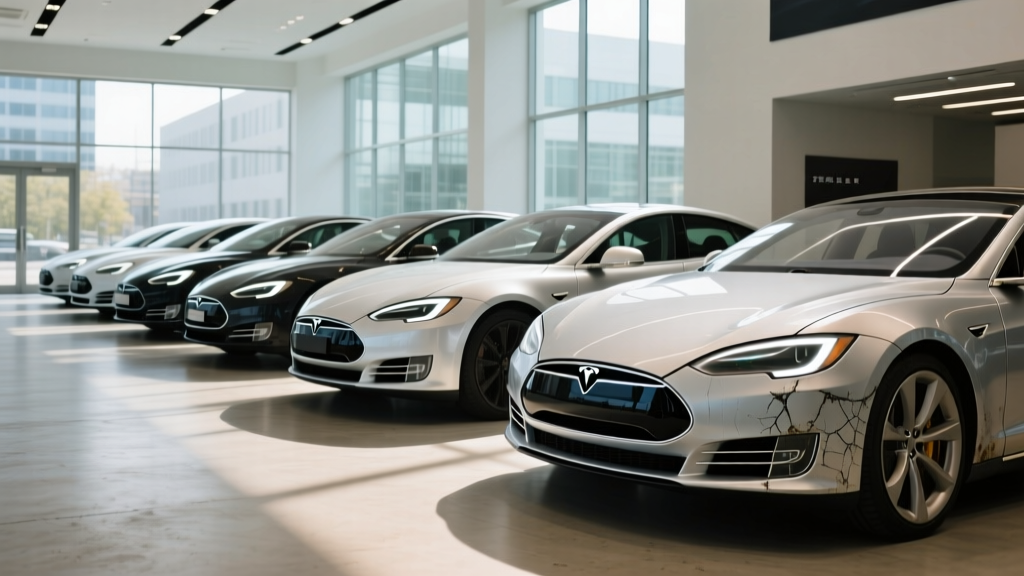
Not every Model S is created equal. Tesla iterated rapidly — sometimes mid-model-year — and several production windows introduced components that have aged poorly. Here are the years and generations that demand the most caution.
2012–2015: The Early Production Gamble
The first-generation Model S (2012–2015) pioneered the large-format lithium-ion EV, but early adopters paid a reliability tax. The 60 kWh, 85 kWh, and original 90 kWh battery packs used early Panasonic NMC cells that, in many cases, have degraded 15–25% by now. Drive unit failures — particularly on the rear large drive unit (LDU) — were common enough that Tesla issued multiple service bulletins. The original Media Control Unit (MCU1), powered by an NVIDIA Tegra 3 chip, is now essentially obsolete: it cannot run the modern Tesla app interface, navigation is sluggish, and the screen itself is prone to yellowing and delamination.
Verdict: Avoid unless the battery and drive unit have been replaced under warranty and the MCU has been upgraded to MCU2 or MCU3 (at owner expense of ~$1,500–$2,500).
2016–2017: The Facelift With Lingering Issues
The 2016 facelift brought a cleaner front fascia (no more faux grille), standard Autopilot hardware (HW2), and the introduction of the 100D and P100D trims with the 100 kWh pack. While the larger battery improved range substantially, these years still used the older rear LDU design prone to coolant leaks into the motor. The early HW2 Autopilot computers were also underpowered and were later replaced under recall with HW2.5 or HW3 boards. Build quality on interior panels, sunroof seals, and door handles remained inconsistent.
Verdict: Proceed with caution. A 100D with a documented battery replacement and MCU upgrade can be a decent value, but pre-purchase inspection is non-negotiable.
2018–2020: Better, But Not Yet the Modern Car
These years introduced the refreshed interior (horizontal touchscreen, redesigned center console), the HW3 computer (enabling modern FSD Supervised features), and the "Raven" suspension update in mid-2019, which swapped the front induction motor for a permanent-magnet reluctance motor (adapted from the Model 3). Raven cars are markedly more efficient and ride better. However, 2018–early 2019 (pre-Raven) cars still carry the older front induction motor and lower efficiency. The 2020 model year is the sweet spot of this generation, as it includes Raven, HW3, and the updated interior.
Verdict: 2020 Raven models with low mileage and service records are the best value in the pre-Palladium used market. Avoid 2018–early 2019 unless priced at a steep discount.
2026 Tesla Model S: Full Specifications
The current Model S — the Palladium generation introduced for the 2021 model year and updated through 2026 — is the version new-car buyers should evaluate. Here are the exact numbers.
| Specification | Model S Long Range | Model S Plaid |
|---|---|---|
| EPA Range | 402 miles | 396 miles |
| Battery Capacity (usable) | ~100 kWh (NMC) | ~100 kWh (NMC) |
| Drivetrain | Dual-Motor AWD | Tri-Motor AWD |
| Horsepower | 670 hp | 1,020 hp |
| 0–60 mph | 3.1 seconds | 1.99 seconds |
| Top Speed | 155 mph | 200 mph |
| Max DC Fast-Charge Rate | 250 kW (peak) | 250 kW (peak) |
| 10–80% DC Charge Time | ~30 minutes | ~30 minutes |
| Level 2 Charge Rate | 11.5 kW (~41 mi/hr) | 11.5 kW (~41 mi/hr) |
| EPA Efficiency | 124 MPGe / 27 kWh/100mi | 120 MPGe / 28 kWh/100mi |
| Cargo Volume (rear + frunk) | 28 cu ft (rear) + 3.1 cu ft (frunk) | 28 cu ft (rear) + 3.1 cu ft (frunk) |
| Rear Legroom | 35.4 inches | 35.4 inches |
| Base MSRP (2026) | $74,990 | $89,990 |
| Battery/Drive Unit Warranty | 8 years / 150,000 miles | 8 years / 150,000 miles |
Charging Speed and Infrastructure
Charging speed is where the Palladium Model S shows its age relative to newer 800V-architecture competitors. The Model S operates on a ~400V electrical architecture, which caps its peak DC fast-charge rate at 250 kW on Tesla V3 Superchargers. That is adequate but no longer class-leading.
| Charging Level | Power / Rate | Estimated Charge Time | Miles Added per Hour |
|---|---|---|---|
| Level 1 (120V household) | ~1.4 kW | Days for a full charge | ~3–5 mi/hr |
| Level 2 (240V / 48A home) | 11.5 kW | ~9–10 hours (0–100%) | ~41 mi/hr |
| DC Fast Charge (V3 Supercharger) | 250 kW peak | ~30 min (10–80%) | Up to ~200 mi in 15 min (peak) |
Charging curve reality: The 250 kW peak is only sustained briefly at low states of charge (roughly 10–25% SoC). Above 50%, the rate tapers significantly — by 80% SoC, you are typically seeing 60–80 kW. This is why Tesla (and all EV best practices) recommend charging to 80% on road trips and relying on home Level 2 for daily needs. A full home charge on an 11.5 kW Wall Connector takes roughly 9–10 hours, easily fitting an overnight session.
The Model S uses the NACS (North American Charging Standard) connector natively, giving it direct access to the entire Tesla Supercharger network — the most reliable and expansive DC fast-charging network in the U.S., with over 6,000 stations. With adapters, it can also access CCS-equipped networks like Electrify America and EVgo.
Pricing, Tax Credits, and Ownership Costs
The 2026 Model S is positioned as a premium luxury sedan, and its pricing reflects that. Here is the current MSRP structure and how the federal tax credit factors in.
| Trim | Base MSRP | Federal §30D Credit | Effective Price (if eligible) |
|---|---|---|---|
| Model S Long Range | $74,990 | Not eligible (MSRP exceeds $55,000 sedan cap) | $74,990 |
| Model S Plaid | $89,990 | Not eligible (MSRP exceeds $55,000 sedan cap) | $89,990 |
Critical tax credit note: Under current IRS §30D rules, the federal clean vehicle credit is capped at $55,000 MSRP for sedans. The Model S, at $74,990 and above, exceeds this cap and does not qualify for the $7,500 federal tax credit when purchased new. This applies regardless of buyer income or battery sourcing. Used Model S buyers may qualify for the up-to-$4,000 used EV credit (30% of sale price, capped at $4,000) if the vehicle is purchased from a dealer for $25,000 or less and the buyer meets income thresholds — but finding a Palladium-generation Model S at that price point is unlikely in 2026. Always consult a tax professional and check irs.gov for current-year rules.
5-Year Estimated Ownership Cost
Even without the tax credit, the Model S can be cost-effective relative to gasoline luxury sedans (BMW 5 Series, Mercedes E-Class) when factoring in fuel savings and minimal maintenance. However, insurance premiums for the Model S run 25–40% higher than comparable ICE sedans, according to industry data. Expect annual insurance costs of $2,800–$4,200 depending on your state, age, and driving record. Electricity costs for home charging average $0.13–$0.16/kWh nationally, translating to roughly $0.04–$0.05 per mile — compared to $0.14–$0.18 per mile for a 25 MPG gasoline sedan at $3.50/gallon.
Technology, Interior, and Driver Assistance
The Palladium interior is a significant leap over the pre-2021 Model S. The cabin features a 17-inch landscape touchscreen (replacing the older 17-inch portrait), a 12.3-inch digital instrument cluster, a rear-seat 8-inch touchscreen for climate and entertainment, and a 22-speaker audio system. Build quality has improved markedly, with soft-touch materials, ventilated front seats, and a glass roof.
Driver assistance: All Model S vehicles come with Tesla's Basic Autopilot (lane centering, adaptive cruise control, traffic-aware features). The optional Full Self-Driving (Supervised) package ($8,000 one-time or $99/month) adds automatic lane changes, Navigate on Autopilot, Smart Summon, and traffic light/stop sign recognition. It is critical to understand that FSD Supervised is an SAE Level 2 system — the driver must remain fully engaged, hands on the wheel (or torque-applied with the yoke), and eyes on the road at all times. This is not autonomous driving.
Notable drawbacks: The yoke steering wheel, while standard on Plaid and optional on Long Range, remains controversial — it requires adaptation for low-speed maneuvers and roundabouts. Panel gap consistency, while improved, still draws criticism relative to Mercedes and BMW build standards. There is no Apple CarPlay or Android Auto; all infotainment runs through Tesla's proprietary system. And while over-the-air updates keep the software current, Tesla's service center network remains thinner than legacy luxury brands, meaning warranty repairs can involve longer wait times in some metro areas.
Which Model S Years Are Worth Buying?
Here is a condensed decision framework based on budget and risk tolerance:
Buy a 2021–2026 (Palladium) Model S if: You want modern range (400+ miles EPA), the current tech stack, HW4 Autopilot computer, heat pump, and the best build quality Tesla has produced. Budget $65,000–$95,000. This is the lowest-risk purchase.
Buy a 2020 Raven Model S if: You want strong value in the used market (~$40,000–$55,000). Ensure it has HW3, the Raven powertrain (front permanent-magnet motor), and documented service history. Range is approximately 320–370 miles EPA depending on trim.
Consider a 2016–2019 100D if: Price is below $30,000 and the battery has been replaced under warranty. Budget for an MCU upgrade and potential drive unit service. Not for buyers who want low-maintenance ownership.
Avoid 2012–2015 Model S vehicles unless: The battery and both drive units have been replaced, the MCU has been upgraded, and the price is below $18,000. These are project cars, not daily drivers for most buyers.
Competitor Comparison: Is the Model S Still Worth It?
The luxury EV sedan segment has grown considerably. Here is how the 2026 Model S stacks up against key rivals:
| Attribute | 2026 Tesla Model S LR | 2026 Lucid Air Pure | 2026 BMW i5 M60 | 2026 Mercedes EQS 450+ |
|---|---|---|---|---|
| EPA Range | 402 mi | 419 mi | 295 mi | 390 mi |
| Base MSRP | $74,990 | $69,900 | $84,100 | $104,400 |
| 0–60 mph | 3.1 sec | 5.2 sec | 3.7 sec | 5.3 sec |
| Max DC Charge | 250 kW | 220 kW | 205 kW | 200 kW |
| Federal Tax Credit | No (MSRP cap) | No (MSRP cap) | No (MSRP cap) | No (MSRP cap) |
| Supercharger Access | Native NACS | NACS adapter | NACS adapter | NACS adapter |
The Lucid Air Pure undercuts the Model S on price and range but sacrifices performance and has a much smaller service network. The BMW i5 and Mercedes EQS offer superior interior build quality and dealer service infrastructure but trail significantly on range and performance per dollar. The Model S's native Supercharger access and proven (if aging) platform remain its strongest competitive advantages. For full comparison data on efficiency, see fueleconomy.gov.
Pros, Cons, and Final Recommendation
Pros
- Class-leading EPA range (402 mi Long Range)
- Extensive Supercharger network with native NACS
- Exceptional performance, especially Plaid (1.99s 0–60)
- Spacious hatchback cargo area (28 cu ft rear)
- Continuous OTA software updates
- Strong battery warranty (8 yr / 150,000 mi)
Cons
- No federal tax credit (exceeds $55K sedan MSRP cap)
- 400V architecture limits peak charge speed vs. 800V rivals
- Insurance premiums 25–40% above ICE luxury sedans
- Yoke steering polarizing; no CarPlay/Android Auto
- Service center availability varies by region
- Used pre-2020 models carry significant reliability risk
Final recommendation: The 2026 Tesla Model S is a compelling luxury EV sedan for buyers who prioritize range, performance, and Supercharger convenience — and who do not need the federal tax credit. The Palladium generation (2021+) is the only Model S era we recommend without major caveats. Used buyers should focus on 2020 Raven models or newer, and should always obtain a pre-purchase inspection from a Tesla-qualified technician. The years to firmly avoid are 2012–2015 (unreliable early production) and 2016–early 2019 (pre-Raven, pre-HW3), unless priced as project cars with full service documentation.
Frequently Asked Questions
What is the real-world range of the 2026 Tesla Model S?
The EPA rates the Long Range at 402 miles and the Plaid at 396 miles. In real-world highway driving (70–75 mph, moderate temperatures), expect 320–350 miles. In cold weather below freezing, plan for 260–300 miles. Preconditioning the battery before driving or charging helps recover some of this loss.
How fast does the Model S charge at home and on the road?
On a home Level 2 charger (240V, 48A), the Model S charges at 11.5 kW, adding approximately 41 miles of range per hour — a full charge takes about 9–10 hours. On a Tesla V3 Supercharger, it peaks at 250 kW and charges from 10–80% in approximately 30 minutes. Above 80%, the charge rate tapers significantly to protect battery health.
Does the 2026 Tesla Model S qualify for the federal EV tax credit?
No. Under IRS §30D rules, the federal clean vehicle credit for new vehicles is capped at $55,000 MSRP for sedans. The Model S starts at $74,990, exceeding this cap. Income limits and battery sourcing requirements are irrelevant here — the MSRP cap alone disqualifies it. Used Model S buyers may qualify for the up-to-$4,000 used EV credit if the vehicle sells for $25,000 or less and buyer income is within thresholds.
Is the Tesla Model S worth buying over the Lucid Air or BMW i5?
It depends on priorities. The Model S wins on performance (especially Plaid), Supercharger network access, and cargo versatility (hatchback). The Lucid Air Pure wins on range and price. The BMW i5 wins on interior build quality and dealer service. If Supercharger reliability and acceleration are top priorities, the Model S remains the strongest choice.
What is the battery warranty on the Model S?
Tesla covers the Model S battery and drive units for 8 years or 150,000 miles, whichever comes first, with a minimum 70% capacity retention threshold. If the battery degrades below 70% of its original capacity within the warranty period, Tesla will repair or replace it. Out-of-warranty battery replacement costs typically range from $12,000 to $20,000 depending on the pack and labor.
Which Tesla Model S years are the most reliable?
The 2021–2026 Palladium generation is the most reliable Model S era, with the fewest systemic issues. Among used models, the 2020 Raven (with the front permanent-magnet motor and HW3 computer) is the best pre-Palladium option. Avoid 2012–2015 entirely, and approach 2016–2019 with caution unless service records confirm battery and drive unit replacements.