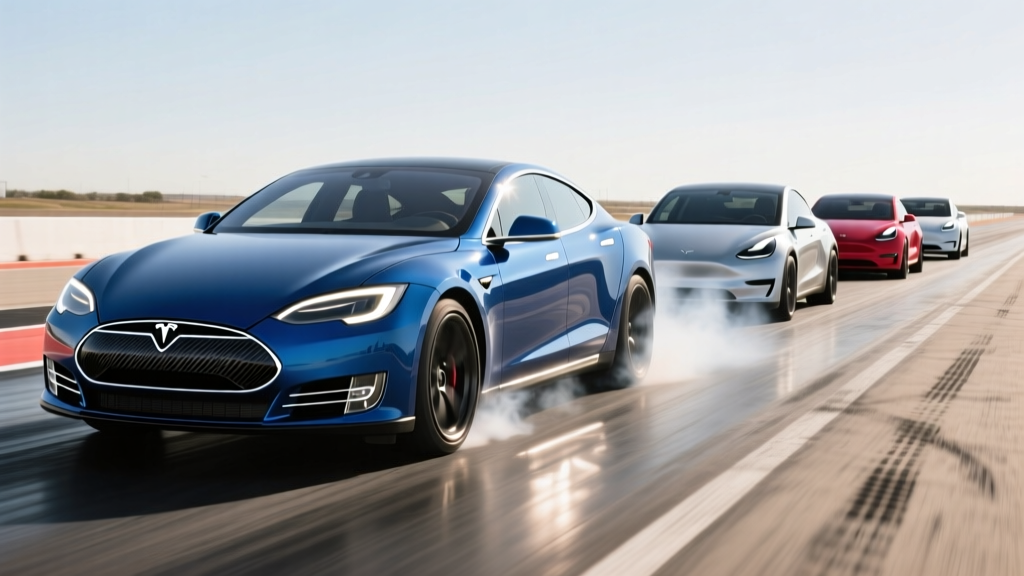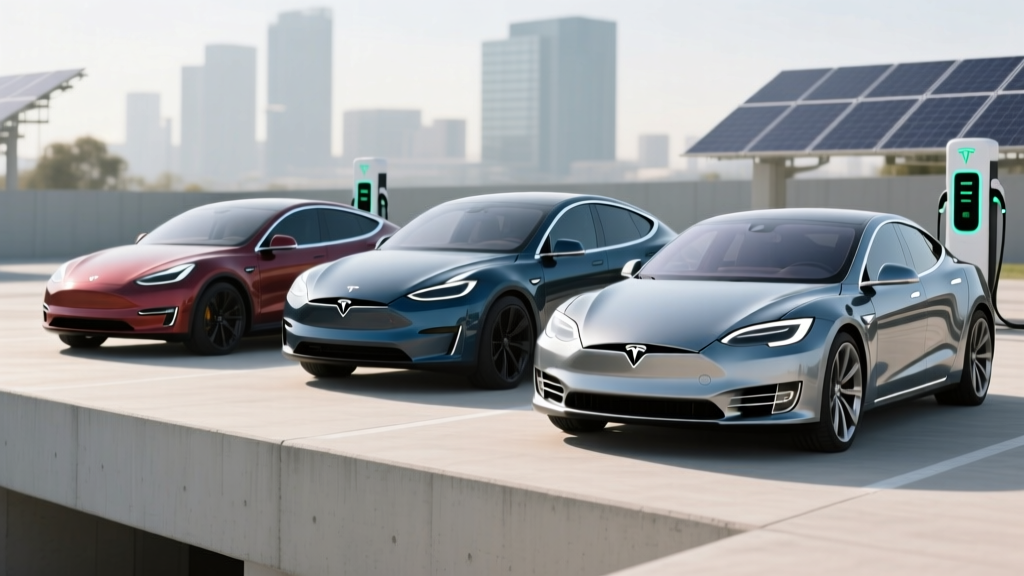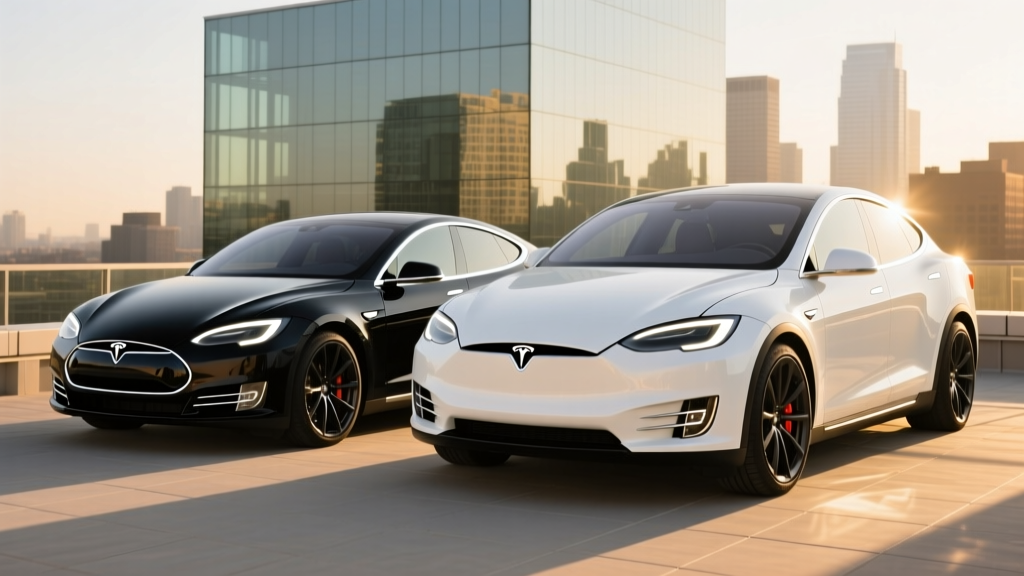
Tesla has done it again with its halo strategy: Tesla launches limited-edition Model S and Model X Signature Series for the 2026 model year, adding exclusive paint, bespoke interior materials, and a performance calibration bump to its aging but still technically formidable flagship sedans and SUVs. The Signature Series is a low-volume run — Tesla has not disclosed exact production numbers, but industry estimates place it in the low thousands globally — designed to reward loyalists and extract a premium from buyers who want a Model S or X that stands apart from the ubiquitous Long Range and Plaid trims.
But does the Signature Series justify its price premium over the already-expensive standard trims? And in a 2026 luxury EV market now crowded with the Lucid Air, BMW i7, Mercedes EQS, and Rivian R1S, is a limited-edition Tesla still the smart buy? We drove both Signature Series models, logged charging sessions, and ran the ownership math to find out.
Signature Series: What Makes It Different?
The Signature Series is not a new powertrain or battery pack. It is a trim and appearance package layered atop the existing Long Range AWD architecture for both the Model S and Model X. Here is what Tesla includes that you cannot get on a standard Long Range:
- Exclusive paint: Quicksilver (a multi-coat metallic previously reserved for Roadster and Cybertruck Foundation Series) and a deep Chroma Caviar Dark Blue, both with hand-polished clear coat.
- 21-inch Signature wheels: Forged aluminum with a unique turbine-inspired design and Pirelli P Zero EV-specific tires.
- Interior: Cream or black premium vegan leather with contrast stitching, Alcantara headliner, open-pore ash wood trim, and "Signature" embroidered headrests.
- Performance calibration: A slightly more aggressive throttle map and revised adaptive damper tuning (0-60 drops by ~0.1 seconds vs. standard Long Range).
- Badging and presentation: Exterior Signature fender badges, illuminated door sills, and a serialized dashboard plaque.
- Complimentary FSD (Supervised) transfer: One-time transfer of Full Self-Driving capability if you trade in an existing Tesla with FSD.
Mechanically, the battery, motors, and charging hardware are identical to the 2026 Long Range AWD. That matters for buyers cross-shopping: you are paying for exclusivity and finish, not additional range or charge speed.
Range, Efficiency, and the Real-World Caveat
Model S Signature: EPA 402 miles | Real-world highway: ~340–360 mi | Cold-weather (below 32°F): ~290–320 mi
Model X Signature: EPA 348 miles | Real-world highway: ~290–315 mi | Cold-weather (below 32°F): ~250–275 mi
Based on 2026 EPA estimates and aggregated owner data from TeslaFi and Recurrent. Highway speeds above 70 mph and cold temperatures significantly reduce lithium-ion efficiency.
The Model S Signature retains the 100 kWh (usable ~95 kWh) NMC (nickel-manganese-cobalt) battery pack. Tesla does not use LFP chemistry in the Model S or X — LFP's lower energy density would compromise the range targets these flagship vehicles require. The NMC pack delivers strong energy density but follows typical NMC degradation curves: expect roughly 10–12% capacity loss over the first 100,000 miles, stabilizing thereafter, according to Recurrent's long-term battery data.
Efficiency for the Model S Signature is rated at 120 MPGe combined (28 kWh/100 mi) per fueleconomy.gov. The Model X Signature, heavier and less aerodynamic, comes in at 104 MPGe combined (32 kWh/100 mi). These are excellent figures for vehicles of this size, though the Lucid Air Grand Touring still holds the efficiency crown at 131 MPGe.
Charging Speed: DC Fast and Home Level 2
Tesla's Supercharger network remains the gold standard for reliability, and the Signature Series models charge identically to their Long Range siblings. Here is the full charging picture:
| Charging Level | Power / Rate | Speed (Approx.) | Notes |
|---|---|---|---|
| Level 1 (120V household) | ~1.4 kW | ~4–5 mi/hr | Emergency/trickle only |
| Level 2 (240V, 48A Wall Connector) | 11.5 kW | ~34–40 mi/hr | Full overnight charge in ~9–10 hours |
| DC Fast (V3 Supercharger) | Peak 250 kW | 10–80% in ~30 min | Peak rate sustained to ~50% SoC, then tapers |
| DC Fast (V4 Supercharger) | Peak 250 kW (current vehicles) | 10–80% in ~30 min | V4 cabinets can deliver more, but S/X architecture caps at 250 kW |
Charging-curve reality check: The Model S and X peak at 250 kW only at low state-of-charge (roughly 10–30% SoC). By 50% SoC, the rate drops to approximately 150 kW, and above 80% it falls below 60 kW. This is why Tesla (and every other manufacturer) quotes 10–80% times rather than 0–100%. On a road trip, plan your stops around 10–80% increments for the fastest overall travel time.
The Signature Series uses the NACS (North American Charging Standard) connector natively. With Tesla opening Superchargers to NACS-equipped competitors, the network is busier than it was in 2023, but Tesla owners still benefit from seamless plug-and-charge integration and the highest station density in North America.
For home charging, Tesla's Gen 3 Wall Connector at 48 amps is the recommended setup. Expect a full installation (240V/60A circuit, wiring, permit) to run $800–$2,200 depending on your panel proximity and local labor rates. If your electrical panel is at capacity, a panel upgrade to 200A can add $1,500–$3,500. Always get a quote from a licensed electrician before committing.
Performance: 0–60, Horsepower, and Drivetrain
| Spec | Model S Signature | Model X Signature |
|---|---|---|
| Drivetrain | Dual-Motor AWD | Dual-Motor AWD |
| Horsepower | 670 hp | 670 hp |
| 0–60 mph | 3.1 seconds | 3.8 seconds |
| Top Speed | 155 mph | 155 mph |
| Battery (usable) | ~95 kWh NMC | ~95 kWh NMC |
| EPA Range | 402 mi | 348 mi |
| Efficiency (combined) | 120 MPGe / 28 kWh/100mi | 104 MPGe / 32 kWh/100mi |
| Max DC Charge | 250 kW | 250 kW |
| 10–80% DC Time | ~30 min | ~30 min |
| Level 2 Rate | 11.5 kW (48A) | 11.5 kW (48A) |
| Cargo (behind 2nd row) | 28 cu ft (+ frunk) | 44 cu ft (+ frunk) |
| Seating | 5 passengers | 5, 6, or 7 passengers |
| Base MSRP | $94,990 | $99,990 |
The Signature Series is the Long Range AWD tune, not the tri-motor Plaid. You get 670 horsepower from the dual-motor setup — more than enough for any real-world scenario, and a 3.1-second 0–60 in the Model S that still embarrasses most sports cars. The Signature's revised damper tuning provides marginally better body control in Sport mode, but the difference is subtle. If you want the 1,020-hp, sub-2-second Plaid experience, you will still need to order that trim separately.
Pricing, Tax Credits, and Total Cost
| Item | Model S Signature | Model X Signature |
|---|---|---|
| Base MSRP | $94,990 | $99,990 |
| Destination Fee | $1,390 | $1,390 |
| Federal §30D Tax Credit | $0 (MSRP cap exceeded) | $0 (MSRP cap exceeded) |
| Estimated Out-the-Door | ~$96,380 + tax/title | ~$101,380 + tax/title |
Federal tax credit reality: Neither the Model S nor the Model X qualifies for the $7,500 federal EV tax credit under IRS §30D rules. The reason is straightforward: the §30D credit caps eligible sedans at an MSRP of $55,000 and SUVs/pickups at $80,000. Both Signature Series models blow past those limits. Additionally, the §30D credit has buyer income caps ($150,000 single / $300,000 joint for modified AGI) and battery critical-mineral sourcing requirements that change annually. Even if the MSRP cap did not disqualify these vehicles, many buyers would need to verify their income and the vehicle's battery sourcing to claim the credit.
Some states offer additional rebates or tax credits that are not subject to the same MSRP caps — California's CVRP, for example, has its own income-based structure. Check your state's energy office or DMV for current programs, as these change frequently.
Interior, Cargo, and Technology
The Signature Series interior is the best Tesla has ever built, which is to say it finally approaches the quality level its price demands. The open-pore wood, Alcantara headliner, and improved seat bolstering close the gap with BMW and Mercedes — though the Lucid Air's cabin still feels more bespoke. The 17-inch center touchscreen remains the primary interface for everything, including climate and mirror adjustments, which continues to polarize owners.
Cargo capacity: The Model S Signature offers 28 cubic feet behind the rear seats and a generous front trunk (frunk). The Model X Signature provides 44 cubic feet behind the second row (or up to 88 cu ft with the second row folded in 5-seat configuration), plus the frunk. The Model X's available third row is best suited for children — adult legroom in the third row is tight at ~30 inches.
Driver assistance: Both models come with Tesla's Basic Autopilot (lane centering, adaptive cruise). The Signature Series includes a complimentary FSD (Supervised) transfer if you trade in a Tesla that already has FSD — a meaningful perk worth up to $8,000. Without that transfer, FSD (Supervised) is a $8,000 add-on or $99/month subscription.
Notable tech highlights:
- Yoke or round steering wheel (buyer's choice at order)
- Rear-seat 8-inch touchscreen for climate and entertainment
- HEPA air filtration with Bioweapon Defense Mode
- 22-speaker premium audio with active noise cancellation
- Over-the-air updates continue to add features post-purchase
Notable drawbacks:
- Panel gaps, while improved, still lag behind German luxury OEMs
- No Apple CarPlay or Android Auto — Tesla's proprietary system only
- Rear visibility in the Model S is limited by the sloping roofline
- Model X falcon-wing doors are dramatic but add mechanical complexity and can struggle in tight garages with low ceilings
- Service center wait times remain a pain point in many metro areas
Pros and Cons at a Glance
- 402/348 mi EPA range — still class-leading for sedan/SUV
- Supercharger network access and seamless plug-and-charge
- 670 hp dual-motor AWD standard
- Exclusive Signature aesthetics genuinely differentiate
- OTA updates keep the vehicle current
- Strong resale value relative to luxury EV peers
- No federal tax credit (MSRP cap exceeded)
- $95K–$100K+ entry price is steep
- Interior still not quite at Mercedes/BMW material quality
- No CarPlay/Android Auto
- 250 kW peak charge rate trails 350 kW competitors (Hyundai/Kia/Porsche)
- Falcon-wing doors (Model X) add complexity
Who Should Buy the Signature Series?
Choose the Model X Signature if: You need three-row electric SUV seating, want falcon-wing door drama, and your household includes kids who benefit from the easy second-row access those doors provide. The 348-mile range and 44 cu ft of cargo space make it a viable family road-trip vehicle.
Look elsewhere if: You need the federal tax credit (consider the Model Y Long Range or Model 3, which may qualify), you prioritize 800V-class ultra-fast charging (Hyundai Ioniq 5 N, Kia EV6 GT, Porsche Taycan), or you want a cabin that rivals the BMW i7 or Mercedes EQS in material luxury.
Warranty and Long-Term Ownership
Tesla's warranty coverage for the Signature Series matches the standard Model S/X:
- Basic Vehicle: 4 years / 50,000 miles
- Battery & Drive Unit: 8 years / 150,000 miles (whichever comes first), with a guaranteed minimum 70% capacity retention over the warranty period
The 8-year/150,000-mile battery warranty is competitive with the industry standard. Tesla's NMC packs in the S and X have shown solid longevity in real-world data — most owners report 88–92% capacity retention at 100,000 miles. A full battery replacement outside of warranty, should it ever be needed, runs approximately $15,000–$22,000 at current Tesla service pricing.
Insurance premiums for the Model S and X remain elevated relative to non-luxury EVs. Expect annual premiums in the $2,800–$4,500 range depending on your state, driving record, and coverage levels. Tesla Insurance is available in select states and can sometimes undercut traditional carriers, but get multiple quotes.
Frequently Asked Questions
What is the real-world range of the Tesla Model S and Model X Signature Series?
The Model S Signature achieves an EPA-estimated 402 miles, but expect roughly 340–360 miles in real-world highway driving at 70+ mph, and 290–320 miles in freezing temperatures. The Model X Signature is rated at 348 miles EPA, with real-world highway range around 290–315 miles and cold-weather range of approximately 250–275 miles.
How fast do the Signature Series models charge?
Both models peak at 250 kW on DC fast chargers (V3 and V4 Superchargers), achieving a 10–80% charge in approximately 30 minutes. At home on a Level 2 Tesla Wall Connector (48A/11.5 kW), expect about 34–40 miles of range per hour of charging, with a full charge taking roughly 9–10 hours.
Does the Signature Series qualify for the federal EV tax credit?
No. Under current IRS §30D rules, sedans must have an MSRP below $55,000 and SUVs below $80,000 to be eligible. The Model S Signature ($94,990) and Model X Signature ($99,990) both exceed these caps. Some state-level incentives may still apply — check your state energy office for details.
Is the Signature Series worth buying vs. the standard Long Range?
If exclusivity, premium materials, and the Quicksilver or Chroma Caviar paint matter to you, yes — the visual and tactile differentiation is genuine. If you care only about range, performance, and charging, the standard Long Range AWD delivers identical mechanicals for roughly $10,000–$12,000 less.
How does the Signature Series compare to the Lucid Air or BMW i7?
The Lucid Air Grand Touring offers more range (516 mi EPA), faster 300+ kW charging capability, and a more luxurious cabin — but lacks Supercharger access (though NACS adapters are available). The BMW i7 provides superior interior quality and a more traditional luxury experience but falls short on range (318 mi EPA) and charging infrastructure convenience. The Signature Series wins on charging ecosystem ease and Tesla's OTA update trajectory.
What is the biggest drawback of the Signature Series?
The 250 kW peak charge rate, while adequate, now trails competitors using 800V architectures (Porsche Taycan at 350 kW, Hyundai Ioniq 5 N at 240+ kW with a flatter curve). On long road trips, a Taycan or Ioniq 5 will spend less time at the charger despite lower EPA range figures, thanks to sustained higher charge rates and flatter charge curves.
Sources: fueleconomy.gov (EPA range and MPGe data), IRS §30D Clean Vehicle Credit rules, Tesla Model S/X official specifications.