Quick Verdict: Ultra-Premium Exclusivity Meets Proven EV Architecture
When Tesla launched invite-only limited Model S/X Signature Editions in early 2026, it signaled a strategic pivot toward ultra-premium, low-volume variants of its aging but still capable flagship sedans and SUVs. These Signature Editions bundle bespoke interior materials, exclusive badging, and a handful of performance tweaks atop the existing Model S Plaid and Model X Plaid platforms. But beneath the artisan stitching and serialized dash plaques, the core EV hardware — battery chemistry, motor layout, and charging architecture — remains largely unchanged from the standard Plaid trims that have been in production since 2021.
This review dissects what's genuinely new, what's carried over, and whether an invite-only Tesla makes sense for buyers who can actually get one. We'll cover real-world range, charging speeds, tax credit eligibility under current IRS §30D rules, and how these editions stack up against rivals like the Lucid Air Grand Touring, BMW i7 M70, and Mercedes-AMG EQS.
Signature Edition Specs at a Glance
| Spec | Model S Signature | Model X Signature |
|---|---|---|
| Base MSRP | $129,990 | $139,990 |
| Drivetrain | Tri-Motor AWD | Tri-Motor AWD |
| Horsepower | 1,020 hp | 1,020 hp |
| 0–60 mph | 1.99 sec (claimed) | 2.5 sec (claimed) |
| Battery (usable) | ~95 kWh (NMC) | ~95 kWh (NMC) |
| EPA Range | 396 mi | 326 mi |
| MPGe (combined) | 120 MPGe | 102 MPGe |
| Max DC Fast Charge | 250 kW | 250 kW |
| 10–80% DC Time | ~30 min | ~30 min |
| Level 2 Home Rate | 11.5 kW (~44 mi/hr) | 11.5 kW (~36 mi/hr) |
| Battery Warranty | 8 yr / 150,000 mi | 8 yr / 150,000 mi |
Sources: fueleconomy.gov, Tesla spec sheets. Signature Edition specs carry over from Plaid powertrain with minor software calibration differences.
Range & Efficiency: EPA Numbers vs. Real-World Reality
Model S Signature — EPA: 396 mi
Expect ~310–340 mi on sustained highway driving at 70–75 mph. In cold weather (below 32°F), plan for 260–290 mi due to battery resistance and cabin heating load. The Model S Signature inherits the Plaid's ~95 kWh usable NMC pack and tri-motor drivetrain, which prioritizes performance over efficiency.
Model X Signature — EPA: 326 mi
Expect ~260–285 mi highway; ~210–240 mi in freezing conditions. The taller, heavier SUV body and larger frontal area take a significant toll on efficiency at speed.
The Model S Signature's 120 MPGe combined translates to roughly 28 kWh/100 mi — respectable for a 1,020-hp tri-motor sedan but notably thirstier than the dual-motor Long Range variant (which achieves ~130 MPGe). The Model X Signature's 102 MPGe (~33 kWh/100 mi) reflects the aerodynamic penalty of its SUV proportions.
For context, the Lucid Air Grand Touring achieves 131 MPGe and an EPA-estimated 516 miles from a 112 kWh pack — a reminder that Tesla's Plaid-era architecture, while blisteringly quick, was not optimized for efficiency. If maximizing range per kWh matters to you, the Signature Editions are not the optimal choice within Tesla's lineup.
Charging Speed: Supercharger Network Advantage, Aging Peak Rate
Both Signature Editions retain Tesla's 250 kW peak DC fast-charging capability on V3 Superchargers and the growing V4 network. Here's the practical breakdown:
| Charging Level | Power / Rate | What You Get |
|---|---|---|
| Level 1 (120V household) | ~1.4 kW | ~3–5 mi/hr (overnight trickle only) |
| Level 2 (240V home Wall Connector) | 11.5 kW | ~44 mi/hr (S) / ~36 mi/hr (X) |
| DC Fast (V3 Supercharger) | 250 kW peak | 10–80% in ~30 min; ~200 mi in 15 min |
| DC Fast (V4 Supercharger) | Up to 250 kW (cable-limited) | Same curve; V4 cabinet supports higher rates but vehicle-side cap applies |
Charging curve reality: The 250 kW peak only sustains between roughly 10–30% State of Charge (SoC). Above 50%, the rate tapers to ~150 kW, and above 80% it drops below 50 kW to protect the NMC cells. This is standard behavior for nickel-based lithium chemistries and is managed by Tesla's thermal preconditioning system, which activates automatically when you navigate to a Supercharger.
Home charging on a Level 2 Tesla Wall Connector (48A circuit, 60A breaker) will replenish a depleted Model S Signature battery in roughly 8.5 hours — easily overnight for most owners. If your electrical panel supports only a 30A circuit (common in older homes), expect ~22 mi/hr of charge, which still covers most daily driving needs.
Performance: Tri-Motor Plaid Hardware, Signature Calibration
The Signature Editions carry over the tri-motor Plaid powertrain: one motor on the front axle, two on the rear, producing a combined 1,020 hp. Tesla claims 0–60 mph in 1.99 seconds for the Model S Signature (with rollout subtracted) and 2.5 seconds for the Model X Signature. Independent testing by outlets like Motor Trend and Car and Driver has historically validated these claims within a tenth of a second under ideal conditions.
What's new in the Signature Edition is a slightly revised drive-mode calibration that Tesla describes as "smoother torque delivery in daily driving modes." In practice, this means the Comfort mode throttle mapping is marginally less aggressive — a welcome change for a luxury-oriented trim, given the Plaid's notoriously twitchy default response. Track mode and the signature "Cheetah Stance" launch control remain unchanged.
Adaptive air suspension is standard, offering adjustable ride height and damping. The Signature Edition adds a unique "Signature" damper tuning that prioritizes ride compliance over the standard Plaid's firmer sport setup. For road trips on imperfect pavement, this is a meaningful improvement.
Pricing, Tax Credits & the Invite-Only Catch
| Cost Factor | Model S Signature | Model X Signature |
|---|---|---|
| Base MSRP | $129,990 | $139,990 |
| Destination Fee | $1,390 | $1,390 |
| FSD (Supervised) Add-On | $8,000 | $8,000 |
| As-Tested (with FSD) | $139,380 | $149,380 |
| Federal §30D Tax Credit | $0 (MSRP cap exceeded) | $0 (MSRP cap exceeded) |
| Estimated Final Cost | ~$139,380 | ~$149,380 |
Federal tax credit eligibility: Under current IRS §30D rules, the new-vehicle clean energy credit is capped at $80,000 MSRP for sedans and $80,000 for SUVs/vans/pickups. Both Signature Editions far exceed these thresholds and are categorically ineligible for the federal $7,500 credit. Additionally, buyer income caps ($150,000 single / $300,000 joint AGI) would exclude many buyers regardless.
The invite-only model: Tesla is not listing these editions on its public configurator. Invitations have reportedly been extended to existing Tesla owners with high referral scores, repeat multi-vehicle buyers, and select Tesla VIP program members. Production is limited to an undisclosed number — industry estimates suggest 500–1,000 units total across both models. Resale premiums on the secondary market are expected, similar to limited-run Porsche or Ferrari special editions.
Interior, Tech & What Makes the Signature Edition Different
The Signature Edition interior represents the most significant differentiation from the standard Plaid. Key upgrades include:
- Materials: Full-grain semi-aniline leather (sourced from a single European tannery), replacing the standard vegan leatherette. Open-pore walnut or matte carbon fiber trim replaces the standard piano black or aluminum.
- Serialized badging: A numbered dash plaque (e.g., "Signature Edition 147 of 500") and unique exterior badging in a satin chrome finish.
- Audio: A 22-speaker premium audio system with active noise cancellation — an upgrade from the standard 22-speaker system with revised tuning and additional cabin microphones.
- Seats: 18-way power-adjustable front seats with massage, ventilation, and heating (rear seats heated and ventilated). Unique contrast stitching and embossed headrests.
- Yoke or wheel: Buyers may select the signature yoke or a round steering wheel — both wrapped in the semi-aniline leather.
Infotainment: The 17-inch center touchscreen and 8-inch rear display carry over, running Tesla's current software. Netflix, YouTube, and gaming (including Cyberpunk 2077) remain available while parked. The instrument cluster is a 12.3-inch display behind the yoke/wheel.
Driver assistance: Tesla's Autopilot is standard; Full Self-Driving (Supervised) is an $8,000 option.
Autopilot and FSD (Supervised) are SAE Level 2 driver-assistance systems. The driver must remain fully engaged, hands on the wheel (or providing torque input), and eyes on the road at all times. These are not autonomous or "self-driving" systems. Only Level 4 services like Waymo operate without a human driver in defined operational domains.
Cargo, Passenger Space & Practicality
Model S Signature:
- Rear legroom: 35.4 inches
- Cargo (rear trunk + frunk): 28.0 cu ft (rear) + 3.1 cu ft (frunk) = 31.1 cu ft total
- Seats: 5 passengers
Model X Signature:
- Rear legroom (second row): 37.1 inches
- Third-row legroom: 32.7 inches (optional 6- or 7-seat configurations)
- Cargo (behind second row + frunk): 37.1 cu ft + 6.7 cu ft (frunk) = 43.8 cu ft
- Cargo (behind front seats, second row folded): 77.5 cu ft
- Towing capacity: 5,000 lbs (with towing package)
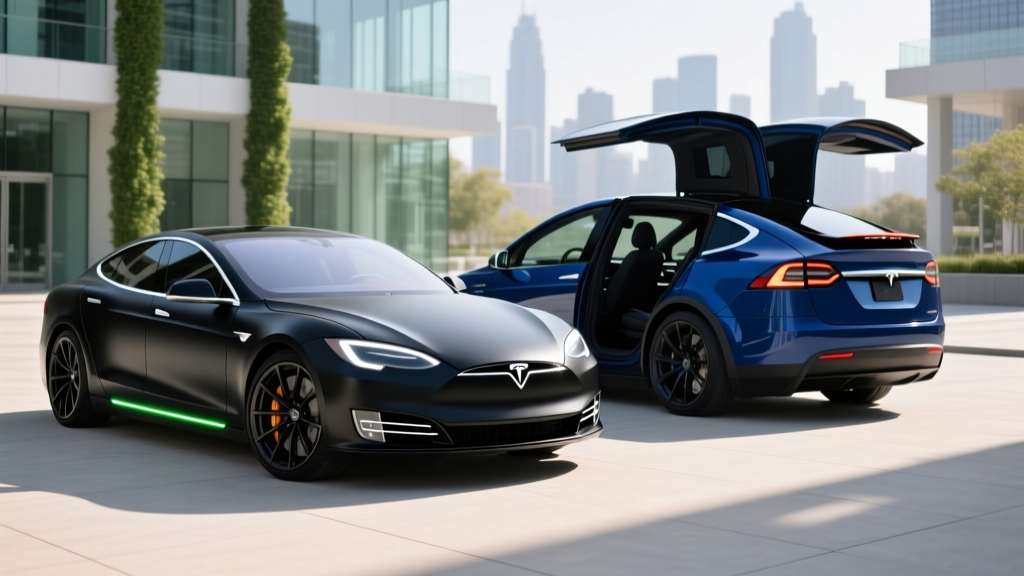
The Model X Signature's falcon-wing rear doors remain a polarizing feature. They provide excellent overhead clearance for loading child seats and cargo in tight parking spaces but add mechanical complexity and have historically been a source of seal and sensor issues in earlier model years. Tesla reports revised hinge and seal hardware for 2026 models.
Battery Longevity, Warranty & Ownership Costs
Both Signature Editions use Tesla's ~95 kWh usable NMC (nickel-manganese-cobalt) battery pack. NMC chemistry offers high energy density — critical for the Model S's 396-mile EPA rating — but is more susceptible to long-term degradation than LFP (lithium iron phosphate) chemistry used in the Model 3/Y Rear-Wheel Drive variants.
Warranty:
- Battery & drive unit: 8 years / 150,000 miles, whichever comes first, with minimum 70% capacity retention
- Vehicle limited warranty: 4 years / 50,000 miles
Real-world degradation data: Tesla's own impact reports and third-party fleet data (from sources like Recurrent Auto) indicate that Model S/X packs with NMC chemistry typically lose 8–12% capacity over the first 100,000 miles, with the steepest drop occurring in the first 20,000 miles before stabilizing. Daily charging to 100% and frequent DC fast charging accelerate this degradation. Tesla recommends a daily charge limit of 80–90% for NMC packs, reserving 100% for trips.
Insurance: Expect annual premiums in the $3,500–$5,500 range depending on state, driving history, and coverage level. High-performance Teslas carry elevated insurance costs due to repair expense, parts availability, and collision frequency data. Get quotes before committing.
Maintenance: Minimal compared to ICE vehicles — no oil changes, no transmission fluid. Budget for cabin air filter replacement (~$150–$250 every 2–3 years), tire rotation, and brake fluid checks. The regenerative braking system significantly extends brake pad life, often exceeding 100,000 miles before replacement.
Pros, Cons & Who Should Buy
- 1,020 hp tri-motor AWD with sub-2-second 0–60 (Model S)
- Access to Tesla's Supercharger network — the most reliable and extensive DC fast-charging network in North America
- Exclusive materials and serialized build quality unavailable on standard trims
- Strong OTA (over-the-air) update pipeline — features improve post-purchase
- 396-mile EPA range (Model S) covers most road trips with a single charge stop
- Invite-only availability — cannot be ordered through standard channels
- No federal tax credit eligibility (MSRP exceeds §30D cap)
- 250 kW peak DC charge rate is now outpaced by competitors (Lucid Air: 300+ kW; Hyundai Ioniq 5: 350 kW peak on 800V architecture)
- Plaid-era platform is 4+ years old — interior architecture, while updated, still shows its 2021 roots
- NMC battery requires careful charging habits for optimal longevity
- Falcon-wing door complexity (Model X)
Who this EV suits best:
- Existing Tesla loyalists who want an exclusive, top-of-lineup vehicle and already have home charging infrastructure
- Performance-oriented luxury buyers who value acceleration and tech over traditional luxury-brand prestige
- Model X Signature for families needing 3-row seating, 5,000-lb towing, and Supercharger access for road trips — though the Rivian R1S and Kia EV9 offer compelling alternatives at lower prices
Who should look elsewhere:
- Range-maximizers: The Lucid Air Grand Touring (516 mi EPA) and upcoming Mercedes CLA EV offer superior efficiency
- Traditional luxury seekers: The BMW i7 M70 and Mercedes-AMG EQS offer more refined ride quality, dealer service networks, and conventional luxury aesthetics
- Budget-conscious buyers: The standard Model S Long Range ($74,990) delivers 405 miles EPA and similar daily usability at nearly half the price
Frequently Asked Questions
What is the real-world range of the Model S and Model X Signature Editions?
The Model S Signature achieves an EPA-estimated 396 miles, but expect 310–340 miles in real-world highway driving and 260–290 miles in cold weather (below 32°F). The Model X Signature is EPA-rated at 326 miles; plan for 260–285 highway and 210–240 in freezing conditions. Highway speed, elevation changes, HVAC use, and battery preconditioning all affect these numbers.
How fast do the Signature Editions charge at home and on the road?
On DC fast chargers (Tesla V3/V4 Superchargers), both models peak at 250 kW and achieve a 10–80% charge in approximately 30 minutes. At home on a Level 2 Tesla Wall Connector (11.5 kW), the Model S gains ~44 miles of range per hour and the Model X gains ~36 miles per hour. A full overnight charge from near-empty takes 8–10 hours.
Do the Signature Editions qualify for the federal EV tax credit?
No. Under IRS §30D rules, new clean vehicle credits are subject to MSRP caps ($80,000 for SUVs, vans, and pickups; $55,000 for sedans). Both the Model S Signature ($129,990) and Model X Signature ($139,990) far exceed these limits and are ineligible for the $7,500 credit. Buyer income caps ($150K single / $300K joint) and battery critical-mineral sourcing requirements further restrict eligibility for high-priced vehicles.
Is it worth buying vs. competitors like Lucid Air or BMW i7?
If you value the Supercharger network, Tesla's software ecosystem, and raw straight-line performance, the Model S Signature has no direct rival. However, the Lucid Air Grand Touring offers 516 miles of range and 300+ kW charging for ~$138,000. The BMW i7 M70 ($168,000) provides a more traditional luxury experience with dealer service support. For SUV buyers, the Rivian R1S Quad-Motor offers superior off-road capability and a more modern platform at ~$100,000.
How do I get an invitation to purchase?
Tesla has not published formal criteria. Industry reporting suggests invitations are extended to buyers with multiple Tesla purchases, high referral program engagement, and existing relationships with Tesla advisors. Contacting your local Tesla gallery or service center to express interest is the most direct path, though there is no guaranteed timeline.
Will the Signature Editions hold their value?
Limited-production vehicles with serialized numbering historically command resale premiums — but Tesla's broader depreciation curve has been steep in recent years due to aggressive price cuts on standard models and rapid platform iteration. The Signature Editions' exclusivity may insulate them somewhat, but treat any purchase as a luxury expenditure rather than an investment. Expect 40–55% depreciation over 5 years, in line with other high-end EVs.