Refresh Spotted: What the Latest Tesla Model S and Model X Prototypes Reveal
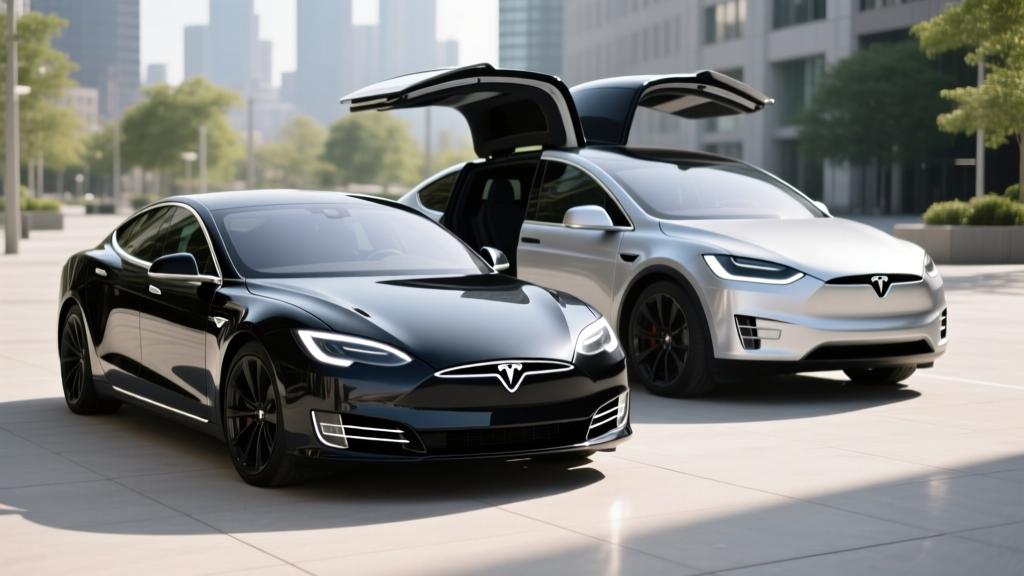
Camouflaged Tesla Model S and Model X prototypes have been spotted testing near the Fremont factory and on public roads in California, fueling speculation about a mid-cycle refresh for Tesla's flagship sedan and SUV. While Tesla has not officially announced updated versions, the sightings — combined with supply-chain leaks and firmware code references — give us a reasonably clear picture of what a 2026 refresh could bring. This article compiles what we know, what remains preliminary, and how the current-generation models stack up for buyers deciding whether to wait.
Current-Generation Baseline: 2025 Model S and Model X Specs
Before projecting what the refresh changes, here is where the current models stand. These figures represent the latest EPA-certified configurations available from Tesla as of early 2026.
| Spec | Model S Long Range | Model S Plaid | Model X Long Range | Model X Plaid |
|---|---|---|---|---|
| EPA Range | 402 mi | 396 mi | 348 mi | 326 mi |
| Battery (usable) | ~95 kWh, NMC | ~95 kWh, NMC | ~95 kWh, NMC | ~95 kWh, NMC |
| Drivetrain | Dual-motor AWD | Tri-motor AWD | Dual-motor AWD | Tri-motor AWD |
| Horsepower | 670 hp | 1,020 hp | 670 hp | 1,020 hp |
| 0-60 mph | 3.1 sec | 1.99 sec | 3.8 sec | 2.5 sec |
| Max DC Charge Rate | 250 kW | 250 kW | 250 kW | 250 kW |
| 10-80% DC Time | ~30 min | ~30 min | ~31 min | ~31 min |
| Efficiency (MPGe) | 124 MPGe | 120 MPGe | 109 MPGe | 101 MPGe |
| Base MSRP | $79,990 | $94,990 | $84,990 | $99,990 |
Source: EPA / fueleconomy.gov and Tesla.com. Prices before destination or incentives.
What the Refresh Spottings Suggest: Projected Changes
Based on prototype sightings, Tesla firmware references, and supply-chain reporting, here is what the anticipated refresh is expected to address:
- 800V architecture: Spy shots show revised high-voltage cabling and components consistent with an 800-volt electrical system (up from the current ~400V). This would enable DC fast-charging at 350+ kW, dramatically cutting 10-80% times to an estimated 18-22 minutes on V4 Superchargers.
- Updated battery chemistry: Leaked supplier contracts point to a next-generation NMC cell with higher nickel content and silicon-anode enhancement, potentially pushing usable capacity to ~100-105 kWh. This could extend EPA range to an estimated 420-440 miles for the Model S Long Range.
- Revised exterior: Camouflaged prototypes show slimmer headlamp clusters, a reshaped front fascia with a smaller grille opening, and flush door handles similar to the refreshed Model 3 Highland. The Model X appears to gain a revised rear light bar.
- Interior overhaul: The current yoke-and-screen layout is expected to gain ventilated front seats (a frequent complaint on current models), ambient lighting, rear-seat entertainment screens, and an updated 15.4-inch center display with faster processing. Build quality improvements — tighter panel gaps, upgraded materials — are anticipated following the Model 3 Highland playbook.
- HW5 / AI5 computer: Firmware references suggest the refresh will ship with Tesla's next-generation hardware platform, offering higher-resolution camera processing for Autopilot and FSD (Supervised).
- Steer-by-wire (possible): Some prototype observations hint at steer-by-wire testing, though this remains unconfirmed and may be reserved for a future Plaid variant.
| Metric | Current Model S LR | Refresh (Est.) |
|---|---|---|
| EPA Range | 402 mi | ~420-440 mi |
| Max DC Charge | 250 kW | ~350 kW (800V) |
| 10-80% Time | ~30 min | ~18-22 min |
| Architecture | ~400V | 800V |
Real-World Range: What the EPA Number Doesn't Tell You
Current Model S Long Range: EPA 402 miles. In real-world highway driving at 70-75 mph, expect approximately 330-360 miles in mild weather. In cold conditions (below 30°F / -1°C), range can drop to 270-310 miles due to cabin heating demands and reduced battery efficiency, even with Tesla's heat pump.
Current Model X Long Range: EPA 348 miles. Highway real-world: 280-310 miles mild weather; 230-270 miles in cold conditions. The Model X's larger frontal area and heavier curb weight (~5,100 lbs) penalize highway efficiency more than the sedan.
Refresh projection: If the estimated 420-440 mile EPA figure materializes, real-world highway range could land in the 350-380 mile band in favorable conditions — a meaningful improvement for cross-country road trips.
Tesla's thermal management system is among the best in the industry, but physics still governs: sustained highway speeds above 70 mph and cold temperatures remain the two biggest range killers for any EV. The Model S benefits from a lower drag coefficient (Cd ~0.208) compared to the Model X (Cd ~0.24), which is why the sedan consistently outperforms the SUV in real-world efficiency despite sharing a similar battery pack.
Charging Speed: Current Reality and Refresh Potential
Charging speed is the single most impactful factor for road-trip usability. Here is how the current Model S and Model X perform across charging levels:
| Level | Power | Rate | Notes |
|---|---|---|---|
| Level 1 (120V) | ~1.4 kW | ~3-4 mi/hr | Emergency/trickle only |
| Level 2 (240V, 48A) | 11.5 kW | ~30-34 mi/hr | Tesla Wall Connector; full charge in ~9-10 hrs |
| DC Fast (V3 Supercharger) | 250 kW peak | ~200 mi in 15 min | 10-80% in ~30 min; tapers significantly above 80% |
The current 250 kW peak on Tesla's V3 Superchargers is solid but trails competitors like the Hyundai Ioniq 5 (peak 240 kW on 800V, but lighter vehicle) and the Porsche Taycan (up to 320 kW on 800V). The refresh's anticipated 800V architecture would close this gap, enabling 350+ kW on Tesla's next-generation V4 Supercharger stations, which are already deploying in select markets.
Charging-curve reality: Even at 250 kW peak, the current Model S sustains that rate only between roughly 10-30% State of Charge (SoC). From 30-60%, the rate tapers to approximately 150-180 kW, and above 80% it drops below 50 kW. This is normal for NMC chemistry, but it means the "30-minute" 10-80% claim assumes ideal battery preconditioning — always navigate to a Supercharger using the car's built-in routing to trigger preconditioning.
Pricing, Tax Credits, and the MSRP Cap Problem
The current Model S starts at $79,990 and the Model X at $84,990. A refresh will almost certainly carry a price increase — likely $3,000-$6,000 across trims based on the added hardware cost of 800V architecture and updated interior components.
| Model / Trim | Base MSRP | §30D Credit Eligible? | Est. After Credit |
|---|---|---|---|
| Model S Long Range | $79,990 | ❌ No — exceeds $55,000 sedan MSRP cap | $79,990 |
| Model S Plaid | $94,990 | ❌ No — exceeds MSRP cap | $94,990 |
| Model X Long Range | $84,990 | ❌ No — exceeds $80,000 SUV MSRP cap | $84,990 |
| Model X Plaid | $99,990 | ❌ No — exceeds MSRP cap | $99,990 |
The hard truth on tax credits: Under current IRS §30D rules, the federal EV tax credit has an MSRP cap of $55,000 for sedans and $80,000 for SUVs/vans/pickups. Every current Model S trim exceeds the sedan cap. The Model X Long Range at $84,990 also exceeds the SUV cap, and the Plaid sits well above it. This means no new Model S or Model X variant currently qualifies for the $7,500 federal credit, regardless of buyer income or battery sourcing.
Additionally, §30D imposes buyer income limits ($150,000 single / $300,000 joint MAGI) and critical-mineral/battery-component sourcing requirements that further restrict eligibility. Even if Tesla repriced a base Model X at exactly $80,000, the battery-sourcing rules would need to be satisfied. See the IRS §30D guidance for full eligibility details.
- Vehicle MSRP: ≤$55,000 (sedans) or ≤$80,000 (SUVs/vans/pickups)
- Buyer MAGI: ≤$150,000 single / $225,000 head of household / $300,000 joint
- Battery critical minerals: Must meet escalating % thresholds from qualifying trade partners
- Battery components: Must meet escalating % manufactured in North America
- Final assembly: Must occur in North America
- Point-of-sale transfer option available for eligible vehicles (reduces purchase price at dealer)
Source: IRS.gov. Rules subject to change; consult a tax professional.
Interior, Cargo, and Technology
Model S cargo: 28 cu ft behind the rear seats, expanding to approximately 79 cu ft with the 60/40 rear seats folded. The front trunk (frunk) adds roughly 3.1 cu ft. Rear legroom measures 40.9 inches — generous for a full-size sedan.
Model X cargo: With five seats configured, cargo volume behind the second row is approximately 44 cu ft, expanding to about 88 cu ft with both rear rows folded (six-seat config). The frunk adds 6.5 cu ft. Second-row legroom is 40.5 inches; third-row legroom is a tight 32.7 inches — best suited for children on short trips.
Current tech highlights:
- 17-inch center touchscreen (tilt-adjustable) with AMD Ryzen processor
- 12.3-inch digital instrument cluster
- Rear-seat 8-inch touchscreen for climate and media
- 22-speaker audio system with active noise cancellation
- Wireless phone charging (two pads), USB-C ports front and rear
- HEPA air filtration with Bioweapon Defense Mode
- Autopilot standard; FSD (Supervised) available as a $8,000 add-on or $99/month subscription
Notable drawbacks of the current generation: No ventilated front seats (a glaring omission at this price point), yoke steering is polarizing and impractical for low-speed maneuvers, rear visibility in the Model S is limited by the sloping roofline, and Model X falcon-wing doors, while dramatic, add complexity and occasional seal/sensor issues. Build quality has improved but still shows inconsistency in panel gaps compared to German competitors.
- Class-leading EPA range (Model S: 402 mi)
- Access to Tesla Supercharger network (17,000+ stalls in North America)
- Tri-motor Plaid performance (1,020 hp, sub-2-sec 0-60)
- Over-the-air updates continuously add features
- Best-in-class software/UX and app integration
- Heat pump standard — better cold-weather efficiency
- No federal tax credit (exceeds MSRP caps)
- No ventilated front seats
- DC charging limited to 250 kW (behind 800V rivals)
- High starting price with no sub-$75K option
- Yoke steering not universally practical
- FSD (Supervised) is SAE Level 2 — not self-driving
- Model X falcon-wing doors add repair complexity
Driver Assistance: Autopilot and FSD (Supervised)
Tesla Autopilot and FSD (Supervised) are SAE Level 2 driver-assistance systems. The driver must remain fully engaged, keep hands on the wheel (or demonstrate attention via camera monitoring), and be prepared to take over at any moment. These systems are not self-driving. Only Level 4 services like Waymo operate without a human driver in defined geofenced areas.
Autopilot (standard) includes adaptive cruise control, lane centering, and automatic emergency braking. FSD (Supervised) adds automatic lane changes, on-ramp/off-ramp navigation, traffic-light and stop-sign recognition, and city-street autosteer. Real-world performance is impressive on highways but inconsistent in complex urban environments — construction zones, unprotected left turns, and faded lane markings still require frequent driver intervention.
The anticipated HW5/AI5 platform in the refresh should improve camera resolution and processing latency, potentially smoothing FSD's edge-case behavior. However, Tesla has not committed to a timeline for moving beyond Level 2 supervision requirements.
Warranty and Battery Longevity
Tesla provides the following coverage on current Model S and Model X:
- Basic vehicle warranty: 4 years / 50,000 miles
- Battery and drive unit warranty: 8 years / 150,000 miles (Long Range) or 8 years / 150,000 miles (Plaid), with a minimum 70% capacity retention threshold over the warranty period
- Rust-through (perforation): 12 years, unlimited miles
Tesla's NMC packs have demonstrated strong longevity in real-world use. Data aggregated from owner reports and fleet studies show typical degradation of approximately 8-12% over the first 100,000 miles, with the curve flattening significantly thereafter. Most Model S/X packs from the 2016-2019 era still retain 85-90% capacity at 80,000-100,000 miles. A full battery replacement outside warranty currently costs approximately $15,000-$22,000 depending on configuration — a figure the refresh's next-gen cells may or may not change.
Should You Wait for the Refresh or Buy Now?
- Buy the current Model S/X now if: You need a vehicle in the next 1-3 months, you're satisfied with 250 kW DC charging and 402/348 miles of EPA range, and you can absorb the full MSRP without a tax credit. Current models are mature, well-supported, and available immediately.
- Wait for the refresh if: You can hold off 6-12 months (estimated reveal timeline based on typical Tesla cadence), you want 800V fast-charging for frequent road trips, you value interior upgrades like ventilated seats, or you want the latest HW5 driver-assist hardware. Expect a price increase of $3,000-$6,000.
- Consider a competitor if: Federal tax credit eligibility matters to your budget (look at the BMW i5, Mercedes EQE, or Lucid Air Pure — though most luxury EVs also exceed MSRP caps), you prefer a traditional dealership experience, or you want a verified Level 3/4 autonomous driving capability (currently limited to specific markets/services).
The Model S and Model X occupy a unique position: they offer the best combination of range, Supercharger access, and performance in their class, but they face intensifying competition from the Lucid Air (up to 516 mi EPA), the BMW i7, and the Mercedes EQS — all of which bring more luxurious interiors and, in some cases, faster charging architectures. The refresh needs to deliver on 800V charging and interior quality to maintain Tesla's flagship edge.
Frequently Asked Questions
What is the real-world range of the Tesla Model S?
The current Model S Long Range carries an EPA rating of 402 miles. In real-world highway driving at 70-75 mph in mild weather, expect approximately 330-360 miles. In cold weather (below 30°F), range drops to roughly 270-310 miles. The anticipated refresh could push EPA range to 420-440 miles, translating to roughly 350-380 miles real-world highway.
How fast does the Model S charge at home and on DC fast chargers?
At home on a Level 2 Tesla Wall Connector (11.5 kW / 48A), the Model S adds approximately 30-34 miles of range per hour, with a full charge taking 9-10 hours. On a V3 Supercharger, it peaks at 250 kW, achieving a 10-80% charge in approximately 30 minutes. The refresh is expected to support 350+ kW via 800V architecture, potentially cutting 10-80% to 18-22 minutes.
Does the Tesla Model S or Model X qualify for the federal EV tax credit?
No. Under current IRS §30D rules, the Model S (a sedan) is subject to a $55,000 MSRP cap, and the Model X (an SUV) is subject to an $80,000 cap. All current trims exceed these limits. A refresh with higher pricing will not change this. Buyers should consult a tax professional about state-level incentives, which may still apply.
Is the Model S Plaid worth the premium over Long Range?
The Plaid adds tri-motor AWD, 1,020 hp, and a 1.99-second 0-60 time for $15,000 more. You sacrifice 6 miles of EPA range (396 vs 402) and slightly lower efficiency. For most buyers, the Long Range's 670 hp and 3.1-second 0-60 are more than adequate. The Plaid is a track-capable halo car — buy it for the performance, not the practicality.
When will the Tesla Model S/X refresh be available?
Tesla has not announced an official timeline. Based on prototype sightings and Tesla's historical product cadence (the Model 3 Highland refresh took roughly 6 years from original launch), a reveal could come in late 2026 or early 2027, with deliveries following 2-4 months later. All timing is speculative until Tesla confirms.
Is Tesla's FSD (Supervised) self-driving?
No. FSD (Supervised) is an SAE Level 2 driver-assistance system. The driver must remain fully attentive and ready to intervene at all times. Tesla's own documentation and regulatory filings classify it as a Level 2 system. Do not treat it as autonomous — distracted driving with FSD engaged is dangerous and potentially illegal.