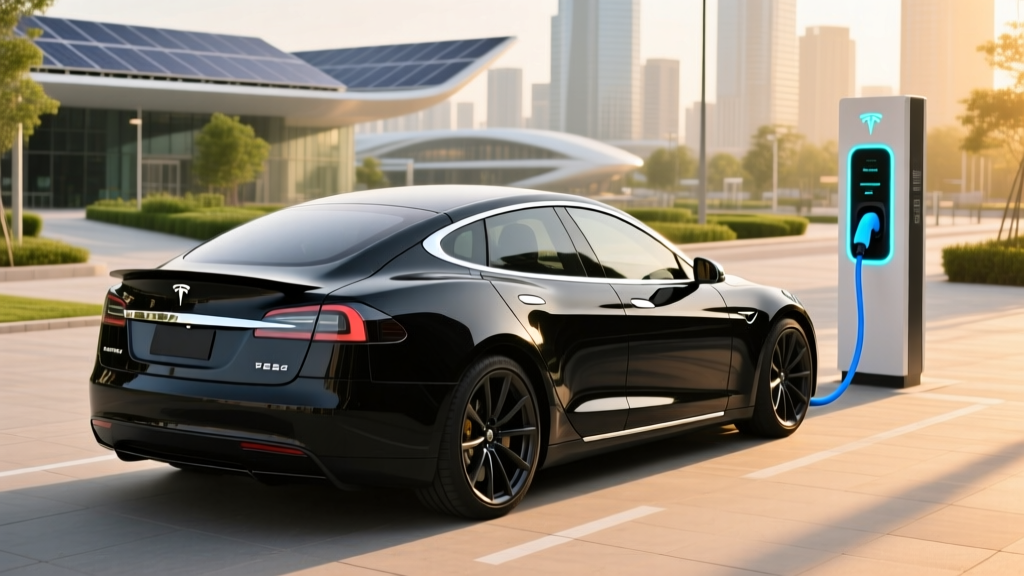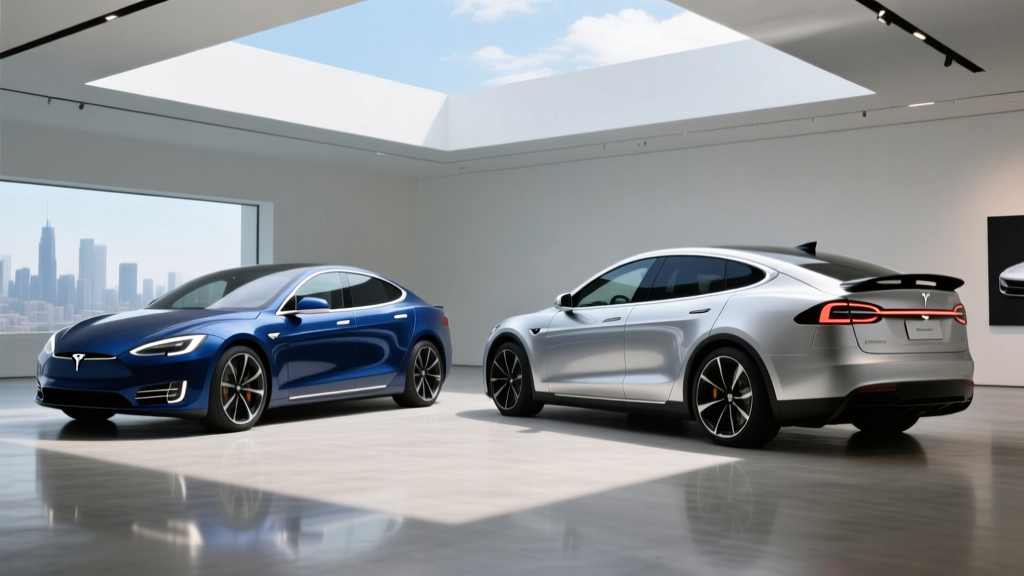
The End of an Era: Model S and Model X in Their Final Year
When Tesla launched the Model S in 2012, it didn't just introduce an electric sedan — it proved that a battery-electric vehicle could outperform combustion luxury cars on range, acceleration, and tech. The Model X followed in 2015, bringing falcon-wing doors and three-row seating to the EV space. Now, as Tesla winds down Model S and Model X production worldwide, these two nameplates are entering their final model year with minimal updates and a clear message: the future belongs to the refreshed Model 3, the updated Model Y, the Cybertruck, and the next-generation platform.
For buyers still considering a new Model S or Model X in 2026, the question isn't whether these cars are capable — they still post impressive numbers — but whether buying a sunset product makes financial and practical sense. This review examines the final-production specs, real-world ownership realities, and how these legacy Teslas stack up against the luxury EV competition that has matured significantly since they debuted.
| Spec | Model S Long Range | Model S Plaid | Model X Long Range | Model X Plaid |
|---|---|---|---|---|
| EPA Range | 402 mi | 359 mi | 335 mi | 320 mi |
| Battery (usable) | ~95 kWh, NMC | ~95 kWh, NMC | ~95 kWh, NMC | ~95 kWh, NMC |
| Drivetrain | Dual-Motor AWD | Tri-Motor AWD | Dual-Motor AWD | Tri-Motor AWD |
| Horsepower | 670 hp | 1,020 hp | 670 hp | 1,020 hp |
| 0-60 mph | 3.1 sec | 1.99 sec | 3.8 sec | 2.5 sec |
| Max DC Fast Charge | 250 kW | 250 kW | 250 kW | 250 kW |
| 10-80% DCFC Time | ~27 min | ~27 min | ~30 min | ~30 min |
| Level 2 Home Rate | 11.5 kW (44 mi/hr) | 11.5 kW (44 mi/hr) | 11.5 kW (36 mi/hr) | 11.5 kW (36 mi/hr) |
| MPGe (combined) | 120 MPGe | 116 MPGe | 103 MPGe | 100 MPGe |
| Efficiency | 28 kWh/100 mi | 29 kWh/100 mi | 33 kWh/100 mi | 34 kWh/100 mi |
| Base MSRP | $74,990 | $89,990 | $79,990 | $94,990 |
| Battery Warranty | 8 yr / 150,000 mi | 8 yr / 150,000 mi | 8 yr / 150,000 mi | 8 yr / 150,000 mi |
Source: EPA / fueleconomy.gov and Tesla.com Model S specs. Prices reflect 2026 MSRP before incentives or delivery fees.
Real-World Range: What the EPA Sticker Doesn't Tell You
Model S Long Range — EPA: 402 miles | Real-World Expectation: Plan for ~310–340 miles on mixed highway driving at 70-75 mph. In cold weather (below 32°F / 0°C), expect a 20-30% reduction, dropping effective range to ~240–280 miles. The Model S Plaid's higher power draw and stickier tires reduce real-world highway range to roughly ~270–300 miles in moderate conditions.
The Model S Long Range's 402-mile EPA figure remains among the highest of any production EV sold in the U.S. But EPA test cycles are conducted at relatively low average speeds with climate control off. In our experience and consistent with third-party highway range tests, sustained 75-mph driving in 65°F conditions yields roughly 310–340 miles before the battery hits zero.
The Model X, with its larger frontal area and heavier curb weight (~5,183 lbs for Long Range vs. ~4,561 lbs for the Model S), sacrifices roughly 60–80 miles of real-world range compared to its sedan sibling. Cold-weather impacts are significant for both: lithium-ion cells in NMC chemistry lose efficiency in freezing temperatures, and cabin heating (even with Tesla's heat pump) draws substantial energy. Winter highway range of 240–260 miles for the Model S and 200–220 miles for the Model X is realistic in sub-freezing climates.
Efficiency figures bear this out. The Model S Long Range achieves 120 MPGe combined (28 kWh/100 mi), which is excellent for a large luxury sedan. The Model X drops to 103 MPGe (33 kWh/100 mi) — still competitive with the BMW iX and Mercedes EQS SUV, but noticeably thirstier than the sedan.
Charging Speed: Still Fast, But No Longer Class-Leading
| Charging Level | Power / Rate | Model S (miles added/hr) | Model X (miles added/hr) |
|---|---|---|---|
| Level 1 (120V, 12A) | ~1.4 kW | ~3-4 mi/hr | ~3 mi/hr |
| Level 2 (240V, 48A) | 11.5 kW | ~44 mi/hr | ~36 mi/hr |
| DC Fast Charge (peak) | 250 kW (V3 Supercharger) | ~172 mi in 15 min | ~150 mi in 15 min |
Both the Model S and Model X peak at 250 kW on Tesla's V3 Superchargers, achieving a 10-80% charge in approximately 27 minutes (Model S) to 30 minutes (Model X). That 250-kW peak is sustained only between roughly 10-30% state of charge; above 50%, the charge curve tapers significantly, dropping below 150 kW, and above 80%, it falls to under 60 kW. This taper behavior is standard for NMC lithium-ion cells to protect long-term battery health, but it means the last 20% of a charge session can take as long as the first 60%.
Compared to 2026 competitors, 250 kW is respectable but no longer best-in-class. The Hyundai Ioniq 5 and Kia EV6 (on 800V architectures) sustain 235+ kW longer and complete 10-80% in ~18 minutes. The Lucid Air Grand Touring charges at up to 300 kW and adds range faster per minute thanks to its superior efficiency. Tesla has not upgraded the Model S/X platform to the higher-voltage architecture used in the Cybertruck, which is one reason these models are being phased out rather than refreshed.
At home on a Level 2 Wall Connector (48 amps / 11.5 kW), the Model S adds roughly 44 miles of range per hour — enough to fully replenish the battery in about 9 hours overnight. The Model X adds ~36 miles per hour, needing roughly 10 hours for a full charge. Both figures assume a 60-amp circuit with a NEMA 14-50 or hardwired connection; installation costs typically range from $800 to $2,500 depending on panel proximity and local permitting, per Tesla's home charging guide.
Performance and Drivetrain: The Plaid Still Shocks
If there's one area where the Model S and Model X refuse to show their age, it's straight-line acceleration. The Model S Plaid's tri-motor setup produces 1,020 horsepower and a claimed 1.99-second 0-60 mph time (with rollout subtracted). Even using the more conservative one-foot rollout-inclusive methodology, the Plaid hits 60 mph in approximately 2.1 seconds — making it one of the quickest production sedans ever built, rivaling the Bugatti Chiron at a fraction of the price.
The Long Range dual-motor variant is hardly slow at 670 hp and a 3.1-second 0-60 time. For context, that matches or beats most V8-powered luxury sport sedans from just five years ago. The Model X, despite its SUV mass, manages 3.8 seconds (Long Range) and 2.5 seconds (Plaid) — figures that defy physics for a three-row family hauler.
All variants use permanent-magnet synchronous motors with Tesla's proprietary inverter technology. The dual-motor setup provides independent front/rear torque vectoring for all-weather traction, while the tri-motor Plaid adds a second rear motor for torque vectoring across the rear axle. Regenerative braking is aggressive and adjustable, enabling genuine one-pedal driving in most conditions.
The adaptive air suspension on both models provides adjustable ride height (useful for clearing speed bumps or maximizing highway efficiency) and a comfortable, if not class-leading, ride quality. Competitors like the Mercedes EQS and BMW i7 offer noticeably more refined suspension tuning, particularly over broken pavement.
Interior, Tech, and the Yoke Debate
The Model S and Model X interiors remain polarizing. The minimalist dashboard centers on a 17-inch landscape touchscreen that controls virtually every vehicle function — climate, media, navigation, vehicle settings, and even the glovebox release. A secondary 8-inch rear touchscreen provides rear-seat passengers with climate and media controls. The instrument cluster is a 12.3-inch display behind the yoke (or optional round steering wheel, reintroduced after customer demand).
The yoke steering wheel remains the most divisive feature in the cabin. At low speeds and during parking maneuvers, the yoke requires hand-over-hand rotation that feels unnatural without a full rim. On highways and twisty roads, it's less intrusive and provides an unobstructed view of the instrument cluster. Tesla has improved the steer-by-wire calibration in the latest software updates, but many buyers still opt for the conventional round wheel when available.
Tech highlights include:
- Autopilot / FSD (Supervised): Tesla's Level 2 driver-assistance system. Autopilot (standard) provides adaptive cruise and lane centering. Full Self-Driving (Supervised) adds automated lane changes, traffic light/stop sign recognition, and Navigate on Autopilot. Neither system is autonomous — the driver must remain fully engaged at all times.
- Infotainment: Netflix, YouTube, Disney+, and Arcade gaming on the center display (while parked). Spotify and Tidal streaming. No Apple CarPlay or Android Auto — Tesla's ecosystem is proprietary.
- Over-the-Air Updates: Regular software updates add features, improve efficiency algorithms, and refine UI. This remains a Tesla strength.
- Sentry Mode / Dashcam: Continuous multi-camera recording with motion-triggered alerts via the Tesla app.
ADAS Limitation Notice: Tesla Autopilot and FSD (Supervised) are SAE Level 2 driver-assistance systems. They do NOT make the vehicle self-driving. The driver must maintain hands-on-wheel awareness and be prepared to take over instantly. Misuse of these systems has been linked to NHTSA-investigated crashes. See NHTSA's investigation page for context.
Pricing, Tax Credits, and the Sunset Discount Question
| Trim | Base MSRP | As-Tested (typical options) | §30D Credit Eligible? | Effective Price (if eligible) |
|---|---|---|---|---|
| Model S Long Range | $74,990 | $78,490 | No — exceeds sedan MSRP cap | $78,490 |
| Model S Plaid | $89,990 | $93,490 | No — exceeds sedan MSRP cap | $93,490 |
| Model X Long Range | $79,990 | $84,490 | Potentially — SUV cap is $80,000 | $76,990 (if eligible) |
| Model X Plaid | $94,990 | $98,490 | No — exceeds SUV MSRP cap | $98,490 |
Under current IRS §30D rules, the federal EV tax credit has strict MSRP caps: $55,000 for sedans and $80,000 for SUVs/vans/pickups. This means:
- Model S (all trims): Classified as a sedan, the $55,000 MSRP cap disqualifies every Model S variant from the federal credit. This has been the case since the §30D restructuring took effect.
- Model X Long Range: At $79,990 MSRP, the base Model X Long Range squeezes under the $80,000 SUV cap. However, adding any factory option (premium paint, FSD, larger wheels) pushes the MSRP above $80,000, disqualifying it. Buyers must also meet income caps ($150,000 single / $300,000 joint AGI) and the vehicle must satisfy critical-mineral and battery-component sourcing requirements, which Tesla's supply chain partially meets but which vary by build month. Always verify eligibility on the IRS qualified vehicles list before purchasing.
- Model X Plaid: At $94,990, it exceeds the SUV cap and is ineligible.
The point-of-sale transfer option, if eligible, allows the buyer to assign the credit to the dealer for an immediate price reduction rather than waiting for a tax refund. Consult a tax professional for your specific situation.
As Tesla winds down production, some buyers wonder whether end-of-line discounts will materialize. Tesla historically does not offer traditional dealer negotiations or incentives on new vehicles, but inventory clearance pricing on existing stock is possible through direct price adjustments on Tesla's website. Check Tesla's current inventory page for any price reductions on in-stock units.
Cargo, Passenger Space, and Practicality
The Model S offers 28.0 cubic feet of cargo space behind the rear seats (including the rear trunk and front trunk/frunk). With the rear seats folded, that expands to approximately 64.9 cubic feet — generous for a sedan, aided by the hatchback-style liftgate. Rear legroom is 35.4 inches, adequate for adults but tighter than the BMW i7 or Mercedes EQS.
The Model X provides more versatility: 81.5 cubic feet behind the front seats (with second and third rows folded), 44.0 cubic feet behind the second row (five-seat config), or 14.4 cubic feet behind the third row (six- or seven-seat config). The falcon-wing rear doors open vertically, providing excellent overhead access for loading children into car seats — a genuine practical advantage in tight parking spaces. Third-row legroom is 32.7 inches, best suited for children or short trips.
Both models include a front trunk (frunk) for additional storage: approximately 3.1 cubic feet in the Model S and 3.0 cubic feet in the Model X. Neither offers a spare tire; Tesla provides a tire inflator kit and roadside assistance during the warranty period.
Warranty, Longevity, and Parts Support Concerns
Tesla covers the battery and drive units for 8 years or 150,000 miles (whichever comes first) with a minimum 70% capacity retention threshold on Long Range models. The Plaid variants carry the same 8-year / 150,000-mile coverage. The basic vehicle limited warranty is 4 years or 50,000 miles.
The battery chemistry in both models is NMC (nickel-manganese-cobalt), which offers higher energy density than LFP (lithium iron phosphate) but is more sensitive to sustained high state-of-charge storage. Tesla recommends daily charging to 80-90% for NMC packs and 100% only before long trips. Long-term degradation data from Tesla's fleet suggests approximately 10-12% capacity loss at 150,000 miles — within the warranty threshold but noticeable for range-sensitive owners.
The elephant in the room for sunset-product buyers is long-term parts and service support. Tesla is legally required to provide parts for a minimum number of years (varies by state, typically 10-15 years for safety-critical components), and the company's over-the-air update infrastructure should continue supporting these vehicles for years. However, as production volumes drop and eventually cease, availability of replacement body panels, interior trim, and model-specific components may become constrained. This is a legitimate consideration for buyers planning 10+ year ownership.
Competitor Comparison: Do the Model S and X Still Compete?
| Model | EPA Range | 0-60 mph | Max DCFC | Base MSRP |
|---|---|---|---|---|
| Tesla Model S LR | 402 mi | 3.1 sec | 250 kW | $74,990 |
| Lucid Air Pure | 419 mi | 3.8 sec | 300 kW | $69,900 |
| BMW i7 eDrive50 | 318 mi | 4.5 sec | 195 kW | $99,795 |
| Mercedes EQS 450+ | 352 mi | 5.3 sec | 200 kW | $104,400 |
| Tesla Model X LR | 335 mi | 3.8 sec | 250 kW | $79,990 |
| BMW iX xDrive50 | 324 mi | 4.4 sec | 195 kW | $87,250 |
| Mercedes EQS SUV 450 | 305 mi | 5.6 sec | 200 kW | $105,550 |
The competitive landscape has transformed dramatically since the Model S launched. The Lucid Air Pure undercuts the Model S Long Range on price while exceeding its EPA range, and the Lucid's 300-kW charging and available 900V architecture represent newer engineering. The BMW i7 and Mercedes EQS sacrifice range for substantially superior interior refinement, ride quality, and traditional luxury appointments.
In the SUV segment, the Model X still offers unique practicality with its falcon-wing doors and optional third row, but the BMW iX delivers a more polished driving experience and interior, while the Mercedes EQS SUV provides a level of luxury the Tesla cannot match. The Rivian R1S is also a credible three-row electric SUV alternative with superior off-road capability.
Pros
- Class-leading EPA range (Model S LR at 402 mi)
- Plaid performance is unmatched at any price point
- Access to Tesla's Supercharger network (now open to other brands, but still most extensive)
- Over-the-air updates continue to add functionality
- Model X falcon-wing doors offer unique third-row access
- Strong efficiency for vehicle size (Model S: 120 MPGe)
Cons
- Platform is aging — no 800V architecture, 250 kW DCFC cap
- Interior quality lags behind BMW, Mercedes, Lucid at similar prices
- No Apple CarPlay or Android Auto
- Yoke steering remains divisive; round wheel availability varies
- Production winding down — long-term parts availability is uncertain
- Model S ineligible for federal tax credit (sedan MSRP cap)
- Ride quality and NVH refinement trail newer competitors
Who Should Buy — and Who Should Look Elsewhere
Choose the Model S if: You prioritize maximum range and acceleration above interior luxury, you're a Tesla ecosystem loyalist who values Supercharger convenience and OTA updates, and you plan to own the vehicle 5-7 years (within the warranty window).
Choose the Model X if: You need a three-row electric SUV with falcon-wing practicality for car seats, you value the Supercharger network for family road trips, and you can configure the Long Range under the $80,000 MSRP cap for potential tax credit eligibility.
Look at competitors if: Interior luxury and ride refinement are priorities (BMW i7, Mercedes EQS), you want newer 800V charging architecture (Lucid Air, Hyundai/Kia E-GMP platform), you need guaranteed long-term parts support from a legacy OEM, or you want Apple CarPlay integration.
Frequently Asked Questions
What is the real-world range of the 2026 Tesla Model S and Model X?
The Model S Long Range achieves 402 miles EPA, but expect approximately 310–340 miles in real-world highway driving at 70-75 mph, and 240–280 miles in sub-freezing winter conditions. The Model X Long Range delivers 335 miles EPA, translating to roughly 260–290 miles highway and 200–220 miles in cold weather. Plaid variants lose 10-15% more due to higher power draw and wider tires.
How fast do the Model S and Model X charge at home and on the road?
On a V3 Supercharger at peak 250 kW, both models add approximately 172 miles (Model S) or 150 miles (Model X) in 15 minutes, with a 10-80% session taking 27–30 minutes. At home on a 48-amp Level 2 Wall Connector (11.5 kW), the Model S adds ~44 miles per hour and the Model X adds ~36 miles per hour. A full overnight charge takes 9–10 hours.
Does the Tesla Model S or Model X qualify for the $7,500 federal EV tax credit?
The Model S does not qualify — it's classified as a sedan and exceeds the $55,000 MSRP cap under IRS §30D rules. The base Model X Long Range at $79,990 MSRP may qualify under the $80,000 SUV cap, but only if no options push it above that threshold, and only if the buyer meets income limits ($150K single / $300K joint) and the vehicle meets critical-mineral and battery-component sourcing requirements. Verify on the IRS qualified vehicle list before purchasing.
Is it risky to buy a Model S or Model X as Tesla winds down production?
There is moderate risk. Tesla will continue to support these vehicles with software updates and parts for years, and the 8-year/150,000-mile battery warranty remains in force. However, as production ceases, model-specific replacement parts (body panels, trim, unique components) may become harder to source over time. Buyers planning to keep the vehicle 5-7 years face minimal risk; those planning 10+ year ownership should weigh this carefully.
How does the Model S compare to the Lucid Air in 2026?
The Lucid Air Pure starts lower ($69,900 vs. $74,990), offers more EPA range (419 vs. 402 miles), charges faster (300 kW peak vs. 250 kW), and has a more conventional luxury interior. The Model S counters with access to Tesla's mature Supercharger network, a more proven software ecosystem, and the Plaid's unmatched 1.99-second 0-60 time. For pure luxury and efficiency, the Lucid wins; for performance and ecosystem, Tesla retains an edge.
What happens to Tesla's warranty and service if I buy in the final production year?
Your warranty is fully honored regardless of when production ends. Tesla's 4-year/50,000-mile basic warranty and 8-year/150,000-mile battery/drivetrain warranty are contractual obligations. Mobile service and Supercharger access continue. The main concern is parts availability for collision repair and cosmetic replacements as supply chains wind down over the following years.