Why Tesla Production Stopped for Model S and Model X
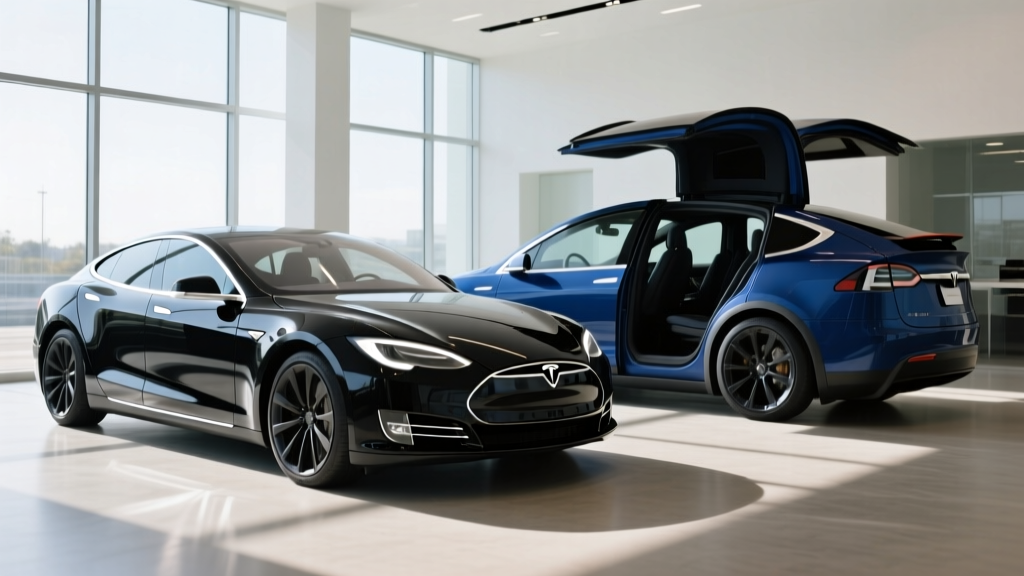
In early 2026, Tesla officially halted production of the Model S sedan and Model X SUV at its Fremont, California factory. The decision, first telegraphed by earnings-call commentary in late 2025, reflects a strategic pivot: Tesla is reallocating Fremont lines toward its next-generation, lower-cost platform vehicles and expanding Optimus robot manufacturing. For over a decade, the Model S and Model X served as Tesla's flagship halo cars — the vehicles that proved electric drivetrains could outperform internal combustion on luxury, speed, and tech. Now, their production run has ended.
If you're researching "tesla production stopped" because you're considering a Model S or Model X, you still have options: remaining new-inventory vehicles at dealerships, Tesla's certified pre-owned program, and the broader used market. But the calculus has changed. Let's break down exactly what the final 2025 model-year versions of these vehicles offer, how they stack up against the competition still in production, and whether buying a discontinued Tesla flagship makes financial sense in 2026.
Final Specs: 2025 Tesla Model S at a Glance
The 2025 Model S was offered in two trims: the Long Range (dual-motor AWD) and the Plaid (tri-motor AWD). Below are the definitive specifications for the final production year.
| Spec | Long Range | Plaid |
|---|---|---|
| EPA Range | 402 miles | 396 miles |
| Battery (usable) | ~95 kWh, NMC | ~95 kWh, NMC |
| Drivetrain | Dual-Motor AWD | Tri-Motor AWD |
| Horsepower | 670 hp | 1,020 hp |
| 0–60 mph | 3.1 seconds | 1.99 seconds |
| Top Speed | 155 mph | 200 mph |
| Max DC Fast Charge | 250 kW | 250 kW |
| 10–80% DC Time | ~27 minutes | ~27 minutes |
| Level 2 Charge Rate | 11.5 kW (~34 mi/hr) | 11.5 kW (~34 mi/hr) |
| MPGe (combined) | 120 MPGe | 116 MPGe |
| kWh/100 mi | 28 kWh | 29 kWh |
| Cargo (rear + frunk) | 28.0 cu ft + 3.1 cu ft | 28.0 cu ft + 3.1 cu ft |
| Rear Legroom | 35.4 inches | 35.4 inches |
| Base MSRP | $74,990 | $89,990 |
| Battery Warranty | 8 yr / 150,000 mi | 8 yr / 150,000 mi |
Source: fueleconomy.gov, Tesla specification archives.
Real-World Range: What the EPA Number Doesn't Tell You
Real-World Highway (70–80 mph): Expect 310–340 miles
Cold Weather (below 32°F): Expect 260–310 miles depending on cabin heating and preconditioning
The Model S Long Range's 402-mile EPA rating was among the highest of any production EV sold in the U.S. But as with every electric vehicle, that number reflects a blended city-highway test cycle with moderate temperatures. On sustained highway driving at 75 mph, aerodynamic drag dominates, and you'll typically see 75–85% of the EPA figure — putting real-world highway range around 310–340 miles.
Cold weather compounds the loss. The Model S uses a heat pump (standard since the 2021 refresh), which mitigates winter range loss compared to older resistive-heater EVs. Still, in sub-freezing conditions without preconditioning, expect a 20–30% reduction from the sticker number. Preconditioning the battery while plugged in — a feature accessible through the Tesla app — recovers much of that lost range by warming the NMC cells to optimal operating temperature before departure.
For daily commuting under 80 miles round-trip, the Model S's real-world range means charging once or twice a week on a home Level 2 charger. For road trips, the 402-mile EPA rating translates to comfortable 250–280 mile legs between Supercharger stops, which aligns well with typical rest-and-eat breaks.
Charging Speed: Supercharger Network and Home Charging
The Model S and Model X use Tesla's proprietary NACS connector, which by 2026 has become the de facto North American standard — adopted by Ford, GM, Rivian, Hyundai, and most major automakers. This means a used Model S or X retains full, native access to Tesla's Supercharger network without adapters, a significant practical advantage.
| Level | Power | Speed | Typical Use |
|---|---|---|---|
| Level 1 (120V) | ~1.4 kW | ~4 mi/hr | Emergency / trickle |
| Level 2 (240V, 48A) | 11.5 kW | ~34 mi/hr | Home overnight |
| DC Fast (Supercharger V3) | 250 kW peak | ~200 mi in 15 min | Road trips |
DC Fast Charging Reality: The Model S peaks at 250 kW on V3 Superchargers, but like all EVs, it doesn't sustain that rate across the full session. The charge curve is aggressive from 10–40% SoC (holding close to peak), then tapers progressively. A 10–80% session takes approximately 27 minutes under optimal conditions (warm battery, V3 or V4 stall). Above 80%, charging slows dramatically to protect the NMC cells — expect an 80–100% top-off to add another 20+ minutes. For road-trip efficiency, plan stops around the 10–80% window.
Home Charging: At 11.5 kW on a 240V/48A Wall Connector, the Model S adds roughly 34 miles of range per hour, or about 270 miles overnight in 8 hours. This is sufficient for virtually all daily driving. Installation of a Tesla Wall Connector typically costs $800–$2,000 including electrician labor, depending on panel proximity and whether a 200-amp service upgrade is needed.
Pricing, Tax Credits, and the Discontinued-Model Factor
Because Model S and Model X production has stopped, pricing now operates across three markets: remaining new dealer inventory, Tesla Certified Pre-Owned, and the general used market.
| Trim | Original MSRP | Est. CPO Price (2026) | Federal §30D Credit Eligible? |
|---|---|---|---|
| Long Range | $74,990 | $58,000–$65,000 | New only — used credit separate (§25E, up to $4,000) |
| Plaid | $89,990 | $70,000–$78,000 | New only — used credit separate (§25E, up to $4,000) |
Federal Tax Credit Nuance: For any remaining new 2025 Model S or X units still in inventory, the IRS §30D credit of up to $7,500 may apply — but only if the buyer meets income caps ($150,000 single / $300,000 joint AGI), the vehicle MSRP is under the $55,000 sedan cap or $80,000 SUV cap (Model S is a sedan, so it must be under $55,000 — which it is not at $74,990 MSRP). This means the new Model S Long Range at $74,990 does not qualify for the §30D new-vehicle credit due to the sedan MSRP cap. The Model X, classified as an SUV, falls under the $80,000 cap and may qualify for its base trims. Always verify current rules at irs.gov and consult a tax professional.
For used Model S or X purchases, the §25E used clean vehicle credit offers up to $4,000 (30% of sale price, capped) if the vehicle sells for $25,000 or less, the buyer meets income caps ($75,000 single / $150,000 joint), and it's purchased from a licensed dealer. Given current CPO pricing, most used Model S/X vehicles will exceed the $25,000 cap, making the used credit difficult to claim.
Model X: The Final Production SUV
The 2025 Model X was also offered in Long Range and Plaid trims. Key differences from the Model S include falcon-wing rear doors, optional 6- or 7-seat configurations, and a slightly lower EPA range due to its larger, heavier body.
The Model X Long Range carried an EPA rating of 348 miles (20-inch wheels) with a base MSRP of $79,990. The Plaid delivered 333 miles at $94,990. Towing capacity reached 5,000 pounds — competitive with mid-size ICE SUVs. Cargo space behind the second row measured 44.1 cu ft, expanding to 83.1 cu ft with seats folded, plus a 6.6 cu ft frunk.
For families needing three rows and electric drivetrain, the Model X was one of very few options. With production stopped, the remaining used and CPO inventory now competes against the Kia EV9, Rivian R1S, and the three-row variants of newer platforms from Hyundai and Volvo.
Pros and Cons of Buying a Discontinued Model S or X
- Class-leading range (402 mi EPA, Long Range)
- Native NACS / full Supercharger access without adapters
- Tri-motor Plaid performance (1,020 hp, 1.99s 0–60)
- Mature software: FSD Supervised, OTA updates continue
- Over-the-air updates expected to continue for years
- 8-year/150,000-mile battery warranty still in effect for recent models
- Production stopped — no new orders, limited inventory
- Long-term parts availability uncertainty (body panels, falcon-wing mechanisms)
- Model S sedan MSRP exceeds §30D sedan cap ($55,000)
- 250 kW peak DC charge rate now trails 350 kW competitors (Hyundai E-GMP, Porsche 800V)
- Interior material quality lags Mercedes EQS, BMW i7 at similar price points
- Yoke steering controversial; no round-wheel option on 2025 models
Who Should Still Buy a Model S or X in 2026?
The Model S still suits: High-mileage commuters who value 400-mile range and Supercharger convenience; performance enthusiasts who want Plaid acceleration without spending six figures on a Porsche Taycan Turbo; and existing Tesla owners deeply embedded in the ecosystem (Solar, Powerwall, app integration).
The Model X still suits: Families needing three-row seating and electric drivetrain who find the EV9 too small or the Rivian R1S too expensive on the used market; buyers who want falcon-wing door practicality in tight parking spaces; and those who need 5,000-lb towing with a pure EV.
Consider pivoting to: The BMW i7 or Mercedes EQS if luxury build quality is paramount; the Lucid Air if range is the top priority (516-mile EPA on Air Grand Touring); or the refreshed Tesla Model 3/Y if you want current-production support and warranty simplicity.
Frequently Asked Questions
Why did Tesla stop producing the Model S and Model X?
Tesla is reallocating Fremont factory capacity toward its next-generation, lower-cost vehicle platform and robotics (Optimus) production. The Model S and X, while iconic, represented a small fraction of Tesla's total volume — the Model 3 and Model Y dominate sales. Continuing low-volume flagship production on expensive Fremont lines no longer aligned with Tesla's cost-reduction strategy.
Will Tesla still service and support the Model S and X?
Yes. Tesla has committed to ongoing service, parts supply, and over-the-air software updates for all existing vehicles. Federal regulations require a minimum of 15 years of parts availability for safety-critical components. However, niche cosmetic and body parts (especially falcon-wing door mechanisms on the Model X) may face longer lead times as the fleet ages.
Does a used Model S qualify for any federal tax credit?
Possibly. The §25E used clean vehicle credit provides up to $4,000, but the vehicle must sell for $25,000 or less from a licensed dealer, and the buyer must meet income caps ($75,000 single / $150,000 joint). Most 2022–2025 Model S vehicles currently trade above $25,000, making this credit difficult to claim. Verify rules at irs.gov.
How does the Model S charging speed compare to newer EVs?
The Model S peaks at 250 kW on DC fast charging, which was class-leading at its 2021 refresh but now trails vehicles on 800V architectures. The Hyundai Ioniq 5, Kia EV6, and Porsche Taycan can accept 350 kW at compatible chargers, achieving 10–80% in roughly 18 minutes versus the Model S's ~27 minutes. For home Level 2 charging, the Model S at 11.5 kW is competitive and adds ~34 miles per hour.
Is the Model S battery reliable long-term?
Tesla's NMC battery packs in the refreshed Model S (2021+) have shown strong longevity. Tesla's own impact reports indicate approximately 12% degradation at 200,000 miles across its fleet. The 8-year/150,000-mile warranty guarantees a minimum of 70% capacity retention. Out-of-warranty replacement costs for a Model S pack have historically ranged from $13,000 to $20,000 depending on the service center and pack availability — a factor to consider on higher-mileage used purchases.
What's the best alternative if I want a luxury electric sedan?
If you want a current-production luxury EV sedan with strong range and charging: the Lucid Air Pure (419 miles EPA, from $69,900) offers the best range; the BMW i5 eDrive40 (295 miles, from $57,900) delivers superior interior quality; and the Mercedes EQS 450+ (390 miles, from $75,900) provides the most luxurious ride. All three benefit from ongoing production, full warranty coverage, and current dealer support.