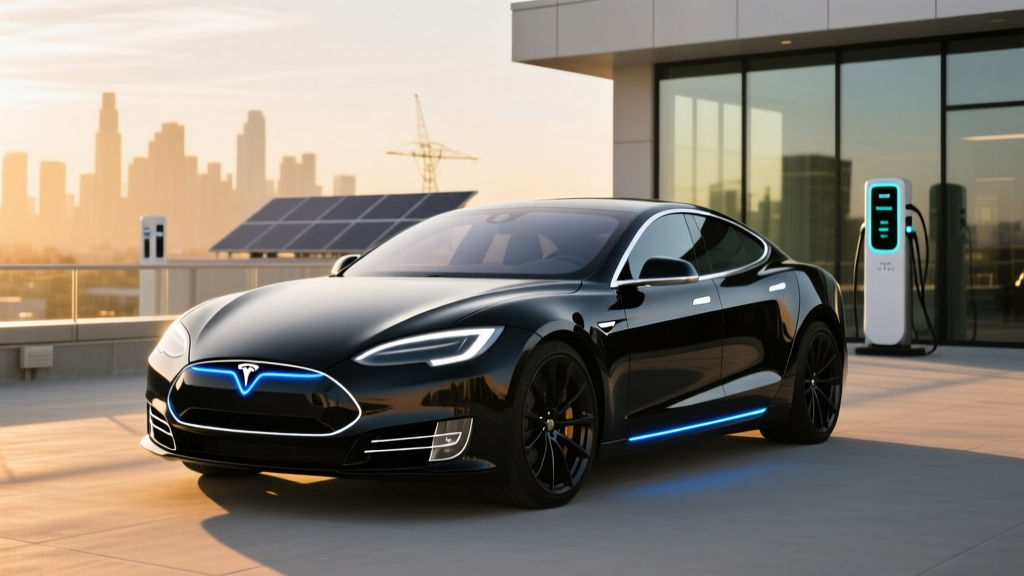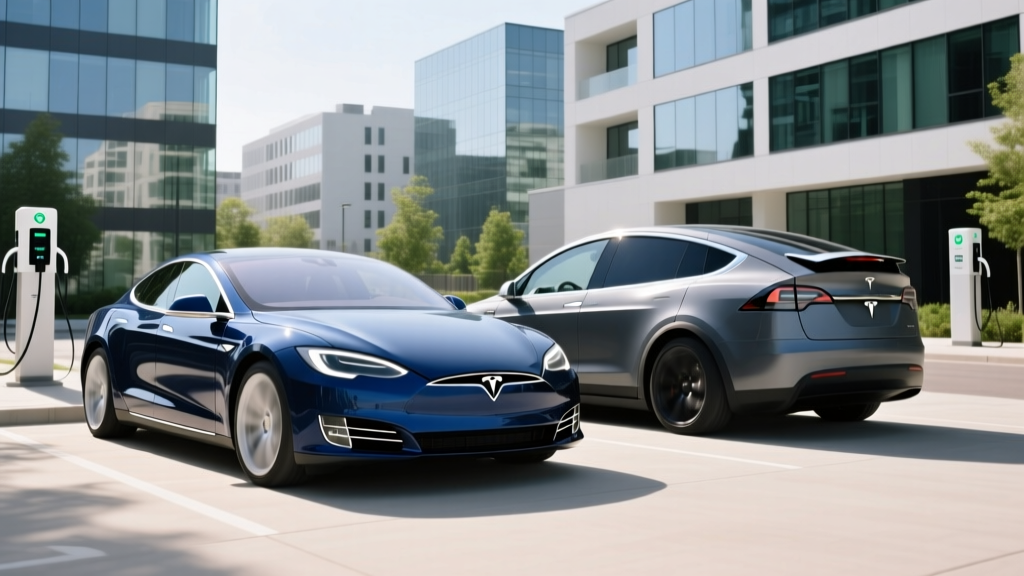
Tesla's decision to halt new orders of the Model S and Model X in several European markets sent a jolt through the EV community. For U.S. shoppers, the Tesla Model S X Europe sales discontinuation raises a practical question: are these flagship sedans and SUVs still worth buying stateside, or does the pullback signal the end of an era? Below, we break down the 2026 Model S and Model X with the exact numbers that matter — EPA range, battery specs, charging speeds, real-world ownership costs, and federal tax credit eligibility — so you can decide whether Tesla's originals still earn a spot in your garage.
Why Tesla Pulled Model S and X From Europe
As of mid-2025, Tesla stopped accepting new orders for the Model S and Model X in most European countries, citing low sales volume, the cost of maintaining EU type-approval and service infrastructure for low-volume models, and a strategic pivot toward the higher-volume Model 3, Model Y, and the Cybertruck. European buyers were directed toward the refreshed Model 3 Highland and the updated Model Y Juniper. The Fremont, California assembly line continues to produce both vehicles for the North American market, where demand — while modest compared to the Model Y — remains steady among luxury EV shoppers seeking range, performance, and the Supercharger network.
This pullback doesn't mean the vehicles are discontinued globally. U.S. buyers can still configure, order, and take delivery of both the Model S and Model X. But the European exit does raise questions about long-term parts availability, software update priority, and resale value — all factors we weigh in this review.
2026 Tesla Model S: Specs, Range, and Real-World Efficiency
| Spec | Model S Long Range | Model S Plaid |
|---|---|---|
| EPA Range | 402 miles | 359 miles |
| Battery (usable) | ~95 kWh, NMC (2170 cells) | ~95 kWh, NMC (2170 cells) |
| Drivetrain | Dual-Motor AWD | Tri-Motor AWD |
| Horsepower | 670 hp | 1,020 hp |
| 0-60 mph | 3.1 sec | 1.99 sec |
| Top Speed | 155 mph | 200 mph |
| MPGe (combined) | 120 MPGe | 116 MPGe |
| Efficiency | 28 kWh/100 mi | 29 kWh/100 mi |
| Cargo (rear + frunk) | 28.0 cu ft (rear) + 3.1 cu ft (frunk) | 28.0 cu ft (rear) + 3.1 cu ft (frunk) |
| Rear Legroom | 35.4 in | 35.4 in |
| Base MSRP | $79,990 | $94,990 |
Source: EPA Fuel Economy — 2025/2026 Tesla Model S
2026 Tesla Model X: Specs, Range, and Real-World Efficiency
| Spec | Model X Long Range | Model X Plaid |
|---|---|---|
| EPA Range | 348 miles | 326 miles |
| Battery (usable) | ~95 kWh, NMC (2170 cells) | ~95 kWh, NMC (2170 cells) |
| Drivetrain | Dual-Motor AWD | Tri-Motor AWD |
| Horsepower | 670 hp | 1,020 hp |
| 0-60 mph | 3.8 sec | 2.5 sec |
| MPGe (combined) | 109 MPGe | 101 MPGe |
| Efficiency | 31 kWh/100 mi | 33 kWh/100 mi |
| Cargo (behind 2nd row) | 42.0 cu ft (+ 7.1 cu ft frunk) | 42.0 cu ft (+ 7.1 cu ft frunk) |
| Max Cargo (folded) | 81.5 cu ft | 81.5 cu ft |
| 2nd-Row Legroom | 41.2 in | 41.2 in |
| Seating | 5, 6, or 7 passengers | 5, 6, or 7 passengers |
| Towing Capacity | 5,000 lbs | 5,000 lbs |
| Base MSRP | $84,990 | $99,990 |
Source: EPA Fuel Economy — 2025/2026 Tesla Model X
Charging Speed: DC Fast, Level 2, and the Charge Curve Reality
| Charging Level | Rate | Miles Added/Hour | Notes |
|---|---|---|---|
| Level 1 (120V, 12A) | ~1.4 kW | ~4-5 mi/hr | Emergency/trickle only |
| Level 2 (240V, 48A) | 11.5 kW | ~34-44 mi/hr | Home Wall Connector; full charge in ~9-10 hrs |
| DC Fast Charge (V4 Supercharger) | Peak 250 kW | ~200 mi in 15 min | 10-80% in ~25 min (Long Range) |
| DC Fast Charge (3rd-party CCS w/ adapter) | Up to 250 kW | Varies by station | Requires Tesla CCS adapter (included since 2024) |
Charge curve reality check: The Model S and X peak at 250 kW on V3/V4 Superchargers, but only when the battery is preconditioned (via navigation to a Supercharger) and at a low state of charge (below 20%). The charge rate tapers significantly above 50% SoC, dropping to roughly 100 kW by 65% and under 50 kW above 85%. A 10-80% charge takes approximately 25-30 minutes for the Long Range and 28-33 minutes for the Plaid. Charging from 80-100% can add another 25-35 minutes — plan accordingly on road trips and charge only to what you need.
At home, a Tesla Wall Connector on a 60A circuit delivers 48A continuous (11.5 kW), adding roughly 34-44 miles per hour of charging. A full overnight charge from 20% to 90% takes about 7-8 hours. Most owners charging from a typical daily commute (30-50 miles) will replenish in under two hours.
Pricing, Trim Levels, and Federal Tax Credit Eligibility
| Model/Trim | Base MSRP | Destination | As-Tested (typical config) | §30D Federal Tax Credit |
|---|---|---|---|---|
| Model S Long Range | $79,990 | $1,390 | $82,000-$86,000 | Not eligible (MSRP exceeds $55,000 sedan cap) |
| Model S Plaid | $94,990 | $1,390 | $97,000-$102,000 | Not eligible (MSRP exceeds $55,000 sedan cap) |
| Model X Long Range | $84,990 | $1,390 | $88,000-$95,000 | Not eligible (MSRP exceeds $80,000 SUV cap) |
| Model X Plaid | $99,990 | $1,390 | $103,000-$108,000 | Not eligible (MSRP exceeds $80,000 SUV cap) |
Neither the Model S nor Model X qualifies for the up-to-$7,500 federal EV tax credit under current IRS §30D rules. The Model S is a sedan with an MSRP far exceeding the $55,000 sedan cap; the Model X is classified as an SUV but its MSRP exceeds the $80,000 SUV cap. Additionally, buyer income limits apply ($150,000 single / $300,000 joint for modified AGI), and battery critical-mineral and component sourcing requirements must be met. Neither vehicle meets all sourcing criteria. If you're shopping for a Tesla that qualifies for the credit, consider the Model 3 or Model Y (certain trims and configurations may qualify — verify at the point of sale with your dealer and consult a tax professional).
Options that push as-tested prices higher include FSD (Supervised) at $8,000 (or $99/month subscription), premium interior colors ($2,000-$2,500), 21-inch wheels ($4,500), and for the Model X, six- or seven-seat configurations ($3,500-$6,500). Fully loaded, a Model X Plaid can exceed $110,000 before taxes.
Standout Tech, Driver Assists, and Notable Drawbacks
What sets these vehicles apart:
- 17-inch cinematic touchscreen with 22-speaker, 960-watt audio system — among the best infotainment experiences in any vehicle, EV or ICE.
- Rear-seat entertainment: 8-inch touchscreen for rear passengers (streaming, gaming, climate control).
- Yoke steering (optional): Controversial but offers unobstructed display visibility; traditional round wheel available at no extra cost.
- HEPA air filtration: Bioweapon Defense Mode with hospital-grade HEPA filter — genuinely effective in wildfire-smoke regions.
- Falcon Wing doors (Model X): Dramatic and practical for car-seat access in tight spaces, though slower to open/close than conventional doors.
- Over-the-air updates: Tesla continues to push meaningful software improvements, though update frequency for S/X has slowed relative to Model 3/Y.
Driver Assistance — Autopilot and FSD (Supervised):
Tesla Autopilot (standard) and Full Self-Driving (Supervised) are SAE Level 2 driver-assistance systems. This means the vehicle can control steering, acceleration, and braking under certain conditions, but the driver must remain fully attentive, keep hands on or near the wheel, and be prepared to take over at any moment. This is not autonomous or self-driving. Tesla's camera-only vision system performs well on well-marked highways but can struggle with construction zones, faded lane markings, heavy rain, and unmapped areas. The $8,000 FSD (Supervised) add-on includes Navigate on Autopilot, Auto Lane Change, Autopark, Summon, and traffic light/stop sign control — useful features, but none eliminate the need for active driver supervision.
Notable drawbacks:
- Aging platform: The Model S/X architecture dates to 2012/2015 (refreshed in 2021). Build quality has improved but still lags Mercedes EQS and BMW i7 in fit-and-finish consistency.
- No CCS native port: Requires a CCS adapter for non-Tesla DC fast chargers (included, but an extra step).
- Rear visibility (Model S): The sloping roofline and small rear window compromise sightlines; rely heavily on the backup camera.
- Falcon Wing door sensors (Model X): Occasionally misread low overhangs, requiring manual override.
- Insurance costs: Average annual premiums run $2,800-$3,500 depending on state and driver profile — significantly above the EV average due to repair costs and parts pricing.
- Slower OTA update cadence: Tesla appears to prioritize new feature development for Model 3/Y and Cybertruck.
Warranty and Battery Longevity
| Component | Coverage |
|---|---|
| Basic Vehicle | 4 years / 50,000 miles |
| Battery & Drive Unit | 8 years / 150,000 miles (Long Range) 8 years / 150,000 miles (Plaid) |
| Battery Capacity Retention | Minimum 70% over warranty period |
Tesla's 8-year/150,000-mile battery and drive unit warranty is competitive with the luxury EV segment. The 70% capacity retention threshold is industry standard, though some competitors (Hyundai/Kia) offer 10-year/100,000-mile terms. In practice, Tesla's 2170 NMC cells with active liquid thermal management have shown strong longevity: Tesla's Impact Report data indicates average battery degradation of approximately 12% after 150,000 miles across the fleet. Individual results vary based on charging habits — frequent DC fast-charging to 100% accelerates degradation, while daily charging to 80-90% on Level 2 and avoiding prolonged storage at extreme SoC levels preserves capacity.
Battery replacement cost (out of warranty): $20,000-$28,000 at a Tesla Service Center, depending on pack configuration and labor. Third-party EV battery specialists may offer refurbished packs for $14,000-$18,000.
Competition: How Do the Model S and X Compare?
| Vehicle | EPA Range | 0-60 mph | Base MSRP | Max DC Charge kW |
|---|---|---|---|---|
| Tesla Model S LR | 402 mi | 3.1 sec | $79,990 | 250 kW |
| BMW i7 eDrive50 | 318 mi | 4.5 sec | $105,700 | 195 kW |
| Mercedes EQS 450+ | 352 mi | 5.3 sec | $104,400 | 200 kW |
| Lucid Air Pure | 419 mi | 3.8 sec | $69,900 | 250 kW |
| Tesla Model X LR | 348 mi | 3.8 sec | $84,990 | 250 kW |
| BMW iX xDrive50 | 324 mi | 4.4 sec | $87,250 | 195 kW |
| Mercedes EQS SUV 450 | 305 mi | 5.4 sec | $104,400 | 200 kW |
| Rivian R1S (Dual) | 352 mi | 4.5 sec | $79,900 | 220 kW |
Sedan verdict: The Model S Long Range still offers the best combination of range (402 mi EPA), performance (3.1 sec 0-60), and charging infrastructure (Supercharger network) in its price bracket. The Lucid Air Pure undercuts it on price and beats it on range, but Tesla's Supercharger network and software ecosystem remain advantages. The BMW i7 and Mercedes EQS offer superior interior luxury and ride quality at significantly higher prices.
SUV verdict: The Model X occupies a unique niche — no other three-row electric SUV offers comparable range (348 mi), acceleration (3.8 sec), and towing capacity (5,000 lbs) at this price. The Rivian R1S is more rugged and off-road capable but has less range. The BMW iX is a two-row crossover with a more refined interior but less utility. For families needing three rows, falcon-wing doors, and road-trip range, the Model X has no direct rival.
✅ Choose the Model X if: You need a three-row electric SUV with genuine 300+ mile real-world range, 5,000-lb towing, and family-friendly falcon-wing access — and you're willing to accept an aging platform.
❌ Skip both if: You require the latest interior luxury (look to BMW i7, Mercedes EQS), the lowest price per mile of range (Lucid Air), or a vehicle that qualifies for the federal tax credit (Model 3/Y, Rivian, Hyundai Ioniq 5).
Who Should Buy the Model S or Model X in 2026?
Despite the European discontinuation, these vehicles serve specific U.S. buyers well:
- High-mileage commuters: The Model S Long Range's 402-mile EPA range means most commuters can go a full work week without charging, even with a 60-mile daily round trip.
- Road-trip families: The Supercharger network — now open to other brands via NACS adoption — remains the most reliable and fastest DC charging infrastructure in the U.S., making long trips in the Model X genuinely practical.
- Performance seekers: The Plaid variants deliver hypercar-level acceleration at a fraction of the cost, though the range penalty is real.
- Tech-forward buyers: Tesla's software ecosystem, OTA updates, mobile app, and Supercharger integration still lead the industry in seamlessness.
These vehicles are not ideal for buyers who prioritize the latest interior luxury, want a vehicle still in active production growth, need the federal tax credit, or plan to sell within 3-4 years (resale values may soften as the platform ages and Tesla's focus shifts).
Frequently Asked Questions
What is the real-world range of the Tesla Model S and Model X?
The Model S Long Range achieves 402 miles EPA, with real-world highway range around 340-360 miles and cold-weather range around 300-340 miles. The Model X Long Range achieves 348 miles EPA, with real-world highway range around 290-310 miles and cold-weather range around 250-280 miles. Plaid variants lose roughly 10-15% to their higher power consumption.
How fast do the Model S and X charge on DC fast chargers and at home?
Both vehicles peak at 250 kW on Tesla V3/V4 Superchargers when preconditioned. A 10-80% charge takes approximately 25-30 minutes (Long Range) or 28-33 minutes (Plaid). At home on a Level 2 Tesla Wall Connector (11.5 kW / 48A), they add 34-44 miles per hour, with a full charge taking roughly 9-10 hours.
Does the Tesla Model S or Model X qualify for the federal EV tax credit?
No. Under current IRS §30D rules, the Model S exceeds the $55,000 MSRP cap for sedans, and the Model X exceeds the $80,000 MSRP cap for SUVs. Additionally, battery critical-mineral and component sourcing requirements are not fully met. Consult the IRS Clean Vehicle Credit page and a tax professional for your specific situation.
Is the Tesla Model S or X still worth buying after Europe discontinued sales?
For U.S. buyers, the vehicles remain in production and are fully supported by Tesla's service and Supercharger networks. The European discontinuation reflects low volume in that market, not a global cancellation. However, buyers should consider that software update priority and long-term resale values may shift as Tesla focuses engineering resources on newer platforms. If range, performance, and Supercharger access are your top priorities, both vehicles remain compelling.
What are the biggest pros and cons of the Model S and X?
Pros: Class-leading range (Model S), unmatched Supercharger network access, blistering performance (especially Plaid), spacious interiors, best-in-class software and app integration, HEPA air filtration, strong safety ratings from NHTSA.
Cons: Aging platform and design, no federal tax credit eligibility, premium insurance costs, build quality inconsistencies, yoke steering learning curve, falcon-wing door sensor quirks (Model X), declining OTA update priority relative to newer Tesla models.
How long will the battery last, and what does replacement cost?
Tesla warrants the battery for 8 years or 150,000 miles (whichever comes first), guaranteeing at least 70% capacity retention. Fleet data suggests average degradation of ~12% at 150,000 miles. Out-of-warranty replacement costs $20,000-$28,000 at a Tesla Service Center. Proper charging habits (avoiding frequent 100% charges, limiting DC fast-charging when possible, preconditioning) can extend battery life well beyond the warranty period.