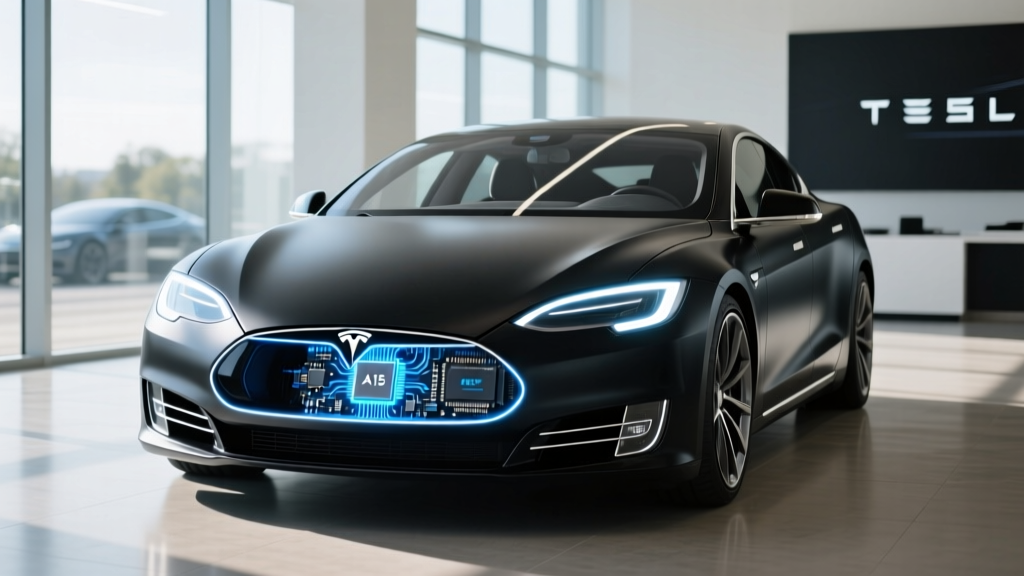
Rumors about a potential Tesla Model S X cancellation have circulated for years, flaring up every time Tesla shifts production priorities or Elon Musk pivots to a new project. As of 2026, both the Model S sedan and Model X SUV remain in production and available for order — but their long-term future is genuinely uncertain. If you're considering one, you need to weigh flagship performance and range against aging platforms, limited tax-credit eligibility, and the reality that Tesla's focus has clearly shifted toward higher-volume models and autonomous services.
This review covers the current state of both vehicles with exact specs, real-world ownership data, and a clear-eyed assessment of whether buying a potentially discontinued model is a smart move or a risk.
Quick Verdict: Still Flagships, But For How Long?
The 2026 Tesla Model S and Model X remain the longest-range, quickest-accelerating vehicles Tesla sells. The Model S Long Range delivers an EPA-estimated 402 miles of range; the Plaid variant sacrifices some range for a 1.99-second 0-60 time that still has no equal in production sedans. The Model X mirrors this split with 348 miles (Long Range) and 326 miles (Plaid).
But these are 2012/2015 architectures with refresh updates, not ground-up redesigns. Interior build quality has improved but still trails Mercedes EQS and BMW iX. And at $79,990+ before options, neither qualifies for the federal §30D tax credit due to MSRP caps. These are enthusiast and status purchases, not value plays.
Range, Battery, and Efficiency
| Model / Trim | EPA Range | Battery (usable) | Chemistry | Efficiency (MPGe) | kWh/100 mi |
|---|---|---|---|---|---|
| Model S Long Range | 402 mi | ~100 kWh | NMC (2170 cells) | 124 MPGe | 27 |
| Model S Plaid | 359 mi | ~100 kWh | NMC (2170 cells) | 116 MPGe | 29 |
| Model X Long Range | 348 mi | ~100 kWh | NMC (2170 cells) | 109 MPGe | 31 |
| Model X Plaid | 326 mi | ~100 kWh | NMC (2170 cells) | 102 MPGe | 33 |
The EPA estimates above assume mixed driving. In real-world highway testing at 70-75 mph, expect the Model S Long Range to deliver approximately 340-360 miles, and the Model X Long Range around 290-310 miles. Cold-weather driving (below 32°F) can reduce range by 20-30%, bringing the Model S down to roughly 280-320 miles. Tesla's heat pump helps mitigate cabin heating losses, but battery chemistry still suffers in extreme cold. If your commute is 80%+ highway or you live in northern climates, plan for 300-320 usable miles from the Model S and 260-280 from the Model X.
Both vehicles use Tesla's 2170-format NMC (nickel manganese cobalt) cells in a ~100 kWh usable pack. Unlike the Model 3/Y Standard Range variants that use LFP (lithium iron phosphate) chemistry — which tolerates daily 100% charging — NMC batteries perform best when charged to 80-90% for daily use and 100% only before long trips. This is a meaningful ownership consideration: your daily usable range is effectively 80-90% of the sticker number unless you're road-tripping.
Charging Speed: DC Fast and Home Level 2
| Charging Method | Model S | Model X | Notes |
|---|---|---|---|
| DC Fast Charge (peak) | 250 kW | 250 kW | CCS2/NACS via Supercharger |
| 10-80% DC time | ~30 min | ~32 min | Preconditioned battery |
| Level 2 (240V/48A) | 11.5 kW (~34 mi/hr) | 11.5 kW (~30 mi/hr) | Home Wall Connector |
| Level 1 (120V/12A) | ~1.4 kW (~4 mi/hr) | ~1.4 kW (~3.5 mi/hr) | Emergency/trickle only |
Tesla's Supercharger network remains the gold standard for reliability, and both the Model S and X can peak at 250 kW on V3 stalls. However, peak is not sustained. The charge curve tapers significantly above 60% state of charge, and the 10-80% time of roughly 30 minutes reflects this reality. For comparison, Hyundai's E-GMP platform (Ioniq 5/6) peaks at 350 kW and achieves 10-80% in ~18 minutes thanks to 800V architecture. Tesla's 400V architecture in the Model S/X limits charge rate relative to battery size.
For home charging, Tesla's Wall Connector at 48 amps delivers 11.5 kW, adding roughly 30-34 miles of range per hour. A full overnight charge (8-10 hours) easily replenishes the pack. Installation typically requires a 60-amp dedicated circuit; expect $800-$2,500 for electrician labor depending on panel proximity and local permit costs. If your electrical panel is at capacity, a panel upgrade ($1,500-$3,000) may be necessary.
Performance and Drivetrain
| Model / Trim | 0-60 mph | Horsepower | Drivetrain | Top Speed |
|---|---|---|---|---|
| Model S Long Range | 3.1 sec | 670 hp | Dual Motor AWD | 155 mph |
| Model S Plaid | 1.99 sec | 1,020 hp | Tri-Motor AWD | 200 mph |
| Model X Long Range | 3.8 sec | 670 hp | Dual Motor AWD | 155 mph |
| Model X Plaid | 2.5 sec | 1,020 hp | Tri-Motor AWD | 163 mph |
The Plaid variants' tri-motor setups (one front, two rear) deliver torque-vectoring AWD and acceleration that embarrasses supercars costing three times as much. The Model S Plaid's 1.99-second 0-60 time remains the quickest of any production sedan. The Long Range dual-motor variants are still brutally quick at 3.1 and 3.8 seconds — more than sufficient for any real-world driving scenario.
Adaptive air suspension is standard on all trims, providing adjustable ride height (useful for steep driveways and speed bumps) and reasonable damping. However, the Model S/X platform was designed over a decade ago; competitors like the Porsche Taycan and Lucid Air offer more refined ride quality and steering feedback.
Pricing, Tax Credits, and Ownership Cost
| Model / Trim | Base MSRP | As-Tested (typical) | §30D Federal Credit | Net Cost |
|---|---|---|---|---|
| Model S Long Range | $79,990 | $84,000-$88,000 | Not eligible (MSRP cap) | $79,990+ |
| Model S Plaid | $94,990 | $99,000-$105,000 | Not eligible (MSRP cap) | $94,990+ |
| Model X Long Range | $84,990 | $89,000-$95,000 | Not eligible (MSRP cap) | $84,990+ |
| Model X Plaid | $99,990 | $104,000-$110,000 | Not eligible (MSRP cap) | $99,990+ |
Under IRS §30D rules, the federal EV tax credit is capped at $7,500 for vehicles with an MSRP of $55,000 or less (sedans) and $80,000 or less (SUVs/vans/trucks). The Model S (a sedan) at $79,990 base far exceeds the $55,000 cap. The Model X (an SUV) at $84,990 exceeds the $80,000 cap. Neither vehicle qualifies for the federal credit in 2026. Additionally, buyer income caps ($150K single / $300K joint) and battery critical-mineral sourcing requirements apply to eligible vehicles. Always verify current rules at irs.gov before purchasing. Some states offer separate incentives — check your state's energy office for details.
Ownership costs extend beyond purchase price. Insurance for the Model S/X runs $2,500-$4,000 annually depending on location and driving record — significantly higher than mainstream EVs due to repair costs and performance. Tesla's proprietary collision centers help, but body work remains expensive. On the positive side, electricity costs roughly $0.13-$0.16/kWh nationally, meaning a full charge costs $13-$16 at home versus $60-$80 for equivalent gas in a comparable ICE vehicle. Over 5 years at 15,000 miles/year, fuel savings can reach $8,000-$12,000 versus a BMW 5 Series or Mercedes GLE.
Cargo, Passenger Space, and Practicality
| Spec | Model S | Model X |
|---|---|---|
| Front legroom | 42.7 in | 41.2 in |
| Rear legroom | 35.4 in | 37.1 in |
| Cargo (rear seats up) | 28 cu ft | 37.1 cu ft |
| Cargo (rear seats folded) | 64.9 cu ft | 81.5 cu ft |
| Frunk | 3.1 cu ft | 6.6 cu ft |
| Seating | 5 passengers | 5, 6, or 7 passengers |
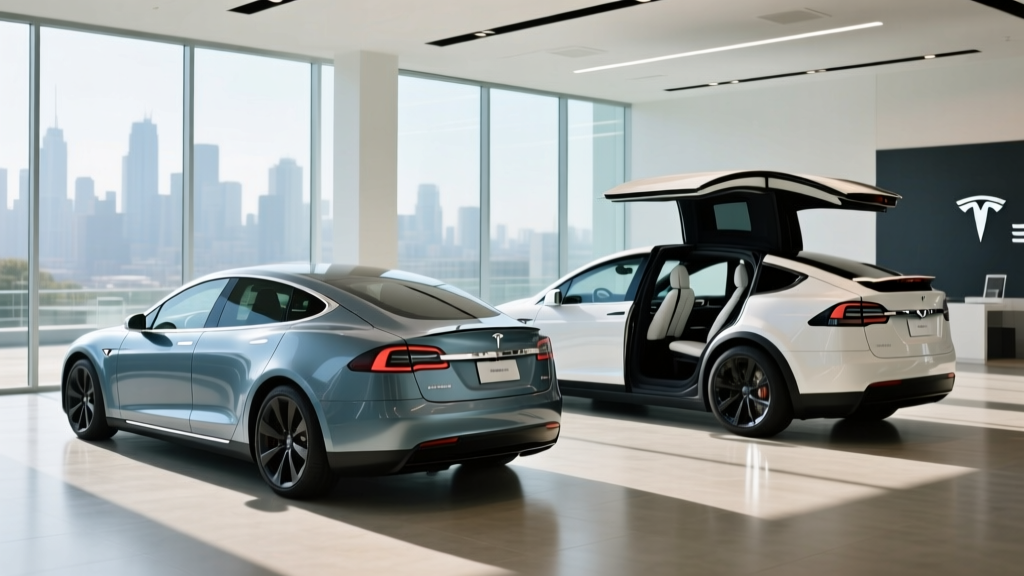
The Model X's falcon-wing rear doors are its most distinctive feature — they articulate upward and outward, requiring less lateral clearance than conventional doors. This makes loading children and cargo easier in tight parking spaces. The available third row (7-seat config) is best suited for children; adults will find it cramped. With all seats folded, the Model X offers SUV-rivaling 81.5 cubic feet of cargo space.
The Model S, as a liftback sedan, offers surprising practicality with 64.9 cubic feet behind the front seats — more than most sedans, though less than wagons and SUVs. The 3.1 cu ft frunk handles charging cables and small items.
Tech, Driver Assistance, and Warranty
Both vehicles feature Tesla's 17-inch landscape touchscreen running the latest software, a 12.3-inch digital instrument cluster, and a yoke or round steering wheel (buyer's choice). The infotainment system remains the industry benchmark for responsiveness and over-the-air update frequency, though Apple CarPlay and Android Auto are still not supported — a dealbreaker for some buyers accustomed to phone projection.
Tesla Autopilot and Full Self-Driving (Supervised) are SAE Level 2 driver-assistance systems. The driver must remain engaged, hands on the wheel (or applying torque), and eyes on the road at all times. These systems handle lane centering, adaptive cruise, and highway on/off-ramps, but they do not make the vehicle autonomous. Only Level 4 services like Waymo operate without a human driver in defined geofenced areas. Do not treat FSD as "self-driving" — you are legally and practically responsible for the vehicle.
FSD (Supervised) costs $8,000 upfront or $99/month in 2026. Its value remains hotly debated: it handles many scenarios well but requires constant supervision and occasionally makes questionable decisions. If you're a vigilant driver who values reduced highway fatigue, it's useful. If you expect autonomy, you will be disappointed.
| Coverage | Duration |
|---|---|
| Basic Vehicle | 4 years / 50,000 miles |
| Battery & Drive Unit | 8 years / 150,000 miles (Long Range) 8 years / 150,000 miles (Plaid) |
| Battery Retention Guarantee | Minimum 70% capacity over warranty period |
Tesla's 8-year/150,000-mile battery warranty is competitive, though some rivals (Hyundai/Kia at 10 years/100,000 miles) offer longer duration. Real-world degradation data from Tesla's fleet suggests most Model S/X packs retain 85-90% capacity at 100,000 miles, with degradation slowing significantly after the initial 10-15% loss in the first 20,000 miles. Out-of-warranty battery replacement costs $15,000-$22,000 depending on pack configuration — a non-trivial long-term ownership risk if you plan to keep the vehicle beyond 8 years.
Pros and Cons
Pros
- Class-leading range (402 mi Model S LR)
- Unmatched acceleration (Plaid variants)
- Supercharger network reliability
- OTA updates keep software current
- Spacious cargo (Model X especially)
- Strong resale value historically
Cons
- No federal tax credit (MSRP caps)
- Aging platform (2012/2015 architecture)
- Interior quality lags German rivals
- No Apple CarPlay / Android Auto
- High insurance premiums
- Cancellation risk affects long-term support
Should You Buy, or Wait for Cancellation?
If the Tesla Model S X cancellation rumors concern you, consider this: Tesla has never formally announced discontinuation, and both models remain orderable in 2026. However, production volumes are low (Fremont allocates most capacity to Model 3/Y), and Tesla's strategic focus has shifted to Cybertruck, next-gen compact platforms, and robotaxi services. If Tesla does discontinue the S/X, expect 10+ years of parts and service support (as is standard), but resale values could soften.
Decision Framework
Buy the Model S/X if:
- You need maximum range and acceleration today
- You value Supercharger network access
- You plan to keep the vehicle 5-8 years (within warranty)
- You accept the no-tax-credit, high-insurance reality
Consider competitors if:
- You want a modern platform (Lucid Air, Porsche Taycan, BMW iX)
- Tax credit eligibility matters (Model 3/Y, Hyundai Ioniq, Ford Mustang Mach-E)
- Interior luxury is a priority (Mercedes EQS, BMW i7)
- You're risk-averse about long-term model support
Frequently Asked Questions
What is the real-world range of the Model S and X?
The Model S Long Range EPA-estimates 402 miles, but expect 340-360 miles in real-world highway driving and 280-320 miles in cold weather. The Model X Long Range estimates 348 miles EPA, with real-world highway range around 290-310 miles and cold-weather range of 240-270 miles.
How fast do the Model S and X charge?
Both peak at 250 kW on DC fast chargers, achieving 10-80% in roughly 30-32 minutes with a preconditioned battery. Home Level 2 charging at 11.5 kW adds 30-34 miles per hour, fully replenishing the pack overnight.
Do the Model S and X qualify for the federal EV tax credit?
No. The Model S ($79,990 base) exceeds the $55,000 sedan MSRP cap, and the Model X ($84,990 base) exceeds the $80,000 SUV cap under IRS §30D rules. Neither qualifies for the $7,500 federal credit in 2026.
Is it worth buying vs. competitors like Lucid Air or Porsche Taycan?
The Model S offers the best range and Supercharger access; the Lucid Air Grand Touring delivers 516 miles EPA and more refined luxury; the Taycan offers superior driving dynamics but less range. Choose Tesla for range/charging, Lucid for luxury/range, Porsche for handling.
What are the biggest pros and cons?
Pros: class-leading range, unmatched acceleration, Supercharger reliability, OTA updates. Cons: no tax credit, aging platform, interior quality gaps, high insurance, cancellation uncertainty.
Will Tesla still service the Model S/X if they're discontinued?
Yes. Automakers are legally required to provide parts and service for 10+ years after discontinuation. Tesla's service network will continue supporting existing vehicles, though resale values may decline if production ends.
For official EPA range and efficiency data, see fueleconomy.gov. For federal tax credit rules, consult irs.gov. For safety ratings, check nhtsa.gov.