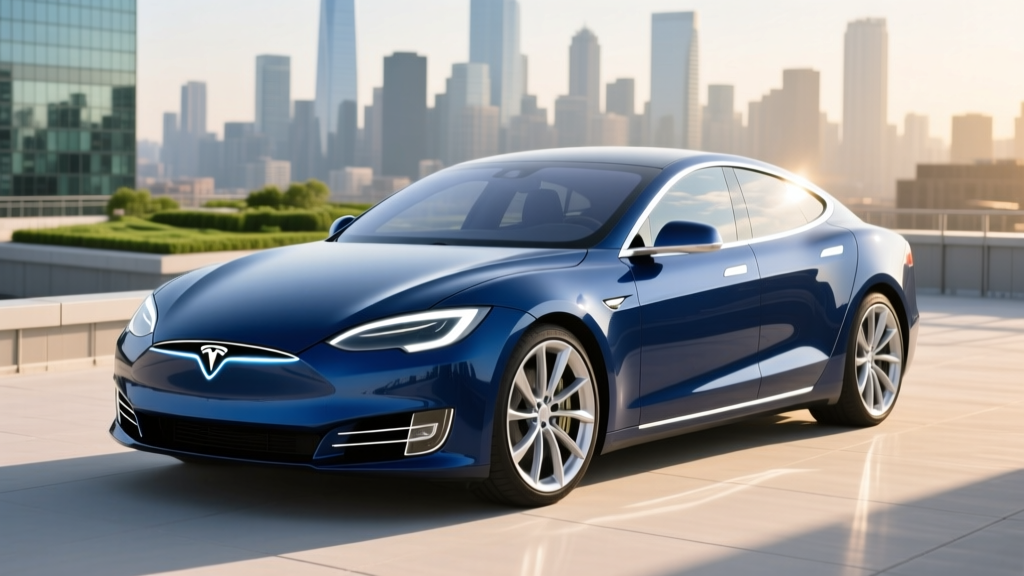
The Tesla Model S has been the benchmark luxury electric sedan for over a decade, but as the EV market has matured, buyers are asking more granular questions — like how the weight of a Tesla Model S affects its efficiency, handling, and real-world range. In this 2026 review, we go beyond the brochure to examine the engineering trade-offs that come with packing a 100 kWh battery into a full-size sedan, and what those pounds mean for your daily driving and road trips.
Why the Weight of a Tesla Model S Matters
Curb weight is one of the most underappreciated specs in EV shopping. It influences everything from tire wear and braking distance to energy consumption at highway speeds. The 2026 Tesla Model S Long Range tips the scales at approximately 4,561 lbs, while the performance-oriented Model S Plaid weighs in at 4,766 lbs. That's roughly 700–900 lbs heavier than a comparable BMW 5 Series, and the difference is almost entirely the battery pack sitting low in the skateboard chassis.
Here's what that mass means in practice:
- Tire consumption: Expect to replace tires every 20,000–30,000 miles rather than 40,000+. The Model S's weight combined with instant torque accelerates tread wear, especially on the rear axle.
- Braking feel: Regenerative braking handles most deceleration, but when you need the friction brakes, you're stopping over two tons. Stopping distances are competitive but not class-leading.
- Efficiency penalty: Heavier vehicles require more energy to accelerate. The Model S Long Range achieves 124 MPGe combined, which is respectable for its size but trails lighter competitors like the Lucid Air Pure (131 MPGe).
- Handling dynamics: The low center of gravity from the floor-mounted battery mitigates body roll, but you'll feel the mass in quick transitions. This is a grand tourer, not a canyon carver.
2026 Tesla Model S Specifications at a Glance
| Spec | Model S Long Range | Model S Plaid |
|---|---|---|
| Curb Weight | 4,561 lbs | 4,766 lbs |
| Battery (usable) | ~95 kWh (NMC) | ~95 kWh (NMC) |
| EPA Range | 402 miles | 396 miles |
| Drivetrain | Dual-Motor AWD | Tri-Motor AWD |
| Horsepower | 670 hp | 1,020 hp |
| 0–60 mph | 3.1 seconds | 1.99 seconds |
| Top Speed | 155 mph | 200 mph |
| Max DC Fast Charge | 250 kW | 250 kW |
| 10–80% DC Time | ~30 minutes | ~30 minutes |
| Level 2 Home Charge | 11.5 kW (~34 mi/hr) | 11.5 kW (~34 mi/hr) |
| MPGe (combined) | 124 MPGe | 120 MPGe |
| Efficiency | 27 kWh/100 mi | 28 kWh/100 mi |
| Cargo Volume | 28 cu ft (rear) + 3.1 cu ft (frunk) | 28 cu ft (rear) + 3.1 cu ft (frunk) |
| Rear Legroom | 35.4 inches | 35.4 inches |
| Base MSRP | $74,990 | $89,990 |
| Battery Warranty | 8 yr / 150,000 mi | 8 yr / 150,000 mi |
Source: EPA / fueleconomy.gov and Tesla specifications.
Real-World Range: What the EPA Number Doesn't Tell You
EPA Estimated: 402 miles (Long Range) / 396 miles (Plaid)
Real-World Highway (70–80 mph): Expect ~310–340 miles in mild weather. The Model S's aerodynamic drag and weight compound at sustained highway speeds, consuming roughly 30–33 kWh/100 mi versus the EPA's 27 kWh/100 mi combined cycle.
Cold-Weather (below 32°F): Range drops 20–30%, bringing realistic winter highway range to ~240–280 miles. The Model S uses a heat pump (standard since 2021) which mitigates cabin-heating losses, but battery chemistry still loses efficiency in the cold. Preconditioning the battery while plugged in recovers some of this loss.
City / Stop-and-Go: This is where the Model S shines — regenerative braking recaptures energy and low-speed driving avoids the aerodynamic penalty. Expect to meet or slightly exceed EPA figures in urban commuting.
The 100 kWh-class NMC (nickel manganese cobalt) battery pack in the Model S provides excellent energy density, which is why a 4,500+ lb sedan can still crack 400 miles. However, NMC chemistry degrades slightly faster than LFP (lithium iron phosphate) over thousands of cycles. Tesla's battery management system is among the best in the industry, and most owners report retaining 90%+ state of health after 100,000 miles. The 8-year/150,000-mile battery warranty guarantees at least 70% capacity retention — though hitting that threshold is rare based on fleet data.
Charging Speed: DC Fast Charging and Home Setup
The Model S charges via Tesla's proprietary NACS connector, which is now the de facto North American standard adopted by most major automakers. The 2026 Model S supports up to 250 kW on Tesla V3 Superchargers.
| Charging Level | Power / Rate | Speed (Miles Added) |
|---|---|---|
| Level 1 (120V household) | ~1.4 kW | ~3–4 miles per hour |
| Level 2 (240V home Wall Connector) | 11.5 kW | ~34 miles per hour |
| DC Fast Charge (V3 Supercharger) | Peak 250 kW | ~200 miles in 15 minutes |
Charging curve reality: The 250 kW peak only holds between roughly 10–30% state of charge. From 30–60%, expect ~150–170 kW. Above 80%, the rate tapers sharply to protect battery health — charging from 80–100% can take as long as 10–80%. For road trips, the practical strategy is to charge to 80% and go, which takes approximately 30 minutes from a low state of charge.
Home charging note: The Model S's 11.5 kW onboard charger means you'll need a 60-amp circuit (48-amp continuous draw) to get the full 34 miles of range per hour. A typical Tesla Wall Connector installation runs $800–$2,000 including parts and electrician labor, depending on whether your electrical panel needs an upgrade. Most owners charging overnight from 20% to 80% will wake up to a full daily driving range in roughly 6–7 hours.
Performance: What 1,020 Horsepower Feels Like at 4,766 Pounds
The Model S Plaid's tri-motor setup (one front, two rear) produces 1,020 horsepower and achieves a verified 1.99-second 0–60 mph time — making it one of the quickest production cars ever built, regardless of powertrain. But the physics of launching a 4,766-lb vehicle are violent in a way that lighter sports cars aren't. You feel the mass pressing you into the seat, and the Michelin Pilot Sport 4S tires fight for grip off the line despite the traction advantage of AWD.
The Long Range dual-motor model is hardly slow at 3.1 seconds to 60 mph and 670 hp. For most buyers, the Long Range is the sweet spot — you sacrifice the sub-2-second party trick but gain 6 additional miles of EPA range, lower weight (by 205 lbs), and save $15,000.
Both trims feature Tesla's adaptive air suspension, which adjusts ride height based on speed and road conditions. The ride quality is firm but compliant, and the suspension lowers at highway speeds to reduce drag and improve range. Steering is precise but light — this is not a sports sedan in the BMW M5 tradition, but rather a brutally fast luxury cruiser.
Pricing, Trims & Federal Tax Credit Eligibility
The 2026 Tesla Model S lineup is straightforward with two trims:
| Trim | Base MSRP | Destination | Total Before Incentives |
|---|---|---|---|
| Model S Long Range | $74,990 | $1,390 | $76,380 |
| Model S Plaid | $89,990 | $1,390 | $91,380 |
Options to consider: Ultra Red paint adds $2,500, 21-inch Arachnid wheels add $4,500 (and reduce range by ~15 miles), and Full Self-Driving (Supervised) capability is an $8,000 add-on or $99/month subscription.
Under current IRS §30D rules, the Tesla Model S does NOT qualify for the $7,500 federal EV tax credit for new vehicles. The reasons:
- MSRP Cap: The §30D credit applies only to sedars priced at $55,000 or below. The Model S starts at $74,990, exceeding this cap.
- Battery Sourcing: Even if the price were eligible, the Model S battery's critical mineral and component sourcing may not meet the escalating domestic-content thresholds required for the full credit in 2026.
- Income Caps: Buyers must also fall under AGI limits ($300K joint / $225K head of household / $150K individual) — though this is moot given the MSRP disqualification.
The Model S may qualify for certain state-level incentives (e.g., California's CVRP, Colorado's state credit), but these vary by jurisdiction. Check your state's energy office for current programs.
Interior, Tech & Daily Livability
The Model S interior has been refreshed with a 17-inch central touchscreen (now in a "yoke" or traditional round steering wheel configuration, buyer's choice), a 12.3-inch driver instrument cluster, and a rear-seat 8-inch entertainment screen. Build quality has improved significantly since the pre-2021 refresh, with better panel gaps and higher-grade materials, though it still trails the Mercedes EQS and Lucid Air in perceived luxury.
Standout tech features:
- Autopilot / FSD (Supervised): Tesla's driver-assist suite remains one of the most capable SAE Level 2 systems available. FSD handles highway lane changes, on/off-ramps, and city streets — but requires continuous driver supervision. This is not autonomous driving.
- Over-the-air updates: Tesla regularly pushes software updates that add features, improve efficiency, and refine the UI — a genuine advantage over legacy automakers.
- Supercharger network access: The most reliable and extensive DC fast-charging network in North America, with seamless plug-and-charge billing.
- Sentry Mode / Dashcam: Built-in cameras record incidents around the parked vehicle, a security feature most competitors still lack.
Cargo and passenger space: The Model S offers 28 cubic feet of rear cargo space (with 60/40 split-folding seats) plus a 3.1-cubic-foot front trunk (frunk). Rear legroom is 35.4 inches — adequate for adults but tighter than the Lucid Air's generous 41.2 inches. The glass roof creates an airy cabin but offers no shade option, which some owners find problematic in hot climates.
Model S vs. Key Competitors: Is It Worth Buying?
The luxury electric sedan segment has grown considerably. Here's how the Model S stacks up against its three primary rivals:
vs. Lucid Air Pure ($69,900, 419 mi EPA): The Lucid Air is lighter (~4,400 lbs), more efficient, roomier in the back seat, and offers more range. The Model S counters with Supercharger access, a more mature software experience, and the Plaid's unmatched performance ceiling. If range and rear-seat comfort are priorities, the Lucid wins on paper.
vs. Mercedes-Benz EQS 450+ ($104,400, 390 mi EPA): The EQS is a true luxury flagship — quieter, more sumptuous, and with superior ride quality. But it's heavier (~5,600 lbs), more expensive, and its charging infrastructure (CCS) is less reliable than Tesla's Supercharger network. Choose the EQS for luxury; choose the Model S for tech and charging convenience.
vs. BMW i7 eDrive50 ($119,300, 318 mi EPA): The i7 is a traditional luxury sedan converted to electric — excellent build quality and comfort but less range, significantly higher price, and no frunk. The Model S is the more pragmatic EV; the i7 is the more traditional luxury car.
- You prioritize Supercharger network reliability for frequent road trips
- You want supercar acceleration (Plaid) in a four-door sedan
- You value over-the-air updates and cutting-edge software
- You prefer the NACS charging standard and its growing ecosystem
Consider alternatives if:
- Rear-seat space is a priority (Lucid Air is significantly roomier)
- Traditional luxury craftsmanship matters most (Mercedes EQS, BMW i7)
- You need the federal tax credit (none of these sedans qualify — look to the Model 3, which starts under $40K)
Pros, Cons & Verdict
- Class-leading Supercharger network with 50,000+ global stalls
- 402-mile EPA range (Long Range) eliminates range anxiety for most trips
- Plaid's 1.99-second 0–60 is genuinely supercar territory
- Continual OTA updates keep the vehicle feeling current
- 8-year/150,000-mile battery warranty with strong real-world retention data
- Excellent regenerative braking enables true one-pedal driving
- Heavy curb weight (4,561–4,766 lbs) increases tire wear and hurts efficiency at speed
- No federal tax credit eligibility due to $55K sedan MSRP cap
- Rear-seat legroom trails Lucid Air by nearly 6 inches
- Glass roof has no retractable shade — cabin heat in summer is a real complaint
- FSD (Supervised) costs $8,000 extra and remains Level 2 — not autonomous
- Panel gap quality, while improved, still inconsistent vs. German competitors
Verdict: The 2026 Tesla Model S remains the performance and technology benchmark in the luxury EV sedan segment. Its weight — a consequence of the large NMC battery — is the engineering trade-off that enables 400+ miles of range and 1,020 horsepower, but it manifests in higher tire costs, slightly lower efficiency than lighter rivals, and a driving character that's more muscle-tourer than sports sedan. If you road-trip frequently and value charging infrastructure above all, the Model S is still the answer. If you want maximum luxury or back-seat space, shop the Lucid Air and Mercedes EQS before committing.
Frequently Asked Questions
How much does a Tesla Model S weigh?
The 2026 Tesla Model S Long Range weighs 4,561 lbs (curb weight), and the Model S Plaid weighs 4,766 lbs. The 205-lb difference is primarily the Plaid's third rear motor and associated power electronics. Both figures are significantly heavier than gas-powered luxury sedans due to the ~95 kWh battery pack.
Does the Tesla Model S qualify for the federal EV tax credit?
No. Under IRS §30D rules, new electric sedans must have an MSRP of $55,000 or less to qualify for the $7,500 credit. The Model S starts at $74,990, making it ineligible regardless of buyer income or battery sourcing. State-level incentives may still apply — check your local programs.
What is the real-world range of the Tesla Model S on a road trip?
On highway road trips at 70–80 mph in mild weather, expect 310–340 miles from the Long Range trim (EPA rated 402 miles). In cold weather (below freezing), that drops to roughly 240–280 miles. City driving with regenerative braking typically matches or slightly exceeds the EPA estimate.
How long does it take to charge a Tesla Model S at home?
With a Tesla Wall Connector on a 60-amp circuit (11.5 kW), the Model S gains approximately 34 miles of range per hour. A full charge from 20% to 80% takes about 6–7 hours overnight. On a standard 120V outlet (Level 1), expect only 3–4 miles per hour — suitable only for emergency trickle charging.
Is the Tesla Model S Plaid faster than a Bugatti?
In a 0–60 mph sprint, the Model S Plaid's 1.99-second time matches or beats most Bugatti models. However, the Plaid's 4,766-lb weight limits its top-end performance — it will not match a Bugatti Chiron's top speed (261+ mph) or quarter-mile trap speed. The Plaid is a drag-strip phenomenon; the Bugatti is a top-speed king.
How long will the Tesla Model S battery last?
Tesla's NMC battery packs are designed for long service life. Fleet data from high-mileage owners shows typical degradation of 8–12% over the first 100,000 miles, with the curve flattening significantly afterward. The battery warranty covers 8 years or 150,000 miles with at least 70% capacity retention. Many Model S batteries from 2016–2018 are still in service with 85%+ state of health at 150,000+ miles.
Is Autopilot or FSD self-driving?
No. Tesla's Autopilot and Full Self-Driving (Supervised) are SAE Level 2 driver-assistance systems. The driver must remain fully engaged, hands on the wheel (or providing torque input), and eyes on the road at all times. FSD can navigate highway interchanges, stop lights, and city streets, but it makes errors and requires human oversight. Only Level 4 services like Waymo operate without a driver.