The Weight Question: Why It Matters for the 2026 Tesla Model S
When you're researching a flagship luxury sedan, the curb weight isn't just a trivia stat — it shapes everything from tire wear to braking distance to real-world energy consumption. The 2026 Tesla Model S tips the scales at approximately 4,561 lbs for the Long Range AWD and 4,766 lbs for the Plaid trim. That's roughly 600–800 lbs heavier than a BMW i5 or Mercedes EQS 450, largely due to Tesla's 100 kWh (usable ~95 kWh) NMC battery pack.
Does the weight hurt the Model S? In some ways, yes. It increases stopping distances and accelerates tire consumption. But Tesla's low center of gravity — the battery pack sits flat under the floor — largely neutralizes the mass penalty in cornering feel. And when it comes to straight-line acceleration, the Plaid's 1,020 horsepower simply overwhelms physics, delivering a 1.99-second 0–60 mph time that no internal-combustion sedan can approach.
This review dissects the Model S across every metric that matters to buyers: EPA and real-world range, charging speed, pricing after tax incentives, and how it stacks up against its closest rivals.
Range, Efficiency, and the Real-World Reality Check
Real-World Expectation: ~320–350 mi highway at 70 mph; ~260–300 mi in freezing temperatures with cabin heat
The Model S Long Range AWD posts an EPA-estimated 402 miles on a full charge, one of the highest figures of any production EV sold in the U.S. The Plaid variant drops slightly to 396 miles due to its stickier tires and more aggressive powertrain calibration. According to fueleconomy.gov, the Long Range achieves 124 MPGe combined (28 kWh/100 mi).
But EPA numbers assume a mix of city and highway driving at moderate speeds. On a sustained 70–75 mph highway run in 50°F weather, expect roughly 320–350 miles before the battery hits 0%. Drop the ambient temperature to 20°F, and the combination of battery resistance and cabin heating can cut range to 260–300 miles. This is the cold-weather penalty every EV owner must plan for on winter road trips.
The Model S's efficiency is impressive given its mass. At 28 kWh/100 mi, it uses less energy per mile than the heavier Lucid Air Grand Touring (30 kWh/100 mi) and significantly less than the Mercedes EQS 580 (33 kWh/100 mi). Tesla's heat pump, standard since 2021, recovers waste heat from the drivetrain to warm the cabin — a major advantage over resistive heaters in cold climates.
Full Specifications at a Glance
| Spec | Long Range AWD | Plaid |
|---|---|---|
| Curb Weight | 4,561 lbs | 4,766 lbs |
| Battery (Usable) | ~95 kWh (NMC) | ~95 kWh (NMC) |
| EPA Range | 402 mi | 396 mi |
| Efficiency | 124 MPGe / 28 kWh/100mi | 119 MPGe / 29 kWh/100mi |
| Horsepower | 670 hp | 1,020 hp |
| 0–60 mph | 3.1 sec | 1.99 sec |
| Drivetrain | Dual-Motor AWD | Tri-Motor AWD |
| Top Speed | 155 mph | 200 mph |
| Max DC Fast Charge | 250 kW | 250 kW |
| 10–80% DC Charge | ~30 min | ~30 min |
| Level 2 (11.5 kW) | ~44 mi/hr | ~44 mi/hr |
| Cargo (trunk + frunk) | 28.0 cu ft total | 28.0 cu ft total |
| Rear Legroom | 35.4 in | 35.4 in |
| Base MSRP | $79,990 | $94,990 |
Charging Speed: DC Fast, Level 2, and the Curve Reality
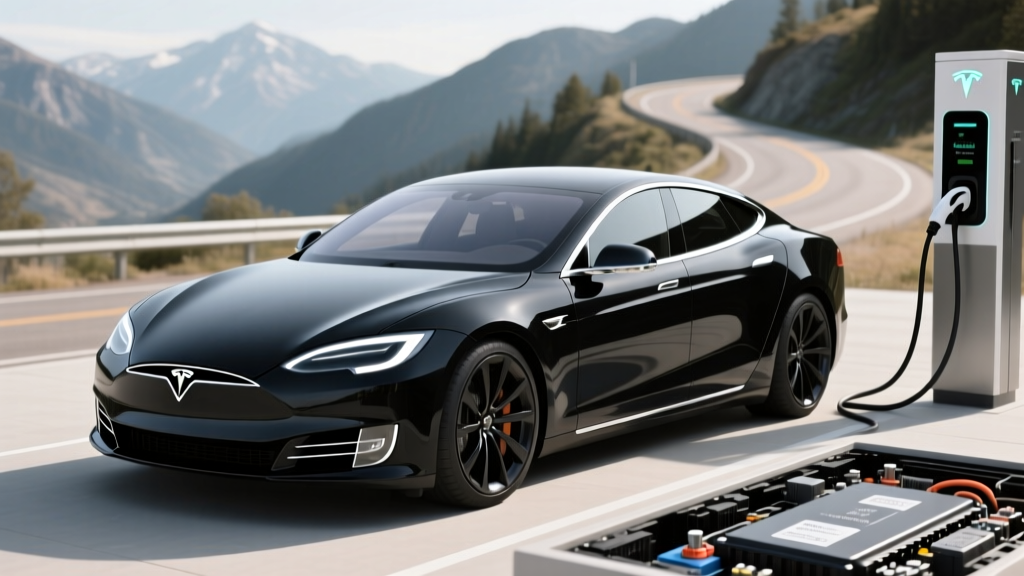
The 2026 Model S peaks at 250 kW on a V3 Tesla Supercharger. In practice, that peak rate holds roughly from 5–30% state of charge before tapering. A 10–80% session takes approximately 30 minutes at a V3 stall. On older V2 Superchargers (150 kW max), expect closer to 40 minutes for the same session.
| Charging Method | Max Power | Speed (mi/hr) | Notes |
|---|---|---|---|
| Level 1 (120V) | 1.4 kW | ~4 mi/hr | Emergency/trickle only |
| Level 2 (240V, 48A) | 11.5 kW | ~44 mi/hr | Full charge in ~9 hrs |
| DC Fast (V3 Supercharger) | 250 kW peak | ~750 mi/hr (peak) | 10–80% in ~30 min |
| DC Fast (CCS via adapter) | ~150–250 kW | Varies by station | EA, EVgo compatible |
For home charging, the Model S accepts up to 11.5 kW on a Wall Connector (48 amps, 240V). That translates to roughly 44 miles of range added per hour of charging — a full overnight session from 10% to 100% takes about 9 hours. If your home electrical panel supports only a 40-amp circuit (common in older homes), you'll see roughly 9.6 kW and ~37 mi/hr.
Charge curve reality check: The 250 kW figure is a peak, not a sustained rate. Above 50% SoC, the rate drops to roughly 120–150 kW. Above 80%, it falls below 60 kW. This is why Tesla (and every other manufacturer) quotes 10–80% times — the final 20% is painfully slow on any lithium-ion pack. For daily driving, set your charge limit to 80% to preserve long-term battery health, and only charge to 100% before road trips.
Pricing, Tax Credits, and True Cost
The 2026 Model S Long Range starts at $79,990, while the Plaid opens at $94,990. Both exceed the IRS §30D MSRP cap of $55,000 for sedans, meaning neither trim qualifies for the $7,500 federal EV tax credit on new purchases. This is a hard rule: per IRS guidelines, the manufacturer's suggested retail price must not exceed $55,000 for sedans (or $80,000 for SUVs/pickups/vans).
| Trim | Base MSRP | Federal Credit | Effective Price |
|---|---|---|---|
| Long Range AWD | $79,990 | $0 (over MSRP cap) | $79,990 |
| Plaid | $94,990 | $0 (over MSRP cap) | $94,990 |
Buyers should also note that §30D imposes adjusted gross income caps: $150,000 single / $300,000 joint filers. And the battery must meet critical-mineral and component sourcing thresholds that tighten annually. Since the Model S fails the MSRP test regardless of income or sourcing, the federal credit is off the table.
Some states offer their own rebates or tax incentives that apply regardless of MSRP — California's CVRP, for example, has its own income-based structure. Check your state's energy office for current programs, as these change frequently.
For buyers who want Tesla's Supercharger network and flagship tech but need the tax credit, the Model 3 (starting ~$38,990) and Model Y (starting ~$44,990, under the $80K SUV cap) remain the credit-eligible options in Tesla's lineup.
Interior, Tech, and Daily Practicality
The Model S cabin is minimalist by design — a 17-inch center touchscreen dominates the dash, with a secondary 8-inch screen for rear passengers. The yoke steering wheel remains standard (a conventional round wheel is available at no cost). Build quality has improved substantially since the 2021 refresh, with tighter panel gaps, ventilated front seats, and a HEPA air filtration system that Tesla calls "Bioweapon Defense Mode."
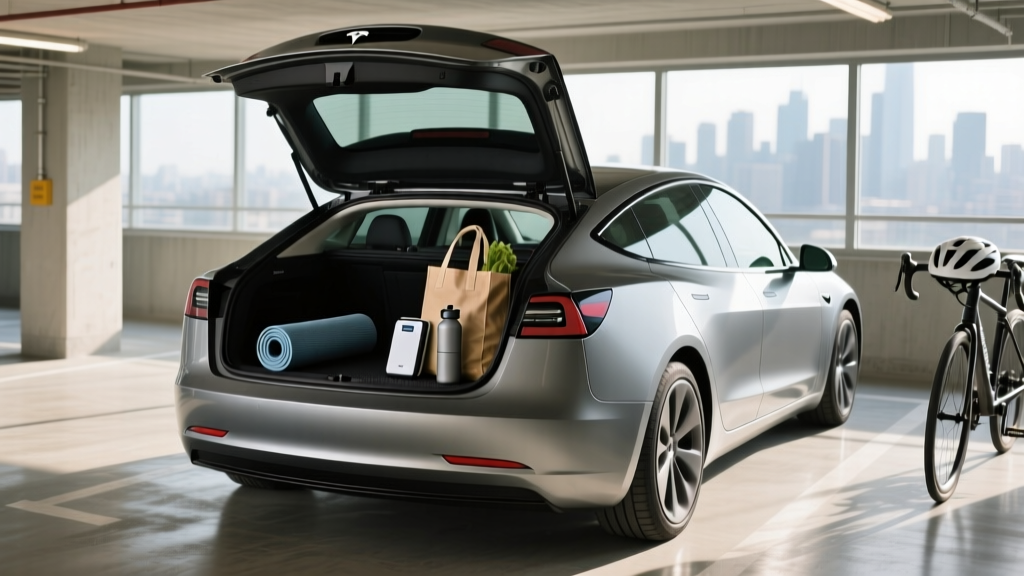
Cargo capacity: 26.3 cu ft behind the rear seats plus a 1.7 cu ft frunk, totaling 28.0 cu ft. With the 60/40 split rear seats folded, cargo volume expands to approximately 64 cu ft — enough for a week's luggage for four people or a full Costco run.
Passenger space: Front legroom is generous at 42.4 inches. Rear legroom measures 35.4 inches — adequate for adults on shorter trips but tighter than a Mercedes EQS (38.0 in rear) or Lucid Air (37.4 in). The floor is flat (no transmission tunnel), so the middle rear seat is usable, though the sloping roofline cuts into headroom for passengers over 6 feet.
Driver assistance: Tesla's Basic Autopilot (lane centering, adaptive cruise) is standard. Full Self-Driving (Supervised) is an $8,000 add-on that enables automatic lane changes, traffic-light recognition, and city-street navigation. It is critical to understand that FSD is an SAE Level 2 system — the driver must remain fully engaged, hands on or near the wheel, eyes on the road. This is not autonomous driving.
Warranty Coverage
Tesla provides a 4-year/50,000-mile basic vehicle warranty and an 8-year/150,000-mile battery and drive unit warranty for the Model S. The battery warranty guarantees retention of at least 70% of original capacity during the coverage period. If degradation exceeds 30% within 8 years or 150,000 miles, Tesla will repair or replace the pack.
For context, NMC batteries in the Model S typically lose 8–12% capacity over the first 100,000 miles based on fleet data, meaning most owners will remain well within the 70% threshold. Tesla does not publish a separate powertrain warranty — the drive units are covered under the same 8-year/150,000-mile term as the battery.
Model S vs. the Competition
The luxury EV sedan segment has matured. Here's how the Model S compares on the metrics buyers care about most:
| Metric | Tesla Model S LR | Lucid Air Pure | Mercedes EQS 450+ | BMW i5 M60 |
|---|---|---|---|---|
| Base Price | $79,990 | $69,900 | $104,400 | $84,100 |
| EPA Range | 402 mi | 419 mi | 390 mi | 295 mi |
| Curb Weight | 4,561 lbs | 4,520 lbs | 5,600 lbs | 5,185 lbs |
| 0–60 mph | 3.1 sec | 5.0 sec | 5.9 sec | 3.7 sec |
| Max DC Charge | 250 kW | 200 kW | 200 kW | 205 kW |
| Fed. Tax Credit | No (MSRP cap) | No (MSRP cap) | No (MSRP cap) | No (MSRP cap) |
| Supercharger Access | Native | No | No | No |
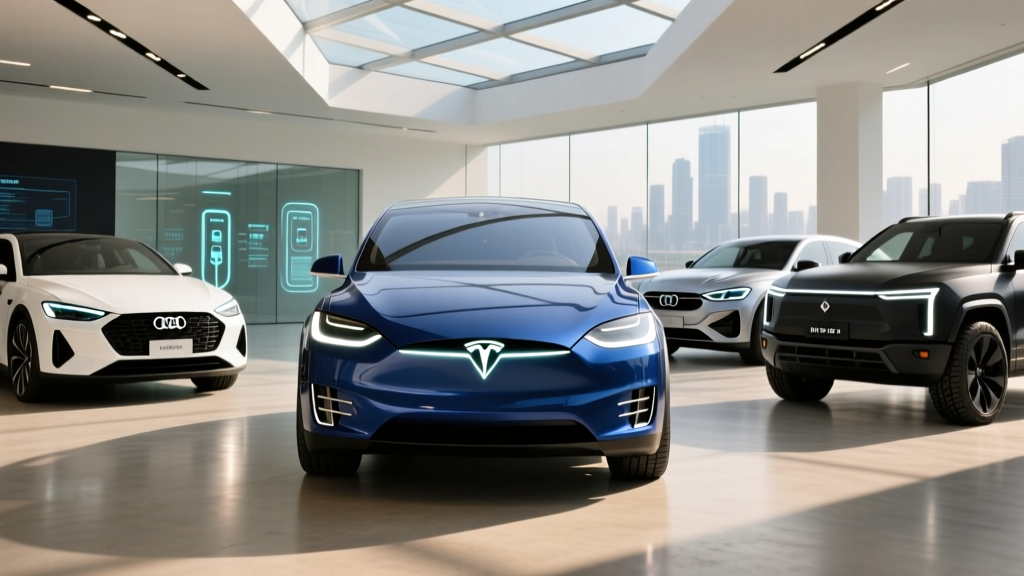
The Lucid Air Pure offers more range for less money, but lacks the Supercharger network and Tesla's software ecosystem. The Mercedes EQS is heavier (5,600 lbs) and slower, but delivers a more traditional luxury ride with superior rear-seat comfort. The BMW i5 M60 is the sportiest alternative but sacrifices 100+ miles of range.
Pros
- 402-mile EPA range among the best of any EV sold
- Native Tesla Supercharger access — the most reliable DC network in the U.S.
- Plaid's 1.99-sec 0–60 is supercar territory in a 4-door sedan
- Over-the-air updates continuously add features
- Strong resale value relative to luxury EV peers
- 8-year/150,000-mile battery warranty
Cons
- No federal tax credit eligibility (over MSRP cap)
- Rear legroom (35.4 in) trails competitors like EQS and Lucid Air
- Weight (4,561+ lbs) increases tire wear and braking distance
- Yoke steering polarizing; takes adaptation
- Minimalist interior not for traditional luxury buyers
- 250 kW peak charge rate lags behind Hyundai/Kia's 350 kW E-GMP
Who Should Buy the 2026 Model S?
Choose the Model S Long Range if: You need maximum range for frequent road trips, want native Supercharger access without adapters, and value software-driven features over traditional luxury materials.
Choose the Model S Plaid if: Track-capable acceleration matters to you, and you're willing to trade 6 miles of range for 1,020 hp and carbon-ceramic brakes.
Look elsewhere if: You need the $7,500 federal tax credit (consider Model 3/Y or Hyundai Ioniq 6), you prioritize rear-seat comfort for tall passengers (Lucid Air or Mercedes EQS), or you prefer a more buttoned-up, traditional luxury cabin.
Frequently Asked Questions
What is the real-world range of the Tesla Model S?
The EPA rates the Long Range at 402 miles, but real-world highway driving at 70 mph yields approximately 320–350 miles. In freezing weather, expect 260–300 miles due to battery resistance and cabin heating demands.
How fast does the Model S charge at home and on the road?
On a Tesla Wall Connector (11.5 kW Level 2), the Model S adds ~44 miles of range per hour, fully charging overnight in about 9 hours. On a V3 Supercharger (250 kW DC), a 10–80% session takes roughly 30 minutes, though the charge rate tapers significantly above 50% SoC.
Does the Tesla Model S qualify for the federal EV tax credit?
No. Under IRS §30D rules, new sedans must have an MSRP at or below $55,000 to qualify. The Model S starts at $79,990, well above the cap. State incentives may still apply — check your local energy office.
How much does it cost to own a Model S vs. a gas sedan?
Electricity costs roughly $0.13–0.17/kWh nationally, putting a full charge at $12–16 for 400 miles. A comparable gas sedan at 25 MPG and $3.50/gallon would cost $56 for the same distance. Over 5 years and 75,000 miles, fuel savings alone can exceed $8,000, partially offsetting the higher purchase price and insurance premiums.
Is the Model S Plaid worth the premium over the Long Range?
The $15,000 premium buys 350 additional horsepower, a tri-motor setup, carbon-ceramic brakes, and a 1.99-second 0–60 time. Unless you plan to track the car or deeply value extreme acceleration, the Long Range's 402-mile range and 3.1-second 0–60 are more than sufficient for daily and road-trip use.
How does the Model S's weight affect tire wear?
At 4,561 lbs, the Model S is heavier than most sedans, which accelerates tire wear — particularly on the rear axle under hard acceleration. Owners typically replace tires every 20,000–30,000 miles. Budget $1,200–1,800 for a set of four EV-rated tires (e.g., Michelin Pilot Sport EV or Pirelli P Zero Elect).