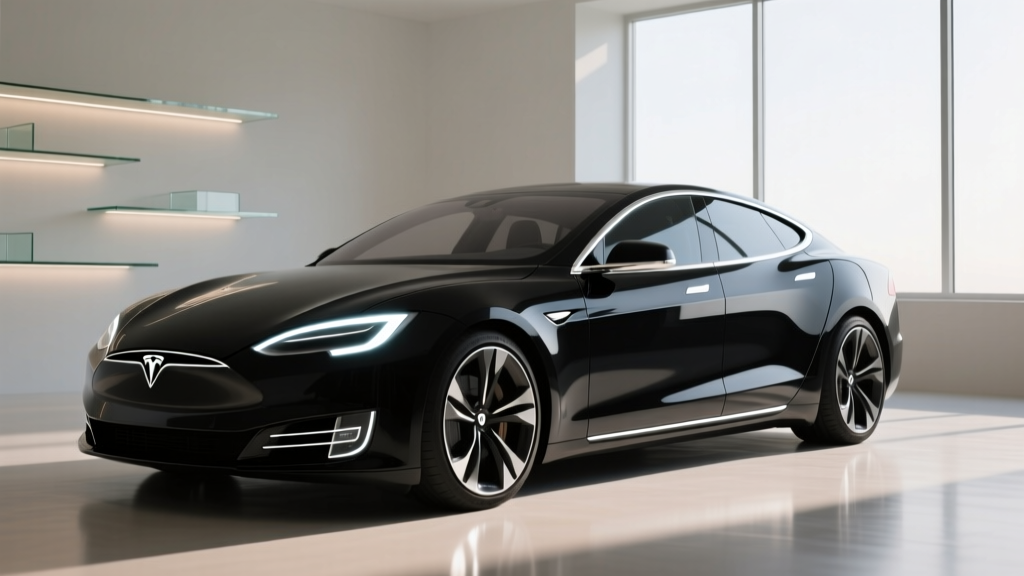
The Tesla Model S has anchored the premium electric sedan segment since 2012, but its engineering choices — particularly its mass — shape everything from tire wear to charging speed to highway efficiency. If you're researching the Model S weight before buying, you're asking the right question: curb weight directly affects real-world range, braking distances, and long-term ownership costs in ways spec sheets rarely highlight.
This guide breaks down the 2026 Tesla Model S lineup by the numbers: curb weight by trim, battery chemistry and capacity, EPA range versus what you'll actually see on the highway in January, DC fast-charging curves, and whether the federal tax credit applies. We'll also compare it against the Lucid Air, BMW i7, and Mercedes EQS so you can see where the Model S fits in today's luxury EV sedan market.
Tesla Model S Weight by Trim: Why It Matters
The 2026 Tesla Model S is offered in two trims: Long Range (dual-motor AWD) and Plaid (tri-motor AWD). Both share the same structural battery pack architecture, but the Plaid's third motor, upgraded cooling system, and carbon-sleeved rotors add meaningful mass.
| Specification | Model S Long Range | Model S Plaid |
|---|---|---|
| Curb Weight | 4,561 lbs (2,069 kg) | 4,766 lbs (2,162 kg) |
| Gross Vehicle Weight Rating (GVWR) | 5,249 lbs | 5,249 lbs |
| Weight Distribution (F/R) | ~48/52% | ~47/53% |
| Drivetrain | Dual-Motor AWD | Tri-Motor AWD |
| Horsepower | 670 hp | 1,020 hp |
| 0-60 mph | 3.1 seconds | 1.99 seconds |
| Top Speed | 155 mph | 200 mph |
| Battery (Usable) | ~100 kWh (NMC) | ~100 kWh (NMC) |
| EPA Range | 402 miles | 396 miles |
| EPA Efficiency | 116 MPGe (29 kWh/100mi) | 116 MPGe (30 kWh/100mi) |
The ~205-pound gap between Long Range and Plaid comes primarily from the rear-axle dual-motor assembly and the more robust thermal management system required to sustain 1,020 hp output. For context, the Model S Long Range is roughly 350 lbs lighter than the Lucid Air Grand Touring (4,915 lbs) and nearly 600 lbs lighter than the Mercedes EQS 580 4MATIC (~5,600 lbs).
How Weight Affects Your Ownership Experience
Mass is the silent cost multiplier in EV ownership. Here's what 4,500+ pounds means in practice:
- Tire wear: Expect 20,000–30,000 miles from OEM tires (typically Michelin Pilot Sport EV or Pirelli P Zero). Heavier EVs consume tires 20–30% faster than comparable ICE sedans due to instant torque plus mass.
- Brake longevity: Regenerative braking handles most deceleration, so physical brake pads often last 80,000+ miles. However, emergency stops from 70 mph carry significantly more kinetic energy than a 3,500-lb sedan, meaning greater rotor stress when friction brakes do engage.
- Highway efficiency: At sustained 75–80 mph speeds, aerodynamic drag dominates, but mass still matters during elevation changes and repeated speed adjustments. Expect 270–310 Wh/mi on the highway versus the EPA-rated ~290 Wh/mi combined.
- Suspension components: Air springs and control arms bear constant load. Budget for air suspension replacement at 80,000–120,000 miles — a known Model S maintenance item costing $1,500–$3,000 per corner out of warranty.
Real-World Range: EPA Sticker vs. What You'll Actually Drive
EPA Rating: 402 miles (Long Range) / 396 miles (Plaid)
Real-world highway (70 mph, 72°F): ~320–350 miles
Real-world highway (70 mph, 30°F): ~250–290 miles
City/commute mixed driving: ~360–390 miles
The Model S Long Range's 402-mile EPA rating remains among the highest of any production EV sold in the US. But EPA testing uses low average speeds and includes significant regenerative braking opportunities that don't reflect sustained interstate driving.
In real-world highway testing at 70 mph in moderate temperatures, the Model S Long Range consistently delivers 320–350 miles before reaching 10% State of Charge. The Plaid, with its tri-motor energy draw and slightly lower EPA rating, typically returns 310–340 miles under identical conditions.
Cold weather is the great equalizer. At 30°F with cabin heating active, lithium-ion internal resistance increases and HVAC load draws 3–5 kW continuously. Expect a 25–35% range reduction in sustained winter highway driving, bringing usable range to approximately 250–290 miles. The Model S heat pump (standard since the 2021 refresh) mitigates this compared to older resistance-heater EVs, but physics still wins.
If your typical drive includes frequent deceleration (suburban, mountainous), you'll recover more energy through regen and land closer to the EPA figure. Pure flat-highway cruising at 80 mph with climate control running is the worst-case scenario for any EV.
Charging Speed: DC Fast Charge and Home Level 2
The Model S uses Tesla's proprietary NACS (North American Charging Standard) connector natively — the same port now being adopted by Ford, GM, Rivian, and most major automakers through 2025–2026. This gives the Model S seamless access to Tesla's Supercharger network (21,000+ stalls in North America) without adapters.
| Charging Method | Max Power | Speed / Time |
|---|---|---|
| DC Fast Charge (Supercharger V4) | 250 kW peak | 10–80% in ~27 minutes |
| DC Fast Charge (CCS station w/ adapter) | ~150–250 kW | 10–80% in ~30–40 minutes |
| Level 2 Home (Tesla Wall Connector) | 11.5 kW (48A) | ~34 miles of range per hour |
| Level 2 Home (NEMA 14-50 outlet) | 9.6 kW (40A) | ~28 miles of range per hour |
| Level 1 (120V standard outlet) | ~1.4 kW | ~4 miles of range per hour |
Understanding the Charge Curve
The Model S peaks at 250 kW at a Supercharger V3/V4 stall, but only when the battery is preconditioned (navigate to a Supercharger in the car's nav and it will warm the battery en route) and the State of Charge is below ~30%. The charge curve tapers significantly:
- 10–30% SoC: Sustains 220–250 kW
- 30–60% SoC: Tapers to 150–180 kW
- 60–80% SoC: Drops to 80–110 kW
- 80–100% SoC: Trickle charges at 20–40 kW
This is why the 10–80% metric matters more than peak kW. The Model S adds approximately 200 miles of range in 15 minutes under optimal conditions. For a 400-mile road trip, plan one 20–25-minute stop at a Supercharger — a reasonable break for food and restrooms.
At home on a Tesla Wall Connector wired to a 60-amp circuit, the onboard charger accepts up to 11.5 kW, adding roughly 34 miles per hour of charging. A full overnight charge (8 hours) restores approximately 270 miles — more than enough for daily use and most next-day trips.
Pricing, Trims, and Federal Tax Credit Eligibility
The 2026 Model S is offered in two trims, both well above the price threshold where most buyers will qualify for federal incentives:
| Trim | Base MSRP | Typical As-Tested |
|---|---|---|
| Model S Long Range | $79,990 | $85,000–$92,000 |
| Model S Plaid | $94,990 | $102,000–$115,000 |
Common options that push the as-tested price higher include Full Self-Driving (Supervised) capability at $8,000, premium interior colors ($2,000–$3,000), 21-inch Arachnid wheels ($4,500), and Yoke steering wheel (no-cost option).
Does the Model S Qualify for the Federal EV Tax Credit?
No — the Model S does not qualify for the IRS §30D Clean Vehicle Credit. There are two independent reasons:
- MSRP cap: The §30D credit caps eligibility at $55,000 for sedans (per IRS guidelines). Both Model S trims exceed this by $25,000–$40,000.
- Buyer income cap: Even if the MSRP were eligible, modified adjusted gross income (MAGI) limits of $150,000 (single) / $300,000 (joint) would exclude many Model S buyers.
Some states offer their own EV rebates or HOV lane access regardless of price — check your state's energy office or DMV for current programs. But at the federal level, Model S buyers pay full MSRP minus any applicable state incentives.
Interior, Cargo, and Technology
The Model S interior underwent a complete redesign for the 2021 refresh and carries forward into 2026 with the yoke-or-wheel option, a 17-inch center touchscreen, a 12.3-inch driver instrument cluster, and a rear-seat 8-inch entertainment display.
Dimensions and Space
- Passenger volume: 100 cu ft (EPA class: Large)
- Front legroom: 42.7 inches
- Rear legroom: 35.4 inches
- Cargo (rear trunk): 26.3 cu ft
- Cargo (front trunk/frunk): 3.1 cu ft
- Cargo (rear seats folded): 58.1 cu ft
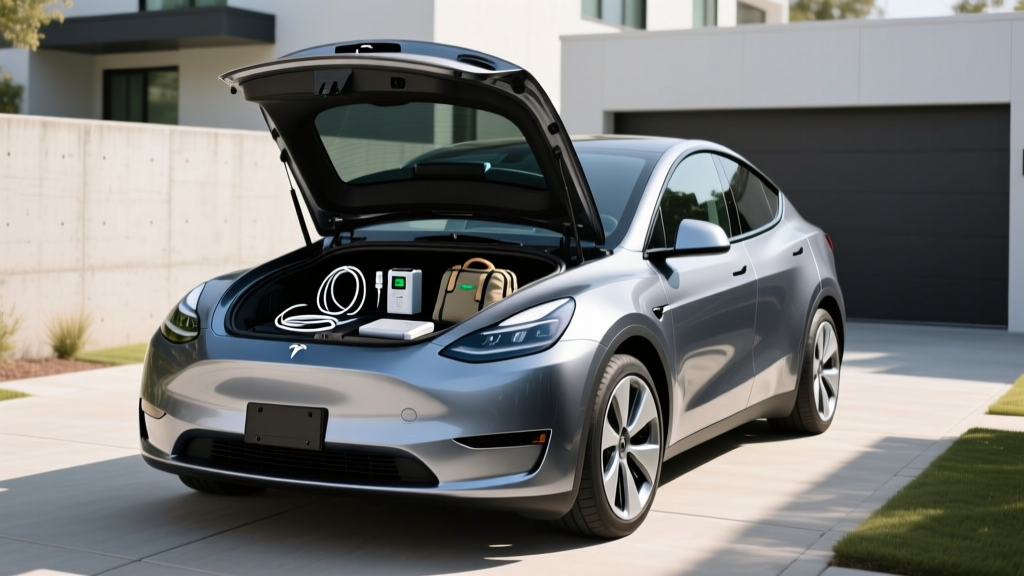
The rear seat comfortably fits two adults for long trips, though the center position is best for children due to the transmission tunnel hump (housing wiring and cooling lines, despite having no mechanical driveshaft). The 26.3 cu ft trunk is generous for a sedan — comparable to a midsize SUV — and the frunk adds space for a charging cable bag or small groceries.
Standout Technology
- 17-inch cinematic touchscreen with 22-speaker 960-watt audio system
- Autopilot (standard): Adaptive cruise, lane centering, auto emergency braking — SAE Level 2, requires driver supervision
- Full Self-Driving (Supervised) ($8,000 option): City street navigation, traffic light/stop sign recognition, auto lane changes — still SAE Level 2, driver must remain fully engaged
- Over-the-air updates continuously add features and refine performance
- Gaming-capable hardware (AMD Ryzen) supports titles like Cyberpunk 2077 while parked
- HEPA air filtration with Bioweapon Defense Mode
Notable Drawbacks
- No physical stalks: Turn signals are now steering-wheel buttons (post-2025 refresh), which many reviewers and owners find unintuitive, especially during roundabouts or three-point turns.
- Rear visibility: The sloping roofline and small rear window limit over-the-shoulder sightlines; you'll rely heavily on the backup camera.
- Build consistency: While improved since 2021, panel gaps and interior trim alignment still vary car-to-car more than German competitors.
- No Apple CarPlay/Android Auto: Tesla's proprietary infotainment is capable but closed — no phone projection available.
Model S vs. Key Competitors: Is It Worth Buying?
| Attribute | Tesla Model S LR | Lucid Air GT | BMW i7 xDrive60 | Mercedes EQS 580 |
|---|---|---|---|---|
| Base MSRP | $79,990 | $109,900 | $120,295 | $127,350 |
| EPA Range | 402 mi | 516 mi | 318 mi | 371 mi |
| Curb Weight | 4,561 lbs | 4,915 lbs | 5,860 lbs | 5,600 lbs |
| 0-60 mph | 3.1 sec | 3.0 sec | 4.5 sec | 4.1 sec |
| Max DC Charge | 250 kW | 300 kW | 195 kW | 200 kW |
| Charging Network | Tesla Supercharger | EA + NACS adapter | EA + NACS adapter | EA + NACS adapter |
| Federal Tax Credit | No (MSRP cap) | No (MSRP cap) | No (MSRP cap) | No (MSRP cap) |
Choose the Model S Long Range if: You want the best combination of range (402 mi), performance (3.1 sec 0-60), and Supercharger network access at the lowest price in this segment. The 4,561-lb curb weight is the lightest here, aiding tire life and efficiency.
Choose the Model S Plaid if: Sub-2-second 0-60 performance is a priority and you're willing to pay $15,000 more and sacrifice 6 miles of EPA range for 1,020 hp.
Choose the Lucid Air Grand Touring if: Maximum range is your top priority (516 miles EPA) and you don't mind a less mature charging network experience and higher price.
Choose the BMW i7 or Mercedes EQS if: Rear-seat luxury, ride isolation, and traditional build quality matter more than performance and range. Both are significantly heavier (5,600–5,860 lbs) and less efficient.
Battery Chemistry, Warranty, and Long-Term Ownership
The Model S uses an NMC (nickel manganese cobalt) lithium-ion battery pack with approximately 100 kWh of usable capacity. Tesla does not publish exact cell chemistry or supplier details, but teardowns and supply-chain reporting consistently point to Panasonic 4680-format or 2170-format NMC cells in a structural pack.
NMC vs. LFP: Why It Matters for Model S Buyers
Tesla uses LFP (lithium iron phosphate) chemistry in the Model 3/Y Standard Range, but the Model S exclusively uses NMC. Here's the trade-off:
- NMC advantages: Higher energy density (more range per pound — critical for the 402-mile target), better cold-weather performance, faster peak charge rates.
- NMC trade-offs: More sensitive to sustained 100% SoC (Tesla recommends daily charging to 80–90% for longevity), slightly faster calendar degradation than LFP, higher materials cost.
For a 400-mile sedan, NMC is the correct engineering choice — LFP's lower energy density would require a heavier pack to achieve the same range, compounding the weight issue further.
Warranty Coverage
- Basic Vehicle: 4 years / 50,000 miles
- Battery & Drive Unit: 8 years / 150,000 miles (whichever comes first), with minimum 70% capacity retention guaranteed
- Roadside Assistance: 4 years / 50,000 miles
The 8-year/150,000-mile battery warranty is competitive with the segment. If capacity drops below 70% within that window, Tesla will repair or replace the pack. Real-world data from high-mileage Model S owners suggests typical degradation of 8–12% over 100,000 miles, with the most significant loss occurring in the first 20,000 miles before stabilizing. According to fueleconomy.gov, modern EV battery packs are designed to last the life of the vehicle under normal use.
Estimated 5-Year Ownership Costs
Beyond the purchase price, budget for these recurring costs:
- Tires: $1,200–$1,800 per set, replaced every 25,000 miles → ~$2,400–$3,600 over 5 years / 50,000 miles
- Insurance: $2,800–$4,500/year depending on location and driving record (Model S premiums are among the highest in the EV segment due to repair costs)
- Electricity (home charging at $0.14/kWh): ~$700–$900/year for 12,000 miles
- Maintenance: Minimal — cabin air filter ($150–$200 every 2 years), brake fluid check, wiper blades. No oil, transmission fluid, or spark plugs.
Frequently Asked Questions
How much does the Tesla Model S weigh?
The 2026 Tesla Model S Long Range has a curb weight of 4,561 lbs, while the Plaid weighs 4,766 lbs. Both are lighter than competing luxury EV sedans like the Lucid Air (4,915 lbs), Mercedes EQS (5,600 lbs), and BMW i7 (5,860 lbs).
What is the real-world range of the Model S?
The EPA rates the Long Range at 402 miles and the Plaid at 396 miles. In real-world highway driving at 70 mph in moderate temperatures, expect 320–350 miles. In cold weather (below freezing), expect 250–290 miles of usable range before needing to charge.
How fast does the Model S charge?
On a Tesla Supercharger (V3/V4), the Model S peaks at 250 kW and charges from 10–80% in approximately 27 minutes with battery preconditioning. At home on a Level 2 Tesla Wall Connector (11.5 kW), it adds about 34 miles of range per hour, fully replenishing overnight.
Does the Model S qualify for the federal EV tax credit?
No. The IRS §30D Clean Vehicle Credit caps sedan eligibility at $55,000 MSRP. Both Model S trims ($79,990–$94,990) far exceed this limit. Buyer income caps ($150K single / $300K joint) also exclude many potential purchasers.
Is the Model S worth buying over the Lucid Air or BMW i7?
The Model S Long Range offers the best value in the luxury EV sedan segment at $79,990 — it's the lightest (4,561 lbs), has strong range (402 mi EPA), the fastest Supercharger network access, and the quickest 0-60 in its price bracket. The Lucid Air Grand Touring wins on pure range (516 mi) but costs $30,000 more. The BMW i7 and Mercedes EQS prioritize rear-seat luxury and ride comfort over performance and efficiency, and both weigh significantly more.
What is the Model S battery warranty?
Tesla covers the Model S battery and drive unit for 8 years or 150,000 miles, guaranteeing a minimum of 70% capacity retention. Real-world data suggests 8–12% degradation over 100,000 miles under normal charging habits (daily limit of 80–90% SoC).
Sources: EPA fuel-economy data via fueleconomy.gov, IRS §30D Clean Vehicle Credit, Tesla official specifications.