Why Tesla Model S Weight Matters for Range and Performance
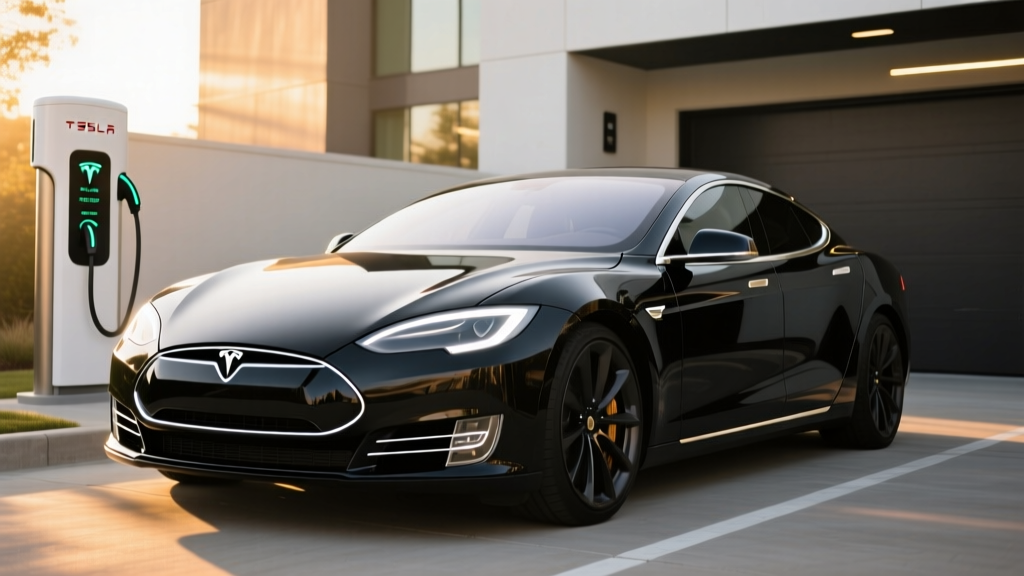
At roughly 4,561 pounds for the Long Range and 5,214 pounds for the Plaid, Tesla Model S weight is not just a spec-sheet footnote — it directly shapes how the car accelerates, brakes, consumes energy at highway speed, and wears through tires over time. For a luxury EV sedan that starts above $75,000, understanding the physics behind the curb weight helps you predict real-world range, charging costs, and long-term ownership economics far better than any marketing brochure.
This guide breaks down the 2026 Tesla Model S lineup with exact numbers: EPA range, battery chemistry, charging curves, efficiency penalties from that mass, and whether the federal tax credit applies. We'll also compare it to the lighter Lucid Air and Mercedes EQS to show where weight helps and where it hurts.
2026 Tesla Model S Specifications at a Glance
| Spec | Model S Long Range | Model S Plaid |
|---|---|---|
| Curb Weight | 4,561 lbs | 5,214 lbs |
| Battery (usable) | ~95 kWh (NMC) | ~95 kWh (NMC) |
| EPA Range | 402 miles | 359 miles |
| Efficiency | 124 MPGe / 27 kWh/100mi | 116 MPGe / 29 kWh/100mi |
| Drivetrain | Dual-Motor AWD | Tri-Motor AWD |
| Horsepower | 670 hp | 1,020 hp |
| 0-60 mph | 3.1 seconds | 1.99 seconds |
| Max DC Fast Charge | 250 kW (peak) | 250 kW (peak) |
| 10-80% DCFC Time | ~30 minutes | ~30 minutes |
| Level 2 Home Charge | 11.5 kW / ~34 mi/hr | 11.5 kW / ~34 mi/hr |
| Cargo Volume | 28.4 cu ft (rear) + frunk | 28.4 cu ft (rear) + frunk |
| Base MSRP (2026) | $74,990 | $89,990 |
| Battery/Drive Unit Warranty | 8 yr / 150,000 mi | 8 yr / 150,000 mi |
Real-World Range: What the EPA Sticker Doesn't Tell You
EPA Estimate: 402 miles (Long Range) / 359 miles (Plaid)
Real-World Expectation: 320-360 miles highway at 70-75 mph; 280-320 miles in cold weather (below 32°F); 370-400 miles in mild city/suburban driving with regen.
The Model S Long Range carries roughly 95 kWh of usable energy in an NMC (nickel-manganese-cobalt) battery pack. That pack accounts for a significant portion of the car's 4,561-pound curb weight. Heavier vehicles require more energy to accelerate and to sustain highway speed against rolling resistance, which is why the Plaid — with its 653 extra pounds from the third motor and reinforced cooling — drops to 359 EPA miles despite the same battery capacity.
On a flat 75-mph highway loop in 65°F weather, expect the Long Range to deliver roughly 340 miles before hitting a 10% state of charge. In winter conditions, battery preconditioning and cabin heating can reduce that by another 15-25%, bringing effective range closer to 280-310 miles. The heat pump Tesla added in the 2021 refresh helps mitigate cold-weather loss compared to older resistive-heater models, but physics still wins: moving 4,561 pounds through dense cold air costs more energy.
For context, the lighter Lucid Air Grand Touring (about 4,700 lbs with a 112 kWh pack) achieves 516 EPA miles, showing that pack size and vehicle efficiency matter as much as weight alone. Source: fueleconomy.gov.
Charging Speed: DC Fast Charging and Home Level 2
| Charging Level | Power (kW) | Miles Added per Hour | Notes |
|---|---|---|---|
| Level 1 (120V household) | ~1.4 kW | ~3-4 mi/hr | Emergency/trickle only |
| Level 2 (240V / 48A Wall Connector) | 11.5 kW | ~34 mi/hr | Full charge in ~9-10 hours |
| DC Fast Charge (V3 Supercharger) | 250 kW peak | ~200 mi in 15 min | Tapers above 50-60% SoC |
The Model S peaks at 250 kW on a V3 Supercharger, but — and this is critical — that peak is sustained for only a short window between roughly 10% and 30% state of charge. As the battery fills and cell resistance rises, the charge curve tapers significantly. By 60% SoC, you're typically seeing 100-120 kW; by 80%, it drops below 60 kW. A realistic 10-80% session takes about 30 minutes at a V3 stall.
At home on a Tesla Wall Connector wired to a 60-amp circuit (48 amps continuous), the onboard charger pulls 11.5 kW, adding roughly 34 miles of range per hour. A full 10-100% charge from empty takes roughly 9 hours — fine for overnight charging. If your home has a 200-amp electrical panel with spare capacity, installation typically runs $800-$2,000 depending on conduit length and local permit fees. Homes needing a panel upgrade to 200 amps can see costs jump to $3,000-$5,000.
One weight-related charging consideration: heavier EVs generate more heat during sustained fast charging due to higher internal resistance loads. Tesla's active thermal management handles this well, but expect the cooling system to run audibly during 250 kW sessions — that's normal, not a fault.
Performance: Where Weight Meets 1,020 Horsepower
The Model S Plaid's tri-motor setup produces 1,020 horsepower and achieves a manufacturer-claimed 1.99-second 0-60 mph time (with rollout subtracted). That makes it one of the quickest production cars ever built, regardless of powertrain. The 653-pound weight penalty over the Long Range is more than offset by the additional torque vectoring and traction from the rear axle's dual motors.
However, weight reveals itself in other dynamics. Braking distances from 70 mph are longer than lighter sport sedans; tire wear accelerates — expect to replace the 21-inch Arachnid tires every 15,000-20,000 miles at roughly $350-$500 per corner. The Plaid's carbon-sleeved rotors help manage thermal load during repeated hard launches, but the laws of momentum are non-negotiable: 5,214 pounds at speed carries enormous kinetic energy.
The Long Range, at 670 hp and 3.1 seconds to 60, is hardly slow. For most buyers, it offers the better balance of performance and efficiency, and its 4,561-pound curb weight is competitive within the luxury EV sedan class (the Mercedes EQS 580 weighs 5,600 lbs; the BMW i7 xDrive60 tips 6,020 lbs).
Pricing, Trims, and Federal Tax Credit Eligibility
| Trim | Base MSRP | Federal §30D Credit | Effective Price |
|---|---|---|---|
| Model S Long Range | $74,990 | $0 (exceeds MSRP cap) | $74,990 |
| Model S Plaid | $89,990 | $0 (exceeds MSRP cap) | $89,990 |
Under current IRS §30D rules, the federal EV tax credit has an MSRP cap of $55,000 for sedans. Both the Model S Long Range ($74,990) and Plaid ($89,990) exceed this cap, meaning neither qualifies for the $7,500 federal credit — regardless of your income or the battery's mineral sourcing. See the full rules at IRS.gov §30D.
There is no income cap workaround for the MSRP limit. However, some states offer separate incentives that don't follow federal MSRP rules — check your state's energy office or DMV for local rebates. Additionally, if you lease rather than buy, the commercial clean vehicle credit (§45W) may allow the lessor to pass savings through, though Tesla does not currently offer leasing on the Model S in most markets.
Destination fees add $1,390. Common options include $1,500 for Ultra Red paint, $4,500 for 21-inch Arachnid wheels (Plaid), and $12,000 for FSD (Supervised) capability — pushing a fully loaded Plaid past $107,000 before taxes.
Interior, Cargo, and Standout Tech
The Model S cabin offers 35.4 inches of rear legroom — adequate for adults but tighter than the Mercedes EQS (42.7 inches). Cargo space is generous: 28.4 cubic feet behind the rear seats, expanding to roughly 79 cu ft with the 60/40 split folded. The front trunk (frunk) adds about 2.5 cu ft for charging cables or a small bag.
The 17-inch center touchscreen runs Tesla's latest software with a responsive UI, integrated navigation with real-time Supercharger routing, and over-the-air updates that periodically add features. The 22-speaker audio system rivals anything from Burmester or Bowers & Wilkins. The yoke steering wheel remains polarizing — it's standard, but a round wheel is available at no cost if you order it.
Autopilot is standard and includes adaptive cruise, lane-keeping, and automatic emergency braking. Full Self-Driving (Supervised) is a $12,000 option or $199/month subscription. Important: FSD is an SAE Level 2 system — you must keep your hands on the yoke/wheel and eyes on the road at all times. It is not autonomous driving. Only Level 4 services like Waymo operate without a human driver in defined zones.
Pros, Cons, and Who Should Buy the Model S
Pros
- 402-mile EPA range (Long Range) is among the highest of any EV sedan
- Supercharger network access with reliable plug-and-charge experience
- Plaid's 1.99s 0-60 is hypercar performance at sedan pricing
- Hatchback cargo flexibility + frunk beats traditional trunk sedans
- OTA updates keep software and features current
- 8-year/150,000-mile battery warranty with 70% retention threshold
Cons
- No federal tax credit due to MSRP cap ($55K sedan limit)
- Weight penalizes tire wear, braking distance, and cold-weather range
- Rear legroom trails German luxury competitors
- Build quality inconsistency still reported by some owners
- 250 kW peak charge rate trails Hyundai/Kia's 350 kW E-GMP platform
- Plaid's $89,990 price approaches Porsche Taycan territory
Best for: Tech-forward buyers who prioritize range and Supercharger convenience, want sedan practicality with hatchback cargo, and value acceleration bragging rights. The Long Range is the sweet spot for daily commuters and road-trippers; the Plaid suits performance enthusiasts who accept the efficiency and weight trade-offs.
Look elsewhere if: You need maximum rear-seat comfort (EQS), the fastest possible DC charging (Ioniq 6 at 350 kW), or you want to qualify for the federal tax credit (consider the Model 3, which sits under the MSRP cap).
Frequently Asked Questions
How does Tesla Model S weight compare to other luxury EV sedans?
The Long Range at 4,561 lbs is lighter than the Mercedes EQS 580 (5,600 lbs), BMW i7 (6,020 lbs), and Porsche Taycan Turbo S (5,121 lbs). Only the Lucid Air (4,700 lbs with larger battery) competes closely. Lower weight helps the Model S achieve better efficiency per kWh than heavier rivals.
Does the Model S qualify for any federal EV tax credit in 2026?
No. The IRS §30D credit caps sedan MSRP at $55,000. The Model S starts at $74,990, disqualifying it entirely. State incentives may still apply — check your local energy office.
What is the real-world highway range of the Model S Long Range?
Expect 320-360 miles at 70-75 mph in mild weather. In freezing temperatures, plan for 280-310 miles. The 402-mile EPA figure assumes a mix of city and highway driving with moderate speeds.
How long does it take to charge a Model S at home?
On a Level 2 Tesla Wall Connector (11.5 kW), a full 0-100% charge takes roughly 9-10 hours. Most owners charge overnight from 20-80%, which takes about 5 hours and adds roughly 200 miles.
Is the Model S Plaid worth the $15,000 premium over Long Range?
Only if you'll use the 1,020 hp and track capability. The Plaid sacrifices 43 miles of range, costs more in tires, and weighs 653 lbs more. For daily driving and road trips, the Long Range is the more rational choice.
What battery chemistry does the Model S use?
The Model S uses NMC (nickel-manganese-cobalt) chemistry, which offers higher energy density than LFP (lithium iron phosphate). NMC is preferred for long-range and performance applications, though it's recommended to charge to 80% daily and 100% only for trips to optimize longevity.