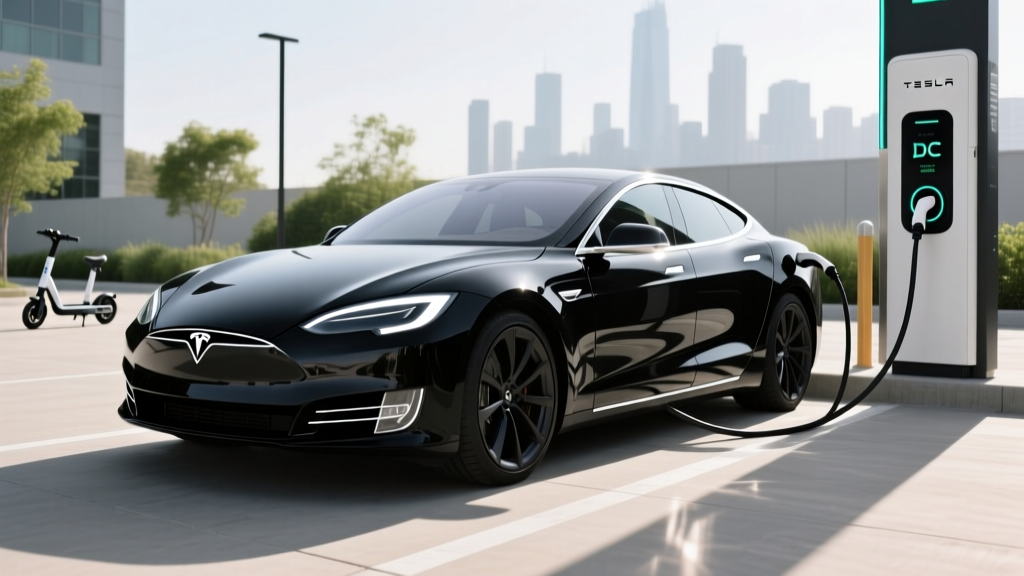
The Tesla Model S has been the benchmark luxury electric sedan for over a decade, but as the EV market matures, buyers are asking tougher questions. Chief among them: how does the Model S warranty hold up against rivals, and does the car's real-world performance justify its premium price in 2026? This review breaks down every spec that matters — from battery chemistry and charging curves to cargo space and federal tax credit eligibility — so you can decide whether Tesla's flagship sedan still earns its place in your garage.
2026 Tesla Model S: Core Specifications at a Glance
| Specification | Long Range (Dual-Motor AWD) | Plaid (Tri-Motor AWD) |
|---|---|---|
| EPA Range | 402 miles | 396 miles |
| Battery (usable) | ~100 kWh (NMC) | ~100 kWh (NMC) |
| Peak DC Fast Charge | 250 kW | 250 kW |
| 10–80% DC Charge Time | ~30 minutes | ~30 minutes |
| Level 2 Home Charge Rate | 11.5 kW (~44 mi/hr) | 11.5 kW (~44 mi/hr) |
| 0–60 mph | 3.1 seconds | 1.99 seconds |
| Horsepower | 670 hp | 1,020 hp |
| Drivetrain | Dual-Motor AWD | Tri-Motor AWD |
| MPGe (combined) | 120 MPGe | 116 MPGe |
| Efficiency | 28 kWh/100 mi | 29 kWh/100 mi |
| Base MSRP | $74,990 | $89,990 |
| Battery & Drive Unit Warranty | 8 yr / 150,000 mi | 8 yr / 150,000 mi |
| Basic Vehicle Warranty | 4 yr / 50,000 mi | 4 yr / 50,000 mi |
Sources: EPA / fueleconomy.gov, Tesla Model S specs page. Specs reflect the current model year; Tesla periodically adjusts pricing and trims mid-cycle.
Real-World Range: What to Expect Beyond the EPA Sticker
EPA Estimated: 402 miles
Real-World Highway (70–80 mph, moderate climate): ~320–350 miles
Real-World Cold Weather (below 32°F, highway): ~260–300 miles
City / Mixed Commute (mild weather): ~370–400 miles
The Model S Long Range carries an EPA-rated 402 miles of range — one of the highest figures of any production EV sold in the US. But that number reflects a blended city/highway cycle with moderate temperatures and conservative speeds.
In sustained highway driving at 75 mph, expect to use roughly 30–33 kWh per 100 miles, which nets you approximately 320 to 350 miles before the battery buffer kicks in. The Model S's large ~100 kWh battery (NMC chemistry) gives it a genuine long-distance advantage, but physics is unforgiving at speed: aerodynamic drag scales with the square of velocity.
Cold weather compounds the loss. Lithium-ion batteries lose efficiency in freezing temperatures, and cabin heating draws significant energy even with the Model S's heat pump system. Plan for a 25–35% range reduction in sub-freezing highway conditions. That 402-mile sticker becomes roughly 260–300 miles of practical range on a winter road trip through the Rockies.
City driving, where regenerative braking recaptures energy and speeds stay lower, is where the Model S gets closest to its EPA number. Commuters with mixed suburban routes will routinely see 370+ miles.
Charging Speed: DC Fast, Level 2, and the Charge Curve Reality
| Charging Level | Power | Speed (miles added/hr) | Notes |
|---|---|---|---|
| Level 1 (120V household) | ~1.4 kW | ~4–5 mi/hr | Emergency/trickle only |
| Level 2 (240V, Wall Connector) | 11.5 kW | ~44 mi/hr | Full charge in ~9 hours |
| DC Fast (V3 Supercharger) | Up to 250 kW peak | ~200 mi in 15 min | 10–80% in ~30 min |
| DC Fast (V4 Supercharger / CCS) | Up to 250 kW | Similar to V3 | With NACS or CCS adapter |
The Model S peaks at 250 kW on Tesla's V3 Superchargers. In practice, the car sustains peak power only through roughly 15–25% State of Charge (SoC). After that, the charge curve tapers progressively — this is normal battery-management behavior to protect NMC cells from heat damage at high SoC.
A typical 10–80% session takes about 30 minutes. That's competitive but no longer class-leading; the Hyundai Ioniq 5 and Kia EV6 (with 800V architectures) can do 10–80% in roughly 18 minutes at 350 kW chargers. The Model S's 400V architecture limits its peak charge rate relative to newer 800V platforms.
At home, the Tesla Wall Connector delivers up to 11.5 kW on a 60-amp circuit (48 amps continuous), adding roughly 44 miles of range per hour. A full overnight charge from 10% to 100% takes about 9 hours. Most owners who charge nightly from 20–80% will wake up to a full battery every morning without issue. Installation typically requires a 240V/60A dedicated circuit; expect $500–$2,000 for professional installation depending on panel proximity and local permitting.
Tesla Model S Warranty: Coverage Breakdown and What It Means
The Model S warranty is one of the strongest in the luxury EV segment, particularly for the battery and drive units — the two most expensive components to replace.
| Component | Coverage | Key Details |
|---|---|---|
| Basic Vehicle (bumper-to-bumper) | 4 years / 50,000 miles | Covers most non-wear components |
| Battery & Drive Unit | 8 years / 150,000 miles | Covers capacity loss below 70% retention |
| Restraint System | 5 years / 60,000 miles | Seatbelts and airbags |
| Corrosion Perforation | 12 years / unlimited miles | Body rust-through only |
| Roadside Assistance | 4 years / 50,000 miles | Towing, flat tire, lockout |
The headline is the 8-year / 150,000-mile battery and drive unit warranty. Tesla guarantees that the battery will retain at least 70% of its original capacity during the warranty period. If degradation drops below that threshold, Tesla will repair or replace the battery pack at no cost. For a ~100 kWh pack, 70% retention means you'd still have roughly 280 miles of range at the warranty boundary — still highly usable.
How does this compare? The Mercedes EQS offers a 10-year / 155,000-mile battery warranty, while the Lucid Air covers 8 years / 100,000 miles. Tesla's 150,000-mile threshold is generous for high-mileage drivers. However, the 70% retention floor is industry-standard rather than exceptional — some competitors guarantee 70% as well, while a few (like Hyundai) use the same threshold but with a 10-year window.
One important nuance: the Model S uses NMC (nickel manganese cobalt) battery chemistry, which offers higher energy density than LFP (lithium iron phosphate) but tends to degrade slightly faster over thousands of cycles. Tesla's battery management system (BMS) is widely regarded as among the best in the industry, which helps mitigate this. Real-world data from high-mileage Tesla owners suggests most Model S packs retain 85–90% capacity at 100,000 miles — well above the warranty threshold.
The basic vehicle warranty at 4 years / 50,000 miles is average for the luxury segment. BMW and Mercedes typically match this. If you plan to keep the car well beyond 50,000 miles, an extended service plan may be worth evaluating — though Tesla does not currently offer a factory-extended bumper-to-bumper plan in all states.
Performance, Efficiency, and Daily Livability
The Model S Long Range delivers 670 horsepower from its dual-motor all-wheel-drive setup, launching to 60 mph in 3.1 seconds. That's supercar territory from just a few years ago, and it's accompanied by the instant torque delivery that makes EVs feel quicker than their numbers suggest.
The Plaid trim adds a third motor for 1,020 hp and a 1.99-second 0–60 time — making it one of the quickest production cars ever built. Both trims use a single-speed transmission with no gear shifts, so acceleration is seamless and uninterrupted.
Efficiency is a Model S strength. At 120 MPGe combined (Long Range), it consumes about 28 kWh per 100 miles — impressive for a 4,500-pound luxury sedan. That translates to roughly $0.10–$0.14 per mile on the national average electricity rate of $0.17/kWh, compared to $0.18–$0.22/mile for a comparable gas-powered BMW 5 Series or Mercedes E-Class at $3.50/gallon.
Interior, Cargo, and Passenger Space
The Model S cabin has improved materially since the 2021 refresh. The 17-inch center touchscreen is responsive and handles nearly all vehicle functions. A second 8-inch screen for rear passengers controls climate and media. The yoke steering wheel remains optional; a conventional round wheel is standard.
- Front headroom: 39.7 inches
- Front legroom: 42.7 inches
- Rear headroom: 38.1 inches
- Rear legroom: 35.4 inches
- Cargo (rear trunk): 28.0 cu ft
- Frunk (front trunk): 5.3 cu ft
- Total cargo: 33.3 cu ft (rear seats up)
The rear trunk is generous for a sedan, and the hatchback-style liftgate makes loading bulky items easier than a traditional trunk lid. The frunk is small but useful for charging cables or a laptop bag. Compared to the Lucid Air (32.1 cu ft total), the Model S offers slightly more cargo versatility. Against the Mercedes EQS sedan, the Model S's hatchback design is a practical advantage.
Tech and Driver Assistance
The Model S comes standard with Tesla's Autopilot, which includes adaptive cruise control, lane centering, and automatic emergency braking. This is an SAE Level 2 driver-assistance system — you must keep your hands on the wheel and eyes on the road at all times. Full Self-Driving (Supervised) is a $8,000 add-on (or $99/month) that adds automatic lane changes, traffic light recognition, and navigate-on-autopilot, but it remains a Level 2 system despite its name. It does not make the car self-driving.
The infotainment system is Tesla's proprietary software, which does not support Apple CarPlay or Android Auto. For some buyers this is a dealbreaker; for others, Tesla's native navigation, streaming, and over-the-air updates make it a non-issue. The 22-speaker audio system is among the best in any vehicle at this price point.
Pricing, Trims, and Federal Tax Credit Eligibility
| Trim | Base MSRP | As-Tested (common config) | Federal §30D Credit Eligible? |
|---|---|---|---|
| Long Range | $74,990 | ~$80,000–$85,000 | No — exceeds MSRP cap |
| Plaid | $89,990 | ~$95,000–$105,000 | No — exceeds MSRP cap |
Under current IRS §30D rules, the federal EV tax credit has an MSRP cap of $55,000 for sedans. Both Model S trims exceed this limit significantly, meaning no new Model S qualifies for the $7,500 federal tax credit. This is a hard cap — no amount of income qualification or battery-sourcing compliance can override it.
Additionally, the §30D credit has buyer income caps ($300,000 joint / $150,000 single filer MAGI) and battery critical-mineral sourcing requirements. But for Model S buyers, the MSRP cap is the disqualifying factor regardless of income.
One potential workaround: the used EV credit (§25E) offers up to $4,000 (30% of sale price, capped) on qualifying pre-owned EVs priced under $25,000. However, finding a Model S under that threshold means accepting a high-mileage, older-generation vehicle. Most current-model-year buyers should budget the full MSRP plus options, destination ($1,990), and applicable state fees.
Model S vs. Key Competitors: Which Luxury EV Sedan Wins?
| Attribute | Tesla Model S LR | Lucid Air Pure | Mercedes EQS 450+ | BMW i5 M60 |
|---|---|---|---|---|
| EPA Range | 402 mi | 419 mi | 390 mi | 295 mi |
| Battery | ~100 kWh NMC | 88 kWh NMC | 108.4 kWh NMC | 81.2 kWh NMC |
| Peak DC Charge | 250 kW | 200 kW | 200 kW | 205 kW |
| 0–60 mph | 3.1 sec | 5.2 sec | 5.9 sec | 3.7 sec |
| HP | 670 | 430 | 355 | 593 |
| Base MSRP | $74,990 | $69,900 | $104,400 | $84,100 |
| Battery Warranty | 8 yr / 150k mi | 8 yr / 100k mi | 10 yr / 155k mi | 8 yr / 100k mi |
| Federal Credit? | No | No | No | No |
- You want the longest range + highest performance combo under $80K
- Supercharger network access is a priority for road trips
- You value OTA updates and Tesla's software ecosystem
- 150,000-mile battery warranty matters for high-mileage plans
- You need Apple CarPlay / Android Auto (consider Lucid or BMW)
- Back-seat luxury and ride comfort outrank performance (Mercedes EQS)
- You want a longer battery warranty window (Mercedes: 10 years)
- Federal tax credit eligibility is essential to your budget
Pros, Cons, and the Bottom Line
- 402-mile EPA range — among the longest of any EV
- 670 hp standard; 1,020 hp Plaid is absurdly quick
- Access to 25,000+ Tesla Supercharger stalls nationwide
- 8-year / 150,000-mile battery warranty is generous
- Class-leading efficiency at 120 MPGe combined
- Hatchback cargo versatility with 33.3 cu ft total
- Continuous OTA improvements
- No Apple CarPlay or Android Auto support
- 250 kW peak charge rate trails 800V competitors
- No federal tax credit (MSRP exceeds $55K sedan cap)
- Yoke steering is polarizing; learning curve for some
- Rear seat comfort below Mercedes/BMW luxury standards
- Panel gaps and build consistency still trail German rivals
- Insurance premiums run 20–40% above segment average
Who Is the Model S Best Suited For?
The Model S Long Range is ideal for high-mileage commuters and frequent road trippers who prioritize range, performance, and Supercharger convenience above traditional luxury polish. If you drive 30,000+ miles per year, the 150,000-mile battery warranty and 402-mile range provide genuine peace of mind.
The Plaid variant suits performance enthusiasts who want hypercar acceleration in a practical four-door sedan. It's a weekend canyon carver and daily driver in one package.
The Model S is less ideal for buyers who prioritize rear-seat luxury, traditional infotainment integration (CarPlay), or who need the car to qualify for federal incentives. For those needs, the Lucid Air Pure offers similar range at a lower starting price, while the BMW i5 provides CarPlay and a more conventional luxury experience.
Frequently Asked Questions
What is the real-world range of the Tesla Model S?
The EPA rates the Long Range at 402 miles. In real-world highway driving at 70–80 mph, expect 320–350 miles. In freezing weather, plan for 260–300 miles. City driving with regenerative braking can approach the EPA figure.
How fast does the Model S charge at home and on the road?
On a Tesla V3 Supercharger, it peaks at 250 kW and charges 10–80% in approximately 30 minutes. At home on a Level 2 Wall Connector (11.5 kW), it adds ~44 miles per hour, fully charging overnight in about 9 hours.
Does the Tesla Model S qualify for the federal EV tax credit?
No. Under current IRS §30D rules, the federal credit is capped at vehicles with an MSRP of $55,000 or less for sedans. The Model S starts at $74,990, making it ineligible regardless of buyer income or battery sourcing.
What does the Model S battery warranty cover?
Tesla covers the battery and drive unit for 8 years or 150,000 miles, whichever comes first. If battery capacity drops below 70% of original capacity within that window, Tesla will repair or replace the pack at no charge. This is one of the most generous mileage limits in the luxury EV segment.
Is the Model S worth buying over the Lucid Air or Mercedes EQS?
If Supercharger network access, performance-per-dollar, and high-mileage warranty coverage are your priorities, yes. If rear-seat luxury, CarPlay integration, or a 10-year battery warranty matter more, the Mercedes EQS or Lucid Air may be better fits. None of these sedans qualify for the federal tax credit due to MSRP caps.
Does the Model S have Apple CarPlay?
No. Tesla uses its proprietary infotainment system exclusively. It supports Bluetooth audio streaming, native navigation, and built-in apps (Spotify, Netflix, etc.), but does not mirror Apple CarPlay or Android Auto. This remains a top complaint among cross-shoppers.
How much does it cost to charge a Model S vs. filling a gas car?
At the national average electricity rate of $0.17/kWh, a full 100 kWh charge costs roughly $17 for 400 miles — about $0.04/mile. Supercharging costs more, typically $0.25–$0.40/kWh ($25–$40 per full charge). A comparable gas sedan at 25 MPG and $3.50/gallon costs $0.14/mile — roughly 3–4× more per mile than home charging.