Quick Verdict: Which Tesla Flagship Fits Your Garage?
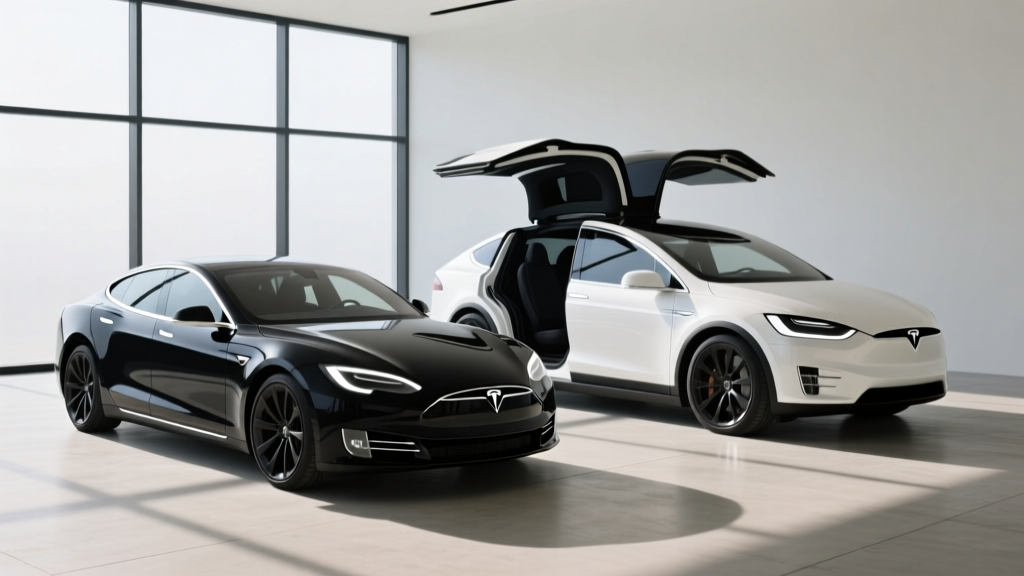
The Tesla Model S sedan and Model X SUV share the same tri-motor Plaid powertrain architecture, similar battery packs, and nearly identical infotainment stacks — yet they serve fundamentally different buyers. The Model S prioritizes range efficiency and sedan driving dynamics, while the Model X trades roughly 40 miles of EPA range for three-row seating, falcon-wing rear doors, and 88 cubic feet of maximum cargo volume. Both remain among the quickest production vehicles on Earth in Plaid trim, and both now use the NACS connector natively, granting full access to Tesla's Supercharger network without adapters.
This side-by-side breaks down the exact numbers — range, charging curves, pricing, tax-credit eligibility, and real-world ownership factors — so you can decide which flagship Tesla earns your $80,000+.
Side-by-Side Specifications
| Spec | 2026 Tesla Model S Long Range | 2026 Tesla Model S Plaid | 2026 Tesla Model X Long Range | 2026 Tesla Model X Plaid |
|---|---|---|---|---|
| EPA Range | 402 mi | 359 mi | 348 mi | 320 mi |
| Battery (usable) | ~95 kWh (NMC) | ~95 kWh (NMC) | ~95 kWh (NMC) | ~95 kWh (NMC) |
| Drivetrain | Dual-Motor AWD | Tri-Motor AWD | Dual-Motor AWD | Tri-Motor AWD |
| Horsepower | 670 hp | 1,020 hp | 670 hp | 1,020 hp |
| 0-60 mph | 3.1 sec | 1.99 sec | 3.8 sec | 2.5 sec |
| Peak DC Charge Rate | 250 kW | 250 kW | 250 kW | 250 kW |
| 10-80% DC Time | ~30 min | ~30 min | ~31 min | ~31 min |
| Level 2 Home Charge | 11.5 kW (~44 mi/hr) | 11.5 kW (~44 mi/hr) | 11.5 kW (~36 mi/hr) | 11.5 kW (~36 mi/hr) |
| MPGe (combined) | 120 MPGe | 116 MPGe | 102 MPGe | 98 MPGe |
| Efficiency (kWh/100 mi) | 28 kWh | 29 kWh | 33 kWh | 34 kWh |
| Cargo (max, cu ft) | 28.4 (rear seats up) / 79.3 (folded) | 28.4 / 79.3 | 88.1 (behind 1st row) | 88.1 |
| Seating | 5 passengers | 5 passengers | 5, 6, or 7 passengers | 5, 6, or 7 passengers |
| Base MSRP | $79,990 | $94,990 | $84,990 | $99,990 |
| Battery/Drive Unit Warranty | 8 yr / 150,000 mi | 8 yr / 150,000 mi | 8 yr / 150,000 mi | 8 yr / 150,000 mi |
Sources: EPA / fueleconomy.gov, Tesla Model S specs, Tesla Model X specs. Pricing reflects 2026 model year MSRP before destination fees.
Real-World Range: What the EPA Sticker Doesn't Tell You
Model S Long Range: EPA 402 mi → Expect ~330-360 mi on highway road trips (70-80 mph); ~260-290 mi in sub-30°F winter conditions.
Model S Plaid: EPA 359 mi → Expect ~280-310 mi highway; ~220-250 mi in cold weather.
Model X Long Range: EPA 348 mi → Expect ~275-300 mi highway; ~215-240 mi in cold weather.
Model X Plaid: EPA 320 mi → Expect ~250-275 mi highway; ~195-220 mi in cold weather.
Tesla's EPA range estimates for the Model S and Model X are among the highest in the industry, but real-world results depend heavily on speed, temperature, and terrain. The Model S Long Range achieves its 402-mile figure partly through its sedan aerodynamics — a drag coefficient around 0.208 Cd — and lower curb weight compared to the Model X. The Model X's larger frontal area, heavier body (roughly 500 lbs more), and falcon-wing door sealing gaps push its consumption to around 33 kWh per 100 miles, roughly 18% less efficient than the Model S Long Range at 28 kWh/100mi.
In cold weather, both vehicles benefit from Tesla's heat pump and battery preconditioning system. However, lithium-ion NMC chemistry inherently loses capacity and charge acceptance below freezing. Plan for 20-30% range reduction in sustained sub-30°F driving, especially on short trips where the cabin and battery never fully warm up. On longer highway runs in cold weather, the heat pump's efficiency partially offsets this loss.
For road-trippers: the Model S Long Range remains the most practical choice, offering roughly 330+ real-world highway miles between charges — enough to stretch Supercharger stops to 250-280 miles apart and still keep a comfortable buffer. The Model X Plaid, by contrast, demands stops every 200-230 miles on the highway, which adds time and cost on long corridors.
Charging Speed: Supercharger Access and Home Setup
| Charging Level | Power / Rate | Model S (mi/hr added) | Model X (mi/hr added) | Notes |
|---|---|---|---|---|
| Level 1 (120V) | ~1.4 kW | ~3-4 mi/hr | ~3 mi/hr | Emergency/trickle only |
| Level 2 (240V, 48A) | 11.5 kW | ~44 mi/hr | ~36 mi/hr | Full overnight charge in 8-10 hrs |
| DC Fast (V3 Supercharger) | Peak 250 kW | ~200 mi in 15 min | ~175 mi in 15 min | 10-80% in ~30 min |
| DC Fast (V4 Supercharger) | Peak 250 kW (current) | Same as V3 | Same as V3 | Newer stalls; same peak for S/X |
Both the Model S and Model X peak at 250 kW on Tesla V3 and V4 Superchargers. However, peak rate is not sustained rate. The charge curve tapers significantly above 50% State of Charge (SoC), dropping to roughly 120 kW by 60% and below 60 kW past 80%. This is why the 10-80% time of approximately 30 minutes is the more useful metric than peak kW alone.
A critical advantage: both vehicles use the NACS (North American Charging Standard) connector natively. This means direct access to over 20,000 Tesla Supercharger stalls across North America — widely regarded as the most reliable DC fast-charging network — without any adapter. As other automakers adopt NACS through 2025-2026, Supercharger stalls are becoming more crowded, but Tesla owners still enjoy seamless plug-and-charge authentication.
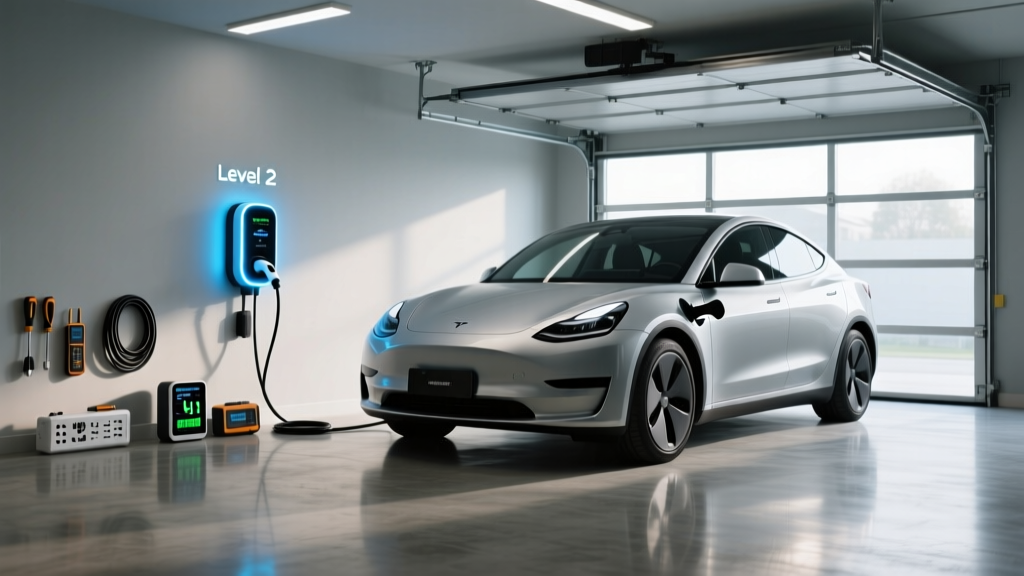
For home Level 2 charging, Tesla's Wall Connector delivers up to 11.5 kW (48 amps) on a 60-amp circuit. The Model S adds roughly 44 miles of range per hour of charging; the Model X adds about 36 miles per hour due to its lower efficiency. Most owners who charge overnight at home wake up to a full battery every morning, making public charging a road-trip-only concern. Installation of a 60-amp circuit with a Tesla Wall Connector typically runs $800-$2,000 depending on panel proximity and local electrician rates — factor in a possible $500-$2,000 panel upgrade if your home's electrical service is below 150 amps.
Pricing, Trims, and Federal Tax Credit Eligibility
| Trim | Base MSRP | Est. As-Tested* | §30D Federal Credit | Effective Price |
|---|---|---|---|---|
| Model S Long Range | $79,990 | $83,000-$88,000 | Not eligible (MSRP cap) | $79,990+ |
| Model S Plaid | $94,990 | $98,000-$105,000 | Not eligible (MSRP cap) | $94,990+ |
| Model X Long Range | $84,990 | $88,000-$95,000 | Potentially $7,500 | ~$77,490+ |
| Model X Plaid | $99,990 | $103,000-$110,000 | Not eligible (MSRP cap) | $99,990+ |
*As-tested includes destination fee, common options (paint, wheels, FSD). Excludes state/local incentives.
The IRS §30D federal EV tax credit has strict MSRP caps: $55,000 for sedans and $80,000 for SUVs, vans, and pickups (source: IRS). This creates an unusual situation for Tesla's flagships:
- Model S (all trims): Classified as a sedan, the $55,000 MSRP cap disqualifies every Model S variant from the federal credit. A $79,990 Long Range is $24,990 over the limit.
- Model X Long Range ($84,990): Classified as an SUV, it exceeds the $80,000 cap by $4,990 and is therefore also ineligible under current rules. Tesla has occasionally adjusted pricing or offered configurations that may land at or below $80,000 — always verify the exact MSRP on the window sticker and confirm eligibility with a tax professional.
- Model X Plaid ($99,990): Well above the $80,000 SUV cap. Not eligible.
Additional §30D requirements include buyer income limits (modified AGI ≤ $150,000 single / $300,000 joint), critical-mineral and battery-component sourcing thresholds that increase annually, and the option to transfer the credit to the dealer as a point-of-sale discount. Given that all current Model S and Model X trims exceed MSRP caps, buyers should not factor the $7,500 federal credit into their purchase budget. Some state-level incentives (California, Colorado, etc.) may still apply — check your state's energy office for current programs.
Performance and Driving Dynamics
The performance gap between Long Range and Plaid trims is dramatic, but both tiers deliver instant torque and all-weather AWD capability that few competitors match.
Model S Long Range (670 hp, dual-motor AWD): The 3.1-second 0-60 time makes it quicker than most sports cars, yet it achieves 402 miles of EPA range — a combination no other production sedan replicates. The adaptive air suspension provides a compliant highway ride while dropping the car for improved aerodynamics at speed.
Model S Plaid (1,020 hp, tri-motor AWD): The 1.99-second 0-60 claim (with rollout subtracted) makes it one of the quickest production cars ever built. Real-world 0-60 runs on prepped surfaces typically land in the 2.1-2.3 second range. The tri-motor setup provides torque vectoring across the rear axle, improving cornering grip. However, the Plaid's additional mass and higher-output motors reduce efficiency by roughly 4% compared to the Long Range.
Model X Long Range (670 hp): At 3.8 seconds to 60 mph in a three-row SUV, the Model X Long Range defies its 5,185-lb curb weight. Air suspension is standard, and the adaptive damping manages body roll competently for a vehicle this tall.
Model X Plaid (1,020 hp): 2.5 seconds to 60 mph in a 7-seat family hauler remains genuinely absurd. The tri-motor powertrain handles the extra mass better than the dual-motor, but you'll feel the weight in transitions and braking distances compared to the Model S Plaid.
Interior, Cargo, and Technology
Cabin and Space
The Model S and Model X share a nearly identical dashboard layout centered on a 17-inch landscape touchscreen with a secondary 8-inch rear passenger display. The yoke steering wheel remains standard, with a round wheel available as a no-cost option. Build quality has improved significantly since the 2021 refresh, with ventilated front seats, heated rear outboard seats, and a panoramic glass roof standard on both.
Model S: Rear legroom measures 35.4 inches — adequate for adults on moderate trips but tighter than a Mercedes EQS or BMW i7. Cargo behind the rear seats is 28.4 cubic feet (including the frunk), expanding to 79.3 cu ft with seats folded. The hatchback design makes loading bulky items easier than a traditional sedan trunk.
Model X: The key differentiator. Available in 5-, 6-, or 7-seat configurations. Second-row captain's chairs (6-seat) offer 37.1 inches of legroom and individual recline. Third-row legroom is a tight 28.5 inches — best for children or short trips. Maximum cargo behind the first row reaches 88.1 cubic feet, rivaling midsize SUVs. The falcon-wing rear doors open upward, providing excellent access to second- and third-row seats in tight parking spaces — though they require overhead clearance and can be slow to operate in rain.
Driver Assistance and Infotainment
Tesla Autopilot and Full Self-Driving (Supervised) are SAE Level 2 driver-assistance systems. The driver must remain fully attentive, keep hands on the wheel (or demonstrate engagement), and be prepared to take over at any moment. These systems are NOT self-driving. Only Level 4 services like Waymo operate without a human driver in geofenced areas.
Tesla's Autopilot (standard) includes adaptive cruise control, lane centering, and automatic emergency braking. The optional Full Self-Driving (Supervised) package ($8,000 one-time or $99/month as of 2026) adds city-street navigation, traffic-light recognition, and autosteer on mapped roads. FSD (Supervised) has improved substantially, handling most suburban and highway scenarios competently, but still requires active supervision — expect occasional disengagements in construction zones, unmapped areas, and complex intersections.
The infotainment system remains one of the best in the industry: Netflix, YouTube, and gaming (including Cyberpunk 2077) run on the 17-inch display while parked. Navigation with real-time Supercharger routing and battery preconditioning is seamless. However, Tesla still offers no Apple CarPlay or Android Auto — a notable omission for buyers accustomed to phone-mirroring.
Ownership Costs, Warranty, and Longevity
Tesla covers the Model S and Model X with a 4-year/50,000-mile basic warranty and an 8-year/150,000-mile battery and drive unit warranty. The battery warranty guarantees retention of at least 70% of original capacity during the coverage period. Tesla's NMC packs have historically shown moderate degradation of roughly 8-12% over the first 100,000 miles based on fleet data, with the curve flattening significantly thereafter.
Charging cost vs. gasoline: At the national average electricity rate of ~$0.16/kWh, charging a Model S Long Range (28 kWh/100mi) costs approximately $4.48 per 100 miles at home. A comparable gasoline sedan at 25 MPG and $3.50/gallon costs $14.00 per 100 miles — a savings of roughly $9.50 per 100 miles, or $1,425 annually at 15,000 miles/year. Supercharger pricing (typically $0.25-$.40/kWh) narrows this gap but still undercuts gasoline.
Insurance: Both vehicles carry higher-than-average insurance premiums due to repair costs, aluminum body panels, and sensor-dense bumpers. Expect annual premiums 25-40% above a comparably priced gasoline vehicle. Get quotes before purchasing.
Depreciation: Tesla's price cuts in 2023-2024 hammered used values for existing owners. The Model S and Model X have stabilized somewhat, but luxury EVs broadly depreciate faster than luxury ICE vehicles. Plan for 45-55% value retention at 5 years / 60,000 miles based on current market trends.
✅ Pros
- Class-leading EPA range (Model S LR at 402 mi)
- Native NACS + Supercharger network access
- Best-in-class acceleration (Plaid trims)
- Over-the-air updates add features post-purchase
- Heat pump standard for cold-weather efficiency
- Strong resale infrastructure (Supercharger density)
❌ Cons
- No federal tax credit (MSRP exceeds §30D caps)
- No Apple CarPlay / Android Auto
- Yoke steering polarizing; round wheel still an option
- Model X falcon-wing doors slow and need overhead clearance
- Insurance premiums 25-40% above average
- Model S rear seat space trails German luxury rivals
- FSD (Supervised) still requires full driver attention
Who Should Buy Which?
Choose the Model S Long Range if: You want maximum range (402 mi EPA), daily-commute efficiency, sedan driving dynamics, and the longest gap between Supercharger stops on road trips. Best for couples or small families who don't need three rows.
Choose the Model S Plaid if: You want supercar acceleration in a practical daily driver and don't mind sacrificing 43 miles of EPA range and ~$15,000 more for the privilege. A track-capable sedan with a back seat.
Choose the Model X Long Range if: You need three-row seating, easy child-seat access via falcon-wing doors, and SUV cargo space, but still want strong range (348 mi EPA) and quick acceleration. Best for families of 5-7 who want to go electric without compromising on road-trip capability.
Choose the Model X Plaid if: You want the fastest SUV on the planet and have the budget for it. Realistically, the Long Range is the smarter buy for most families — the Plaid's 28-mile range penalty and $15,000 premium buy acceleration you'll rarely use at full capacity with kids in the back.
Competitive Landscape: Is It Worth It vs. Rivals?
The Model S competes with the Lucid Air (up to 516 mi EPA, starting ~$69,900), BMW i7 (318 mi, ~$105,700), and Mercedes EQS (352 mi, ~$104,400). The Lucid Air Pure offers more range and a lower starting price, but lacks Supercharger access and Tesla's software ecosystem. The i7 and EQS offer superior rear-seat luxury and build quality but trail on range and performance-per-dollar.
The Model X faces the BMW iX (324 mi, ~$87,250), Rivian R1S (up to 410 mi with Max pack, ~$79,900), and Kia EV9 (304 mi, ~$54,900). The Rivian R1S is the closest functional rival — it offers genuine off-road capability, three rows, and competitive range, though it lacks the Supercharger network. The EV9 is dramatically cheaper but slower and shorter-ranged. The iX seats only five and lacks the Model X's third-row versatility.
Neither the Model S nor Model X qualifies for the federal tax credit, which gives rivals like the Rivian R1S (if eligible under sourcing rules) and certain Lucid Air trims a potential $7,500 pricing advantage. Factor this into your comparison.
Frequently Asked Questions
What is the real-world range of the Model S and Model X?
The Model S Long Range delivers roughly 330-360 real-world highway miles and 260-290 miles in cold weather, against its 402-mile EPA rating. The Model X Long Range returns approximately 275-300 highway miles and 215-240 cold-weather miles against its 348-mile EPA rating. Plaid trims lose an additional 10-15% due to higher-output motors.
How fast do the Model S and Model X charge?
Both peak at 250 kW on Tesla V3/V4 Superchargers, achieving a 10-80% charge in approximately 30 minutes. At home on a 48-amp Level 2 charger (11.5 kW), the Model S adds ~44 miles per hour and the Model X adds ~36 miles per hour, with a full charge taking 8-10 hours overnight.
Does the Model S or Model X qualify for the $7,500 federal EV tax credit?
As of 2026, neither vehicle qualifies under the IRS §30D rules. The Model S exceeds the $55,000 sedan MSRP cap, and all Model X trims exceed the $80,000 SUV cap. Buyers should not budget around the federal credit for these vehicles. State incentives may still apply — verify with your state energy office and a tax professional.
Is the Model X worth the premium over the Model S?
Only if you need three-row seating, SUV cargo space, or the falcon-wing door convenience for child-seat loading. The Model S is more efficient, longer-ranged, quicker (in equivalent trims), and cheaper. If your household fits comfortably in five seats, the Model S is the better value proposition.
How reliable are the falcon-wing doors on the Model X?
Tesla has improved the falcon-wing mechanism since the 2016 launch, with better seals and more consistent sensor calibration. However, they remain more complex than conventional doors — they open slower (~6-8 seconds), require overhead clearance (roughly 8 feet), and can struggle in heavy rain due to the upward-opening design letting water into the cabin opening. They're a conversation piece and a genuine convenience for car-seat access, but a maintenance risk long-term.
Should I buy FSD (Supervised)?
At $8,000 or $99/month, FSD (Supervised) offers impressive city-street capability but still requires full driver attention (SAE Level 2). It's a convenience feature, not a self-driving system. If your commute involves repetitive highway miles, standard Autopilot handles that well at no extra cost. Consider FSD only if you frequently drive in complex urban environments and value the navigation-on-autopilot features — and understand it may not add equivalent resale value.