Quick Verdict: Can the Tesla Model S Actually Tow?
The 2026 Tesla Model S carries a maximum towing capacity of 3,500 pounds when properly equipped with the factory tow hitch. That puts it on par with midsize luxury sedans but well below electric SUVs and trucks built for heavy hauling. If you're eyeing the Model S and wondering whether it can pull a small boat trailer, a lightweight camper, or a utility trailer loaded with gear, the short answer is yes — within strict limits. But towing also slashes real-world range, and the Model S's sedan form factor means you'll sacrifice cargo practicality compared to a Model X or Rivian R1S.
This review covers the full ownership picture: EPA range versus what you'll actually see, DC fast-charging speeds, battery chemistry, tax credit eligibility under current IRS §30D rules, and whether the Model S still makes sense against newer competitors in 2026.
Tesla Model S Core Specs at a Glance
| Spec | Long Range (Dual Motor AWD) | Plaid (Tri-Motor AWD) |
|---|---|---|
| EPA Range | 402 miles | 359 miles |
| Battery (usable) | ~95 kWh (NMC) | ~95 kWh (NMC) |
| Max DC Fast Charge | 250 kW (V3 Supercharger) | 250 kW (V3 Supercharger) |
| 10–80% DC Time | ~27 minutes | ~27 minutes |
| Level 2 Home Charge | 11.5 kW (~44 mi/hr) | 11.5 kW (~44 mi/hr) |
| 0–60 mph | 3.1 seconds | 1.99 seconds |
| Horsepower | 670 hp | 1,020 hp |
| Drivetrain | Dual Motor AWD | Tri-Motor AWD |
| Towing Capacity | 3,500 lbs | Not rated for towing |
| Efficiency | 120 MPGe (28 kWh/100mi) | 116 MPGe (29 kWh/100mi) |
| Cargo Volume | 28 cu ft (rear seats up), 79 cu ft (folded) | 28 cu ft / 79 cu ft |
| Base MSRP | $79,990 | $94,990 |
| Battery Warranty | 8 years / 150,000 miles | 8 years / 150,000 miles |
Sources: fueleconomy.gov, Tesla.com spec sheets (2026 model year).
Range Reality: EPA Sticker vs. What You'll Actually Drive
Long Range: EPA 402 miles. Expect ~330–360 miles on highway road trips at 70–75 mph, and ~260–300 miles in sub-freezing winter conditions.
Plaid: EPA 359 miles. Expect ~290–320 miles highway, ~230–270 miles in cold weather.
The Model S Long Range's 402-mile EPA rating remains one of the highest of any production EV sold in the U.S. But EPA testing cycles include generous low-speed city segments that flatter efficiency. On real-world highway runs at sustained 70+ mph speeds, expect to lose roughly 10–18% from the sticker figure, based on independent testing by outlets like Edmunds and Car and Driver.
Cold weather compounds the loss. Lithium-ion NMC batteries lose efficiency below 40°F, and cabin heating draws heavily from the pack. The Model S uses a heat pump (standard since the 2021 refresh), which recovers some efficiency compared to resistive heaters, but you should still budget 20–30% range reduction in freezing temperatures.
Towing range penalty: Pulling a 3,000-lb trailer at highway speeds can cut range by 40–55%. That means a Long Range Model S that normally delivers 340 highway miles might only manage 150–190 miles while towing. Plan charging stops accordingly — and precondition the battery before every fast-charge stop to minimize taper.
Charging Speed: Supercharger Network Advantage
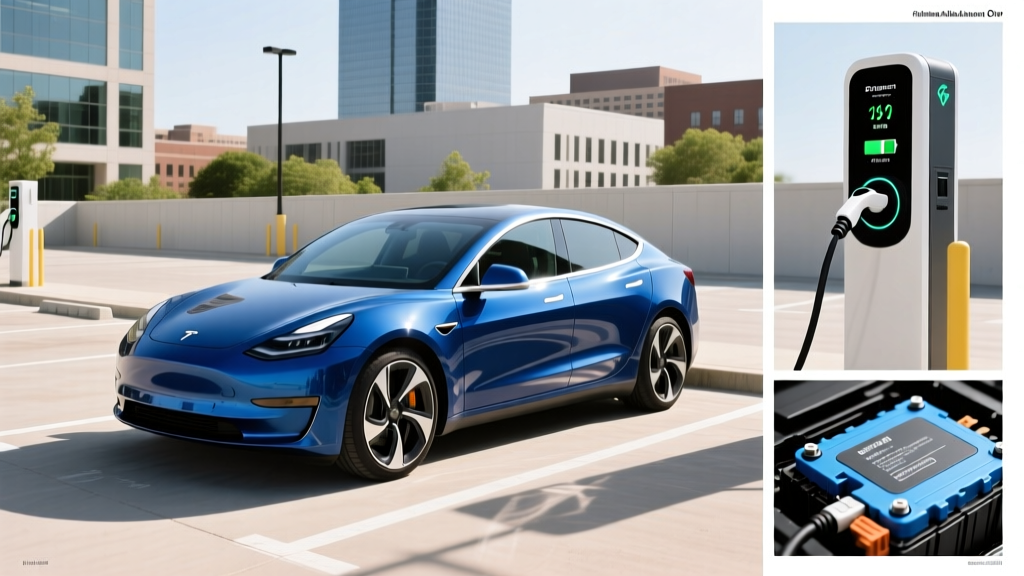
The Model S charges at up to 250 kW on Tesla V3 Superchargers. That's the peak rate — the actual charge curve tapers significantly above 50% state of charge (SoC). Here's what that means in practice:
| Charging Level | Power (kW) | Speed (mi/hr added) | Typical Use Case |
|---|---|---|---|
| Level 1 (120V outlet) | ~1.4 kW | ~4–5 mi/hr | Emergency/overnight trickle |
| Level 2 (240V, Wall Connector) | 11.5 kW | ~44 mi/hr | Daily home charging |
| DC Fast (V3 Supercharger) | Up to 250 kW | ~180 mi/hr (peak) | Road trips, 10–80% in ~27 min |
A full home charge from empty on a Level 2 Tesla Wall Connector takes roughly 8.5 hours. Most owners charging nightly from 30–80% SoC will see a full replenishment in about 4 hours.
On the road, the Tesla Supercharger network remains the most reliable DC fast-charging ecosystem in the U.S., with over 25,000 stalls nationally. The Model S can also use CCS-compatible networks (Electrify America, EVgo) via Tesla's included CCS adapter, though peak speeds on non-Tesla chargers may be lower depending on the station's output.
Charge curve reality: The 250 kW peak only holds between roughly 10–30% SoC. From 50–80%, expect speeds to drop to 80–120 kW. This taper is why the 10–80% time is 27 minutes rather than the ~15 minutes a sustained 250 kW would theoretically deliver.
Towing Capacity of the Tesla Model S: The Full Breakdown
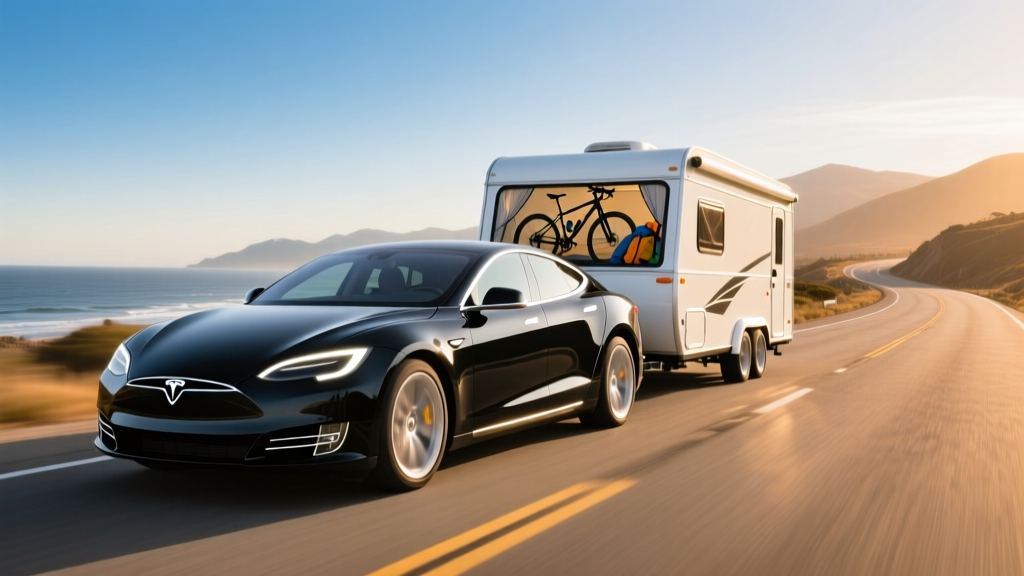
Here's the critical detail many buyers miss: only the Model S Long Range (Dual Motor) is rated for towing, at 3,500 pounds. The Plaid trim is not rated for towing by Tesla. If you order a Plaid, the tow hitch option will not appear in the configurator.
The 3,500-lb rating requires the factory-installed tow hitch (a $1,000 option at time of order — it cannot be retrofitted at a service center easily). This rating covers:
- Small enclosed utility trailers (loaded)
- Lightweight pop-up campers
- Jet Ski or small boat trailers
- Bicycle racks with hitch-mounted carriers
What it cannot tow:
- Most travel trailers (typically 4,500–8,000+ lbs)
- Horse trailers
- Large boat trailers
- Car-hauling flatbeds
If you need to tow more than 3,500 lbs, you'll need to look at the Tesla Model X (5,000 lbs), Rivian R1S (7,700 lbs), or the Ford F-150 Lightning (7,700–10,000 lbs depending on configuration). The Model S is a luxury performance sedan that happens to offer light towing — it was never engineered as a hauler.
Tongue weight limit: Tesla specifies a maximum tongue weight of 350 lbs (10% of max tow rating). Exceeding this risks rear suspension damage and voids warranty coverage for related components.
Performance, Interior, and Tech
The Model S Long Range delivers 670 horsepower from its dual-motor all-wheel-drive setup, hitting 0–60 mph in 3.1 seconds. That's supercar territory from a five-seat luxury sedan. The Plaid's tri-motor configuration pushes 1,020 hp and a claimed 1.99-second 0–60 — though real-world testing typically shows 2.1–2.3 seconds on prepped surfaces.
Interior space: The Model S offers 28 cubic feet of cargo behind the rear seats (including the front trunk, or "frunk," which adds about 3.1 cu ft). Fold the 60/40 split rear seats and you get 79 cu ft — competitive with midsize wagons but less than any crossover. Rear legroom measures 35.4 inches, adequate for adults but tighter than a BMW 5 Series or Mercedes EQS.
Tech highlights:
- 17-inch center touchscreen with excellent responsiveness
- Second-row 8-inch touchscreen for rear passengers
- Tesla Autopilot (Level 2 SAE driver-assist) standard — includes adaptive cruise, lane centering, auto lane change
- Full Self-Driving (Supervised) available as a $8,000 option or $99/month subscription — still requires active driver engagement at all times
- Over-the-air updates continuously add features
- Gaming-capable hardware (AMD Ryzen processor)
Notable drawbacks: The yoke-style steering wheel (standard since 2023, with a round wheel available by request) draws polarizing reviews. Panel gap quality, while improved from earlier years, still trails German luxury rivals. The lack of Apple CarPlay/Android Auto remains a dealbreaker for some buyers — Tesla's native navigation and media apps are robust, but phone mirroring is not supported.
Pricing, Tax Credit Eligibility, and Total Cost
| Trim | Base MSRP | Federal §30D Credit | Effective Price |
|---|---|---|---|
| Long Range | $79,990 | Not eligible | $79,990 |
| Plaid | $94,990 | Not eligible | $94,990 |
The Tesla Model S does not qualify for the $7,500 federal EV tax credit under IRS §30D. The reason is straightforward: the credit applies only to new EVs with an MSRP at or below $55,000 for sedans. At nearly $80,000 to start, the Model S exceeds this cap by a wide margin. Additionally, buyer income caps apply (§300,000 MAGI for joint filers, $150,000 for single filers), and battery critical-mineral and component sourcing requirements must be met. Full rules are published at irs.gov.
Some buyers may qualify for state-level incentives (California, Colorado, and others offer rebates or tax credits that vary by jurisdiction — check your state's energy office for current amounts). But at the federal level, no credit applies to the Model S.
5-year ownership cost context: The Model S costs roughly $0.04–$0.06 per mile to charge at home (varies by local electricity rates), versus $0.12–$0.16/mile for a comparable gasoline sedan like the BMW M5. Over 75,000 miles, fuel savings alone can reach $6,000–$8,000. However, insurance premiums for the Model S run 30–50% higher than segment averages, and depreciation on luxury EVs tends to be steep — expect 45–55% value loss over five years based on current market data.
Pros and Cons
- 402-mile EPA range (Long Range) — among the highest of any EV
- Supercharger network reliability and coverage
- 3.1-second 0–60 (Long Range) with practical daily comfort
- Over-the-air updates keep the car current years after purchase
- Low running costs vs. gasoline luxury sedans
- 3,500-lb towing for light trailers (Long Range only)
- No federal tax credit — MSRP far exceeds §30D sedan cap
- Plaid trim not rated for towing at all
- Towing slashes range by 40–55%
- Rear seat room trails competing luxury sedans
- Yoke steering polarizing; no Apple CarPlay/Android Auto
- High insurance premiums and steep depreciation
How It Compares: Model S vs. Key Competitors
| Vehicle | Towing Capacity | EPA Range | Base MSRP | §30D Credit |
|---|---|---|---|---|
| Tesla Model S LR | 3,500 lbs | 402 mi | $79,990 | No |
| Mercedes EQS 450+ | Not rated | 352 mi | $105,550 | No |
| BMW i7 xDrive60 | Not rated | 318 mi | $120,300 | No |
| Tesla Model X LR | 5,000 lbs | 348 mi | $81,630 | No |
| Rivian R1S (Dual) | 7,700 lbs | 352 mi | $79,900 | Partial* |
*Rivian R1S eligibility depends on trim, battery sourcing, and buyer income. Check IRS §30D rules for current-year specifics.
The Model S occupies a unique niche: it's the only luxury sedan offering both 400+ mile range and any towing capability. German rivals don't offer tow ratings. If towing is a priority and you need more than 3,500 lbs, the Model X (SUV) or Rivian R1S are the logical upgrades — but you'll trade the sedan's efficiency and highway composure for SUV bulk.
Who Should Buy the Tesla Model S?
- You want maximum EV range in a sedan form factor
- You need light towing (small boat, utility trailer) under 3,500 lbs
- You road-trip frequently and value Supercharger network access
- You prioritize acceleration and tech over rear-seat luxury
- You need to tow over 3,500 lbs (choose Model X, R1S, or F-150 Lightning)
- You want federal tax credit eligibility (look at sub-$55K sedans)
- Rear-seat passenger comfort is a top priority (BMW i7 or Mercedes EQS)
- You need Apple CarPlay/Android Auto integration
Frequently Asked Questions
What is the real-world range of the Tesla Model S?
The Long Range model carries a 402-mile EPA rating. In real-world highway driving at 70–75 mph, expect 330–360 miles. In freezing weather, that drops to 260–300 miles. The Plaid's 359-mile EPA rating translates to roughly 290–320 highway miles.
How fast does the Model S charge?
At a Tesla V3 Supercharger, the Model S peaks at 250 kW and charges from 10–80% in approximately 27 minutes. At home on a Level 2 Wall Connector (11.5 kW), it adds about 44 miles of range per hour, with a full charge taking roughly 8.5 hours from empty.
Does the Tesla Model S qualify for the federal EV tax credit?
No. Under IRS §30D rules, new sedan EVs must have an MSRP of $55,000 or less to qualify. The Model S starts at $79,990, well above this cap. Buyer income limits and battery-sourcing requirements add further restrictions. Always verify current rules at irs.gov.
Can I tow a travel trailer with the Model S?
Most travel trailers exceed 3,500 lbs loaded, which is the Model S Long Range's maximum tow rating. Pop-up campers and teardrop trailers that stay under 3,500 lbs are feasible, but expect range to drop by 40–55% while towing. The Plaid trim is not rated for towing at all.
Is the Model S worth buying over the Model X or Rivian R1S?
If you prioritize range, efficiency, and sedan driving dynamics, the Model S wins. If you need more than 3,500 lbs of towing, more cargo space, or a third row, the Model X (5,000 lbs towing) or Rivian R1S (7,700 lbs) are better choices — at the cost of higher energy consumption and a higher starting price.
What battery chemistry does the Model S use?
The Model S uses NMC (nickel manganese cobalt) lithium-ion cells. NMC offers higher energy density than LFP (lithium iron phosphate), enabling the 402-mile range in a manageable pack size. Tesla recommends daily charging to 80% for NMC batteries, with 100% reserved for long trips — this helps maximize long-term battery health.
What is the battery warranty?
Tesla covers the Model S battery and drive unit for 8 years or 150,000 miles, whichever comes first, with a minimum 70% capacity retention threshold. If the battery degrades below 70% of its original capacity within the warranty period, Tesla will repair or replace it. Battery replacement outside warranty currently costs between $13,000 and $20,000 depending on the pack configuration.