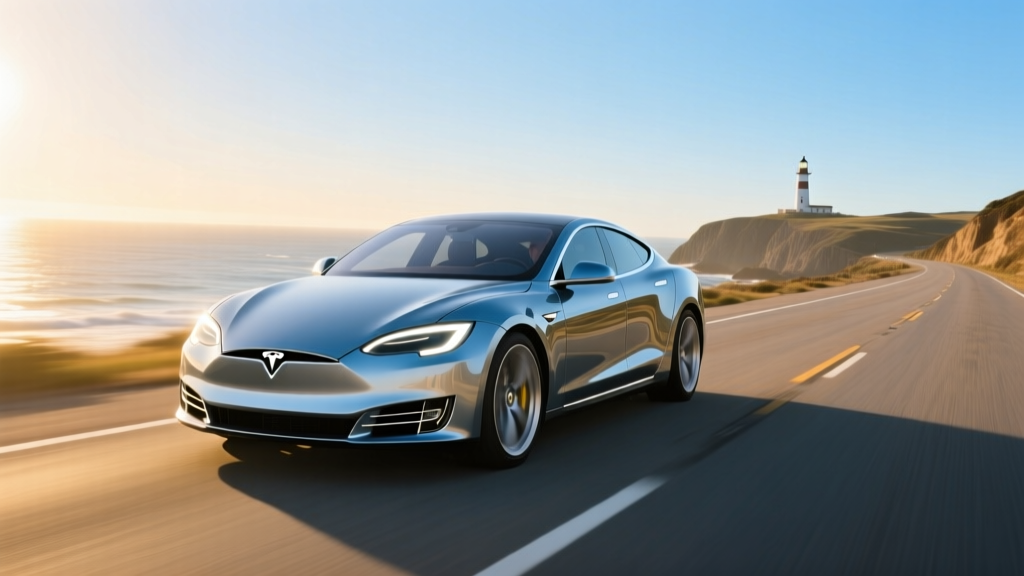
The Tesla Model S has been the benchmark luxury electric sedan for over a decade, and the 2026 lineup continues that tradition with two distinct personalities: the efficiency-focused Long Range and the record-shattering Plaid. While most buyers will never approach the Model S Tesla top speed of 200 mph (electronically limited on Plaid), understanding the full performance envelope — alongside real-world range, charging behavior, and ownership costs — is essential before signing a six-figure purchase order.
This review covers every spec that matters to an EV buyer: EPA range versus what you'll actually see on the highway, DC fast-charge curves (not just peak kW), battery chemistry, federal tax credit eligibility under current IRS §30D rules, and how the Model S stacks up against the Lucid Air, Porsche Taycan, and Mercedes EQS in 2026.
2026 Tesla Model S at a Glance: Specs That Matter
| Spec | Model S Long Range | Model S Plaid |
|---|---|---|
| Base MSRP | $74,990 | $89,990 |
| EPA Range | 402 miles | 396 miles |
| Battery (usable) | ~100 kWh, NMC | ~100 kWh, NMC |
| Drivetrain | Dual-Motor AWD | Tri-Motor AWD |
| Horsepower | 670 hp | 1,020 hp |
| 0–60 mph | 3.1 seconds | 1.99 seconds |
| Top Speed | 155 mph | 200 mph |
| Max DC Fast Charge | 250 kW | 250 kW |
| 10–80% DC Time | ~30 minutes | ~30 minutes |
| Level 2 (11.5 kW) | ~41 mi/hr | ~41 mi/hr |
| MPGe (combined) | 120 MPGe | 116 MPGe |
| Efficiency | 28 kWh/100 mi | 29 kWh/100 mi |
| Battery Warranty | 8 yr / 150,000 mi | 8 yr / 150,000 mi |
Source: EPA fueleconomy.gov, Tesla.com (2026 model year). Specs reflect current production; Tesla may adjust mid-year without notice.
Range Reality Check: EPA Sticker vs. Real-World Miles
EPA Estimate: 402 mi (Long Range) / 396 mi (Plaid)
Expect on a 75°F highway road trip (65–75 mph): ~320–350 mi
Expect in freezing weather (20°F) with cabin heat: ~260–300 mi
City / stop-and-go with regen: Can match or slightly exceed EPA
The Model S Long Range carries an EPA-estimated 402 miles of range, placing it among the longest-range EVs sold in the US. The Plaid's tri-motor setup and stickier tires reduce that slightly to 396 miles. Both figures are impressive on paper, but real-world results depend heavily on speed, temperature, and terrain.
At sustained highway speeds of 70–80 mph, aerodynamic drag dominates energy consumption. In independent testing, the Model S Long Range typically delivers between 320 and 350 miles before reaching a 5% state of charge in moderate temperatures. The Plaid, with its wider tires and higher rolling resistance, tends toward the lower end of that band.
Cold weather is the equalizer. At 20°F, lithium-ion internal resistance increases and cabin heating draws significant power even with the Model S's standard heat pump. Plan for 25–35% range reduction in deep winter — roughly 260 to 300 usable miles. If your commute is 60 miles round-trip in a Minnesota January, you'll still have comfortable margin, but a 300-mile road trip will require a charge stop.
The battery pack is a ~100 kWh (usable) NMC (nickel manganese cobalt) architecture. Tesla does not publish exact cell-level chemistry details, but the pack uses a 4680-type structural design in current production. NMC offers higher energy density than LFP, which is why the Model S achieves over 400 miles in a sedan form factor — but it also means Tesla recommends daily charging to 80–90% for longevity, reserving 100% for trips.
Charging Speed: DC Fast, Level 2, and the Curve
| Charging Level | Power / Rate | Miles Added per Hour | Notes |
|---|---|---|---|
| Level 1 (120V) | ~1.4 kW | ~3–5 mi/hr | Emergency/trickle only |
| Level 2 (240V, 48A) | 11.5 kW | ~41 mi/hr | Full charge in ~10 hrs |
| DC Fast (V3 Supercharger) | Peak 250 kW | ~200 mi in 15 min | 10–80% in ~30 min |
| DC Fast (V4 Supercharger) | Peak 250 kW* | ~200 mi in 15 min | *Model S capped at 250 kW |
The Model S peaks at 250 kW on Tesla's V3 and V4 Superchargers using the native NACS connector. That peak is reached at a low state of charge (around 10–15% SoC) and tapers progressively: by 50% SoC, expect roughly 150–170 kW, and above 80%, the rate drops below 75 kW to protect the NMC cells. A 10–80% session takes approximately 30 minutes under ideal thermal conditions.
Thermal preconditioning is critical. If you navigate to a Supercharger using the car's built-in navigation, the battery management system will warm the pack en route, enabling faster charge acceptance on arrival. Without preconditioning — for example, pulling into a charger with a cold-soaked pack — peak rates may be limited to 120–150 kW for the first several minutes.
At home on a Wall Connector (240V, 48 amps), the onboard charger accepts up to 11.5 kW, adding roughly 41 miles of range per hour. A full 10–100% charge takes about 10 hours — easily achievable overnight. The Model S uses the NACS (North American Charging Standard) connector natively, meaning no adapter is needed at Tesla Superchargers. For Electrify America or other CCS networks, a NACS-to-CCS adapter (sold separately) is required.
Performance: The Top Speed Story and What 1,020 HP Feels Like
The headline number is the Model S Tesla top speed: 200 mph on the Plaid (electronically limited), and 155 mph on the Long Range. The Plaid's 200-mph limit was raised from 175 mph in earlier model years after Tesla validated the tire and drivetrain package for sustained high-speed operation with the appropriate wheel and tire setup (the 21-inch Arachnid wheels with Michelin Pilot Sport 4S are required for the 200-mph capability).
But top speed is a trivia answer, not a daily-use metric. The performance figure that actually reshapes your driving experience is the 0–60 mph time: 1.99 seconds for the Plaid (with rollout subtracted; approximately 2.1 seconds in real-world roll-out conditions). This makes the Model S Plaid one of the quickest production cars ever built, regardless of powertrain. The tri-motor setup — one front, two rear — enables torque vectoring across the rear axle, which is how Tesla manages traction with such extreme power delivery.
The Long Range is hardly slow at 3.1 seconds to 60 mph and 670 horsepower. It also delivers a more compliant ride on the standard adaptive air suspension, since it doesn't carry the Plaid's track-focused hardware. For most buyers, the Long Range is the rational choice: nearly identical range, more than enough performance, and $15,000 less.
Interior, Cargo, and Tech: Luxury With Caveats
The Model S cabin centers on a 17-inch landscape-oriented touchscreen that controls virtually every vehicle function. The 2026 refresh continues with the yoke-style steering wheel as standard (a conventional round wheel is available as a no-cost option — and we recommend it for most drivers). A second 8-inch screen for rear passengers handles climate and media controls.
Passenger space is generous for a sedan:
- Front legroom: 42.7 inches
- Rear legroom: 35.4 inches
- Front headroom: 38.8 inches
- Rear headroom: 38.1 inches
Cargo capacity benefits from both a rear hatchback design and a front trunk (frunk):
- Rear cargo (behind second row): 28 cu ft
- Rear cargo (seats folded): 79 cu ft
- Frunk: 3.1 cu ft
The infotainment system remains one of the most capable in any vehicle, with native streaming apps, a web browser, and gaming (including AAA titles when parked). Over-the-air updates continue to add features years after purchase. However, the minimalist interior — no physical buttons for climate, mirrors, or glove box — remains polarizing, and panel-gap quality, while improved, still doesn't match a Mercedes EQS or Porsche Taycan at this price point.
On the driver-assistance front, the Model S ships with Tesla's Basic Autopilot (adaptive cruise + lane centering). Full Self-Driving (FSD) Supervised is available as a $8,000 one-time purchase or $99/month subscription. To be explicit: FSD is a Level 2 driver-assist system per SAE classification. It does not make the car self-driving. You must keep your hands on the wheel and eyes on the road at all times. The system is capable on highways and in some city scenarios, but it requires active supervision and can make unpredictable decisions in construction zones, unmapped areas, or adverse weather.
Pricing, Trims, and Federal Tax Credit Eligibility
| Trim | Base MSRP | Destination | Federal §30D Credit | Effective Price (if eligible) |
|---|---|---|---|---|
| Model S Long Range | $74,990 | $1,390 | $0 (exceeds MSRP cap) | $76,380 |
| Model S Plaid | $89,990 | $1,390 | $0 (exceeds MSRP cap) | $91,380 |
Here is the tax credit reality that catches many buyers off guard: the Tesla Model S does not qualify for the $7,500 federal EV tax credit under IRS §30D. The reason is the MSRP cap. Under current law, sedars are capped at $55,000 MSRP to qualify (SUVs, vans, and trucks have an $80,000 cap, and the Model S is classified as a sedan by the IRS). Both the Long Range at $74,990 and the Plaid at $89,990 exceed that threshold.
Additionally, the §30D credit has buyer income limits ($150,000 single / $300,000 joint MAGI) and critical-mineral/battery-component sourcing requirements that change annually. Even if the Model S were below the MSRP cap, battery sourcing rules could further restrict eligibility. Always verify current-year rules at IRS.gov §30D guidance and consult a tax professional before relying on credit projections for your purchase decision.
Some buyers offset the lack of federal credit through state-level incentives (California's CVRP, Colorado's innovative motor vehicle credit, and others), employer EV subsidies, or utility rebates for home charging installation. These vary by jurisdiction — check your state energy office or AFDC state incentive database for specifics.
Model S vs. the Competition: Is It Still the One to Beat?
The luxury EV sedan segment in 2026 is more competitive than ever. Here's how the Model S compares on the metrics that matter:
| Metric | Tesla Model S LR | Lucid Air Grand Touring | Porsche Taycan Turbo S | Mercedes EQS 580 |
|---|---|---|---|---|
| Price | $74,990 | $125,600 | $197,500 | $127,350 |
| EPA Range | 402 mi | 516 mi | 283 mi | 371 mi |
| 0–60 mph | 3.1 sec | 3.0 sec | 2.4 sec | 4.1 sec |
| Max DC Charge | 250 kW | 300+ kW | 270 kW | 200 kW |
| Supercharger Access | Native | Adapter req. | Adapter req. | Adapter req. |
Choose the Model S Long Range if: You want the best combination of range, performance, and price in a luxury sedan, and you value native Supercharger network access for road trips. The Tesla charging ecosystem remains the most reliable in North America, and at $74,990, the Model S undercuts every competitor here by $50,000+.
Choose the Lucid Air Grand Touring if: Maximum range is your top priority (516 EPA miles is extraordinary), and you're willing to pay a significant premium for it. The Air also offers a more traditionally luxurious interior.
Choose the Porsche Taycan if: Driving dynamics, build quality, and brand prestige matter more than range or value. The Taycan's 800V architecture charges fast, but its range is notably lower.
Choose the Mercedes EQS if: You want a traditional luxury sedan experience with the quietest cabin and most advanced driver-comfort features, and you don't mind lower efficiency.
Ownership Costs and Warranty
Tesla provides an 8-year/150,000-mile battery and drive unit warranty on the Model S, with a guaranteed minimum 70% capacity retention over that period. The basic vehicle limited warranty is 4 years / 50,000 miles. This battery warranty is competitive with Lucid (8yr/100,000mi) and better than Porsche's 8yr/100,000mi in mileage coverage.
Insurance costs are a real factor at this price. Expect annual premiums of $3,000–$5,000 depending on your profile, location, and coverage level — significantly higher than a mid-market EV. Tesla offers its own insurance product in many states, which uses real-time driving behavior data and can be competitive for clean-record drivers.
Depreciation remains a consideration. The Model S has historically seen steep first-year depreciation, though Tesla's pricing stability in recent years and continued OTA improvements have helped retain values better than some competitors. Still, plan for 40–50% depreciation over 5 years if resale value matters to your financial calculus.
On the savings side, electricity cost versus premium gasoline is substantial. At $0.15/kWh (national average for home charging) and 28 kWh/100 mi, the Long Range costs about $4.20 per 100 miles to fuel. A comparable BMW 5 Series at 25 mpg combined on $4.50/gallon premium costs $18.00 per 100 miles. Over 15,000 annual miles, that's roughly $2,070 in annual fuel savings.
Pros, Cons, and Who Should Buy
- Class-leading 402-mile EPA range (Long Range)
- Native Supercharger network — most reliable DC charging in the US
- Plaid's 1.99-sec 0–60 is hypercar performance at sedan pricing
- Hatchback cargo versatility (28 cu ft + frunk)
- Continuous OTA updates add features post-purchase
- Strong 8yr/150,000mi battery warranty
- No federal tax credit (exceeds $55K sedan MSRP cap)
- Interior materials and panel gaps lag Mercedes/Porsche at this price
- Yoke steering is impractical for low-speed maneuvers (round wheel recommended)
- FSD is Level 2 only — not autonomous, requires full driver attention
- High insurance premiums ($3K–$5K/yr typical)
- 250 kW DC peak lags Lucid Air's 300+ kW capability
The Model S Long Range is best for: Tech-forward professionals and road-trippers who want a 400-mile daily driver with Supercharger convenience, don't need an SUV, and value performance without paying Plaid money. It's the sweet spot in the lineup.
The Model S Plaid is best for: Enthusiasts who want record-setting acceleration and a 200-mph top speed in a four-door daily driver, and who view the car as a performance statement as much as transportation.
Look elsewhere if: You want a traditional luxury experience with button-operated climate controls, whisper-quiet cabin isolation, and dealer service — the EQS or Taycan serve those needs better. Or if you need the federal tax credit to make the math work — consider the Model 3 ($38,990 base, under the cap) or a qualifying SUV.
Frequently Asked Questions
What is the Tesla Model S top speed?
The Model S Plaid has an electronically limited top speed of 200 mph (with 21-inch Arachnid wheels and approved tires). The Long Range is limited to 155 mph. Achieving the Plaid's top speed requires a track environment and appropriate tire condition — it is not accessible on public roads.
What is the real-world range of the Tesla Model S?
The EPA rates the Long Range at 402 miles and the Plaid at 396 miles. In real-world highway driving at 70–80 mph in moderate temperatures, expect 320–350 miles. In freezing weather, plan for 260–300 miles. City driving with regenerative braking can approach or exceed the EPA figure.
How fast does the Model S charge?
On a Tesla V3 or V4 Supercharger, the Model S peaks at 250 kW and charges from 10–80% in approximately 30 minutes (with battery preconditioning). At home on a Level 2 Wall Connector (11.5 kW), it adds about 41 miles per hour, reaching a full charge overnight in roughly 10 hours.
Does the Tesla Model S qualify for the federal EV tax credit?
No. Under current IRS §30D rules, the Model S exceeds the $55,000 MSRP cap for sedans. Neither the Long Range ($74,990) nor the Plaid ($89,990) is eligible for the $7,500 federal credit. State incentives may partially offset this — check your local programs.
Is the Model S worth buying over the Lucid Air or Porsche Taycan?
It depends on your priorities. The Model S Long Range at $74,990 offers the best value in this segment — 402 miles of range, 3.1-second 0–60, and native Supercharger access for tens of thousands less than any competitor. The Lucid Air Grand Touring wins on maximum range (516 mi) but costs $50K+ more. The Porsche Taycan wins on driving dynamics and build quality but sacrifices range. For most buyers, the Model S Long Range is the rational choice.
What battery does the Model S use, and how long will it last?
The 2026 Model S uses an NMC (nickel manganese cobalt) battery pack with approximately 100 kWh of usable capacity. Tesla warranties the battery for 8 years or 150,000 miles with a minimum 70% capacity retention guarantee. Real-world data from earlier Model S vehicles suggests typical degradation of 10–15% over the first 100,000 miles, with the curve flattening thereafter.