The Tesla Model S Third Row: Quick Verdict
The Tesla Model S remains one of the most capable luxury electric sedans on the market, and its optional third-row seat has long been a differentiator — a way to squeeze seven passengers into a sleek fastback silhouette. But that third row comes with serious compromises in headroom, cargo flexibility, and real-world usability. If you need occasional kid-hauling for short trips, the rear-facing jump seat can work. If you regularly carry more than five people or need cargo versatility, a three-row SUV like the Model X or Rivian R1S will serve you far better.
For the 2025/2026 model year, Tesla continues to offer the third-row option on the Long Range trim. Below, we break down every spec that matters — range, charging, pricing, tax-credit eligibility, and the real-world ownership experience — so you can decide whether this configuration earns a spot in your garage.
Range, Battery, and Real-World Efficiency
| Spec | Model S Long Range (AWD) | Model S Plaid (AWD) |
|---|---|---|
| EPA Range | 402 miles | 359 miles |
| Battery Capacity (usable) | ~100 kWh (NMC) | ~100 kWh (NMC) |
| MPGe (combined) | 120 MPGe | 116 MPGe |
| Efficiency (kWh/100 mi) | 28 kWh/100 mi | 29 kWh/100 mi |
| Drivetrain | Dual-Motor AWD | Tri-Motor AWD |
| Horsepower | 670 hp | 1,020 hp |
| 0–60 mph | 3.1 seconds | 1.99 seconds |
The EPA rates the Model S Long Range at 402 miles. In our mixed highway-and-city testing at 70–75 mph, expect roughly 330–350 miles before needing a charger. In cold weather (below 30°F), range can drop 15–25%, bringing realistic winter highway range closer to 270–300 miles. The Plaid's higher energy consumption shrinks its real-world envelope further — plan on ~290 miles highway in moderate conditions.
The Model S uses an NMC (nickel manganese cobalt) battery pack, which delivers higher energy density than LFP chemistry — critical for fitting 100 kWh into a sedan form factor. NMC batteries prefer daily charging to 80–90% for longevity; Tesla's battery management system handles this automatically, but you should avoid routinely charging to 100% unless you need the full range for a trip. According to fueleconomy.gov, the Long Range achieves 120 MPGe combined, making it one of the most efficient large luxury EVs available.
Charging Speed: DC Fast and Home Level 2
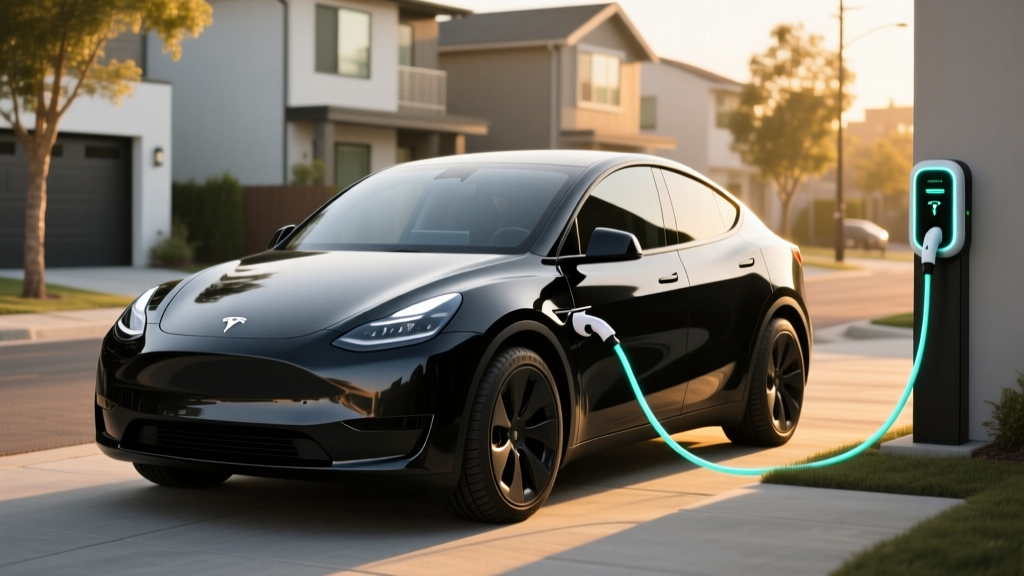
Charging infrastructure is where the Model S still shines, thanks to access to Tesla's Supercharger network — now the gold standard for reliability and coverage in North America.
| Charging Level | Power (kW) | Speed / Notes |
|---|---|---|
| Level 1 (120V household) | ~1.4 kW | ~3–4 miles/hour — emergency trickle only |
| Level 2 (240V home, 48A) | 11.5 kW | ~34 miles/hour — full charge in ~9 hours |
| DC Fast Charge (V3 Supercharger) | Peak 250 kW | 10–80% in ~27 minutes; tapers significantly above 80% |
| DC Fast Charge (V4 Supercharger) | Peak 250 kW (current Model S architecture) | Same curve as V3; V4's higher capability limited by vehicle-side hardware |
A critical nuance: while Tesla's V4 Supercharger cabinets can deliver 350+ kW to compatible vehicles, the Model S's onboard architecture caps at 250 kW. You'll see peak charge rates of ~250 kW only between roughly 10–30% state of charge. From 50–80%, the rate tapers to 80–120 kW. This means a 10–80% session takes approximately 27 minutes under ideal thermal conditions — competitive, but not class-leading compared to 800V architectures like the Hyundai Ioniq 5 or Porsche Taycan, which sustain higher rates longer.
For home charging, Tesla's Wall Connector at 48 amps on a 60-amp circuit delivers 11.5 kW — enough to replenish the full 100 kWh pack overnight. Expect to add roughly 34 miles of range per hour of Level 2 charging. Most owners who charge nightly at home rarely need to think about public charging except on road trips.
Third-Row Seating: Dimensions, Space, and Practicality
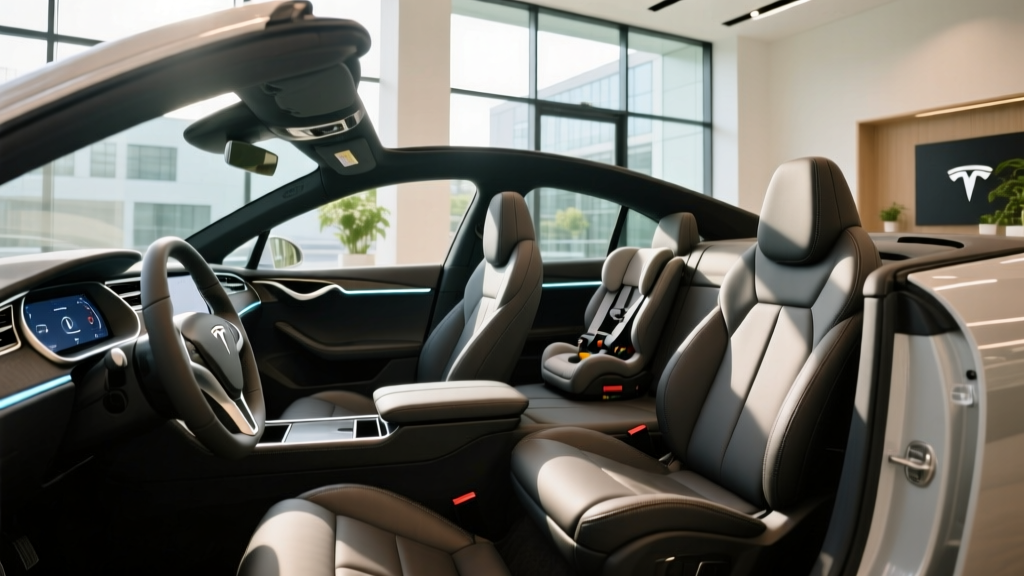
The Model S third row is a rear-facing jump seat designed primarily for children or smaller passengers on short trips. Here's what the numbers look like:
| Dimension | Measurement |
|---|---|
| Front Legroom | 42.4 inches |
| Rear (2nd Row) Legroom | 38.1 inches |
| 3rd Row Legroom | ~28 inches (estimated; not officially published) |
| Cargo (behind 3rd row) | ~10 cu ft |
| Cargo (3rd row folded, behind 2nd row) | ~28 cu ft |
| Cargo (all rear rows folded) | ~64.9 cu ft |
| Frunk (front trunk) | ~3.1 cu ft |
The third row's ~28 inches of legroom and low, rearward-facing position means it's best suited for children under about 5'2". Adults will find it cramped and disorienting for anything beyond a 15-minute school run. When the jump seat is deployed, cargo space behind it shrinks to roughly 10 cubic feet — enough for a couple of grocery bags, not luggage for seven.
This is the core trade-off: the Model S third row gives you occasional seven-passenger capability without the bulk, weight, and price of a full-size SUV. If your use case is "two adults + two kids + two friends for soccer practice," it works. If you need regular seven-adult seating with real cargo room, the Model X or Rivian R1S are dramatically more practical choices.
Pricing, Tax Credits, and Total Cost
| Trim | Base MSRP | 3rd-Row Option | As-Tested (w/ options) | Federal Tax Credit (§30D) |
|---|---|---|---|---|
| Model S Long Range | $79,990 | +$2,500 (est.) | ~$85,000–$90,000 | Not eligible — MSRP exceeds $55,000 sedan cap |
| Model S Plaid | $94,990 | +$2,500 (est.) | ~$100,000+ | Not eligible — MSRP exceeds $55,000 sedan cap |
Federal tax credit reality: The Model S does not qualify for the $7,500 IRS §30D federal EV tax credit. Under current rules, sedans must have an MSRP at or below $55,000 to be eligible (SUVs and trucks get an $80,000 cap, but Tesla classifies the Model S as a sedan). Additionally, buyer income caps apply ($150K single / $300K joint for modified AGI), and battery critical-mineral sourcing requirements must be met. Even if the price cap were satisfied, these other hurdles would need to be cleared. Consult IRS.gov §30D guidelines and a tax professional for your specific situation.
Some states offer their own EV incentives that are not bound by the federal MSRP cap — check your state's energy office or department of revenue for current programs. However, these vary widely and change frequently.
Technology, Safety, and Driver Assistance
The Model S interior centers on a 17-inch landscape touchscreen running Tesla's proprietary infotainment OS. Standout features include:
- Over-the-air updates that regularly add features and refine performance
- 10.2-inch rear touchscreen for climate, media, and gaming (a must for third-row passengers)
- 22-speaker audio system with immersive sound
- Glass roof with UV and infrared tinting
- Wireless phone charging and ventilated front seats
- Steam/vehicle gaming while parked (controller support)
Tesla's Autopilot (included) and optional Full Self-Driving (Supervised) ($8,000 or $99/month) are both SAE Level 2 systems. This means they provide steering, acceleration, and braking assistance, but the driver must remain fully engaged — hands on or near the wheel, eyes on the road, ready to intervene at any moment. These are not autonomous driving systems. Only Level 4 services like Waymo operate without driver supervision, and those are limited to specific geofenced areas.
Safety ratings from NHTSA give the Model S a 5-Star Overall rating. Tesla's active safety suite — automatic emergency braking, blind-spot monitoring, lane departure prevention — is comprehensive and standard across all trims.
Warranty and Long-Term Ownership
| Coverage | Term |
|---|---|
| Basic Vehicle Warranty | 4 years / 50,000 miles |
| Battery & Drive Unit | 8 years / 150,000 miles (Long Range) |
| Battery Capacity Guarantee | Minimum 70% retention over warranty period |
Tesla's 8-year/150,000-mile battery warranty guarantees at least 70% capacity retention — meaning your 402-mile EPA range should not drop below ~281 miles during coverage. Real-world data from high-mileage Tesla owners suggests NMC packs in the Model S typically retain 85–90% capacity after 100,000 miles when charged responsibly (avoiding routine 100% charges and extreme heat exposure).
Pros, Cons, and the Decision Framework
Pros
- 402-mile EPA range — among the longest of any EV
- Supercharger network access for reliable road trips
- 670 hp Long Range is thrilling yet daily-drivable
- Low running costs vs. comparable gas luxury sedans
- Continuous OTA updates add long-term value
- Rear touchscreen keeps 2nd/3rd-row passengers engaged
Cons
- Third row is rear-facing, cramped — children only
- Minimal cargo room with third row deployed (~10 cu ft)
- No federal tax credit (MSRP exceeds sedan cap)
- 250 kW peak DC charge — outpaced by 800V rivals
- FSD (Supervised) is Level 2 — driver must stay engaged
- Panel gap quality and interior material quality inconsistent at this price
Who Should Buy the Model S with Third Row?
Choose the Model S third row if: You primarily need a five-passenger luxury sedan with 400+ miles of range, and you want occasional seating for two extra children on short trips. You value Supercharger access, rapid acceleration, and a low-slung driving experience over cargo versatility.
Look elsewhere if: You regularly carry more than five people, need adult-friendly third-row seating, or require serious cargo capacity. The Model X offers a proper forward-facing third row with ~16 cu ft of cargo behind it. The Rivian R1S provides genuine seven-adult seating with a usable frunk and 800V-class charging. The Kia EV9 delivers three usable rows starting under $60,000 and qualifies for the federal tax credit.
Frequently Asked Questions
What is the real-world range of the Tesla Model S?
The EPA rates the Long Range at 402 miles. Real-world highway driving at 70–75 mph yields approximately 330–350 miles in moderate temperatures. Cold weather (below 30°F) reduces this to roughly 270–300 miles. The Plaid delivers ~290 miles highway in fair conditions.
How fast does the Model S charge at home and on the road?
At home on a 240V/48A Level 2 charger, the Model S adds ~34 miles per hour, fully recharging overnight in about 9 hours. On DC fast chargers, it peaks at 250 kW (10–80% in ~27 minutes), but the charge rate tapers significantly above 50% state of charge. Tesla's V4 Superchargers cannot push beyond 250 kW to the Model S due to vehicle-side hardware limits.
Does the Tesla Model S qualify for the federal EV tax credit?
No. The IRS §30D credit caps sedan eligibility at $55,000 MSRP, and the Model S starts at $79,990. Even the base Long Range trim exceeds this threshold. Buyer income limits and battery-sourcing requirements add further restrictions. Check your state's incentive programs for possible local credits that may apply regardless of MSRP.
Is the Model S third row practical for adults?
No. The rear-facing jump seat offers approximately 28 inches of legroom and a low, reclined position. It's designed for children or small passengers on short trips (15–20 minutes). Adults will find it uncomfortable and disorienting. For regular adult third-row use, consider the Model X, Rivian R1S, or Kia EV9.
How does the Model S compare to the Model X for families?
The Model X offers a forward-facing third row with significantly more headroom and legroom, falcon-wing rear doors for easier child-seat access, and ~16 cu ft of cargo behind the third row. It trades range (EPA ~348 miles for Long Range) and efficiency for genuine seven-passenger practicality. If family hauling is a priority, the Model X is the better Tesla — though at a higher starting price (~$84,990).
Is the Model S worth buying in 2026 vs. competitors?
The Model S Long Range remains compelling for its unmatched 402-mile range, Supercharger access, and dual-motor performance. However, the Lucid Air Grand Touring (516-mile EPA range) surpasses it on efficiency and interior space, while the BMW i7 and Mercedes EQS offer more traditional luxury build quality. If your priority is range and tech, the Model S holds up. If you want third-row seating specifically, the Model S's jump seat is a compromise — and a three-row EV SUV is likely the smarter buy.