The Tesla Model S has been the benchmark luxury electric sedan for over a decade, but one of its most debated options remains the rear-facing third-row seat. Originally introduced to squeeze two small children into the Model S footprint, the third-row configuration turns this flagship sedan into a 7-passenger vehicle — at least on paper. In 2026, with rivals like the Lucid Air, Mercedes EQS, and BMW i7 all offering spacious five-seat layouts (and SUVs like the Model X dominating family hauling), the question is whether the Model S third row is a practical family solution or a compromise best left unchecked on the order form.
We've driven the Model S Long Range and Plaid with and without the third-row option across multiple model years. Below, we break down the real-world usability, the range and charging impact, the cost, and whether this configuration still makes sense for buyers who need occasional extra seating but prefer a sedan over an SUV.
Tesla Model S Third Row: Quick Verdict
Choose the Model S third row if: You have young children (under ~4'9" / 57 inches tall), need occasional 7-seat capacity for short trips, and prefer the driving dynamics and efficiency of a sedan over the Model X.
Skip the third row if: Your passengers are older children or adults, you regularly need cargo space behind the second row, or you prioritize second-row legroom and comfort over seat count.
Consider the Model X instead if: You need genuine 6- or 7-seat capacity with usable third-row headroom and cargo volume.
Specs at a Glance: 2026 Tesla Model S Long Range & Plaid
| Specification | Model S Long Range | Model S Plaid |
|---|---|---|
| EPA Range | 402 miles | 359 miles |
| Battery Capacity (usable) | ~100 kWh (NMC) | ~100 kWh (NMC) |
| Drivetrain | Dual-Motor AWD | Tri-Motor AWD |
| Horsepower | 670 hp | 1,020 hp |
| 0–60 mph | 3.1 seconds | 1.99 seconds |
| Top Speed | 155 mph | 200 mph |
| MPGe (combined) | 120 MPGe | 116 MPGe |
| Efficiency | 28 kWh/100 mi | 29 kWh/100 mi |
| Max DC Fast Charge | 250 kW | 250 kW |
| 10–80% DCFC Time | ~30 minutes | ~30 minutes |
| Level 2 Charge Rate | 11.5 kW (~44 mi/hr) | 11.5 kW (~44 mi/hr) |
| Seating Capacity | 5 (standard) / 7 (option) | 5 (standard) / 7 (option) |
| Cargo Volume (behind 2nd row) | 28 cu ft (5-seat) / reduced w/ 3rd row deployed | 28 cu ft (5-seat) / reduced w/ 3rd row deployed |
| Frunk | 5.3 cu ft | 5.3 cu ft |
| Base MSRP | $74,990 | $89,990 |
| Third-Row Option | ~$2,000 (historical pricing) | ~$2,000 (historical pricing) |
| Battery/Drive Unit Warranty | 8 years / 150,000 miles | 8 years / 150,000 miles |
Sources: EPA fueleconomy.gov, Tesla Model S order page.
Real-World Range: What the EPA Sticker Doesn't Tell You
EPA Estimated Range (Long Range): 402 miles
Real-World Expectation: 340–370 miles in mixed highway/city driving at moderate temperatures. Expect 300–330 miles at sustained 75–80 mph highway speeds. In freezing conditions (below 32°F), plan for 260–310 miles depending on cabin heating demand and whether you precondition.
The Model S Long Range's 402-mile EPA figure remains one of the highest of any production EV sold in the U.S. That number is achievable in mild weather with a mix of city and suburban driving, where regenerative braking recaptures energy and speeds stay moderate. On a 70-degree day with a blend of city and 65-mph highway driving, we've seen indicated range within 5–8% of the EPA sticker.
Highway efficiency tells a different story. At 75–80 mph, aerodynamic drag dominates, and the ~100 kWh NMC (nickel manganese cobalt) battery delivers closer to 300–330 miles before you'll want to find a Supercharger. Cold weather compounds the loss: lithium-ion cells are less efficient at low temperatures, and resistive cabin heating (the Model S uses a heat pump in recent model years, which helps) still draws significant energy. In sub-freezing testing, a 20–25% range reduction is typical, bringing real-world range to roughly 260–310 miles.
The Plaid's lower EPA rating (359 miles) reflects its tri-motor powertrain's higher energy consumption. Real-world highway range for the Plaid sits around 280–310 miles in fair weather, dropping to 230–270 miles in cold conditions.
Third-row impact on range: The added weight of the third-row seat assembly (~40–50 lbs) and any passengers is negligible for range — figure 1–2% reduction when the seats are occupied. The real range consideration is that a fully loaded 7-passenger Model S will consume slightly more energy during acceleration-heavy city driving.
Charging Speed: Supercharger Network Advantage
| Charging Level | Power / Rate | Miles Added per Hour | Typical Use Case |
|---|---|---|---|
| Level 1 (120V) | ~1.4 kW | ~5 mi/hr | Emergency / trickle top-up |
| Level 2 (240V, 48A) | 11.5 kW | ~44 mi/hr | Home overnight charging |
| DC Fast Charge (V3 Supercharger) | Peak 250 kW | ~180 mi in 15 min | Road trips |
| DC Fast Charge (V4 Supercharger) | Up to 250 kW (Model S limited) | ~180 mi in 15 min | Road trips, newer stations |
The Model S charges at a peak rate of 250 kW on Tesla's V3 and V4 Superchargers. A 10–80% session takes approximately 30 minutes under optimal conditions (battery preconditioned, warm ambient temperature, station not power-sharing). The charge curve is aggressive in the 10–50% range, where you'll see sustained rates near 200–250 kW, then tapers progressively above 60% and drops sharply past 80%.
kW vs kWh reminder: kW (kilowatts) measures charging power — the rate at which energy flows into the battery. kWh (kilowatt-hours) measures battery capacity — how much energy the battery stores. The Model S has a ~100 kWh battery and charges at up to 250 kW.
For home charging, the onboard charger accepts up to 11.5 kW on a Level 2 (240V) connection, adding roughly 44 miles of range per hour. A full overnight session from 20% to 100% takes about 8–9 hours on a Tesla Wall Connector or equivalent Level 2 unit. Most owners charge between 20% and 80% daily, which takes roughly 5 hours on Level 2 — easily accomplished overnight.
Tesla's Supercharger network remains the most reliable public DC fast-charging infrastructure in the U.S., with over 20,000 stalls across North America. The Model S uses Tesla's proprietary connector natively, though Tesla has opened portions of the network to NACS-equipped vehicles from other brands. For non-Tesla CCS chargers (Electrify America, EVgo, ChargePoint), Tesla sells a CCS adapter that enables compatibility, though peak rates on non-Tesla networks may vary.
Third-Row Usability: The Honest Assessment
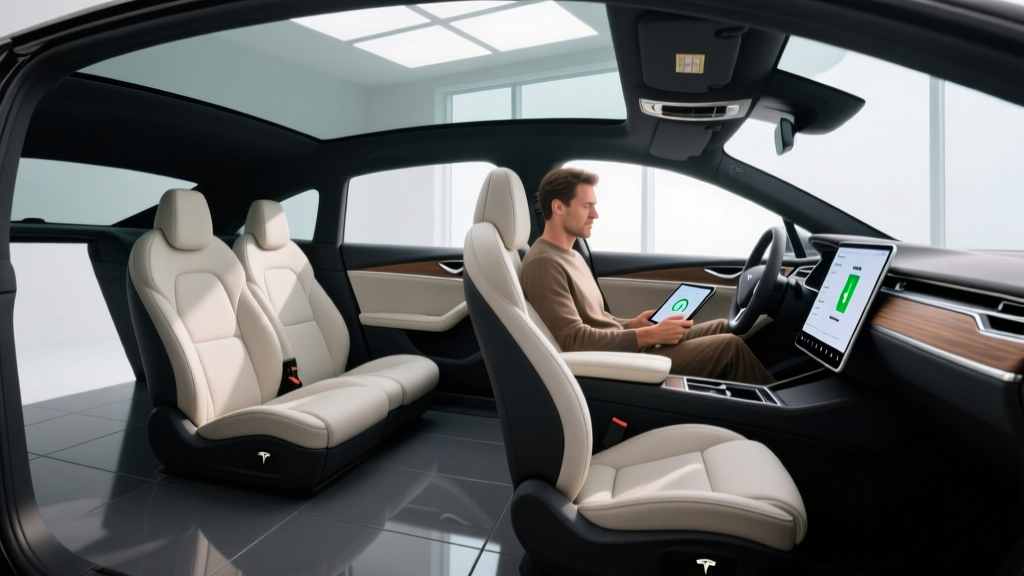
The Model S third row consists of two rear-facing jump seats mounted in what would otherwise be the rear cargo area. These seats were designed for children — specifically, passengers under approximately 57 inches tall (4'9") and under a weight threshold set by Tesla's safety guidelines. They are not suitable for adults or older teenagers.
Passenger space breakdown:
- Front row legroom: 42.7 inches — generous and unchanged regardless of third-row configuration
- Second row legroom: 35.4 inches — adequate for adults, though tighter than the Lucid Air (36.3 in) or Mercedes EQS (38.4 in rear)
- Third row: Rear-facing, limited headroom and legroom; best for children under ~6 years old
Cargo trade-off: With the third-row seats folded flat, cargo volume behind the second row is essentially unchanged from the 5-seat configuration at 28 cubic feet. However, when the third-row seats are deployed and occupied, cargo space behind them drops dramatically — to roughly 5–8 cubic feet, enough for a couple of backpacks or a small grocery run but nothing more. The 5.3-cubic-foot frunk remains available regardless.
Safety note: The rear-facing orientation of the third-row seats provides inherent crash protection for small children, but these seats lack LATCH anchors. You cannot install a child safety seat in the third row — children must be old enough to use the integrated harness or seat belt. Always consult NHTSA guidelines for child passenger safety.
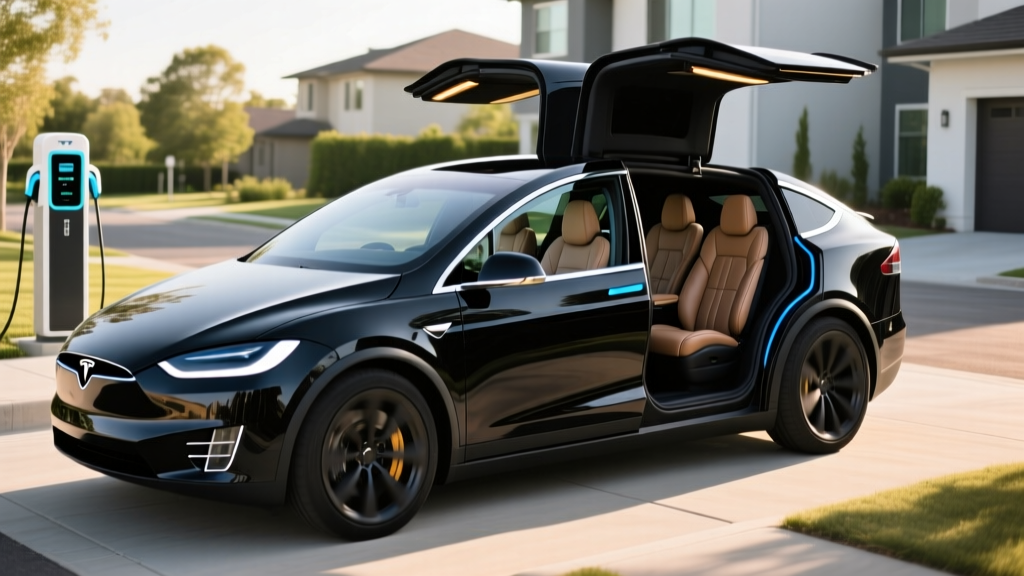
For families who regularly transport more than five people, the Model X is the objectively better choice. Its available 6- or 7-seat configuration includes a proper forward-facing third row with more headroom, easier ingress/egress via falcon-wing doors, and usable cargo space even with all rows deployed (up to ~88 cu ft with both rear rows folded).
Pricing, Trims, and Federal Tax Credit Eligibility
| Trim / Config | Base MSRP | Third-Row Option | Est. As-Tested (w/ options) | §30D Federal Credit |
|---|---|---|---|---|
| Model S Long Range (5-seat) | $74,990 | — | $74,990–$82,000 | Not eligible (MSRP cap: $55,000 for sedans) |
| Model S Long Range (7-seat) | $74,990 | +~$2,000 | $76,990–$84,000 | Not eligible (MSRP cap: $55,000 for sedans) |
| Model S Plaid (5-seat) | $89,990 | — | $89,990–$100,000+ | Not eligible (MSRP cap: $55,000 for sedans) |
| Model S Plaid (7-seat) | $89,990 | +~$2,000 | $91,990–$102,000+ | Not eligible (MSRP cap: $55,000 for sedans) |
Federal tax credit reality: The Tesla Model S does not qualify for the IRS §30D Clean Vehicle Credit. Under current IRS rules, the credit is capped at vehicles with an MSRP of $55,000 for sedans (or $80,000 for SUVs, vans, and trucks). Even the base Model S Long Range at $74,990 exceeds the sedan cap by nearly $20,000. Additionally, buyer income limits apply ($150,000 single / $300,000 joint filers for modified adjusted gross income). Battery component and critical mineral sourcing requirements further restrict eligibility for many EVs. Always verify current rules at IRS.gov or consult a tax professional.
Some states offer additional rebates or incentives for EV purchases, and these may not carry the same MSRP caps as the federal credit. Check your state's energy or environmental agency for details.
Performance, Tech, and Ownership Experience
The Model S Long Range delivers 670 horsepower from its dual-motor all-wheel-drive powertrain, sprinting to 60 mph in 3.1 seconds — quicker than virtually any four-door sedan outside the hypercar segment. The Plaid's tri-motor setup produces 1,020 horsepower and a claimed 1.99-second 0–60 time, making it one of the fastest production cars ever built.
Ride quality on the current-generation Model S (refreshed in 2021) is markedly improved over earlier models, with adaptive air suspension that adjusts damping and ride height. The cabin is quieter, materials quality has improved (though still not matching the Lucid Air or Mercedes EQS for luxury feel), and the yoke-style steering wheel (now optional alongside a conventional round wheel) remains polarizing.
Standout tech features:
- 17-inch center touchscreen with gaming-grade processor, Netflix/YouTube streaming, and full web browser
- Autopilot (standard): Adaptive cruise control, lane-keeping, and automatic emergency braking — SAE Level 2 driver assistance requiring full driver engagement
- Full Self-Driving (Supervised) ($8,000 option or $99/month): Adds automated lane changes, traffic light/stop sign recognition, and Navigate on Autopilot — still SAE Level 2, not autonomous driving
- Over-the-air updates that regularly add features and refine existing ones
- Sentry Mode and dashcam recording using the vehicle's external cameras
Important: Tesla Autopilot and Full Self-Driving (Supervised) are SAE Level 2 driver-assistance systems. The driver must keep hands on the wheel (or demonstrate attentiveness via the cabin camera), monitor the road, and be prepared to take over at any time. These systems do not make the Model S a self-driving vehicle.
Notable drawbacks:
- Interior materials and build quality, while improved, still lag behind Lucid, Mercedes, and BMW at this price point
- Second-row seat comfort is adequate but not class-leading — limited thigh support and no available recline adjustment
- No Apple CarPlay or Android Auto integration (Tesla uses its proprietary infotainment exclusively)
- Insurance costs remain higher than average for the segment due to repair costs and performance classification
- Service center wait times in some metro areas can stretch to weeks for non-urgent repairs
How the Model S Third Row Compares to Alternatives
If you need 6+ seats and an electric powertrain, here's how the competitive landscape shapes up:
- Tesla Model X (6- or 7-seat): Genuine third row, falcon-wing doors, up to 348 miles EPA range, starts at ~$79,990. Far more practical for regular family hauling.
- Kia EV9 (6- or 7-seat): Three-row electric SUV, up to 304 miles range, starts at ~$54,900 (eligible for §30D credit on qualifying trims). Much more affordable, though less range and performance.
- Rivian R1S (7-seat): Three-row electric SUV, up to 352 miles range (Max Pack), starts at ~$79,900. Excellent off-road capability and interior quality.
- Mercedes EQS SUV (optional 3rd row): Luxury three-row electric SUV, up to 305 miles range, starts at ~$104,400. Premium materials but high price.
The Model S third row occupies a narrow niche: you want a sedan with the occasional ability to carry two small children beyond the standard five passengers. If that's your exact use case, no other EV sedan offers this flexibility. If you need genuine three-row utility, every option above is more practical.
Pros and Cons
Pros
- Class-leading EPA range (402 mi Long Range) and real-world efficiency
- Supercharger network access — the most reliable DC fast-charging ecosystem
- Exceptional performance (3.1s 0–60 Long Range; 1.99s Plaid)
- Only luxury EV sedan offering any form of 7-passenger seating
- Strong OTA update track record keeps vehicle current years after purchase
- 8-year/150,000-mile battery and drive unit warranty
Cons
- Third row only fits small children; rear-facing, minimal cargo when deployed
- No federal tax credit eligibility (MSRP exceeds §30D sedan cap)
- Interior quality not commensurate with $75K–$100K+ price point
- No Apple CarPlay / Android Auto
- Insurance premiums above segment average
- Second-row comfort lags competitors (Lucid Air, EQS, i7)
Who Should Buy the Tesla Model S with Third Row?
The Model S third-row option makes sense for a specific buyer: you love the driving dynamics, range, and Supercharger convenience of the Model S sedan, have one or two young children (under ~6 years old), and occasionally need to carry a second child or a friend's kid for short trips. It's a bonus feature, not a primary seating solution.
If your family-hauling needs are more demanding — regular carpools, older children, road trips with 6+ people and luggage — the Model X, Kia EV9, or Rivian R1S will serve you far better. The Model S third row is a clever engineering solution to a niche problem, but it remains a compromise in a vehicle otherwise optimized for performance and efficiency.
Frequently Asked Questions
What is the real-world range of the Tesla Model S with the third-row option?
The third-row option adds minimal weight and does not materially affect range. The Model S Long Range carries a 402-mile EPA rating; expect 340–370 miles in real-world mixed driving, 300–330 miles at sustained highway speeds, and 260–310 miles in freezing conditions. The Plaid's 359-mile EPA rating translates to roughly 280–310 miles real-world in fair weather.
How fast does the Model S charge at home and on the road?
On DC fast chargers (Tesla Superchargers), the Model S peaks at 250 kW and charges from 10–80% in approximately 30 minutes when preconditioned. At home on a Level 2 (240V, 48A) connection, it charges at 11.5 kW, adding about 44 miles of range per hour — a full overnight session replenishes most daily driving needs.
Does the Tesla Model S qualify for the federal EV tax credit?
No. Under current IRS §30D rules, the Clean Vehicle Credit caps sedan eligibility at an MSRP of $55,000. The Model S starts at $74,990, well above this threshold. Buyer income limits and battery sourcing requirements further restrict the credit. Always confirm eligibility at IRS.gov before purchasing.
Is the Model S third row safe for children?
The third-row seats are rear-facing and designed for children under approximately 57 inches tall. They use integrated seat belts (no LATCH anchors for child seats). Rear-facing seating provides good crash protection, but parents should review NHTSA child passenger safety guidelines and Tesla's owner manual for weight and height limits.
Is the Model S third row worth it vs. buying a Model X?
If you regularly need 6+ seats, the Model X is the clear choice — it offers a proper forward-facing third row, more cargo space, and easier access via falcon-wing doors. The Model S third row is best viewed as an occasional-use feature for young children, ideal for buyers who prefer the sedan's driving dynamics and efficiency but need a backup seat or two.
How much does the Model S cost with the third-row option in 2026?
The Model S Long Range starts at $74,990; adding the third-row option (historically ~$2,000) brings the base to roughly $76,990 before destination, paint, wheel, or FSD options. A well-equipped Long Range with third row typically lands between $80,000 and $85,000. The Plaid with third row can exceed $100,000 with options.
What is the battery warranty on the Model S?
Tesla covers the Model S battery and drive unit for 8 years or 150,000 miles (whichever comes first), with a minimum 70% capacity retention guarantee over the warranty period. This is competitive with the industry standard (most EVs offer 8 years/100,000 miles), and Tesla's track record on battery degradation has been strong — most Model S vehicles retain well above 80% capacity at 100,000 miles.