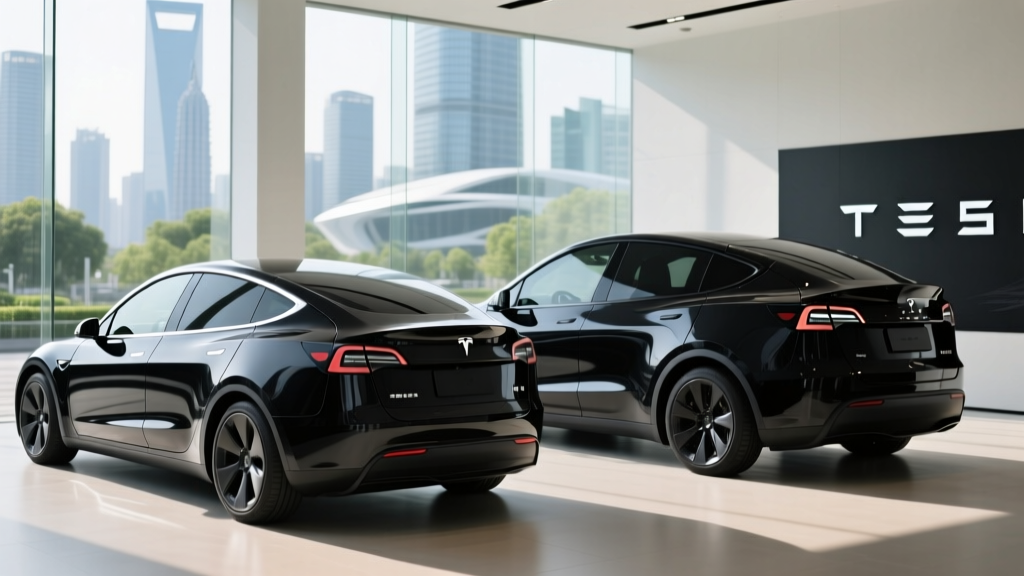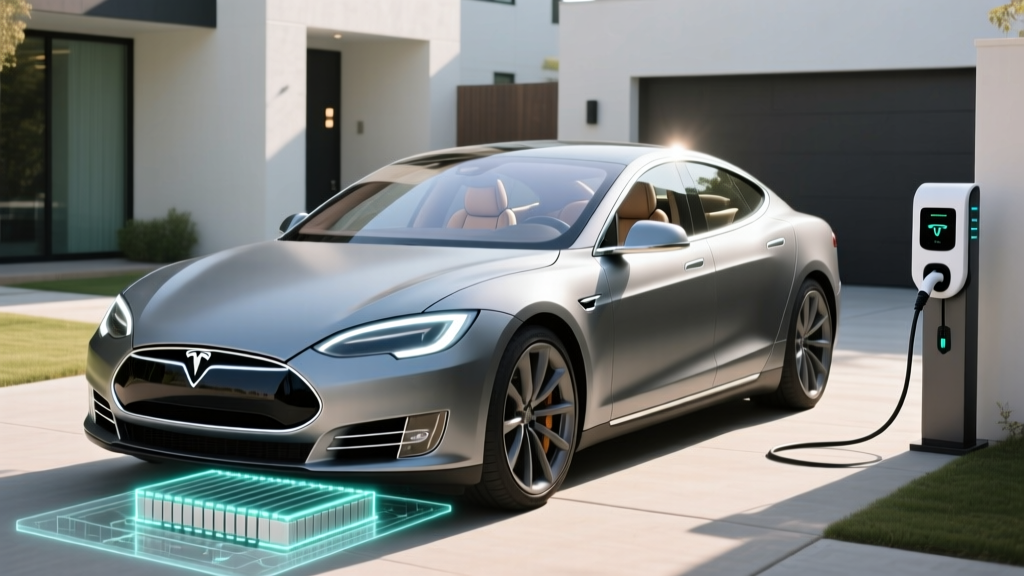
If you've been searching for details on the Tesla Model S sunroof, you've likely discovered that Tesla doesn't offer a traditional pop-up sunroof on any of its vehicles. Instead, the Model S comes standard with a massive, fixed all-glass panoramic roof that stretches from the windshield header to the rear window. It's one of the most distinctive design features of the car — and one of the most misunderstood. In this comprehensive review, we break down exactly what the Model S glass roof offers, then dive deep into the 2026 Model S's range, charging performance, pricing, and whether it still earns its place against a growing field of luxury EV competitors.
The Tesla Model S Glass Roof: What You Actually Get
Let's clear up the terminology first. The Tesla Model S has never offered a conventional opening sunroof or moonroof. What it does have is a fixed panoramic all-glass roof that spans nearly the entire length of the cabin. Tesla uses infrared-reflective glass that the company claims blocks a significant portion of UV and infrared radiation, reducing heat buildup compared to standard automotive glass.
In practice, the glass roof floods the cabin with natural light and creates an airy, open feeling that makes the interior feel larger than its dimensions suggest. The lack of an operable panel means no wind noise at highway speeds and no mechanical components to fail — but it also means zero fresh-air ventilation from above. If you want open-air driving, the windows are your only option.
2026 Tesla Model S: Range, Battery, and Efficiency
The 2026 Tesla Model S Long Range carries an EPA-estimated range of 402 miles on a full charge, placing it among the longest-range production EVs available. The Plaid variant, which trades some efficiency for a tri-motor powertrain, is rated at approximately 359 miles EPA.
| Spec | Long Range (Dual Motor) | Plaid (Tri Motor) |
|---|---|---|
| EPA Range | 402 mi | 359 mi |
| Battery (usable) | ~100 kWh (NMC) | ~100 kWh (NMC) |
| Efficiency | 124 MPGe / 27 kWh/100mi | 116 MPGe / 29 kWh/100mi |
| 0–60 mph | 3.1 sec | 1.99 sec |
| Horsepower | 670 hp | 1,020 hp |
| Drivetrain | AWD (Dual Motor) | AWD (Tri Motor) |
| Top Speed | 155 mph | 200 mph |
| Base MSRP | $79,990 | $94,990 |
Tesla uses NMC (nickel manganese cobalt) chemistry in the Model S's ~100 kWh battery pack. NMC offers higher energy density than LFP (lithium iron phosphate), which is why it's used in Tesla's performance and long-range vehicles. The trade-off is that NMC degrades slightly faster over time and Tesla recommends daily charging to 80–90% rather than 100% for routine use, reserving full charges for road trips.
Charging Performance: DC Fast, Level 2, and the Supercharger Advantage
The Model S supports up to 250 kW peak DC fast charging on Tesla's V3 Supercharger network and compatible CCS stations (with the Tesla-provided CCS adapter). On a V3 Supercharger, Tesla rates a 10–80% charge at approximately 25–30 minutes, though real-world results depend heavily on battery temperature, state of charge, and charger availability.
| Charging Method | Max Power | Speed (Approx.) | 10–80% Time |
|---|---|---|---|
| DC Fast (V3 Supercharger) | 250 kW peak | ~200 mi in 15 min | ~25–30 min |
| DC Fast (CCS adapter, 350 kW station) | 250 kW peak (vehicle-limited) | ~200 mi in 15 min | ~25–30 min |
| Level 2 (Tesla Wall Connector, 48A) | 11.5 kW | ~34 mi/hr | ~10–11 hours |
| Level 1 (120V household) | ~1.4 kW | ~3–4 mi/hr | Not practical |
Charging curve reality: The 250 kW peak rate is only sustained roughly between 10–30% state of charge. Above 50%, the rate tapers significantly — by 80%, you're typically seeing 50–70 kW. This is normal for NMC packs and why Tesla's navigation system preconditions the battery when you route to a Supercharger, warming it to optimize the charge curve. Skipping preconditioning on a cold battery can add 10+ minutes to your charge session.
For home charging, the Tesla Wall Connector at 48 amps on a 240V/60A circuit delivers 11.5 kW — enough to fully replenish the Model S overnight in about 10–11 hours. Most owners who drive 40–60 miles daily will only need 2–3 hours of Level 2 charging per night. Installation costs for a 240V/60A circuit typically range from $800–$2,500 depending on panel capacity and run length. Always consult a licensed electrician for your specific setup.
Performance and Driving Dynamics
The Model S Long Range's dual-motor all-wheel-drive powertrain produces 670 horsepower and delivers a 0–60 mph time of 3.1 seconds. That's supercar territory from just a few years ago, in a five-passenger luxury sedan with a trunk and a frunk.
The Plaid variant's tri-motor setup (one front, two rear) pushes output to 1,020 horsepower with a claimed 0–60 of 1.99 seconds (with rollout subtracted). Real-world rollouts on public roads typically yield 2.2–2.4 seconds — still absurdly quick and the fastest acceleration of any production sedan.
Ride quality has improved significantly since the 2021 refresh, with adaptive air suspension that adjusts firmness and ride height. The cabin is quiet at highway speeds, though the large glass roof does transmit slightly more road noise from above compared to a steel roof with sound deadening. The yoke steering wheel remains standard on Plaid and optional on Long Range; a conventional round wheel is available if you prefer.
Interior Space, Cargo, and Practicality
The Model S seats five adults and offers generous interior volume for a sport sedan:
- Front legroom: 42.7 inches
- Rear legroom: 35.4 inches
- Cargo (rear trunk): 26.3 cu ft (with rear seats up)
- Cargo (rear seats folded): ~58 cu ft
- Frunk (front trunk): ~5.3 cu ft
The rear trunk features a hatchback/liftback design, making it far more practical for loading bulky items than a traditional sedan trunk. Combined with the 60/40 split-folding rear seats, the Model S can swallow luggage for a family road trip or a large hardware-store haul without issue. The frunk is useful for charging cables, a laptop bag, or groceries you want to keep separate.
Pricing, Trims, and Federal Tax Credit Eligibility
The 2026 Tesla Model S is offered in two trims:
| Trim | Base MSRP | As-Tested (Typical Options) | §30D Federal Credit |
|---|---|---|---|
| Long Range | $79,990 | ~$85,000–$88,000 | Not eligible (MSRP cap) |
| Plaid | $94,990 | ~$100,000+ | Not eligible (MSRP cap) |
Tax credit reality: Under IRS §30D rules, new EVs classified as sedans must have an MSRP of $55,000 or less to qualify for the federal tax credit (SUVs, vans, and trucks have a $80,000 cap). The Model S is classified as a sedan, and both trims exceed the $55,000 MSRP cap by a wide margin. The 2026 Model S does not qualify for the $7,500 federal EV tax credit. Additionally, buyer income caps apply (§30D limits AGI to $150,000 single / $300,000 joint), and battery critical-mineral and component sourcing requirements must be met. Always verify current rules at IRS.gov or consult a tax professional.
Some states offer their own EV incentives that may apply regardless of MSRP — check your state's energy office or DMV for details.
Technology, Autopilot, and Safety
The Model S runs Tesla's latest infotainment software on a 17-inch center touchscreen with a secondary 8-inch rear-seat display. Wireless Apple CarPlay and Android Auto are not supported — Tesla uses its own app ecosystem. The system includes Netflix, YouTube, and gaming capabilities (the car can run Cyberpunk 2077-level games while parked). A 22-speaker audio system with active noise cancellation is standard.
Autopilot (basic) comes standard and includes adaptive cruise control, lane centering, and automatic emergency braking. Full Self-Driving (Supervised) is a $8,000 add-on (or $99/month subscription) that adds automatic lane changes, intersection handling, and navigate-on-Autopilot.
Safety ratings are strong: the Model S earned a 5-star overall rating from NHTSA and top scores from IIHS in crashworthiness tests. The low center of gravity from the floor-mounted battery pack contributes to excellent rollover resistance.
Warranty and Long-Term Ownership
Tesla covers the Model S with the following warranties:
- Basic vehicle: 4 years / 50,000 miles
- Battery & drive unit: 8 years / 150,000 miles (Long Range), 8 years / 150,000 miles (Plaid)
- Battery degradation threshold: Tesla warrants that the battery will retain at least 70% of its original capacity during the warranty period
Real-world degradation data from high-mileage Model S owners suggests NMC packs typically lose 10–15% capacity over the first 100,000 miles, with degradation slowing significantly after the initial break-in period. A full battery replacement out of warranty currently costs approximately $15,000–$22,000 depending on the pack and labor.
Pros and Cons
Pros
- Class-leading 402-mile EPA range (Long Range)
- Access to Tesla Supercharger network (~20,000+ stalls in North America)
- Brutal acceleration even in base dual-motor trim
- Expansive all-glass panoramic roof creates airy cabin
- Liftback cargo area + frunk = excellent practicality
- Over-the-air updates continuously add features
- Strong resale value relative to other luxury EVs
Cons
- No opening sunroof — glass roof is fixed only
- No factory sunshade for the glass roof (heat in summer)
- Does not qualify for $7,500 federal tax credit (MSRP cap)
- No Apple CarPlay or Android Auto
- Panel gaps and interior fit/finish trail German competitors
- FSD (Supervised) costs $8,000 extra and remains Level 2
- Rear seat comfort and headroom not as plush as Mercedes EQS or BMW i7
Who Should Buy the 2026 Tesla Model S?
The Model S is best suited for tech-forward buyers who prioritize range, charging infrastructure, and acceleration above traditional luxury markers like hand-stitched leather or whisper-quiet cabin isolation. It's an excellent road-trip EV thanks to the Supercharger network and 400-mile range, and the liftback design makes it surprisingly practical for families.
If you want a conventional power sunroof that opens, the Model S will not meet that need — and no current Tesla offers one. If you value the feeling of an open, light-filled cabin without the mechanical complexity, the fixed glass roof is a strong alternative. Buyers who prioritize rear-seat luxury and traditional build quality should also cross-shop the Mercedes-Benz EQS, BMW i7, and Lucid Air.
Frequently Asked Questions
Does the Tesla Model S have a sunroof that opens?
No. The Model S features a fixed all-glass panoramic roof that does not open, tilt, or slide. There is no operable sunroof or moonroof option on any Model S trim or model year.
What is the real-world range of the 2026 Model S?
The EPA rates the Long Range at 402 miles. In real-world highway driving at 70–80 mph, expect roughly 330–350 miles. In cold weather (below freezing), range can drop to 260–290 miles on the highway due to battery resistance and cabin heating demands.
How fast does the Model S charge at home and on the road?
On a Tesla V3 Supercharger, the Model S peaks at 250 kW and charges from 10–80% in about 25–30 minutes with a preconditioned battery. At home on a Level 2 Wall Connector (11.5 kW), a full charge takes approximately 10–11 hours.
Does the 2026 Model S qualify for the federal EV tax credit?
No. Under current IRS §30D rules, sedans must have an MSRP of $55,000 or less. Both Model S trims start well above that threshold. State-level incentives may still apply — check your local programs.
Is the Model S worth buying over the Lucid Air or Mercedes EQS?
If Supercharger access, proven software, and maximum range are your top priorities, the Model S remains compelling. The Lucid Air offers comparable or greater range (up to 516 mi EPA on the Air Grand Touring) and a more luxurious interior, but relies on the Electrify America network. The Mercedes EQS prioritizes ride comfort and cabin opulence but falls short on range (350 mi EPA) and charging speed. Your choice depends on whether infrastructure (Tesla), luxury (Mercedes), or range efficiency (Lucid) matters most.
Does the glass roof make the cabin too hot in summer?
The IR-reflective glass helps, but many owners in hot climates report noticeable heat gain through the roof. Aftermarket ceramic tint or a removable fabric sunshade ($50–$150) is a common and effective solution.