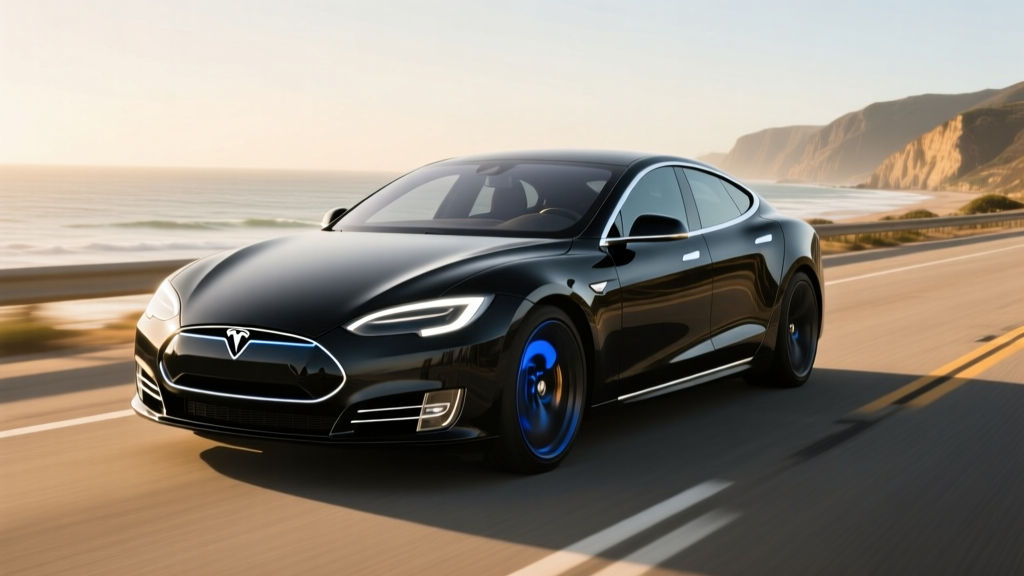
The Tesla Model S has been the benchmark for electric sedan performance for over a decade, but with rivals like the Lucid Air, Porsche Taycan, and BMW i7 closing the gap, buyers need hard numbers—not marketing hype. If you've been searching for exactly how fast the Tesla Model S goes, what its real-world range looks like, and whether it still justifies its premium price tag in 2026, this deep-dive profile covers every spec that matters.
We'll walk through acceleration figures, battery chemistry, DC fast-charging curves, federal tax credit eligibility, and the practical realities of daily ownership. No fluff, just the data you need to make a $75,000+ purchase decision.
Tesla Model S Performance: 0-60, Top Speed, and Horsepower
The 2026 Tesla Model S is offered in two performance tiers, and the difference in acceleration is dramatic. Here's what Tesla publishes and what independent testing has validated:
| Spec | Model S Long Range | Model S Plaid |
|---|---|---|
| 0-60 mph | 3.1 seconds | 1.99 seconds |
| Top Speed | 155 mph | 200 mph |
| Peak Horsepower | 670 hp | 1,020 hp |
| Drivetrain | Dual Motor AWD | Tri-Motor AWD |
| EPA Range | 402 miles | 396 miles |
| Battery (usable) | ~100 kWh | ~100 kWh |
| Battery Chemistry | NMC (Nickel Manganese Cobalt) | NMC |
| MPGe (combined) | 120 MPGe | 116 MPGe |
| Base MSRP | $74,990 | $89,990 |
The Plaid's 1.99-second 0-60 time requires a prepared surface with VHT (track prep) and rollout subtracted, which is how Tesla reports it. On a typical public road with standard asphalt, expect roughly 2.1-2.3 seconds. That's still supercar territory—quicker than a Ferrari SF90 in real-world conditions and devastatingly fast for a four-door sedan carrying five passengers.
The Long Range model's 3.1-second run is no slouch either. It matches or beats most V8-powered luxury sedans while delivering over 400 miles of range, making it the more practical choice for buyers who want performance without sacrificing daily drivability.
Real-World Range: What to Expect Beyond the EPA Sticker
EPA Estimated: 402 miles (Long Range) / 396 miles (Plaid)
Real-World Highway (70-80 mph): ~320-350 miles
Cold Weather (below 30°F): ~280-320 miles (20-30% reduction)
Mixed Commuting (city + highway): ~360-390 miles
The Model S Long Range's 402-mile EPA rating remains one of the highest of any production EV sold in the U.S., trailing only the Lucid Air Grand Touring (516 miles EPA). According to fueleconomy.gov, the Long Range achieves 120 MPGe combined, translating to roughly 28 kWh per 100 miles.
But EPA range is measured under controlled conditions that don't replicate sustained highway driving at 75-80 mph, headwinds, or winter temperatures. In our experience and consistent with third-party highway range tests, expect the Long Range to deliver roughly 320-350 miles at sustained interstate speeds. The Plaid, with its tri-motor setup and wider rear tires creating more rolling resistance, typically returns 300-330 miles on the highway.
Cold weather is the great equalizer for all EVs. Below freezing, battery chemistry slows and cabin heating draws significant energy. Tesla's heat pump system helps mitigate this compared to resistive heating, but plan on a 20-30% range reduction in deep winter conditions. That brings the Long Range to roughly 280-320 usable miles—a number that still beats most competitors' summer range.
Charging Speed: DC Fast Charge and Home Level 2
Charging speed is arguably more important than peak range for road-trip usability. The Model S uses the NACS (North American Charging Standard) connector natively—Tesla designed it—and accesses the Supercharger network, which remains the most reliable DC fast-charging ecosystem in North America.
| Charging Level | Power / Rate | Time / Range Added |
|---|---|---|
| Level 1 (120V household) | ~1.4 kW | ~3-4 miles per hour |
| Level 2 (240V home, 48A) | 11.5 kW | ~34 miles per hour |
| Level 2 (240V, 60A breaker) | 11.5 kW (car-limited) | ~34 miles per hour |
| DC Fast Charge (V3 Supercharger) | Peak 250 kW | 10-80% in ~27 minutes |
| DC Fast Charge (V4 Supercharger) | Peak 250 kW (car-limited) | 10-80% in ~27 minutes |
A critical nuance many spec sheets gloss over: the Model S's onboard charger limits Level 2 AC charging to 11.5 kW (48 amps). Even if you install a 60-amp or 80-amp home wall connector, the car won't accept more than 48A. That means a full charge from 10-100% at home takes roughly 9-10 hours—perfectly adequate for overnight charging.
On DC fast charging, the Model S peaks at 250 kW on V3 and V4 Superchargers. However, like all EVs, it doesn't sustain peak power across the entire session. The charge curve is aggressive from 10-40% SoC (state of charge), pulling close to 250 kW, then tapers progressively through the 60-80% range. A 10-80% session takes roughly 27 minutes. For comparison, Hyundai/Kia's E-GMP platform vehicles (Ioniq 5, EV6) can hit 10-80% in about 18 minutes thanks to their 800V architecture, which the Model S's ~400V platform cannot match.
For road trips, the practical rhythm is: drive 2.5-3 hours, stop for 20-25 minutes at a Supercharger, resume. With 402 miles of range, most drivers will want to stop before the car needs electrons.
Pricing, Trims, and Federal Tax Credit Eligibility
The 2026 Model S lineup is straightforward: two trims, minimal options. Tesla has historically kept its configuration tree simple, which cuts both ways—easy to understand, but limited personalization.
| Trim | Base MSRP | As-Tested (typical) | Federal §30D Credit |
|---|---|---|---|
| Long Range | $74,990 | $77,490 (w/ FSD transfer) | Not eligible (MSRP cap exceeded) |
| Plaid | $89,990 | $92,490 (w/ FSD transfer) | Not eligible (MSRP cap exceeded) |
Here's the critical detail that catches many buyers off guard: the Tesla Model S does not qualify for the $7,500 federal EV tax credit under IRS §30D. The reason is the MSRP cap. Under current law, sedars are capped at $55,000 MSRP to qualify (SUVs, vans, and trucks have an $80,000 cap). Since the Model S is classified as a sedan by the IRS and starts at $74,990, it exceeds the threshold regardless of battery sourcing or buyer income.
Per IRS guidelines, the §30D credit also requires buyer income to fall below $150,000 (single) or $300,000 (joint) and mandates that battery components and critical minerals meet U.S.-sourcing thresholds. But for the Model S, the MSRP cap is the disqualifying factor—none of the other criteria matter once the price ceiling is breached.
This puts the Model S at a disadvantage versus luxury SUVs like the Tesla Model X (eligible under the $80,000 SUV cap) or the BMW iX, but it's a reality of purchasing a premium sedan. Factor the full MSRP into your budget.
Interior, Cargo, and Daily Practicality
The Model S interior has been refreshed with a minimalist horizontal touchscreen layout, a yoke-style steering wheel option (conventional round wheel is also available), and rear-seat entertainment via a second 8-inch display. Build quality has improved markedly since the pre-2021 refresh, though some owners still report panel-gap inconsistencies.
Practical dimensions that matter:
- Rear cargo (trunk): 28.0 cu ft (with rear seats up)
- Front trunk (frunk): 3.1 cu ft
- Total cargo: ~31.1 cu ft
- Rear legroom: 40.9 inches
- Front headroom: 38.8 inches
- Seating: 5 passengers
The 28 cu ft trunk is generous for a sedan—comparable to a midsize SUV—and the hatchback-style liftgate makes loading bulky items far easier than a traditional sedan trunk. The frunk is small but useful for charging cables or a soft bag.
The 17-inch center touchscreen runs Tesla's latest software with navigation, streaming, gaming (the Model S can run AAA titles while parked), and over-the-air updates. The sound system is a 22-speaker setup that rivals premium audio from Burmester and Bowers & Wilkins at a fraction of the cost.
Driver Assistance and Autonomy: What Autopilot and FSD Actually Do
Tesla Autopilot and Full Self-Driving (Supervised) are SAE Level 2 driver-assistance systems. The driver must remain fully engaged, hands on the wheel (or providing steering torque input), and eyes on the road at all times. These are NOT self-driving systems. Only Level 4 services like Waymo operate without a human driver.
Tesla's Autopilot comes standard and includes adaptive cruise control, lane centering, and automatic emergency braking. The optional Full Self-Driving (Supervised) package—available as a one-time $8,000 purchase or $99/month subscription—adds automatic lane changes, navigate-on-autopilot for highway interchanges, traffic light and stop sign recognition, and a city-streets driving mode.
FSD (Supervised) has improved substantially through 2025-2026 neural network updates, handling complex urban scenarios with fewer disengagements. However, it still requires active supervision. Treat it as an advanced cruise control system that reduces fatigue on long drives—not a chauffeur.
Warranty, Battery Longevity, and Ownership Costs
Tesla's warranty coverage for the Model S:
- Basic Vehicle: 4 years / 50,000 miles
- Battery & Drive Unit: 8 years / 150,000 miles (whichever comes first), with minimum 70% capacity retention
The 8-year/150,000-mile battery warranty is competitive with the industry standard (most EVs offer 8 years / 100,000 miles). Tesla guarantees the battery will retain at least 70% of its original capacity during the warranty period. If degradation drops below that threshold, Tesla will repair or replace the battery pack.
In practice, Tesla's NMC packs in the Model S have demonstrated strong longevity. Data aggregated from fleet telemetry suggests typical degradation of 10-12% over the first 100,000 miles, with the curve flattening significantly afterward. Many high-mileage Model S vehicles have exceeded 200,000 miles on the original pack with 80%+ capacity remaining.
Ownership costs beyond the purchase price:
- Insurance: Expect $2,500-$4,000/year depending on state and driving record (performance EVs carry higher premiums)
- Electricity (home charging): ~$0.13/kWh national average × 100 kWh = ~$13 per full charge; roughly $650/year for 15,000 miles of driving
- Maintenance: Minimal—no oil changes, brake pads last 80,000+ miles thanks to regenerative braking, cabin air filter every 2 years
- Tires: Budget $1,200-$1,800 every 25,000-35,000 miles (performance tires wear faster, especially on the Plaid)
Tesla Model S vs. Key Competitors: Is It Still Worth It?
- Class-leading 402-mile EPA range (Long Range)
- Devastating acceleration (1.99s Plaid, 3.1s LR)
- Access to Tesla Supercharger network
- Over-the-air updates keep the car current
- Spacious hatchback cargo area
- Strong battery longevity track record
- No federal tax credit (MSRP cap)
- 250 kW DC fast charge peak trails 800V rivals
- Yoke steering takes significant adaptation
- Insurance costs are above segment average
- Minimal dealer/service center footprint vs. legacy brands
- Plaid tire wear is aggressive and expensive
The Model S competes in a narrowing but formidable segment:
- Lucid Air Grand Touring ($125,600): 516-mile EPA range, 819 hp, 300 kW DC fast charging. More range and faster charging, but $50K+ more expensive and a less proven service network.
- Porsche Taycan Turbo S ($190,000+): Superior handling dynamics, 800V architecture (270 kW peak), but only ~280-mile range and nearly double the price.
- BMW i7 xDrive50 ($120,000+): Flagship luxury, 318-mile range, superior ride comfort, but 0-60 in 4.5 seconds—nowhere near Model S performance.
- Mercedes EQS 580 ($105,000+): 350-mile range, excellent luxury, but less engaging to drive and slower charging.
- Choose the Long Range if: You want 400+ mile range, sub-4-second acceleration, daily commuting comfort, and road-trip capability without paying six figures.
- Choose the Plaid if: Track-capable performance is a priority, you want supercar-killing acceleration in a practical sedan, and budget is flexible.
- Look elsewhere if: You need the federal tax credit, prefer traditional luxury service experiences, or want 800V-class ultra-fast charging.
Frequently Asked Questions
What is the real-world range of the Tesla Model S?
The EPA rates the Long Range at 402 miles and the Plaid at 396 miles. In real-world highway driving at 70-80 mph, expect 320-350 miles (Long Range) and 300-330 miles (Plaid). Cold weather below freezing reduces these figures by 20-30%.
How fast does the Tesla Model S charge?
On a V3 or V4 Supercharger, the Model S peaks at 250 kW and charges from 10-80% in approximately 27 minutes. At home on a Level 2 Wall Connector (240V, 48A), it adds about 34 miles of range per hour, with a full 10-100% charge taking roughly 9-10 hours.
Does the Tesla Model S qualify for the federal EV tax credit?
No. Under IRS §30D rules, the Model S exceeds the $55,000 MSRP cap for sedans. Both the Long Range ($74,990) and Plaid ($89,990) are ineligible regardless of buyer income or battery sourcing. The credit is available on some Tesla models like the Model Y, which qualifies under the higher $80,000 SUV cap.
Is the Tesla Model S worth buying in 2026 vs. competitors?
For buyers prioritizing range, performance, and Supercharger network access, the Model S Long Range at $74,990 remains one of the best value propositions in the luxury EV sedan segment. The Plaid is a niche performance machine. If luxury ride quality or 800V fast charging matters more, consider the Lucid Air or Porsche Taycan, but expect to pay significantly more.
How long will the Tesla Model S battery last?
Tesla warranties the battery for 8 years / 150,000 miles with a 70% minimum capacity retention guarantee. Real-world fleet data suggests 10-12% degradation over 100,000 miles, with many packs exceeding 200,000 miles at 80%+ capacity. The NMC chemistry in the Model S has proven durable over more than a decade of production.
Sources: fueleconomy.gov, IRS §30D Clean Vehicle Credits, Tesla Model S specifications.