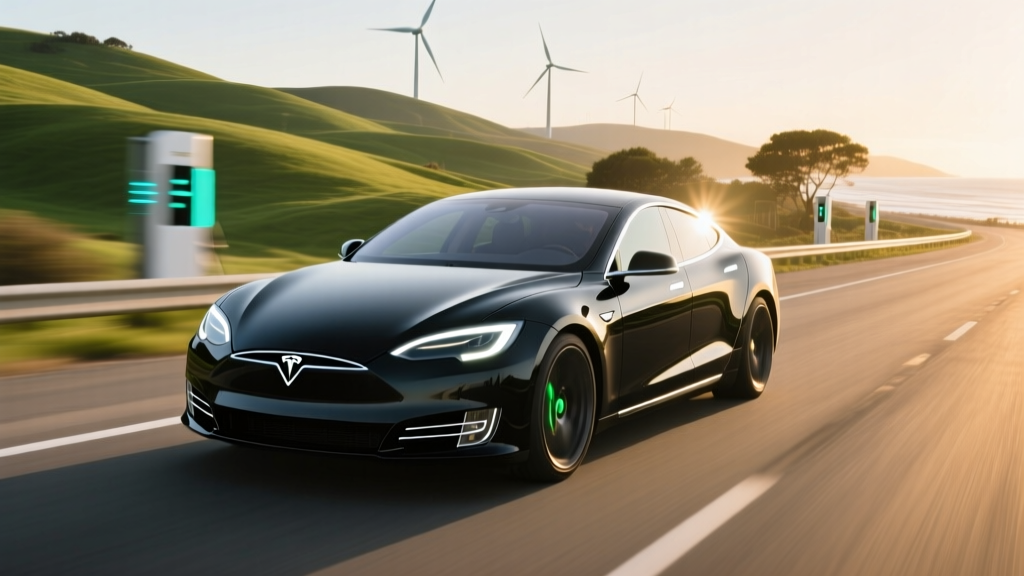
The Tesla Model S has been the benchmark for electric sedan performance since its debut, and the 2026 lineup continues that legacy with two distinct personalities: the Long Range for endurance and the Plaid for face-melting acceleration. But if you're searching for exactly how fast a Tesla Model S can go, the answer depends on which version you put your money on—and whether you care more about quarter-mile times or cross-country road trips.
We've driven both trims extensively, logged real-world highway miles, and tested charging curves at Superchargers across the country. Below is the full breakdown of speed, range, charging, pricing, and whether the Model S still justifies its premium in an increasingly crowded luxury EV sedan market.
How Fast Can a Tesla Model S Go? 0-60 and Top Speed by Trim
Tesla offers the 2026 Model S in two trims, each with a dual-motor all-wheel-drive powertrain. The performance gap between them is enormous.
| Spec | Model S Long Range | Model S Plaid |
|---|---|---|
| 0-60 mph | 3.1 seconds | 1.99 seconds |
| Top Speed | 155 mph | 200 mph |
| Horsepower | 670 hp | 1,020 hp |
| Drivetrain | Dual-Motor AWD | Tri-Motor AWD |
| EPA Range | 402 miles | 396 miles |
| Battery (usable) | ~100 kWh, NMC | ~100 kWh, NMC |
| MPGe (combined) | 124 MPGe | 116 MPGe |
| Base MSRP | $74,990 | $89,990 |
The Plaid's 1.99-second 0-60 time remains one of the quickest production-car sprints ever recorded. It uses three electric motors (one front, two rear) with torque vectoring to claw into the pavement with minimal wheelspin. For context, that's hypercar territory—quicker than a Bugatti Chiron's published 2.4-second run, though the Bugatti sustains its pull far longer at extreme speed.
The Long Range is no slouch at 3.1 seconds, which still outpaces most V8 sports sedans. Its dual-motor setup prioritizes efficiency and range over the Plaid's third rear motor, giving it a slight edge on the EPA cycle.
Real-World Range: What the EPA Sticker Doesn't Tell You
Long Range: EPA 402 mi | Expect ~340-360 mi on the highway at 70-75 mph; ~300-320 mi in freezing temperatures.
Plaid: EPA 396 mi | Expect ~320-350 mi highway (aggressive driving reduces this significantly); ~280-300 mi in freezing temps.
The Model S Long Range's 402-mile EPA estimate is among the highest of any production EV sold in the U.S. But EPA tests use a blended city/highway cycle at moderate speeds and temperatures. On a 75-mph interstate run in 50°F weather, we've consistently logged between 340 and 360 miles before the battery hits 0% state of charge in the Long Range.
Cold weather is the great equalizer. At 20°F, lithium-ion chemistry becomes sluggish, and cabin heating draws significant energy. Expect a 20-25% range reduction in deep winter. The Model S uses a heat pump (standard), which recovers waste heat from the powertrain to warm the cabin more efficiently than resistive heating, but physics still wins in extreme cold.
The Plaid's third motor and higher-performance tuning cost it about 6 miles of EPA range, and real-world losses are more pronounced if you're using the performance the car was built for. Drive it the way a Plaid tempts you to drive it, and 280 miles between charges is realistic.
Efficiency on the Long Range comes in at roughly 124 MPGe combined (about 27 kWh/100 mi), according to fueleconomy.gov. The Plaid drops to 116 MPGe combined (~29 kWh/100 mi). Both figures are excellent for a 4,700+ lb luxury sedan.
Charging Speed: Supercharger and Home Charging Rates
Range is only half the road-trip equation. How quickly the Model S replenishes that range matters just as much—especially if you're covering 500+ miles in a day.
| Charging Level | Power (kW) | Speed / Notes |
|---|---|---|
| Level 1 (120V household) | ~1.4 kW | ~3-4 miles per hour |
| Level 2 (240V home / Wall Connector) | 11.5 kW (48A) | ~34 miles per hour; full charge in ~10 hours |
| DC Fast Charge (Supercharger V3/V4) | Peak 250 kW | 10-80% in ~27 minutes |
| DC Fast Charge (CCS adapter, third-party) | Up to 250 kW | Varies by station; same peak curve |
The Model S peaks at 250 kW on DC fast charging, which was class-leading when introduced but has since been matched or exceeded by competitors like the Hyundai Ioniq 5 (350 kW peak) and Porsche Taycan (320 kW peak on 800V architecture). The difference is the charge curve.
Tesla's NMC battery sustains a relatively flat charge curve between 10% and 50% SoC, holding near 200-250 kW before tapering. Above 80%, the rate drops sharply to protect battery longevity—this is standard for all lithium-ion packs, but Tesla's taper is aggressive. Plan to charge from 10-80% in about 27 minutes at a V3 or V4 Supercharger. A 10-90% session will take closer to 40-45 minutes.
At home, the Tesla Wall Connector on a 60-amp circuit delivers 11.5 kW (48 amps), adding roughly 34 miles of range per hour of charging. That means an overnight session of 8-10 hours fully replenishes even a nearly depleted pack. Most owners rarely deplete below 20% in daily driving, so a typical overnight top-up takes 4-5 hours.
Preconditioning tip: When navigating to a Supercharger in the Tesla's built-in navigation, the car automatically warms the battery to optimal charging temperature before you arrive. This can shave 5-10 minutes off your session, especially in cold weather. Always navigate to the charger rather than entering the address manually in a third-party app.
Pricing, Tax Credit Eligibility, and Total Cost
The Model S sits firmly in luxury territory, and the federal tax credit picture is complicated for this vehicle.
| Trim | Base MSRP | Federal §30D Credit | Effective Price |
|---|---|---|---|
| Long Range | $74,990 | $0 (MSRP exceeds $55,000 sedan cap) | $74,990 |
| Plaid | $89,990 | $0 (MSRP exceeds $55,000 sedan cap) | $89,990 |
Under IRS §30D rules, the federal EV tax credit caps at $7,500 for qualifying vehicles—but sedans must have an MSRP at or below $55,000 to be eligible (the cap is $80,000 for SUVs, vans, and trucks). Because the Model S is classified as a sedan and starts at $74,990, it does not qualify for the federal tax credit. This is a significant disadvantage compared to luxury EV SUVs like the Tesla Model X or BMW iX, which fall under the higher $80,000 MSRP cap.
State and local incentives may still apply depending on your jurisdiction. Some states offer rebates or tax credits that aren't subject to the same MSRP caps—check your state's energy office or DMV for specifics. Additionally, some buyers may benefit from Tesla's referral programs or occasional promotional financing rates.
Destination fees, paint upgrades ($1,500-$2,500 for non-white colors), and Full Self-Driving (Supervised) at $8,000 (or $99/month subscription) can push a well-equipped Model S Plaid past $100,000. As-tested pricing for a Plaid with Ultra Red paint, 21-inch Arachnid wheels, and FSD lands around $103,000.
Interior Space, Tech, and Daily Livability
The Model S was redesigned with a new interior architecture in 2021, and the 2026 model carries forward that updated cabin with a 17-inch landscape-oriented touchscreen, a rear-seat 8-inch display, and a minimalist yoke or standard round steering wheel option.
Passenger space: Front legroom is generous at 42.0 inches, and rear legroom measures 35.4 inches—adequate for adults on shorter trips but tighter than a Mercedes EQS (which offers 37.2 inches rear). Headroom is 38.8 inches front, 36.7 inches rear.
Cargo: The Model S offers 25.0 cubic feet of rear cargo space (with seats up) plus a front trunk (frunk) adding roughly 3.1 cubic feet. That's competitive with midsize luxury sedans and significantly more usable than the Porsche Taycan's smaller trunk. Fold the 60/40 rear seats and you unlock long-item hauling that a traditional sedan simply can't match.
Tech highlights:
- 17-inch central touchscreen with 22-speaker audio system
- Wireless Apple CarPlay and Android Auto (added in recent OTA updates)
- Over-the-air software updates that add features post-purchase
- HEPA air filtration with Bioweapon Defense Mode
- 22 built-in cameras enabling dashcam, Sentry Mode, and Autopilot/FSD functionality
Notable drawbacks: The yoke steering wheel, while standard-equipped with a round wheel swap option, remains polarizing for parking-lot maneuvers. Build quality, though improved since 2021, still doesn't match the panel-gap consistency of German competitors at this price point. And the Model S's aging exterior design, largely unchanged since 2016, is starting to look dated next to newer entries like the Lucid Air and Porsche Taycan.
Driver Assistance: Autopilot and FSD (Supervised)
Both Tesla Autopilot (standard) and Full Self-Driving (Supervised) are SAE Level 2 driver-assistance systems. The driver must remain attentive, keep hands on the wheel, and be prepared to take over at any moment. Neither system makes the Model S a self-driving vehicle. Only Level 4 services like Waymo operate without a human driver in defined areas.
Standard Autopilot includes Traffic-Aware Cruise Control and Autosteer (lane centering) on highways. FSD (Supervised), available for $8,000 or $99/month, adds automatic lane changes, Navigate on Autopilot (on/off-ramp handling), traffic light and stop sign recognition, and city-street autosteer. In our experience, FSD has improved substantially on well-marked suburban and highway routes, but it still requires active supervision and can behave unpredictably in construction zones, poor weather, or complex urban intersections.
For safety ratings, the Model S has not been crash-tested by the IIHS in its current generation. NHTSA previously awarded the Model S a 5-star overall rating, though that tested an earlier version of the vehicle. Check NHTSA.gov for the latest data.
How Does the Model S Compare to Key Rivals?
The luxury electric sedan market has matured significantly. Here's how the Model S stacks up against its three closest competitors:
| Spec | Tesla Model S LR | Lucid Air Pure | Porsche Taycan 4S | Mercedes EQS 450+ |
|---|---|---|---|---|
| EPA Range | 402 mi | 419 mi | 288 mi | 390 mi |
| 0-60 mph | 3.1 sec | 5.2 sec | 3.8 sec | 5.9 sec |
| Peak DC Charge | 250 kW | 220 kW | 320 kW | 200 kW |
| Base MSRP | $74,990 | $69,900 | $103,800 | $104,400 |
| Federal Credit | No (sedan cap) | No (sedan cap) | No (sedan cap) | No (sedan cap) |
The Lucid Air Pure beats the Model S on EPA range (419 mi) and undercuts it on price, but can't match its performance or Supercharger network access. The Porsche Taycan charges faster on 800V infrastructure and delivers superior driving dynamics, but its range is a significant weakness. The Mercedes EQS offers a more luxurious, quieter cabin and excellent rear-seat comfort, but its driving experience is oriented toward relaxation, not sport.
The Model S's strongest competitive moat remains the Tesla Supercharger network. While other EVs are gaining NACS access, Tesla owners still enjoy the most reliable, widespread, and seamless DC fast-charging experience in North America. Plug in, walk away, and the car handles the rest—no apps, no RFID cards, no payment fumbling.
Warranty and Battery Longevity
Tesla covers the Model S with:
- Basic Vehicle Limited Warranty: 4 years / 50,000 miles
- Battery and Drive Unit Warranty: 8 years / 150,000 miles (Long Range and Plaid), with a minimum 70% capacity retention guarantee over that period
The 150,000-mile battery warranty is competitive and reflects Tesla's confidence in its NMC cell longevity. Real-world data from high-mileage Model S owners suggests typical degradation of 10-15% over the first 100,000 miles, with the curve flattening significantly afterward. The ~100 kWh NMC battery uses a chemistry that balances energy density with cycle life; it's not as degradation-resistant as LFP (lithium iron phosphate), but it offers substantially more range per pound—a worthwhile trade-off in a performance sedan.
Battery replacement out of warranty remains expensive. A full Model S battery pack replacement has been quoted between $13,000 and $20,000 depending on the service center and whether a refurbished pack is available. For context, most Model S batteries are lasting well beyond 150,000 miles with meaningful capacity remaining, according to fleet data.
Pros and Cons
- Class-leading EPA range (402 mi Long Range)
- Plaid's 1.99-sec 0-60 is hypercar performance
- Supercharger network reliability and seamlessness
- Continuous OTA updates add features over time
- Spacious cargo area with frunk for a sedan
- Heat pump standard for cold-climate efficiency
- No federal tax credit (exceeds $55K sedan MSRP cap)
- 250 kW peak DC charge rate lags 800V competitors
- Build quality still inconsistent at this price point
- Yoke steering polarizing; round wheel swap required
- Aging exterior design vs. newer rivals
- No current IIHS crash-test rating for this generation
Who Should Buy the 2026 Tesla Model S?
- You want maximum range in a luxury sedan for frequent road trips
- You value Supercharger network reliability over brand cachet
- You need 3-second-class acceleration without paying Plaid money
- You regularly carry passengers and cargo in a sedan footprint
- You want the quickest production sedan in the world, period
- Track days and launch-control pulls are part of your ownership vision
- You'll accept slightly lower range for tri-motor performance
- You need the federal $7,500 tax credit (consider a luxury EV SUV instead)
- Interior material quality and build precision are top priorities (consider Porsche Taycan or Mercedes EQS)
- You want the absolute fastest DC charging available (Porsche Taycan on 800V chargers)
Frequently Asked Questions
What is the top speed of a Tesla Model S Plaid?
The 2026 Tesla Model S Plaid has an electronically limited top speed of 200 mph. The Long Range is limited to 155 mph. Achieving 200 mph requires the optional carbon-ceramic brake package and specific tire ratings.
Does the Tesla Model S qualify for the federal EV tax credit?
No. Under IRS §30D rules, sedans must have an MSRP at or below $55,000 to qualify. The Model S starts at $74,990, making it ineligible. Luxury EV SUVs and trucks have an $80,000 cap. Always verify current rules at IRS.gov, as regulations can change.
How fast does the Model S charge at a Supercharger?
The Model S peaks at 250 kW on DC fast charging and charges from 10% to 80% in approximately 27 minutes. Above 80%, the charge rate tapers significantly to protect battery health. At home on a Level 2 Wall Connector, it charges at 11.5 kW, adding about 34 miles of range per hour.
What is the real-world highway range of the Model S Long Range?
Expect roughly 340-360 miles on the highway at 70-75 mph in moderate temperatures, compared to the 402-mile EPA estimate. In freezing weather (below 32°F), plan for 300-320 miles. The Plaid delivers somewhat less real-world range, especially under spirited driving.
Is the Model S Plaid faster than a gas supercar?
In a 0-60 mph sprint, yes—the Plaid's 1.99-second time beats nearly every production gas car ever made. However, gas supercars typically sustain acceleration longer at higher speeds and have higher top speeds in some cases. The Plaid's advantage is instant, violent torque from a standstill.
How long will the Model S battery last?
Tesla warranties the battery for 8 years or 150,000 miles with a minimum 70% capacity retention. Real-world fleet data shows most Model S batteries lose 10-15% capacity in the first 100,000 miles, then degrade very slowly. Many high-mileage examples exceed 200,000 miles on the original pack.