Quick Verdict: Still the Benchmark, but the Field Has Caught Up
The Tesla Model S entered 2026 as the original luxury EV sedan — and its powertrain numbers still shock. With up to 1,020 horsepower in Plaid trim and an EPA-estimated 402 miles of range in the Long Range variant, it remains a spec-sheet monster. But the real question for buyers spending $80,000+ isn't just peak performance — it's whether the Model S's charging infrastructure advantage, software ecosystem, and practicality justify its price against rivals like the Lucid Air, BMW i5, and Mercedes EQS that have narrowed the gap considerably.
This review breaks down every key Tesla Model S spec — horsepower, range, charging speed, efficiency, pricing, and tax-credit eligibility — with the real-world caveats that spec sheets leave out.
Tesla Model S Specs at a Glance
| Spec | Long Range | Plaid |
|---|---|---|
| Drivetrain | Dual-Motor AWD | Tri-Motor AWD |
| Horsepower | 670 hp | 1,020 hp |
| 0-60 mph | 3.1 seconds | 1.99 seconds |
| Top Speed | 155 mph | 200 mph |
| EPA Range | 402 miles | 396 miles |
| Battery (usable) | ~100 kWh (NMC) | ~100 kWh (NMC) |
| Max DC Fast Charge | 250 kW | 250 kW |
| 10-80% DC Charge Time | ~27 minutes | ~27 minutes |
| Level 2 Charge Rate | 11.5 kW (~41 mi/hr) | 11.5 kW (~41 mi/hr) |
| MPGe (combined) | 120 MPGe | 116 MPGe |
| Efficiency | 28 kWh/100 mi | 29 kWh/100 mi |
| Cargo Volume | 28 cu ft (rear) + ~5 cu ft (frunk) | 28 cu ft (rear) + ~5 cu ft (frunk) |
| Rear Legroom | 35.4 inches | 35.4 inches |
| Base MSRP | $79,990 | $94,990 |
| Battery/Drive Unit Warranty | 8 years / 150,000 miles | 8 years / 150,000 miles |
Range: EPA Sticker vs. Real-World Reality
Real-World Expectation: 320-360 miles highway; 260-300 miles in freezing temperatures
The Model S Long Range's 402-mile EPA figure places it among the longest-range EVs sold in the U.S., trailing only the Lucid Air Grand Touring (~516 miles EPA). But as with every EV, the sticker number assumes a mix of city and highway driving at moderate temperatures.
In sustained highway driving at 70-75 mph, expect roughly 320-360 miles before needing to stop, based on independent testing and owner data aggregated by fueleconomy.gov. The Model S's large battery pack and efficient thermal management help, but aerodynamic drag at highway speed cuts into range significantly.
Cold weather is the bigger variable. At temperatures below 32°F, lithium-ion chemistry slows and cabin heating demands energy, reducing range by 20-30%. In sub-freezing road-trip conditions, plan for 260-300 miles of usable range. The Model S includes a heat pump (standard since the 2021 refresh), which recovers waste heat from the drivetrain to warm the cabin more efficiently than resistive heating — but physics still wins in extreme cold.
Practical takeaway: On a 500-mile road trip in mild weather, you'll make one 20-25 minute Supercharger stop. In winter, plan for two stops or accept a tighter buffer.
Charging: DC Fast, Level 2, and the Supercharger Advantage
| Charging Level | Power / Rate | Miles Added | Time (10-80%) |
|---|---|---|---|
| Level 1 (120V household) | ~1.4 kW | ~4-5 miles/hour | N/A (days) |
| Level 2 (240V home / Wall Connector) | 11.5 kW | ~41 miles/hour | ~9 hours (full) |
| DC Fast (Tesla Supercharger V3/V4) | Peak 250 kW | ~200 miles in 15 min | ~27 minutes |
| DC Fast (CCS via adapter) | Up to 250 kW | Varies by station | ~27-35 minutes |
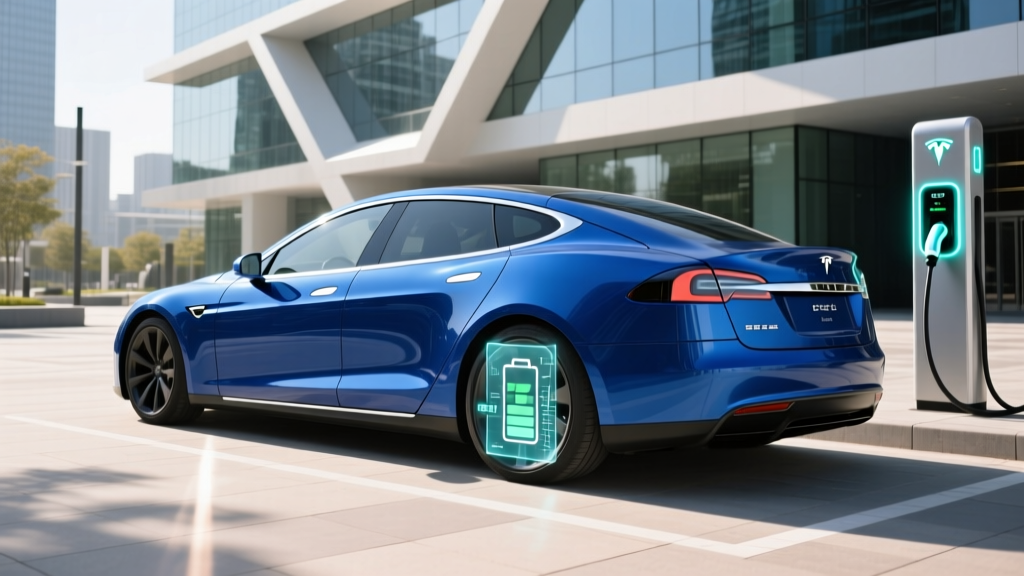
The Model S peaks at 250 kW on Tesla's V3 and newer V4 Superchargers. That's enough to add roughly 200 miles of range in 15 minutes — but only under ideal conditions. Here's what the spec sheet doesn't tell you about the charge curve:
Peak 250 kW is sustained only between roughly 10-30% state of charge (SoC). Above 50%, the rate tapers progressively — dropping to ~100 kW around 70% and below 50 kW past 85%. This is standard lithium-ion behavior: charging slows as the battery fills to protect cell longevity. A 10-80% session takes approximately 27 minutes; an 80-100% top-off can add another 25+ minutes. For road trips, the strategy is clear: charge to 80% and move on.
At home, Tesla's Wall Connector delivers up to 11.5 kW (48 amps) on a 60-amp circuit. That's roughly 41 miles of range per hour of charging, meaning an overnight session (8-10 hours) easily replenishes a full day's driving. Installation typically requires a 240V/60A circuit; budget $500-$2,000 for professional electrical work depending on panel capacity and run length.
Tesla now includes a CCS adapter with new vehicles, opening access to Electrify America, EVgo, and other CCS networks. However, Tesla's own Supercharger network — with over 6,000 U.S. stalls — remains the most reliable DC fast-charging ecosystem in North America, with plug-and-charge billing that third-party networks still struggle to match.
Performance: 670 to 1,020 Horsepower, Explained
The Model S Long Range's dual-motor all-wheel-drive powertrain produces 670 horsepower and launches the sedan to 60 mph in 3.1 seconds. That's quicker than a Porsche 911 Carrera and more than sufficient for any real-world driving scenario, from highway merging to canyon carving.
The Plaid variant adds a third rear motor for tri-motor AWD and a staggering 1,020 horsepower. Tesla claims a 1.99-second 0-60 mph time (with rollout subtracted, as is drag-racing convention). Independent testing by outlets like Motor Trend has verified sub-2.0-second runs on prepped surfaces. On a public road, the Plaid's acceleration is genuinely disorienting — and largely irrelevant beyond the first few seconds.
Both trims feature adaptive air suspension, torque-vectoring AWD, and a low center of gravity thanks to the underfloor battery pack. The result is competent handling for a 4,600-pound sedan, though the Lucid Air and Porsche Taycan still edge it out in steering feel and chassis refinement.
Pricing, Tax Credit Eligibility, and Total Cost
| Trim | Base MSRP | As-Tested (typical options) | §30D Federal Credit |
|---|---|---|---|
| Long Range | $79,990 | $83,000-$87,000 | Not eligible (MSRP exceeds $55,000 sedan cap) |
| Plaid | $94,990 | $98,000-$105,000 | Not eligible (MSRP exceeds $55,000 sedan cap) |
Federal tax credit reality: The Model S does not qualify for the $7,500 IRS §30D federal EV tax credit. Under current rules, sedans must have an MSRP at or below $55,000 to be eligible — and the Model S starts nearly $25,000 above that threshold. Additionally, buyer income caps ($150,000 single / $300,000 joint MAGI) would exclude many Model S buyers regardless. Per IRS guidelines, the credit also requires critical-mineral and battery-component sourcing compliance, which adds further complexity.
Some states offer their own EV incentives that may apply — check your state's energy office for current programs. But at the federal level, budget the full MSRP.
Ownership cost context: Despite the lack of a federal credit, the Model S can still undercut comparably equipped German sedans on fuel and maintenance. At $0.15/kWh (national average for home charging), a full 100 kWh charge costs roughly $15 — versus $60-80 to fill a BMW 5 Series with premium gasoline. Over 5 years and 75,000 miles, energy savings alone can reach $8,000-$12,000 compared to a performance ICE sedan. Factor in no oil changes, fewer brake replacements (thanks to regenerative braking), and the total-cost gap narrows further — though higher insurance premiums for the Model S partially offset these savings.
Interior, Technology, and Daily Practicality
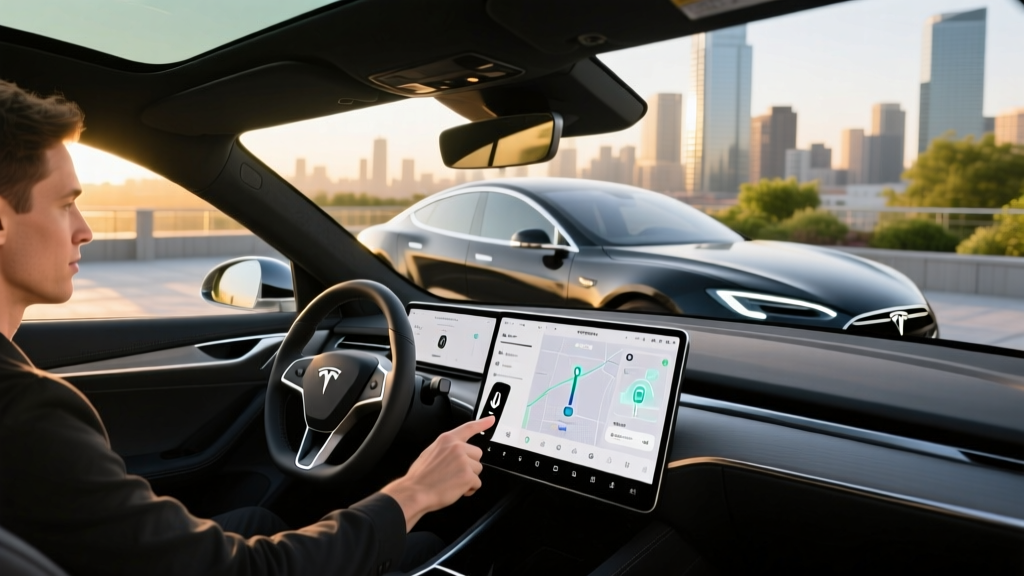
The Model S interior centers on a 17-inch landscape touchscreen that handles nearly every vehicle function — climate, navigation, media, vehicle settings, and even gaming (a built-in GPU supports titles like Cyberpunk 2077 while parked). A secondary 8-inch rear touchscreen gives back-seat passengers climate and media control. The yoke-style steering wheel remains standard, though a conventional round wheel is available at no extra cost.
Driver assistance: Tesla's Basic Autopilot (lane-keeping, adaptive cruise) is standard. Full Self-Driving (FSD) Supervised, which adds automated lane changes, traffic-light recognition, and city-street navigation, is available as a subscription ($99/month) or one-time purchase. Crucially, FSD is a Level 2 driver-assist system per SAE classification — the driver must remain fully engaged and responsible at all times. It is not autonomous driving.
Cargo and passenger space: The Model S offers 28 cubic feet of rear cargo space (with a power liftgate) plus a ~5 cu ft front trunk (frunk). Rear legroom measures 35.4 inches — adequate for adults but noticeably tighter than the Lucid Air's 41.3 inches or a Mercedes S-Class. The floor-mounted battery creates a flat load floor but a slightly elevated seating position. For families, two child seats fit comfortably in the rear; three-across is tight.
Pros and Cons
Pros
- Class-leading 402-mile EPA range (Long Range)
- Access to Tesla's Supercharger network — the most reliable DC fast-charging ecosystem in North America
- Brutal acceleration: 670 hp (Long Range) or 1,020 hp (Plaid)
- Over-the-air updates continuously add features and refinements
- Best-in-class battery warranty: 8 years / 150,000 miles with 70% minimum retention
- Strong efficiency: 120 MPGe combined (Long Range)
Cons
- No federal tax credit eligibility (MSRP exceeds $55,000 sedan cap)
- Rear-seat legroom (35.4 in) trails Lucid Air and German luxury sedans
- Yoke steering and touchscreen-dependent controls polarize owners
- 250 kW peak DC charge rate is outpaced by Hyundai/Kia's 350 kW (E-GMP) and Porsche's 800V architecture
- Insurance premiums run 15-30% higher than comparable ICE sedans
- Panel fit and interior material quality don't match $80K+ German rivals
Who Should Buy the 2026 Tesla Model S?
Choose the Model S Long Range if: You want maximum range (402 mi EPA), need Supercharger access for frequent road trips, value OTA software updates, and prioritize acceleration and tech over rear-seat luxury.
Choose the Model S Plaid if: You want the fastest production sedan on the planet and accept the range/price trade-off. Track use and bragging rights are the primary motivations.
Consider the Lucid Air instead if: Rear-seat space (41.3 in legroom), interior material quality, and 516-mile EPA range matter more than Supercharger access and Tesla's software ecosystem.
Consider the BMW i5 or Mercedes EQS if: Traditional luxury build quality, dealer service networks, and available federal or lease incentives are priorities.
Frequently Asked Questions
What is the real-world range of the Tesla Model S?
The EPA estimates 402 miles for the Long Range and 396 miles for the Plaid. In real-world highway driving at 70+ mph, expect 320-360 miles. In freezing weather, plan for 260-300 miles. The heat pump helps, but cold temperatures reduce battery efficiency regardless.
How fast does the Model S charge at home and on the road?
At home on a 240V Level 2 Wall Connector (11.5 kW), the Model S adds about 41 miles of range per hour — a full overnight charge covers most daily needs. On a 250 kW Tesla Supercharger, a 10-80% session takes approximately 27 minutes, adding up to 200 miles in the first 15 minutes. Charging slows significantly above 80% SoC.
Does the Tesla Model S qualify for the federal EV tax credit?
No. The IRS §30D credit caps sedan eligibility at $55,000 MSRP. The Model S starts at $79,990, well above the threshold. Buyer income limits ($150K single / $300K joint) and battery-sourcing requirements further restrict eligibility. Check IRS.gov for current rules, and consult a tax professional for your specific situation.
Is the Model S worth buying vs. the Lucid Air or BMW i5?
The Model S wins on Supercharger network access, acceleration, and software. The Lucid Air Grand Touring offers superior range (516 mi EPA), more rear legroom, and a more luxurious interior. The BMW i5 provides traditional build quality and may qualify for incentives the Tesla doesn't. Your priority — tech ecosystem vs. luxury comfort vs. maximum range — should drive the decision.
What is the Tesla Model S battery warranty?
Tesla covers the Model S battery and drive units for 8 years or 150,000 miles (whichever comes first), with a guaranteed minimum 70% capacity retention. This is one of the strongest battery warranties in the EV market. NMC chemistry in the Model S has shown typical degradation of 8-12% over 100,000 miles based on owner fleet data.
Is Tesla FSD actually self-driving?
No. Full Self-Driving (Supervised) is classified as SAE Level 2 driver assistance. The system can navigate highways, change lanes, and handle some city streets, but the driver must remain attentive, hands on or near the wheel, and ready to take over at any moment. Only Level 4 services like Waymo operate without a human driver — and those are limited to specific geofenced areas.