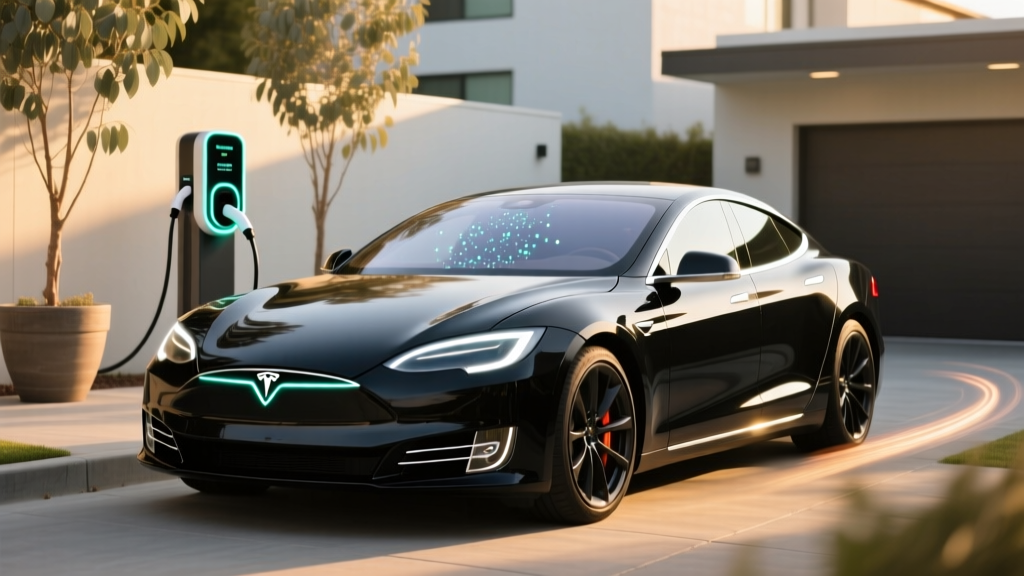
The 2026 Tesla Model S: Software Update Timing and Full EV Profile
If you own a Tesla — or are considering one — you've likely wondered: how long do Tesla software updates take? Unlike traditional automakers that require dealership visits for firmware flashes, Tesla delivers over-the-air (OTA) updates directly to your vehicle via Wi-Fi or cellular. But the duration varies significantly depending on the update's scope, your connection quality, and the vehicle's generation.
This review answers that question in detail while providing a comprehensive profile of the 2026 Tesla Model S, including EPA range, charging speeds, battery chemistry, pricing, federal tax credit eligibility, and real-world ownership considerations.
How Long Do Tesla Software Updates Actually Take?
Tesla OTA updates fall into three categories, each with different download and installation times:
| Update Type | Download Time | Installation Time | Total Downtime |
|---|---|---|---|
| Minor (bug fixes, UI tweaks) | 5–15 minutes (Wi-Fi) | 10–20 minutes | ~15–35 minutes |
| Medium (feature additions, map data) | 15–45 minutes (Wi-Fi) | 20–40 minutes | ~35–85 minutes |
| Major (FSD improvements, powertrain recalibration) | 30–90 minutes (Wi-Fi) | 40–75 minutes | ~70–165 minutes |
Key variables that affect timing:
- Connection type: Wi-Fi downloads are 3–5x faster than cellular. Tesla strongly recommends connecting to a 2.4 GHz or 5 GHz home network for updates.
- Vehicle state: The car must be parked, not charging, and in a location with adequate cellular coverage if Wi-Fi is unavailable. Updates will not install while the vehicle is in drive or plugged into a DC fast charger.
- Hardware generation: HW4/AI4-equipped vehicles (2023+) process installations faster than legacy HW3 cars due to improved compute modules.
- Staged rollout: Tesla rolls updates out gradually. You may see a notification days or weeks after an update is announced. The "Advanced" update preference in Settings > Software tends to receive updates sooner than "Standard."
2026 Tesla Model S: Range, Battery, and Efficiency
The 2026 Model S continues with two trims: the Long Range and the Plaid. Both use a 100 kWh (usable ~95 kWh) battery pack with NMC (nickel manganese cobalt) chemistry, chosen for its high energy density — critical for the Model S's 400+ mile range target.
Model S Long Range: EPA-estimated 402 miles. Real-world highway driving at 75 mph yields approximately 340–360 miles. In freezing temperatures (below 32°F / 0°C), expect a 20–30% reduction, bringing usable range to roughly 280–320 miles without preconditioning.
Model S Plaid: EPA-estimated 359 miles. Real-world highway: ~300–320 miles. Cold weather: ~250–280 miles.
Preconditioning the battery before departure (via scheduled departure or the Tesla app) recovers 5–10% of cold-weather range by warming the pack to optimal operating temperature.
| Spec | Long Range | Plaid |
|---|---|---|
| EPA Range | 402 mi | 359 mi |
| Battery (usable) | ~95 kWh, NMC | ~95 kWh, NMC |
| Efficiency | 124 MPGe / 27 kWh/100mi | 116 MPGe / 29 kWh/100mi |
| Drivetrain | Dual-Motor AWD | Tri-Motor AWD |
| Horsepower | 670 hp | 1,020 hp |
| 0–60 mph | 3.1 seconds | 1.99 seconds |
| Top Speed | 155 mph | 200 mph |
Charging Speed: DC Fast, Level 2, and Home Setup
The Model S supports Tesla's NACS (North American Charging Standard) connector natively — no adapter needed at Superchargers. With the industry's transition to NACS as the dominant standard, 2026 Model S owners also gain access to an expanding network of non-Tesla NACS chargers from operators like Electrify America and EVgo.
| Charging Level | Power / Rate | Miles Added per Hour | Notes |
|---|---|---|---|
| Level 1 (120V) | ~1.4 kW | ~4 mi/hr | Emergency/trickle only |
| Level 2 (240V, 48A) | 11.5 kW | ~34 mi/hr | Home Wall Connector; full charge in ~9 hours |
| DC Fast Charge | Peak 250 kW | ~200 mi in 15 min | 10–80% in ~27 min; tapers significantly above 80% |
Charging curve reality check: The Model S peaks at 250 kW only between roughly 10–25% state of charge (SoC). From 25–50%, it sustains approximately 170–200 kW. From 50–80%, power drops to 100–130 kW. Above 80%, charging slows dramatically to protect the NMC cells — a 80–100% session can add another 25–35 minutes. For road trips, plan stops around the 10–80% window for the fastest turnaround.
kW vs. kWh refresher: kW (kilowatts) measures the rate of energy flow — like water pressure in a hose. kWh (kilowatt-hours) measures total energy stored — like the size of the tank. A 250 kW charger fills a 95 kWh battery faster than a 50 kW charger, but the battery's total capacity remains 95 kWh.
Pricing, Trims, and Federal Tax Credit Eligibility
| Trim | Base MSRP | As-Tested (typical options) |
|---|---|---|
| Long Range | $79,990 | $84,000–$88,000 |
| Plaid | $94,990 | $99,000–$105,000 |
Does the 2026 Model S Qualify for the §30D Federal EV Tax Credit?
No. The 2026 Tesla Model S does not qualify for the $7,500 federal EV tax credit under IRS §30D rules. Two disqualifying factors apply:
- MSRP cap: §30D limits the credit to sedans with an MSRP of $55,000 or less. Both Model S trims exceed this threshold significantly.
- Buyer income cap: Even if the price qualified, modified adjusted gross income (MAGI) must not exceed $150,000 (single) / $300,000 (joint). Many Model S buyers exceed these limits.
Additionally, battery-sourcing and critical-minerals requirements under the Inflation Reduction Act further restrict eligibility for vehicles with non-domestic cell supply chains. Tesla has made progress on domestic sourcing, but the MSRP cap alone disqualifies the Model S regardless.
Interior, Cargo, and Technology
The Model S cabin centers on a 17-inch landscape touchscreen running Tesla's proprietary infotainment OS. A secondary 8-inch rear touchscreen provides climate and media controls for back-seat passengers. The yoke steering wheel remains standard (a conventional round wheel is available at no extra charge).
Cargo and passenger space:
- Rear legroom: 35.4 inches
- Trunk: 28.4 cu ft (rear seats up)
- With rear seats folded: 64.9 cu ft
- Frunk (front trunk): 3.1 cu ft
The Model S offers class-leading sedan cargo volume, aided by its hatchback-style liftgate. The frunk is small but useful for charging cables and emergency kits.
Standout Tech Features
- Autopilot (included): SAE Level 2 driver assist with traffic-aware cruise control and autosteer. Driver must remain engaged — this is not self-driving.
- Full Self-Driving (Supervised) — $8,000 option: Adds automatic lane changes, navigate on Autopilot, traffic light/stop sign recognition, and Smart Summon. Still SAE Level 2; driver supervision required at all times.
- OTA software updates: Continuous feature improvements delivered wirelessly (see timing breakdown above).
- Gaming: Up to 10 teraflops of GPU power supports AAA-level gaming on the center display while parked.
- Sentry Mode / Dashcam: Continuous 360° recording when parked, with cloud-accessible clips via the Tesla app.
Notable Drawbacks
- Yoke steering requires an adjustment period and can frustrate during low-speed maneuvers and roundabouts.
- No Apple CarPlay or Android Auto — Tesla's ecosystem is closed.
- Rear visibility is limited by the sloping roofline; the camera-based mirror helps but doesn't fully compensate.
- Build quality, while improved, still shows occasional panel-gap inconsistencies compared to German luxury competitors.
- Insurance premiums run 20–40% higher than equivalent ICE sedans due to repair costs and parts pricing.
Warranty and Long-Term Ownership
| Component | Coverage |
|---|---|
| Basic Vehicle | 4 years / 50,000 miles |
| Battery & Drive Unit | 8 years / 150,000 miles (Long Range) 8 years / 150,000 miles (Plaid) |
| Battery Degradation Threshold | Warranty covers retention below 70% of original capacity |
Tesla's 8-year/150,000-mile battery warranty is competitive, though some rivals now offer 10-year coverage. The 70% retention threshold is industry-standard. Real-world data from Tesla's fleet shows NMC packs typically retain 85–90% capacity after 100,000 miles when charged primarily to 80–90% on Level 2.
Battery care tips for NMC chemistry:
- Set daily charge limit to 80–90% (the car's software allows you to set this precisely).
- Avoid leaving the car at 100% SoC for extended periods — charge to 100% only before long trips.
- Precondition the battery before DC fast charging (the navigation system does this automatically when a Supercharger is set as your destination).
Who Is the 2026 Model S For?
Choose the Model S If:
- You want 400+ mile EPA range in a luxury sedan for frequent road trips
- Home Level 2 charging is available (essential for the ownership experience)
- You value OTA updates that continuously add features without dealership visits
- You want tri-motor performance (Plaid) that rivals hypercars at a fraction of the cost
- Supercharger network access is a priority for your travel patterns
Consider Competitors If:
- You need Apple CarPlay/Android Auto (look at the BMW i7 or Mercedes EQS)
- Your budget is under $55K and you need the federal tax credit (consider the Tesla Model 3 or Hyundai Ioniq 6)
- You prefer traditional luxury dealer service networks (BMW, Mercedes, Porsche)
- You want an SUV form factor with more cargo flexibility (Model X, Rivian R1S, BMW iX)
Pros and Cons at a Glance
Pros
- 402-mile EPA range (Long Range) — among the highest of any production EV
- 250 kW DC fast charging with mature Supercharger network
- Continuous OTA updates add features years after purchase
- Class-leading performance (Plaid: 1.99s 0–60)
- Spacious hatchback cargo area for a sedan
- Industry-leading infotainment and gaming capabilities
Cons
- No federal tax credit eligibility (MSRP exceeds $55K cap)
- Insurance premiums significantly above segment average
- No smartphone integration (CarPlay/Android Auto)
- Yoke steering is polarizing and impractical for some drivers
- Service center availability remains limited in rural areas
- Plaid's range penalty (43 fewer EPA miles than Long Range)
2026 Tesla Model S vs. Key Competitors
| Attribute | Tesla Model S LR | BMW i7 xDrive50 | Mercedes EQS 450+ | Lucid Air Pure |
|---|---|---|---|---|
| EPA Range | 402 mi | 318 mi | 352 mi | 419 mi |
| Base MSRP | $79,990 | $105,700 | $104,400 | $69,900 |
| Max DC Charge | 250 kW | 195 kW | 200 kW | 250 kW |
| 0–60 mph | 3.1s | 4.5s | 5.9s | 5.0s |
| Federal Credit | No (MSRP) | No (MSRP) | No (MSRP) | Partial eligibility* |
*Lucid Air Pure eligibility depends on trim MSRP and battery sourcing; verify at fueleconomy.gov before purchase.
Frequently Asked Questions
How long do Tesla software updates take on average?
Most updates complete within 30–60 minutes total (download + installation). Minor patches may finish in 15–20 minutes, while major FSD or powertrain updates can take up to 2.5 hours. Always connect to Wi-Fi for the fastest downloads and schedule updates overnight when possible.
Can I drive my Tesla while a software update is downloading?
Yes. The download phase happens in the background and does not affect driving. However, once installation begins, the vehicle is completely immobilized and cannot be driven or charged until the installation finishes. You'll receive a notification before installation starts.
What is the real-world highway range of the Model S Long Range?
Expect approximately 340–360 miles at 75 mph in moderate temperatures (60–80°F). In freezing conditions, range drops to 280–320 miles unless you precondition the battery. The EPA's 402-mile estimate assumes a mix of city and highway driving under ideal conditions — sustained highway speeds above 70 mph and cold weather are the two biggest range killers.
Does the 2026 Model S qualify for any federal EV tax credit?
No. Under current IRS §30D rules, the Model S is disqualified by the $55,000 MSRP cap for sedans. Buyer income limits ($150K single / $300K joint) and battery-sourcing requirements present additional barriers. Check your state's energy office for possible state-level incentives.
How does the Tesla Supercharger network compare to CCS networks?
Tesla's Supercharger network remains the most reliable and extensive DC fast-charging network in North America, with over 6,000 stalls in the US. Reliability rates consistently exceed 97%. Non-Tesla networks (Electrify America, EVgo) have improved but still report higher downtime rates. The 2026 Model S uses NACS natively, so no adapter is needed.
Is FSD (Supervised) worth the $8,000 cost?
FSD (Supervised) adds useful features like automatic lane changes and Smart Summon, but it remains an SAE Level 2 system requiring constant driver attention. Most daily commuters find the included Autopilot sufficient. FSD makes the most sense for frequent highway travelers who want reduced cognitive load — but never treat it as a substitute for an attentive driver.
How does the Model S battery hold up over time?
Tesla's NMC battery packs typically retain 85–90% of original capacity after 100,000 miles with proper care (charging to 80–90% daily, avoiding extended 100% storage). The 8-year/150,000-mile warranty covers degradation below 70%. Replacement cost, if out of warranty, ranges from $13,000–$20,000 depending on labor and pack availability.