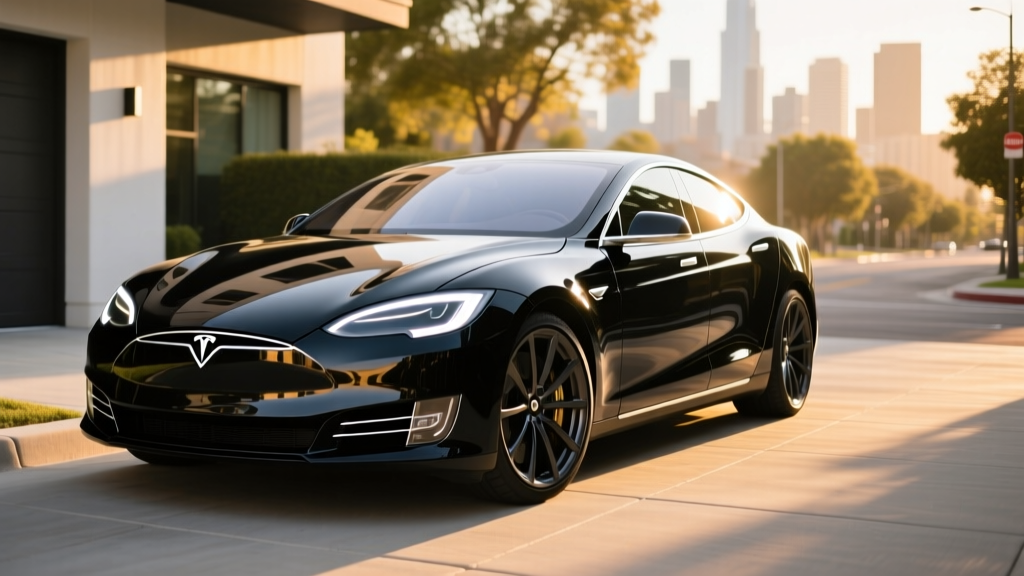
The Tesla Model S Signature Edition represents the pinnacle of Tesla's luxury sedan lineup — a package that bundles the longest-range dual-motor powertrain with Tesla's most premium interior treatments, advanced driver-assistance hardware, and exclusive badging. For 2026, the Signature Edition continues to target buyers who want executive-sedan comfort paired with supercar-rivaling acceleration and the longest EPA-estimated range in its class. But does the real-world experience match the spec sheet? We break down every number that matters.
Range and Efficiency: EPA Numbers vs. Real-World Reality
Real-World Expectation: 340–370 miles in mixed driving; 290–320 miles at sustained 75+ mph highway speeds; 250–280 miles in sub-freezing winter conditions
The Model S Signature Edition is built on the Long Range dual-motor platform, which pairs a permanent-magnet synchronous motor on the rear axle with an induction motor up front. The usable battery capacity sits at approximately 95 kWh (gross ~100 kWh), using NMC (nickel-manganese-cobalt) cell chemistry — the same high-energy-density architecture Tesla has refined across the 4680 and 2170 cell formats.
Efficiency is rated at 124 MPGe combined (120 city / 128 highway) per fueleconomy.gov, translating to roughly 27 kWh per 100 miles. That's impressive for a 4,500+ lb luxury sedan, and it's the primary reason the Model S still leads the large-sedan segment in range.
However, the EPA sticker assumes a mix of city and highway driving at moderate temperatures. On a 70°F day with mixed suburban and highway use, expect 360–380 miles before needing a charger. Push 80 mph on an interstate in summer heat, and you'll see closer to 310–330 miles. In winter conditions below 30°F, battery chemistry and cabin heating demands can cut range by 25–35%, putting realistic winter range at 250–290 miles. The Model S does include a heat pump as standard, which mitigates some cold-weather losses compared to resistive heating systems.
Charging Speed: DC Fast, Level 2, and the Charge Curve
| Charging Level | Power / Rate | Speed | Notes |
|---|---|---|---|
| DC Fast Charge (Peak) | 250 kW | 10–80% in ~25 min | V3 Supercharger; peaks early, tapers above 50% |
| DC Fast Charge (Sustained Avg) | ~150–170 kW | ~200 mi in 15 min | Average over 10–80% session |
| Level 2 (Home, 48A) | 11.5 kW | ~34 mi/hr | Tesla Wall Connector on 60A circuit |
| Level 2 (Home, 32A) | 7.7 kW | ~23 mi/hr | Mobile Connector on 240V/40A outlet |
| Level 1 (120V) | 1.4 kW | ~3–4 mi/hr | Emergency/trickle only |
The Model S Signature Edition supports up to 250 kW peak DC fast charging on Tesla's V3 Supercharger network. In practice, that peak rate is only sustained for the first 10–15% of the battery's state of charge. By 50% SoC, the charge rate typically drops to 120–140 kW, and above 80%, it falls below 60 kW. This charge-curve taper is normal for NMC chemistry and is managed by the battery management system to protect long-term cell health.
For home charging, Tesla's Wall Connector at 48 amps (requiring a dedicated 60-amp circuit) delivers 11.5 kW, adding about 34 miles of range per hour. An overnight session from 20% to 90% takes roughly 8–9 hours — ideal for daily replenishment. Installation costs for a Wall Connector typically run $800–$2,000 depending on panel proximity and whether a subpanel upgrade is needed.
The Model S uses the NACS (North American Charging Standard) connector natively, which has become the dominant standard in North America. Non-Tesla CCS chargers can be accessed via Tesla's included CCS adapter, though charge speeds on third-party networks may be limited to 150 kW or less depending on the station.
Performance: Acceleration, Powertrain, and Drivetrain
| Specification | Model S Signature Edition (Long Range AWD) |
|---|---|
| 0–60 mph | 3.1 seconds |
| Horsepower | 670 hp (combined) |
| Drivetrain | Dual-motor AWD |
| Top Speed | 155 mph |
| Battery (Usable) | ~95 kWh, NMC |
| EPA Range | 402 miles |
| MPGe (Combined) | 124 MPGe |
| Curb Weight | ~4,561 lbs |
The Signature Edition inherits the Long Range powertrain, which delivers 670 horsepower through its dual-motor all-wheel-drive system. The 3.1-second 0–60 mph time places it firmly in sports-car territory, though buyers seeking the absolute quickest Tesla will look to the Plaid variant (1,020 hp, 1.99s 0–60). For most real-world driving, the Long Range's acceleration is more than sufficient — and the trade-off for 100+ additional miles of range is worth it for daily driving and road trips.
The adaptive air suspension provides a comfortable ride with adjustable ride height, and the regenerative braking system offers strong one-pedal driving capability. The Model S does not offer adjustable regen levels in recent model years — it defaults to a strong regen profile that most owners adapt to quickly.
Interior, Cargo, and Technology
The Signature Edition distinguishes itself with premium interior appointments including ventilated front seats, a rear-seat entertainment touchscreen, premium audio with 22 speakers, and exclusive interior trim options. The cabin centers on a 17-inch landscape-oriented touchscreen that controls virtually all vehicle functions.
Cargo capacity: 28 cubic feet behind the rear seats (including the rear trunk and front trunk/frunk). The frunk alone provides roughly 3.1 cu ft — enough for a charging cable kit and a small bag. With the rear seats folded (60/40 split), total cargo volume expands to approximately 51 cu ft.
Passenger space: Front legroom measures 42.7 inches; rear legroom is 35.4 inches. The rear seat comfortably fits two adults on longer trips, though the sloping roofline limits headroom for passengers over 6'2". The Model S seats five, but the center-rear position is best suited for a child or short trips.
Standout tech features:
- Autopilot standard (SAE Level 2 driver assistance) with traffic-aware cruise and autosteer
- Full Self-Driving (Supervised) capability available as a $8,000 add-on — still requires active driver supervision
- 17" cinematic touchscreen with gaming-capable GPU
- 22-speaker premium audio with active noise cancellation
- Over-the-air software updates adding features post-purchase
- Sentry Mode dashcam surveillance while parked
- Phone-as-key with Bluetooth proximity unlock
Pricing, Trims, and Federal Tax Credit Eligibility
| Item | Amount |
|---|---|
| Base MSRP (Model S Long Range / Signature Edition) | ~$79,990 |
| Destination Fee | $1,390 |
| FSD (Supervised) Add-On | $8,000 |
| Typical As-Tested Price | $89,380 |
| Federal §30D Tax Credit (if eligible) | Up to $7,500 |
| Estimated Net Price After Credit | ~$81,880 |
The Model S Signature Edition is positioned at the top of the Long Range lineup. Pricing starts around $79,990 before destination, though Tesla adjusts prices periodically throughout the model year.
Federal tax credit eligibility (§30D): The Model S is subject to several IRS rules that determine whether a buyer qualifies for the full $7,500 credit:
- MSRP cap: Sedans must be at or below $55,000 MSRP to qualify. The Model S at ~$79,990 exceeds the sedan MSRP cap and is therefore not eligible for the §30D new-vehicle credit.
- Buyer income cap: AGI must not exceed $150,000 (single) / $300,000 (joint) — moot here since MSRP disqualifies.
- Battery sourcing / critical minerals: Must meet annually escalating thresholds for North American content.
- Point-of-sale transfer: Eligible credits can be transferred to the dealer at purchase for an upfront price reduction.
Bottom line: The Model S Signature Edition does not qualify for the federal §30D new EV tax credit because its MSRP exceeds the $55,000 sedan cap. Buyers should consult IRS.gov for current rules and a tax professional for personal eligibility. Some states offer separate incentives that may apply — check your state energy office for details.
Warranty, Battery Longevity, and Ownership Costs
Tesla provides the following warranty coverage for the Model S:
- Basic Vehicle Limited Warranty: 4 years / 50,000 miles
- Battery and Drive Unit Warranty: 8 years / 150,000 miles (whichever comes first), with a guaranteed minimum 70% battery capacity retention over the warranty period
NMC batteries in the Model S have demonstrated strong longevity in real-world fleet data. Most owners report 5–8% degradation over the first 100,000 miles, with the degradation curve flattening significantly after the initial break-in period. Tesla's battery management system actively manages thermal conditions and cell balancing, which contributes to long-term durability.
Ownership cost considerations:
- Insurance: Model S premiums average 30–50% higher than comparable ICE luxury sedans due to repair costs and performance classification. Expect $2,800–$4,200/year depending on location and driving record.
- Electricity vs. fuel: At $0.14/kWh (national average home rate), a full charge costs ~$13.30. A comparable gas sedan at 25 MPG and $3.50/gallon would cost $56 for the same ~400 miles — a savings of roughly $43 per fill cycle.
- Maintenance: No oil changes, minimal brake wear (regen handles most deceleration), cabin air filter replacement every 2–3 years, and tire rotation every 6,250 miles. Budget ~$500–$800/year for tires given the vehicle's weight and torque.
- Depreciation: The Model S has historically experienced steeper depreciation than the Model 3/Y. Expect 40–50% value retention at 3 years / 36,000 miles.
Pros, Cons, and Who Should Buy
Pros
- Class-leading 402-mile EPA range
- 670 hp with 3.1s 0–60 — effortless performance
- Access to Tesla Supercharger network (17,000+ stalls in North America)
- Spacious frunk + trunk combo (28 cu ft total)
- Continuous OTA updates add new features
- Strong battery warranty (8 yr / 150,000 mi)
Cons
- No federal tax credit (MSRP exceeds $55K sedan cap)
- Insurance premiums significantly above segment average
- 250 kW peak DC charging trails some 800V competitors (Porsche, Hyundai at 350 kW)
- Touchscreen-centric controls lack physical buttons for climate/media
- Rear-seat headroom tight for tall passengers
- High starting price vs. Model 3 for similar tech
Who the Model S Signature Edition suits best:
- Road-trip enthusiasts: 402 miles of range plus the Supercharger network makes cross-country driving practical with minimal stops.
- Executive commuters: Premium interior, quiet ride, and strong acceleration make it ideal for daily drives of 30–80 miles round trip.
- Tech-forward buyers: OTA updates, FSD capability, and the Tesla ecosystem appeal to those who want a software-defined vehicle.
- Not ideal for: Budget-conscious buyers (no tax credit, high insurance), those who prefer physical controls, or families needing three-across rear seating (consider the Model X instead).
How It Compares: Model S vs. Key Competitors
At the $80,000+ price point, the Model S Signature Edition competes with the Porsche Taycan, BMW i7, Mercedes EQS, and Lucid Air. Here's how it stacks up on the metrics that matter:
| Metric | Tesla Model S LR | Lucid Air Pure | BMW i7 xDrive50 | Porsche Taycan 4S |
|---|---|---|---|---|
| EPA Range | 402 mi | 419 mi | 318 mi | 288 mi |
| 0–60 mph | 3.1s | 3.8s | 4.5s | 3.8s |
| Peak DC Charge | 250 kW | 220 kW | 195 kW | 270 kW |
| Base MSRP | ~$79,990 | ~$69,900 | ~$105,700 | ~$103,800 |
| Federal Credit | No (MSRP cap) | No (MSRP cap) | No (MSRP cap) | No (MSRP cap) |
The Model S wins on acceleration and charging infrastructure (Supercharger access). The Lucid Air Pure edges it out on range and price. The BMW i7 and Porsche Taycan prioritize luxury build quality and driving dynamics but sacrifice significant range. For buyers prioritizing range + performance + charging network, the Model S remains compelling.
Frequently Asked Questions
What is the real-world range of the Tesla Model S Signature Edition?
The EPA rates it at 402 miles. In real-world mixed driving at moderate temperatures, expect 340–370 miles. Sustained highway driving at 75+ mph reduces this to roughly 290–330 miles, and winter conditions below freezing can drop range to 250–280 miles.
How fast does the Model S charge at home and on the road?
On a DC fast charger (V3 Supercharger), it peaks at 250 kW and charges from 10–80% in about 25 minutes, though the average rate over the session is closer to 150–170 kW due to charge-curve taper. At home on a Level 2 Wall Connector (48A), it adds about 34 miles of range per hour, taking 8–9 hours for a near-full charge.
Does the Model S Signature Edition qualify for the federal EV tax credit?
No. The §30D federal tax credit caps eligible sedans at $55,000 MSRP. The Model S at ~$79,990 exceeds this threshold. Some state-level incentives may still apply — check your state energy office and consult a tax professional. See IRS.gov §30D guidelines for current rules.
Is the Model S worth buying over the Lucid Air or BMW i7?
If range and Supercharger network access are your top priorities, the Model S is the strongest choice. The Lucid Air Pure offers more range (419 mi EPA) at a lower price but lacks Tesla's charging ecosystem. The BMW i7 delivers superior interior luxury and build quality but gives up over 80 miles of range. Test-drive all three to determine which trade-off suits your needs.
How long will the Model S battery last?
Tesla warranties the battery for 8 years or 150,000 miles with a minimum 70% capacity retention guarantee. Real-world fleet data suggests NMC batteries in Teslas typically retain 90–95% capacity at 100,000 miles, with degradation slowing significantly after the first 20,000–30,000 miles. Many Model S vehicles have exceeded 200,000 miles on the original battery.
Is Tesla Autopilot the same as self-driving?
No. Autopilot and Full Self-Driving (Supervised) are SAE Level 2 driver-assistance systems. The driver must remain fully attentive, monitor the road, and be prepared to take control immediately. Tesla's cabin camera monitors driver engagement. True autonomous driving (SAE Level 4) is currently only available through ride-hail services like Waymo in select cities.