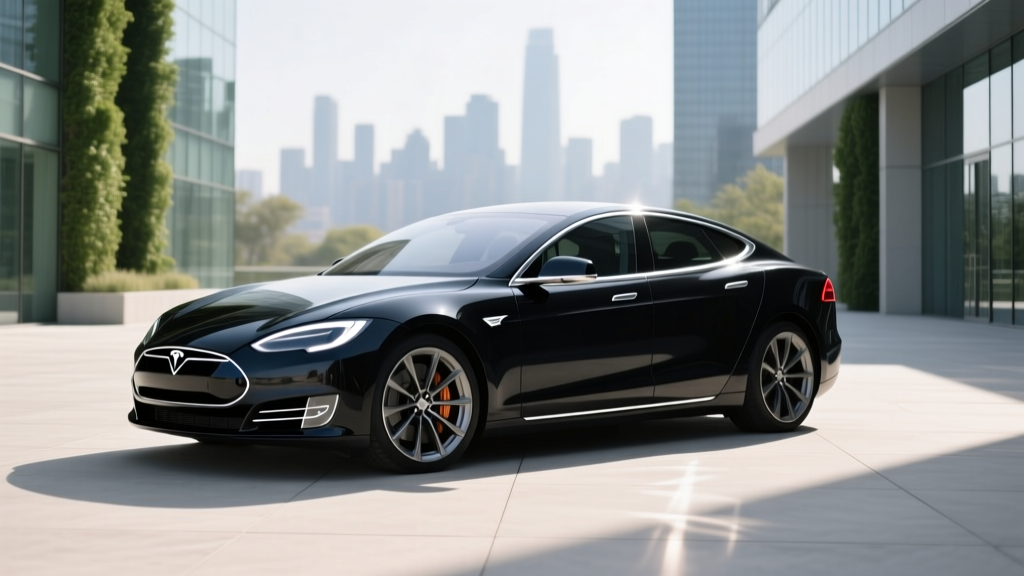
The Tesla Model S has been on sale for over a decade, but its position as a flagship luxury electric sedan still draws scrutiny — especially regarding safety. If you're researching the Tesla Model S safety rating, you'll find a complex picture: stellar crash-test scores from the National Highway Traffic Safety Administration (NHTSA), a more mixed profile from the Insurance Institute for Highway Safety (IIHS), and a continuously evolving suite of active safety technology that Tesla updates over the air.
This review covers everything a 2025 Model S buyer needs to know — crash-test results, real-world range, charging performance, pricing after federal tax credits, and how it compares to rivals like the Lucid Air, BMW i7, and Mercedes-Benz EQS. We'll also separate marketing claims from data so you can decide whether the Model S still earns its premium price.
Tesla Model S Safety Ratings: NHTSA vs. IIHS
The Tesla Model S safety rating varies significantly depending on which testing body you consult. Here's what the latest available data shows:
| Testing Agency | Rating / Score | Key Details |
|---|---|---|
| NHTSA Overall | 5 out of 5 Stars | 5 stars in frontal crash, 5 stars in side crash, 4 stars in rollover |
| IIHS Overall | Not a Top Safety Pick (2024–2025 cycle) | Acceptable in moderate overlap front; Marginal in updated side test; headlight ratings vary by trim |
| Euro NCAP (2023 protocol) | 5 Stars | 88% adult occupant, 85% child occupant, 79% safety assist |
The NHTSA's 5-star rating covers the Model S's structural crashworthiness and is a strong indicator of occupant protection in major collisions. The low center of gravity from the under-floor battery pack contributes to the 4-star rollover rating — excellent for a sedan.
However, the IIHS evaluation tells a more nuanced story. The IIHS updated its side-crash test protocol to use a heavier barrier at higher speed, and the current-generation Model S (refreshed in 2021) scored Marginal in this tougher test. The moderate overlap front test earned an Acceptable rating rather than the top Good mark, largely due to dummy injury measurements in the lower leg and hip region. These results prevent the Model S from earning the IIHS Top Safety Pick designation, which requires Good ratings across most crash tests.
Active Safety and Driver-Assistance Technology
Beyond crash protection, the Model S comes standard with Tesla's Autopilot suite, which includes:
- Automatic Emergency Braking (AEB) — forward and rear
- Lane-Keeping Assist with lane-departure warning
- Adaptive Cruise Control (Traffic-Aware Cruise Control)
- Blind-Spot Monitoring with camera-based visualization on the instrument cluster
- 360-degree camera views replacing traditional ultrasonic parking sensors (Tesla Vision)
The optional Full Self-Driving (Supervised) package ($8,000 as of 2025) adds Navigate on Autopilot (automatic highway interchanges), Auto Lane Change, Autosteer on city streets, and Smart Summon. Despite the name, FSD is an SAE Level 2 driver-assistance system — you must keep your hands on the wheel and eyes on the road at all times. It is not autonomous driving.
In NHTSA's crash-imminent braking tests, the Model S has demonstrated strong AEB performance, with the system engaging at speeds up to 55 mph to mitigate or avoid frontal collisions. However, the removal of ultrasonic sensors in favor of Tesla Vision (camera-only) has drawn criticism from some owners regarding parking-assist precision at very low speeds.
Range, Battery, and Real-World Efficiency
The 2025 Tesla Model S is offered in two trims, both using a 100 kWh (usable ~95 kWh) NMC (nickel-manganese-cobalt) lithium-ion battery pack:
| Specification | Model S Long Range | Model S Plaid |
|---|---|---|
| EPA Range | 402 miles | 396 miles |
| Battery (Usable) | ~95 kWh, NMC | ~95 kWh, NMC |
| Drivetrain | Dual-Motor AWD | Tri-Motor AWD |
| Horsepower | 670 hp | 1,020 hp |
| 0–60 mph | 3.1 seconds | 1.99 seconds |
| Top Speed | 155 mph | 200 mph |
| EPA Efficiency | 124 MPGe (27 kWh/100 mi) | 116 MPGe (29 kWh/100 mi) |
EPA sticker: 402 miles (Long Range). In real-world highway driving at 70–75 mph, expect approximately 320–350 miles before needing to charge. In cold weather (below 32°F), range can drop 15–25%, yielding 280–320 miles on the Long Range trim. City driving with heavy regenerative braking can approach or slightly exceed the EPA figure. These estimates are consistent with independent testing by EV reviewers and fueleconomy.gov data.
The Model S Long Range's 27 kWh per 100 miles is remarkably efficient for a 4,500+ lb luxury sedan. The tri-motor Plaid trades a small amount of efficiency for extraordinary performance — 1,020 hp and a sub-2-second 0–60 time make it one of the quickest production cars ever built.
Charging Performance: DC Fast and Home Level 2
Charging speed is where the Model S shows its age relative to newer 800-volt competitors like the Lucid Air and Hyundai Ioniq 5. The Model S uses a 400-volt architecture, which limits peak DC fast-charging rates.
| Charging Level | Power / Rate | Speed | Notes |
|---|---|---|---|
| Level 1 (120V) | ~1.4 kW | ~3–4 miles per hour | Emergency/trickle only |
| Level 2 (240V, 48A) | 11.5 kW | ~34 miles per hour | Home Wall Connector; full charge in ~9 hours |
| DC Fast Charge (Tesla Supercharger V3) | Peak 250 kW | 10–80% in ~27 minutes | Peak rate not sustained; tapers significantly above 60% SoC |
| DC Fast Charge (CCS adapter) | Peak ~200 kW | 10–80% in ~32 minutes | Via Tesla CCS adapter; rate depends on station |
The Model S can peak at 250 kW on a V3 Supercharger, but the charging curve tapers early. You'll see 250 kW briefly between roughly 10–25% state of charge, then the rate drops to 150 kW, then 100 kW, and finally 50 kW or less above 80%. The 10–80% charge time of approximately 27 minutes is adequate for road trips but trails the Lucid Air (which can add 200 miles in ~12 minutes on 350 kW chargers) and 800V platforms from Hyundai/Kia.
At home, the Tesla Wall Connector at 48 amps delivers 11.5 kW — enough to add roughly 34 miles per hour of charging or fully replenish the battery overnight in about 9 hours. Most owners charge to 80–90% daily, which takes roughly 6–7 hours.
Pricing, Trims, and Federal Tax Credit Eligibility
The 2025 Model S pricing structure is straightforward with two trims:
| Trim | Base MSRP | As-Tested (Typical Options) | Federal Tax Credit (§30D) |
|---|---|---|---|
| Model S Long Range | $79,990 | $82,000–$86,000 | Not eligible (MSRP exceeds $55,000 sedan cap) |
| Model S Plaid | $94,990 | $98,000–$105,000 | Not eligible (MSRP exceeds $55,000 sedan cap) |
Federal tax credit status: The Model S does not qualify for the $7,500 IRS §30D federal EV tax credit. Under current law, sedans must have an MSRP at or below $55,000 to be eligible. Since both Model S trims far exceed this cap, buyers cannot claim the credit regardless of income or battery sourcing. This is a firm rule — there is no workaround for the MSRP cap on new vehicle purchases. (See IRS guidelines on clean vehicle credits.)
However, buyers may still benefit from:
- State-level EV rebates (e.g., California, Colorado, New York — amounts vary by jurisdiction; check your state's energy office)
- Utility company charging incentives (some offer reduced electricity rates or charger rebates)
- Employer EV benefits programs
Optional packages include FSD (Supervised) at $8,000, premium interior colors ($1,500–$2,500), 21-inch Arachnid wheels ($4,500), and a Yoke steering wheel (included on Plaid, optional on Long Range).
Interior, Cargo, and Technology
The refreshed Model S interior is a significant upgrade from the pre-2021 cabin, featuring a 17-inch landscape-oriented touchscreen, a 12.3-inch digital instrument cluster, and a rear 8-inch passenger display. Materials include vegan leather upholstery, aluminum and wood trim, and improved NVH (noise, vibration, harshness) insulation.
| Dimension | Measurement |
|---|---|
| Front Headroom | 39.7 inches |
| Front Legroom | 42.7 inches |
| Rear Headroom | 38.1 inches |
| Rear Legroom | 35.4 inches |
| Cargo (Trunk) | 26.3 cu ft |
| Cargo (Frunk) | 3.1 cu ft |
| Total Cargo | ~29.4 cu ft (seats up); ~64 cu ft (rear seats folded) |
The hatchback-style liftback gives the Model S a practicality advantage over traditional luxury sedans like the BMW i7 or Mercedes EQS. The 26.3 cu ft trunk easily swallows luggage for four on a road trip, and the 3.1 cu ft frunk handles charging cables or a small bag.
Tech highlights include:
- Over-the-air (OTA) software updates that regularly add features
- Built-in gaming (Steam integration for backseat passengers)
- 22-speaker, 960-watt audio system
- HEPA air filtration with Bioweapon Defense Mode
- Sentry Mode (360° camera recording when parked)
- Dog Mode and Camp Mode for climate control while stationary
Notable drawbacks include the absence of Apple CarPlay and Android Auto (Tesla relies entirely on its proprietary infotainment), the Yoke steering wheel's learning curve for low-speed maneuvers, and the camera-only Tesla Vision system that some owners find less reliable than ultrasonic sensors in heavy rain or low-light parking scenarios.
Warranty and Long-Term Ownership
Tesla's warranty coverage for the Model S:
- Basic Vehicle: 4 years / 50,000 miles
- Battery & Drive Unit: 8 years / 150,000 miles (Long Range) with minimum 70% capacity retention
- Battery & Drive Unit (Plaid): 8 years / 150,000 miles with minimum 70% capacity retention
The 8-year/150,000-mile battery warranty is competitive within the luxury EV segment. Tesla guarantees the battery will retain at least 70% of its original capacity during the warranty period. Real-world degradation data from Tesla's fleet suggests most Model S batteries retain 85–90% capacity after 100,000 miles, though individual results depend on charging habits (frequent DC fast charging and charging to 100% regularly can accelerate degradation).
Insurance costs for the Model S tend to run higher than the luxury sedan average — expect annual premiums in the $3,500–$5,500 range depending on your state, driving record, and coverage level. Get personalized quotes before committing to a purchase.
Who the Model S Is For — and Who Should Look Elsewhere
- You want the most range of any Tesla sedan (402 mi EPA) with access to the Supercharger network
- Performance matters — the Plaid's 1.99-second 0–60 is unmatched at this price
- You value OTA updates, a minimalist tech-forward cabin, and hatchback practicality
- You regularly road-trip and want proven long-distance EV infrastructure
- You need IIHS Top Safety Pick+ credentials (consider the Lucid Air or Genesis Electrified G80)
- Federal tax credit eligibility is a priority — no Model S trim qualifies
- You prefer Apple CarPlay/Android Auto integration
- Faster DC charging is critical (800V platforms like the Lucid Air or Porsche Taycan charge significantly faster)
Model S vs. Key Competitors
| Spec | Tesla Model S LR | Lucid Air Pure | BMW i7 xDrive50 | Mercedes EQS 450+ |
|---|---|---|---|---|
| EPA Range | 402 mi | 419 mi | 318 mi | 350 mi |
| Price (MSRP) | $79,990 | $69,900 | $105,700 | $104,400 |
| Peak DC Charge | 250 kW | 300 kW | 195 kW | 200 kW |
| 0–60 mph | 3.1 sec | 5.0 sec | 4.5 sec | 5.9 sec |
| NHTSA Rating | 5 stars | Not yet rated | Not yet rated | 5 stars |
| Tax Credit | No | No (MSRP cap) | No (MSRP cap) | No (MSRP cap) |
The Lucid Air Pure undercuts the Model S on price while offering more range and faster charging, though Tesla's Supercharger network and software ecosystem remain advantages. The BMW i7 and Mercedes EQS offer more traditional luxury interiors and dealer service networks but sacrifice range and performance.
Frequently Asked Questions
What is the real-world range of the Tesla Model S?
The Long Range trim has an EPA rating of 402 miles. In real-world highway driving at 70–75 mph, expect 320–350 miles. Cold weather (below freezing) can reduce range by 15–25%, yielding 280–320 miles. City driving with regenerative braking can approach the EPA figure.
How fast does the Model S charge at home and on the road?
At home on a Level 2 Tesla Wall Connector (48A, 11.5 kW), you'll add about 34 miles per hour, with a full charge taking roughly 9 hours. On a V3 Supercharger (250 kW peak), a 10–80% charge takes approximately 27 minutes, though the rate tapers significantly above 60% state of charge.
Does the Tesla Model S qualify for the federal EV tax credit?
No. Under IRS §30D rules, sedans must have an MSRP of $55,000 or less to qualify for the $7,500 federal tax credit. Both Model S trims ($79,990 and $94,990) exceed this cap, making them ineligible regardless of buyer income or battery sourcing. Check your state for additional incentives.
Is the Tesla Model S safe in a crash?
NHTSA gives the Model S a 5-star overall rating, indicating excellent crash protection. However, the IIHS has not awarded it Top Safety Pick status due to Marginal scores in the updated side-crash test and Acceptable (not Good) scores in the moderate overlap front test. The low battery placement provides strong rollover resistance.
Is the Model S worth buying over competitors in 2025?
It depends on priorities. The Model S excels in range, performance (especially the Plaid), Supercharger access, and software. It falls short on IIHS safety scores, DC charging speed versus 800V rivals, and tax credit eligibility. If NHTSA 5-star safety and Tesla's ecosystem are your top priorities, it's a strong choice. If IIHS ratings and faster charging matter more, consider the Lucid Air.
What is the battery warranty on the Model S?
Tesla covers the battery and drive unit for 8 years or 150,000 miles, whichever comes first, with a guaranteed minimum of 70% capacity retention. Real-world data suggests most Model S batteries retain 85–90% capacity at 100,000 miles with proper charging habits.
- 402-mile EPA range (Long Range) — among the longest of any EV sedan
- NHTSA 5-star overall safety rating
- Extraordinary performance: Plaid does 0–60 in 1.99 seconds
- Access to Tesla's extensive Supercharger network
- OTA software updates continuously add features
- Hatchback liftback offers more cargo space than traditional luxury sedans
- 8-year/150,000-mile battery warranty
- IIHS scores prevent Top Safety Pick designation (Marginal side-crash result)
- No federal tax credit eligibility (MSRP exceeds $55,000 sedan cap)
- DC charging speed trails 800V competitors (250 kW peak vs. 350 kW for Lucid)
- No Apple CarPlay or Android Auto
- Tesla Vision (camera-only) parking assist less reliable in adverse conditions
- Insurance premiums run higher than segment average
- Yoke steering wheel divisive for daily driving