Tesla Model S Safety Rating: What the Crash Tests Actually Show
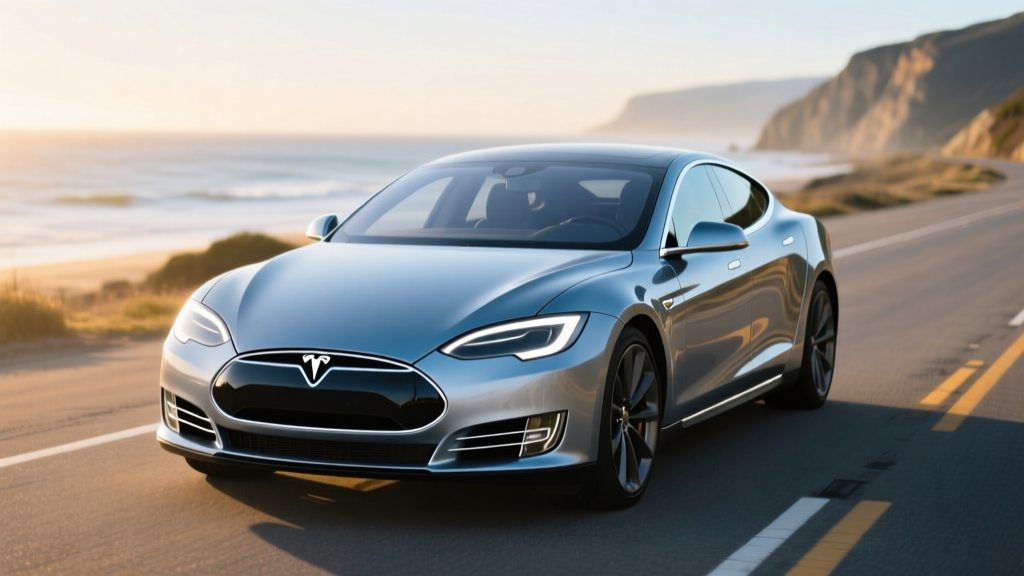
If you are researching the safety rating Tesla Model S scores across federal and independent testing, the short answer is that the sedan remains one of the safest vehicles Tesla has ever built — but the details matter. The National Highway Traffic Safety Administration (NHTSA) has historically awarded the Model S a 5-Star Overall safety rating across multiple model years, with top marks in frontal crash, side crash, and rollover resistance. That 5-Star designation is the highest NHTSA offers and reflects the structural advantages of a skateboard battery platform that places mass low and creates a massive front crumple zone where an engine block would otherwise sit.
The Insurance Institute for Highway Safety (IIHS) has tested the current-generation Model S (post-2021 refresh) with generally strong results, though IIHS test protocols evolve annually and buyers should verify the latest model-year scorecard directly on their site. Tesla's active safety suite — standard on every Model S — includes automatic emergency braking, lane-departure warning, blind-spot monitoring, and side-collision warning. These systems have contributed to strong crash-avoidance scores.
Range, Battery, and Efficiency: Real Numbers Beyond the Sticker
The 2025/2026 Tesla Model S Long Range pairs a ~100 kWh usable battery pack (NMC chemistry — nickel manganese cobalt, chosen for its higher energy density versus LFP) with a dual-motor all-wheel-drive powertrain. The result is one of the longest EPA range figures of any production sedan on the market.
EPA Estimated Range: 402 miles (Long Range AWD)
Real-World Highway (70-75 mph): Expect ~320–350 miles in mild weather
Cold-Weather Highway (below 30°F): Expect ~260–300 miles due to battery resistance and cabin heating loads
City / Moderate Climate: Closely matches or slightly exceeds EPA thanks to regenerative braking
Efficiency on the EPA cycle lands around 124 MPGe combined, or roughly 27 kWh per 100 miles — impressive for a 4,500+ lb luxury sedan. On the highway, expect that figure to climb to 30–33 kWh/100mi at sustained 75 mph speeds, which is the primary reason real-world highway range falls short of the sticker.
| Spec | Long Range AWD | Plaid (Tri-Motor AWD) |
|---|---|---|
| EPA Range | 402 mi | 396 mi |
| Battery (usable) | ~100 kWh, NMC | ~100 kWh, NMC |
| Peak DC Charge Rate | 250 kW | 250 kW |
| 10–80% DC Charge | ~30 min | ~30 min |
| Level 2 Home Charging | 11.5 kW (~41 mi/hr) | 11.5 kW (~41 mi/hr) |
| 0–60 mph | 3.1 sec | 1.99 sec |
| Horsepower | 670 hp | 1,020 hp |
| Drivetrain | Dual-Motor AWD | Tri-Motor AWD |
| MPGe (combined) | 124 MPGe | 116 MPGe |
| Base MSRP | $79,990 | $94,990 |
Charging Speed: DC Fast Charging and Home Setup
The Model S supports a peak DC fast-charge rate of 250 kW on Tesla's V3 Supercharger network and compatible CCS stations via the built-in NACS (North American Charging Standard) port. In practice, you will see the charge curve peak near 250 kW between roughly 10–30% State of Charge, then taper progressively. The 10–80% charge takes approximately 30 minutes under ideal conditions (battery preconditioned, warm ambient temperature, V3 or equivalent charger).
Above 80% SoC, charging slows dramatically — this is normal lithium-ion behavior to protect cell longevity. Plan to charge to 80% on road trips and only top off higher if your next stop requires it.
| Level | Power (kW) | Miles of Range Added | Typical Use Case |
|---|---|---|---|
| Level 1 (120V) | ~1.4 kW | ~3–5 mi/hr | Emergency / overnight trickle |
| Level 2 (240V, 48A) | 11.5 kW | ~41 mi/hr | Home daily charging |
| DC Fast (V3 Supercharger) | Peak 250 kW | ~200 mi in 15 min | Road trips |
For home Level 2 charging, the Model S accepts up to 11.5 kW on a 60-amp circuit (48 amps continuous). A full overnight charge from 20% to 80% takes roughly 5–6 hours — easily enough to wake up with a full battery every morning. Tesla's Wall Connector costs approximately $475 for the unit; professional installation on a 240V/60A circuit typically runs $500–$2,000 depending on panel proximity and local permitting.
Interior, Cargo, and Technology
The refreshed Model S interior features a 17-inch center touchscreen, a 12.3-inch driver instrument cluster, and a rear-seat 8-inch touchscreen for climate and entertainment. The yoke steering wheel remains available (a round wheel is now standard again as well). Build quality on post-2023 models has improved noticeably over earlier production years, though panel gaps and trim alignment still draw occasional owner complaints compared to legacy luxury competitors like the Mercedes EQS or BMW i7.
Passenger space: Front legroom measures 42.7 inches; rear legroom comes in at 35.4 inches. The rear seat is comfortable for two adults on longer trips but the center position is best reserved for a child seat. Headroom is generous front and rear thanks to the absence of a transmission tunnel.
Cargo volume: 28 cubic feet behind the rear seats (including the front trunk/frunk). With the rear seats folded, that expands to approximately 64.9 cu ft. The frunk alone provides roughly 5.3 cu ft — enough for a carry-on bag or charging cables. This is genuinely practical for a sedan and a meaningful advantage over competitors without front trunks.
Standout tech: Tesla's infotainment remains among the most responsive in the industry, with over-the-air updates, built-in navigation with real-time Supercharger routing, Spotify/Tidal/Apple Music integration, and a HEPA air filtration system with "Bioweapon Defense Mode." The available Full Self-Driving (Supervised) package costs an additional $8,000 (or $99/month subscription) and provides automated lane changes, traffic-light recognition, and city-street navigation — but again, this is a Level 2 system requiring constant driver supervision.
Pricing, Tax Credits, and Total Cost
The 2025/2026 Tesla Model S starts at $79,990 for the Long Range AWD and $94,990 for the Plaid tri-motor, both before destination fees and options. Here is where the tax-credit conversation gets important for buyers.
MSRP Cap: Sedans must be under $55,000 MSRP to qualify. The Model S at $79,990+ exceeds this cap and does NOT qualify for the $7,500 federal new-EV tax credit.
Buyer Income Cap: Even for eligible vehicles, AGI limits apply ($150K single / $300K joint).
Battery Sourcing: Separate critical-mineral and battery-component rules apply to qualifying vehicles.
Bottom Line: Model S buyers should NOT factor the federal credit into their purchase math. State incentives may apply — check your state's energy office or IRS §30D guidance for current rules.
Without the federal credit, the Model S Long Range at ~$80K competes directly with the Lucid Air Pure ($69,900, 419 mi EPA range) and the Mercedes EQS 450+ ($104,400, 390 mi range). The Lucid undercuts on price and matches on range; the Mercedes wins on interior luxury. The Model S occupies a middle ground with the strongest Supercharger network access and the quickest over-the-air feature pipeline.
| Trim | Base MSRP | Federal Credit | Effective Price |
|---|---|---|---|
| Long Range AWD | $79,990 | $0 (over MSRP cap) | $79,990 |
| Plaid Tri-Motor | $94,990 | $0 (over MSRP cap) | $94,990 |
| + FSD Package | +$8,000 | N/A | Varies |
Warranty and Long-Term Ownership
Tesla covers the Model S with a 4-year/50,000-mile basic vehicle warranty and an 8-year/150,000-mile battery and drive-unit warranty. The battery warranty guarantees retention of at least 70% of original capacity during the coverage period. If your pack degrades below that threshold, Tesla will repair or replace it at no cost.
Real-world degradation data from high-mileage Model S owners suggests NMC packs in this platform typically lose 8–12% capacity over the first 100,000 miles, with the curve flattening significantly after year three. Daily charging to 80% (rather than 100%), using preconditioning for fast charging, and avoiding prolonged storage at very low or very high SoC will help preserve long-term State of Health.
Insurance costs for the Model S tend to run 20–35% higher than comparably priced gasoline luxury sedans, reflecting repair costs for aluminum body panels and battery-adjacent collision damage. Get quotes before ordering — premiums vary widely by state, driver profile, and insurer.
Pros, Cons, and Who Should Buy the Model S
- 402-mile EPA range — among the longest of any EV sedan
- Supercharger network access (most reliable DC network in the US)
- 5-Star NHTSA safety rating
- Massive frunk + trunk cargo versatility
- Quick 250 kW DC charging, 30 min 10–80%
- Over-the-air updates continuously add features
- No federal tax credit (MSRP exceeds $55K sedan cap)
- Plaid performance comes at a $15K premium over Long Range
- Rear-seat comfort trails Mercedes EQS and Lucid Air
- Insurance premiums significantly above class average
- Yoke steering is not for everyone (round wheel now standard)
- Build quality improved but still inconsistent vs. legacy luxury
Who the Model S suits best: Tech-forward professionals and frequent road-trippers who value Supercharger network reliability and long single-charge range above traditional luxury interior materials. It is an excellent commuter car for high-mileage drivers (50+ miles/day round trip) who can charge at home overnight. Families with older children will find the rear seat adequate; those with rear-facing car seats may find the space tighter than an SUV alternative like the Model X or Rivian R1S.
Who should look elsewhere: Buyers whose budget depends on the $7,500 federal credit should look at the Tesla Model 3, Hyundai Ioniq 6, or Chevrolet Equinox EV. Those prioritizing rear-seat luxury and ride refinement over performance and range should test-drive the Lucid Air and Mercedes EQS before committing.
Frequently Asked Questions
What safety rating does the Tesla Model S have?
NHTSA has awarded the Model S a 5-Star Overall safety rating — the highest possible. This includes 5 stars in frontal crash, side crash, and rollover categories. IIHS scores vary by model year and test protocol; check IIHS.org for the current-year scorecard.
What is the real-world range of the Tesla Model S?
The EPA rates the Long Range AWD at 402 miles. In real-world highway driving at 70–75 mph in moderate temperatures, expect 320–350 miles. In cold weather (below 30°F), highway range drops to approximately 260–300 miles due to increased battery resistance and cabin heating demand.
How fast does the Model S charge at home and on the road?
On DC fast charging, the Model S peaks at 250 kW and charges from 10–80% in approximately 30 minutes. At home on a Level 2 (240V/48A) charger, it adds roughly 41 miles of range per hour at 11.5 kW, fully replenishing overnight.
Does the Tesla Model S qualify for the federal EV tax credit?
No. The federal §30D new-EV credit caps sedan MSRPs at $55,000. The Model S starts at $79,990 and is therefore ineligible. State-level incentives may still apply depending on your jurisdiction. Consult IRS guidance and a tax professional for your specific situation.
Is the Model S worth buying over the Lucid Air or Mercedes EQS?
Choose the Model S if Supercharger network access, proven over-the-air software, and the longest track record matter most. Choose the Lucid Air if you want equal or better range at a lower price point with a more spacious rear seat. Choose the Mercedes EQS if interior luxury, ride comfort, and dealer service infrastructure are your top priorities.
How long will the Model S battery last?
Tesla warranties the battery for 8 years or 150,000 miles (whichever comes first) with a 70% capacity-retention guarantee. Real-world data from high-mileage owners suggests 8–12% degradation over 100,000 miles is typical for the NMC pack, with many units lasting well beyond 200,000 miles before approaching the warranty threshold.