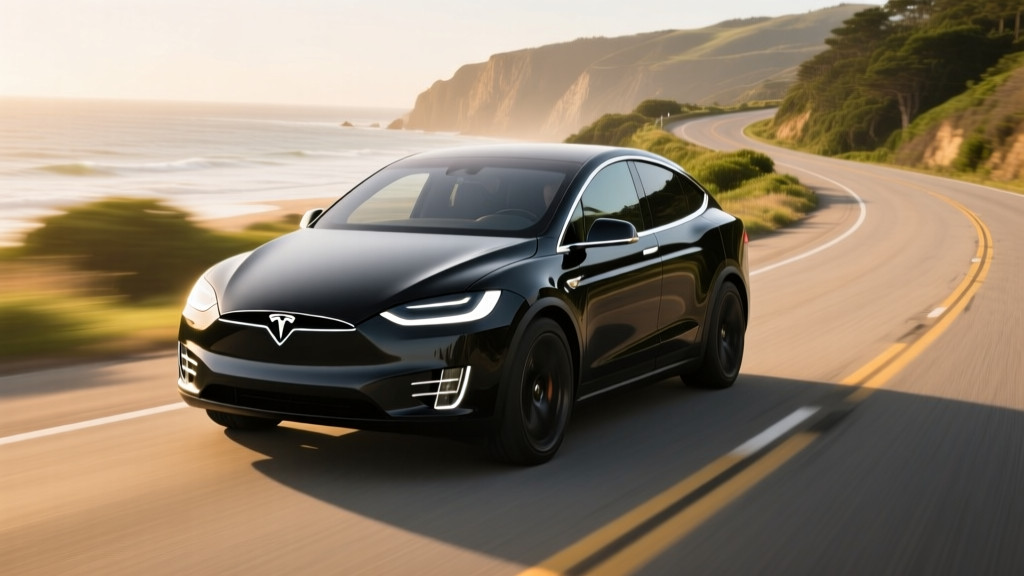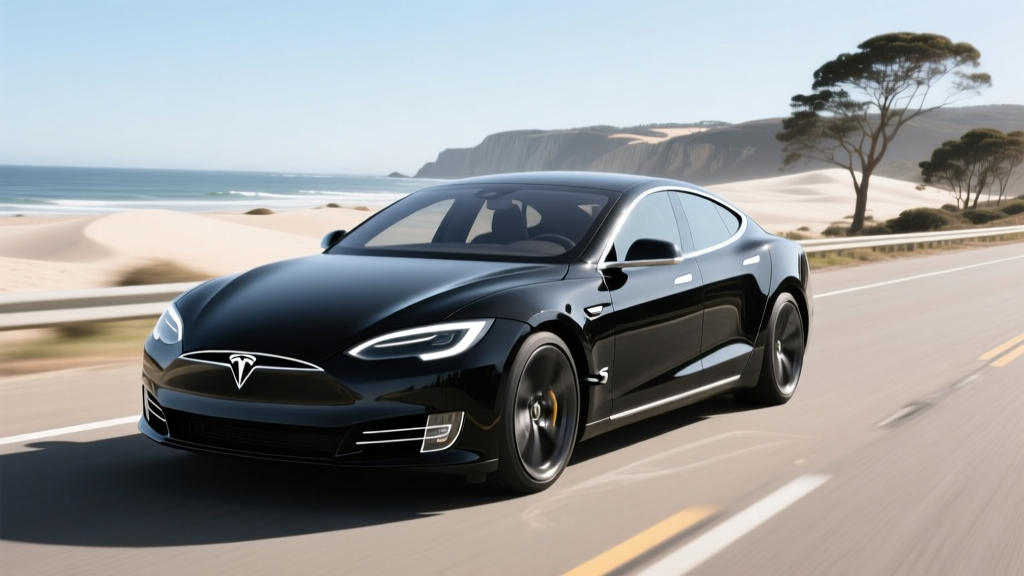
The Tesla Model S has been the benchmark luxury electric sedan for over a decade, and the 2026 model year continues to refine the formula. While competitors like the Lucid Air, BMW i7, and Mercedes EQS have closed the gap in interior refinement and ride quality, the Model S remains compelling for its combination of range, Supercharger network access, and software-driven innovation. And yes — those flush, Tesla style retractable door handles that auto-present as you approach are still one of the most recognizable design signatures in the EV world.
This review covers the 2026 Tesla Model S Long Range and Plaid trims with exact EPA data, real-world range expectations, charging curves, tax-credit eligibility, and the ownership practicalities that spec sheets don't tell you.
Quick Verdict: Who the 2026 Model S Is For
The Model S Long Range is best suited for high-mileage commuters and road-trippers who prioritize range and charging infrastructure over interior opulence. The Plaid variant targets performance enthusiasts who want supercar acceleration in a four-door package. Neither trim is ideal for buyers who value traditional luxury materials, physical controls, or rear-seat entertainment — the Lucid Air and BMW i7 win those comparisons.
Choose the Model S if: You want maximum EPA range in a sedan, access to the Supercharger network, and over-the-air updates that add features post-purchase.
Look elsewhere if: Interior material quality is a priority, you need a spacious rear seat for adults on long trips, or you prefer physical buttons for climate and audio controls.
Range, Efficiency, and Real-World Expectations
The 2026 Tesla Model S Long Range carries an EPA-estimated 402 miles of range, while the tri-motor Plaid is rated at 396 miles. Both use a ~100 kWh (usable) NMC (nickel-manganese-cobalt) battery pack with Tesla's structural battery architecture.
EPA Estimate vs. Real-World Range
Model S Long Range: EPA 402 mi. Expect ~340–360 mi on sustained highway driving at 70+ mph. In freezing temperatures (below 32°F), range can drop 20–30%, yielding roughly 280–320 mi. City driving with regenerative braking recovers closer to the EPA sticker.
Model S Plaid: EPA 396 mi. Highway real-world: ~330–350 mi. Cold weather: ~270–315 mi. The tri-motor drivetrain draws more energy under hard acceleration.
Efficiency for the Long Range is rated at 120 MPGe combined (28 kWh/100 mi), which is competitive for a large sedan but trails the Lucid Air Grand Touring's 131 MPGe. The Plaid dips to 116 MPGe combined (29 kWh/100 mi).
Charging Speed: DC Fast, Level 2, and the Supercharger Advantage
The Model S supports a peak DC fast-charge rate of 250 kW on V3 Superchargers and compatible CCS/NACS stations. Tesla's NACS connector is now the industry standard, and the Model S uses it natively — no adapter needed at Superchargers.
| Charging Level | Power / Rate | Time / Miles Added |
|---|---|---|
| DC Fast (V3 Supercharger, peak) | 250 kW | 10–80% in ~25 min; adds ~200 mi in 15 min |
| DC Fast (sustained avg 10–80%) | ~170 kW avg | Charge curve tapers above 55% SoC |
| Level 2 (Tesla Wall Connector, 48A) | 11.5 kW | ~44 mi/hr of charging |
| Level 2 (32A portable/mobile) | 7.7 kW | ~30 mi/hr of charging |
| Level 1 (120V household) | ~1.4 kW | ~5 mi/hr — emergency use only |
Charging-curve reality check: The 250 kW peak is only sustained from roughly 10–30% State of Charge. From 50–80%, the rate tapers to ~100–120 kW. This means the advertised "200 miles in 15 minutes" is achievable only when arriving at a low SoC. Plan road-trip stops accordingly — arriving at 15% SoC and charging to 65% is faster than arriving at 40% and charging to 80%.
For home charging, Tesla's Gen 3 Wall Connector at 48 amps on a 60A circuit delivers a full overnight charge for most commutes. Expect a professional installation cost of $500–$1,500 depending on panel proximity, plus potential panel-upgrade costs of $1,500–$3,000 if your home has a 100A service.
Performance: Long Range vs. Plaid
| Spec | Model S Long Range | Model S Plaid |
|---|---|---|
| Drivetrain | Dual-Motor AWD | Tri-Motor AWD |
| Horsepower | 670 hp | 1,020 hp |
| 0–60 mph | 3.1 seconds | 1.99 seconds |
| Top Speed | 155 mph | 200 mph |
| EPA Range | 402 mi | 396 mi |
| Battery (usable) | ~100 kWh, NMC | ~100 kWh, NMC |
| Efficiency | 120 MPGe / 28 kWh/100mi | 116 MPGe / 29 kWh/100mi |
| Curb Weight | ~4,561 lbs | ~4,766 lbs |
The Long Range's 3.1-second 0–60 time already outpaces most sports cars. The Plaid's 1.99-second claim (with rollout subtracted) is legitimately supercar territory — in real-world testing by multiple outlets, it consistently hits 2.1–2.3 seconds, which is still astonishing for a four-door sedan carrying five passengers.
Both trims feature adaptive air suspension that adjusts ride height based on speed and GPS-remembered locations (useful for driveways and speed bumps). The Plaid adds carbon-sleeved rotors and track-oriented cooling for sustained high-speed runs.
Interior, Tech, and Those Retractable Door Handles
The Model S interior is minimalist by design — a 17-inch center touchscreen handles virtually all vehicle functions, from climate control to glove-box release. A secondary 8-inch rear touchscreen provides rear passengers with climate and media controls. The 12.2-inch digital instrument cluster behind the yoke (or optional round steering wheel) shows speed, range, and navigation.
The Tesla style retractable door handles are auto-presenting: they extend electronically when the key fob or phone key is detected within range, then retract flush after closing. This isn't purely aesthetic — flush handles reduce aerodynamic drag, contributing incrementally to the Model S's 0.208 Cd drag coefficient, one of the lowest of any production sedan. In practice, the handles are reliable, though occasional reports of a handle failing to present in extreme cold (below 0°F) have surfaced in owner forums. Tesla has issued service bulletins addressing this in prior model years.
Cargo space: The Model S offers 25.0 cu ft of rear trunk volume (with a wide hatch opening) plus a 3.1 cu ft frunk. Total cargo capacity with rear seats folded is approximately 54 cu ft. Rear legroom measures 35.4 inches — adequate for adults on short trips but tighter than the Lucid Air (37.2 in) or BMW i7 (40.3 in).
Driver assistance: The Model S includes Tesla's Basic Autopilot (lane-keeping, adaptive cruise, traffic-aware features) as standard. Full Self-Driving (Supervised) is a $8,000 add-on or $99/month subscription. Per NHTSA's SAE framework, FSD Supervised is a Level 2 system — the driver must remain engaged, hands on the wheel, and eyes on the road at all times. It is not autonomous driving.
ADAS Limitation Notice: Tesla Autopilot and FSD (Supervised) are SAE Level 2 driver-assistance systems. They do NOT make the vehicle self-driving. The driver is legally and operationally responsible for the vehicle at all times. Autosteer disengages in construction zones, faded lane markings, and certain weather conditions.
Pricing, Trims, and Federal Tax Credit Eligibility
| Trim | Base MSRP | Destination | Est. §30D Credit | Effective Price* |
|---|---|---|---|---|
| Model S Long Range | $74,990 | $1,990 | $0 (MSRP cap) | $76,980 |
| Model S Plaid | $89,990 | $1,990 | $0 (MSRP cap) | $91,980 |
*Effective price before state/local incentives, after estimated federal credit. See caveats below.
Tax credit reality for the Model S: Under IRS §30D rules, the federal EV tax credit has an MSRP cap of $55,000 for sedans (source: IRS.gov). Both Model S trims exceed this cap, meaning the Model S does not qualify for the $7,500 federal tax credit. Additionally, buyer income caps ($150,000 single / $300,000 joint MAGI) and battery critical-mineral sourcing requirements apply to eligible vehicles — but the MSRP cap alone disqualifies the Model S regardless of buyer income.
State incentives may partially offset cost. California's CVRP was restructured in 2024, and state-level rebates vary widely — check your state's energy office for current programs.
Warranty and Long-Term Ownership
Tesla provides a 4-year/50,000-mile basic vehicle warranty and an 8-year/150,000-mile battery and drive unit warranty for the Model S (Long Range). The Plaid carries the same 8-year battery warranty but with a 150,000-mile limit. The warranty guarantees the battery will retain at least 70% of its original capacity during the coverage period.
Based on long-term fleet data from sources like Recurrent Auto, Tesla's NMC packs in the Model S typically show 8–12% degradation over the first 100,000 miles, with the curve flattening significantly afterward. A full battery replacement out of warranty costs approximately $12,000–$20,000 depending on pack configuration and labor — though replacements at this mileage are uncommon.
Pros, Cons, and Competitor Comparison
Pros
- Class-leading 402-mile EPA range (Long Range)
- Access to Tesla Supercharger network (17,000+ U.S. stations)
- Tri-motor Plaid offers supercar-level acceleration
- Over-the-air updates continuously add features
- Strong resale value relative to luxury EV peers
- Aero-efficient retractable door handles and 0.208 Cd drag coefficient
Cons
- No federal tax credit eligibility (MSRP exceeds $55K sedan cap)
- Interior materials don't match Lucid Air or BMW i7 at this price
- Rear seat legroom (35.4 in) is tight for the segment
- Yoke steering wheel is polarizing; round wheel availability varies
- All climate/media controls require touchscreen interaction
- Peak 250 kW DC charging trails Lucid Air's 300+ kW capability
Model S vs. Lucid Air Grand Touring: The Air offers more range (516 mi EPA), a more luxurious interior, and faster peak charging — but at a higher starting price (~$109,900) and with a smaller service-center footprint.
Model S vs. BMW i7 eDrive50: The i7 wins on rear-seat comfort, ride quality, and material quality, but its 318-mile EPA range and limited DC charging network access (no Superchargers without adapters) are trade-offs.
Frequently Asked Questions
What is the real-world range of the 2026 Tesla Model S?
The Long Range achieves 402 miles EPA, but expect 340–360 miles on highway trips at 70+ mph and 280–320 miles in freezing temperatures. The Plaid delivers similar but slightly lower real-world figures due to its tri-motor power draw.
How fast does the Model S charge at home and on the road?
On a V3 Supercharger, it peaks at 250 kW, reaching 10–80% in approximately 25 minutes. At home with a 48A Tesla Wall Connector (11.5 kW), expect ~44 miles of range per hour of charging — a full charge in about 9–10 hours.
Does the Tesla Model S qualify for the $7,500 federal EV tax credit?
No. The IRS §30D credit caps eligible sedans at $55,000 MSRP. The Model S starts at $74,990, disqualifying both trims regardless of buyer income. State and local incentives may still apply — consult your state energy office and a tax professional.
How do the Tesla style retractable door handles work in winter?
The auto-present handles extend when the key fob or phone key is detected. In extreme cold (below 0°F), there have been isolated reports of handles being slow to present or requiring a manual push to initiate. Tesla's preconditioning feature (via the app) warms the vehicle before entry and mitigates most cold-weather issues.
Is the Model S worth buying over the Lucid Air or BMW i7?
If range, Supercharger access, and software features are your priorities, the Model S Long Range remains excellent. If interior luxury and rear-seat space matter more, the Lucid Air and BMW i7 are stronger choices — though both cost more and lack the Supercharger network advantage.
What is the battery warranty and expected lifespan?
Tesla covers the battery for 8 years or 150,000 miles, guaranteeing at least 70% capacity retention. Real-world data suggests 8–12% degradation over 100,000 miles, with many packs lasting well beyond 200,000 miles before approaching the 70% threshold.