Tesla Model S Reliability: What the Data Actually Shows
The Tesla Model S has been on sale for over a decade, which means we finally have long-term ownership data to evaluate — not just early-adopter anecdotes. For buyers researching Tesla Model S reliability in 2026, the picture is nuanced: the powertrain and battery have proven durable over high mileage, but build quality, suspension components, and interior materials remain common pain points that affect the ownership experience.
This review examines the 2026 Tesla Model S through the lens of reliability, efficiency, and total cost of ownership — with exact figures for range, charging, pricing, and warranty coverage. Whether you're cross-shopping the Model S against the Lucid Air, Mercedes EQS, or BMW i7, the data below will frame your decision.
2026 Tesla Model S Specifications at a Glance
| Specification | Long Range (Dual Motor AWD) | Plaid (Tri-Motor AWD) |
|---|---|---|
| EPA Range | 402 miles | 359 miles |
| Battery Capacity (usable) | ~95 kWh (NMC) | ~95 kWh (NMC) |
| Max DC Fast Charge | 250 kW (peak) | 250 kW (peak) |
| 10–80% DC Charge Time | ~30 minutes | ~30 minutes |
| Level 2 Home Charge Rate | 11.5 kW (~44 mi/hr) | 11.5 kW (~44 mi/hr) |
| 0–60 mph | 3.1 seconds | 1.99 seconds |
| Horsepower | 670 hp | 1,020 hp |
| Drivetrain | Dual Motor AWD | Tri-Motor AWD |
| MPGe (combined) | 120 MPGe | 116 MPGe |
| Efficiency | 28 kWh/100 mi | 29 kWh/100 mi |
| Base MSRP | $74,990 | $89,990 |
| Cargo Volume | 28 cu ft (rear) + 3.1 cu ft (frunk) | 28 cu ft (rear) + 3.1 cu ft (frunk) |
| Rear Legroom | 35.4 inches | 35.4 inches |
Source: fueleconomy.gov and Tesla official specifications. Prices reflect 2026 model year MSRP before destination charges.
Real-World Range: Beyond the EPA Sticker
EPA Estimate: 402 miles (Long Range) / 359 miles (Plaid)
Real-World Highway (70 mph, moderate climate): ~320–350 miles (Long Range), ~280–310 miles (Plaid)
Cold Weather (below 32°F): Expect 20–30% reduction — roughly 260–300 miles for Long Range
City/Commuter Driving with Regen: Can approach or slightly exceed EPA estimates
The Model S Long Range's 402-mile EPA rating remains among the highest of any production EV sold in the U.S. But EPA estimates are derived from a mix of city and highway driving cycles at moderate temperatures. In practice, sustained highway driving at 75–80 mph pushes consumption higher due to aerodynamic drag — the Model S's efficiency drops from roughly 28 kWh/100 mi in mixed driving to 32–34 kWh/100 mi at freeway speeds.
Cold weather is the larger reliability concern for range. Nickel-manganese-cobalt (NMC) batteries, which the Model S uses, lose usable capacity in freezing temperatures. Tesla's heat pump and battery preconditioning mitigate this, but owners in northern climates should plan for 260–300 miles of usable range on a full charge in winter. This isn't a defect — it's battery chemistry physics — but it matters for road-trip planning.
The Plaid's lower 359-mile rating reflects its tri-motor powertrain's higher mass and the energy demands of 1,020 hp. Aggressive driving in the Plaid can push consumption well above 35 kWh/100 mi, cutting range to under 250 miles between charges.
Charging Speed and Infrastructure
| Charging Level | Power (kW) | Miles Added per Hour | Notes |
|---|---|---|---|
| Level 1 (120V household) | ~1.4 kW | ~4–5 mi/hr | Emergency/trickle only; ~80+ hours for full charge |
| Level 2 (240V home, 48A) | 11.5 kW | ~44 mi/hr | Full charge in ~9 hours; recommended for daily use |
| DC Fast Charge (Tesla Supercharger V3) | 250 kW (peak) | ~200 mi in 15 min | 10–80% in ~30 min; tapers above 80% |
| DC Fast Charge (V4 Supercharger) | Up to 250 kW | Similar to V3 for Model S | Model S architecture caps at 250 kW; cannot reach V4's 350 kW potential |
The Model S charges at a peak rate of 250 kW on Tesla's V3 and V4 Supercharger network. This is competitive but no longer class-leading — the Hyundai Ioniq 5 and Porsche Taycan can sustain higher charge rates on compatible infrastructure. The Model S's charge curve peaks early (around 15–20% SoC) and tapers progressively, meaning the 10–80% time of approximately 30 minutes is realistic but the final 20% adds significant time.
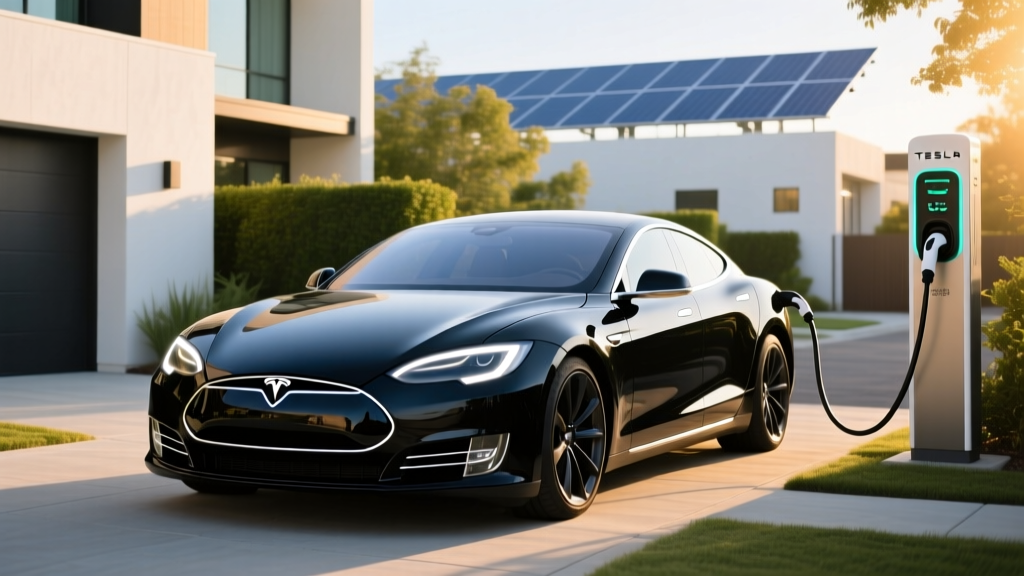
For home charging, the onboard 11.5 kW AC charger is adequate. A Wall Connector on a 60-amp circuit delivers roughly 44 miles of range per hour of charging — enough to replenish a full day's driving overnight. Installation costs for a Level 2 home setup typically range from $800 to $2,500 depending on panel capacity and conduit run length. Homes with 100-amp electrical panels may require a $1,500–$3,000 panel upgrade to support a 48-amp charger.
One reliability advantage: Tesla's proprietary NACS connector and Supercharger network consistently deliver higher uptime than third-party CCS networks. Tesla reports Supercharger availability above 99.5%, which matters for long-distance reliability.
Battery Longevity and Powertrain Reliability
The most common question from prospective Model S buyers is whether the battery will last. Data from Tesla's fleet and third-party tracking (including long-term owner logs) shows that NMC batteries in the Model S typically retain 88–92% of original capacity after 100,000 miles. Degradation is front-loaded — expect a 3–5% loss in the first 20,000 miles, followed by a slow linear decline.
Tesla's battery warranty covers 8 years or 150,000 miles (whichever comes first) with a minimum 70% capacity retention threshold. This is one of the more generous warranties in the segment. The drive unit warranty is also 8 years/150,000 miles.
Where Model S reliability falters is in non-powertrain components:
- Air suspension: Earlier model years had frequent air strut failures. Tesla has revised the design, but 80,000+ mile cars may still require strut replacement at $1,200–$2,000 per corner.
- Door handles and window regulators: Flush door handles have been a recurring issue across model years, with motors failing in cold weather or after repeated use.
- Touchscreen and MCU: The 17-inch center display is the car's sole interface. MCU (Media Control Unit) failures, while less common in the current-generation AMD Ryzen-based hardware, are expensive to replace out of warranty ($2,000–$3,000).
- Panel gaps and paint quality: Tesla's Fremont factory build quality has improved but still lags German competitors. Misaligned panels and paint chips are common complaints.
The drive motors themselves — permanent magnet synchronous on the rear, induction on the front (Long Range) — have proven highly durable. Motor replacements under 100,000 miles are rare.
Pricing, Tax Credits, and Total Cost
| Trim | Base MSRP | As-Tested (typical options) | §30D Federal Tax Credit | Effective Price |
|---|---|---|---|---|
| Long Range | $74,990 | $78,000–$82,000 | Not eligible (MSRP exceeds $55,000 sedan cap) | $74,990+ |
| Plaid | $89,990 | $93,000–$100,000 | Not eligible (MSRP exceeds $55,000 sedan cap) | $89,990+ |
This is a critical point for buyers: the 2026 Tesla Model S does not qualify for the $7,500 federal EV tax credit under IRS §30D rules. The credit has an MSRP cap of $55,000 for sedans (and $80,000 for SUVs, trucks, and vans). Since the Model S is classified as a sedan and starts at $74,990, it exceeds the threshold at every trim level.
Additionally, §30D imposes buyer income caps ($150,000 single / $300,000 joint AGI) and battery critical-mineral sourcing requirements — but these are moot here because the MSRP cap alone disqualifies the vehicle.
For the 5-year total cost of ownership, the Model S benefits from lower fueling costs (electricity at $0.13–$0.18/kWh nationally vs. premium gasoline at $3.80–$4.50/gallon) and minimal scheduled maintenance (no oil changes, fewer brake replacements due to regen). However, insurance premiums for the Model S run 30–50% higher than comparable ICE sedans, and out-of-warranty repairs can be costly. Expect $0.06–$0.08 per mile in electricity costs vs. $0.14–$0.18 per mile for a BMW 5 Series on premium fuel.
Tech, Driver Assistance, and Interior
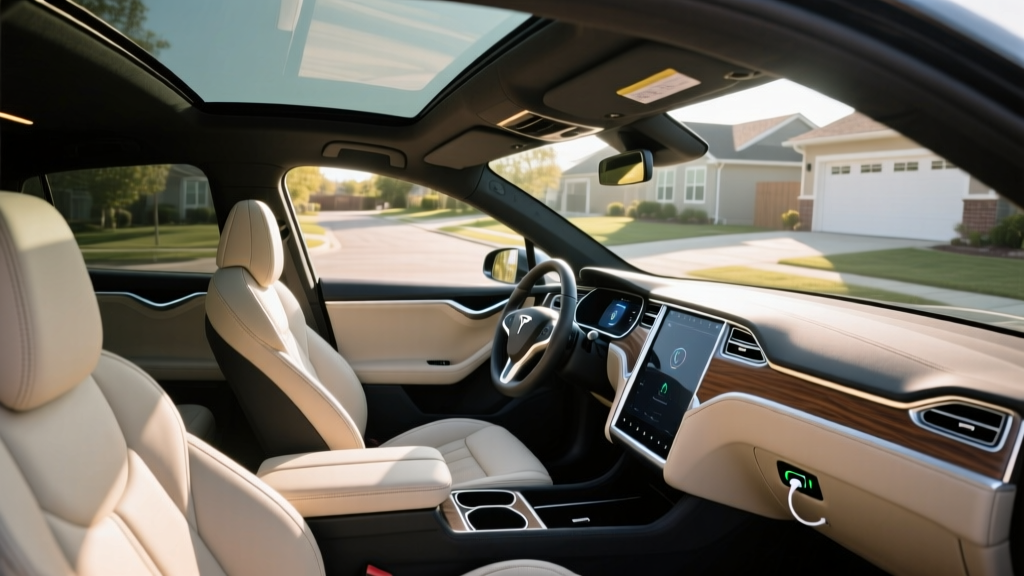
The Model S runs Tesla's latest software on an AMD Ryzen-based infotainment system with a 17-inch center touchscreen and a 12.3-inch driver display. The yoke steering wheel (now optional alongside a traditional round wheel) remains polarizing. Rear passengers get an 8-inch screen for climate and entertainment.
Autopilot and FSD (Supervised): Tesla's driver-assistance suite is standard at the Autopilot level (adaptive cruise, lane centering). Full Self-Driving (Supervised) is a $8,000 option or $99/month subscription. It is critical to understand that FSD is an SAE Level 2 system — the driver must remain fully engaged, hands on the wheel, and eyes on the road at all times. It is not autonomous driving. Tesla's naming convention is marketing, not engineering.
Autopilot and FSD (Supervised) require continuous driver supervision. The system can steer, accelerate, and brake within its lane, but cannot handle all road scenarios. You are the driver. Only Level 4 systems (e.g., Waymo robotaxis in designated zones) operate without a human driver.
Interior space is generous for a sedan: 28 cubic feet of rear cargo (hatchback design makes loading practical) plus a 3.1-cubic-foot frunk. Rear legroom at 35.4 inches is adequate but trails the Lucid Air (37.2 inches) and Mercedes EQS (40.2 inches). The cabin materials have improved with vegan leather and aluminum trim, but at this price point, competitors like the BMW i7 and Mercedes EQS offer noticeably richer interior quality.
Pros, Cons, and Who Should Buy
Pros
- Best-in-class EPA range (402 mi Long Range)
- Supercharger network reliability and coverage
- Strong battery longevity data at 100,000+ miles
- Generous 8-yr/150,000-mi battery warranty
- Hatchback cargo versatility (28 cu ft)
- Plaid's 1.99-sec 0–60 is supercar territory
- Over-the-air updates add features post-purchase
Cons
- No federal tax credit (MSRP exceeds sedan cap)
- Build quality still inconsistent vs. German rivals
- Air suspension and door handle reliability concerns
- 250 kW peak charge rate lags 800V competitors
- Rear seat comfort and legroom trail Lucid Air, EQS
- High insurance premiums
- FSD costs $8,000 extra and remains Level 2
Who the Model S suits best: Tech-forward buyers who prioritize range, Supercharger access, and performance over traditional luxury finishes. It's an excellent long-distance commuter and road-trip EV thanks to the 402-mile range and Supercharger network. Families may prefer the Model X or a three-row EV for space. Buyers seeking a traditional luxury experience with premium materials and dealer service should test-drive the Lucid Air, BMW i7, or Mercedes EQS before committing.
Frequently Asked Questions
What is the real-world range of the 2026 Tesla Model S?
The Long Range achieves an EPA-estimated 402 miles, but real-world highway driving at 75 mph typically yields 320–350 miles. In freezing temperatures, expect 260–300 miles. The Plaid delivers roughly 280–310 miles on the highway.
How fast does the Model S charge at home and on the road?
On a Level 2 home charger (11.5 kW), the Model S adds about 44 miles of range per hour, reaching a full charge in roughly 9 hours. On a Tesla V3 Supercharger, it peaks at 250 kW and charges from 10–80% in approximately 30 minutes.
Does the Tesla Model S qualify for the federal EV tax credit?
No. Under current IRS §30D rules, the Model S exceeds the $55,000 MSRP cap for sedans. Neither the Long Range ($74,990) nor the Plaid ($89,990) is eligible for the $7,500 credit, regardless of buyer income or battery sourcing.
Is the Model S worth buying over the Lucid Air or Mercedes EQS?
The Model S wins on Supercharger network access, real-world charging infrastructure reliability, and the Plaid's unmatched acceleration. The Lucid Air offers superior rear-seat space and a more luxurious interior. The Mercedes EQS delivers the quietest, most refined ride. If Supercharger access matters to you (and for road trips, it should), the Model S retains a practical advantage — though Tesla has opened the network to other brands via NACS adapters.
How long will the Model S battery last?
Fleet data indicates NMC batteries in the Model S retain 88–92% capacity after 100,000 miles. Tesla warrants the battery for 8 years or 150,000 miles with at least 70% retention. Many high-mileage Model S vehicles (150,000–200,000 miles) remain on their original battery packs with acceptable degradation.
What are the most common Model S reliability issues?
Non-powertrain issues dominate: air suspension strut failures (on equipped vehicles), flush door handle motor failures, and occasional MCU/touchscreen failures. The battery and drive motors have proven highly reliable. Build quality (panel gaps, paint) remains a frequent complaint but is cosmetic rather than mechanical.