Quick Verdict: Still the Benchmark Luxury EV Sedan
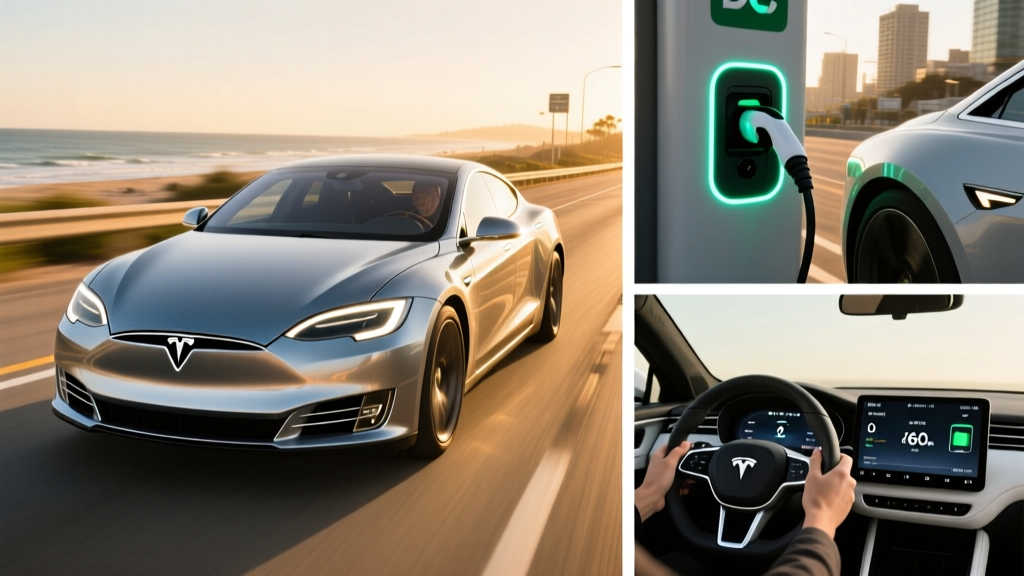
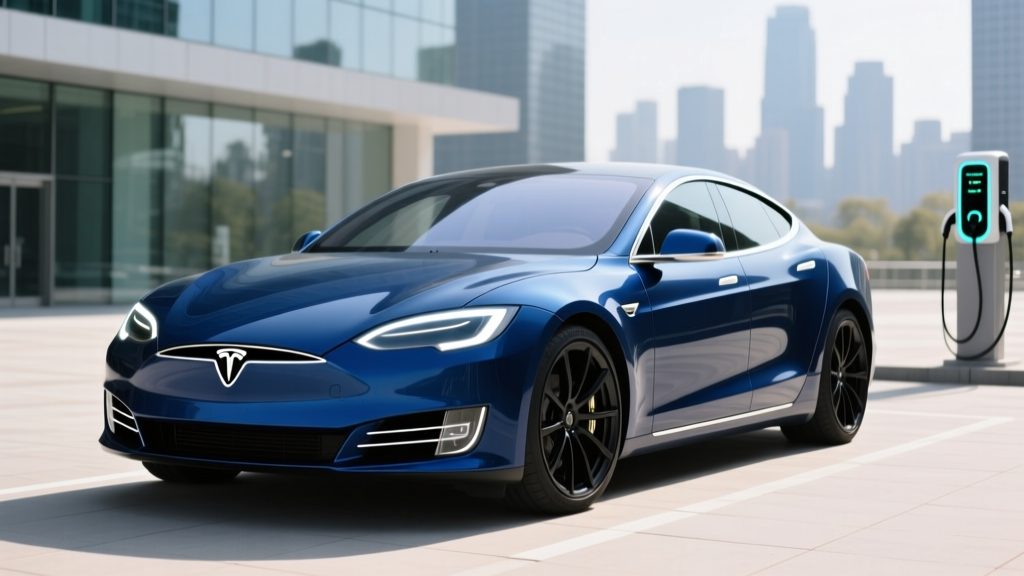
The Tesla Model S refresh continues to define the full-size luxury electric sedan segment. With EPA-estimated range reaching 402 miles on the Long Range trim and a 2.3-second 0-60 mph time on the Plaid, it remains one of the most capable EVs on the market. But at a starting MSRP of $79,990, buyers need to know exactly what they're getting — including real-world range expectations, charging realities, and whether the federal tax credit applies.
| Spec | Long Range | Plaid |
|---|---|---|
| EPA Range | 402 mi | 396 mi |
| Battery (usable) | ~95 kWh, NMC | ~95 kWh, NMC |
| Peak DC Charge | 250 kW | 250 kW |
| 10-80% DC Time | ~27 min | ~27 min |
| 0-60 mph | 3.1 sec | 1.99 sec (w/ rollout) |
| Horsepower | 670 hp | 1,020 hp |
| Drivetrain | AWD (dual-motor) | AWD (tri-motor) |
| Base MSRP | $79,990 | $89,990 |
| Efficiency | 124 MPGe (combined) | 116 MPGe (combined) |
| Battery Warranty | 8 yr / 150,000 mi | 8 yr / 150,000 mi |
Range & Efficiency: EPA Numbers vs. Real-World Driving
EPA Estimate: 402 miles (Long Range) / 396 miles (Plaid)
Real-World Expectation: 330-360 miles highway at 70 mph; 280-310 miles in freezing temperatures; 370-390 miles mixed city driving.
The Model S Long Range achieves 402 miles on the EPA cycle — a number validated by fueleconomy.gov. That figure assumes a mix of city and highway driving at moderate temperatures with climate control at reasonable levels.
In practice, highway-only driving at sustained 70-75 mph speeds typically yields 330-360 miles before needing to charge. Cold weather (below 32°F) can reduce range by 15-25% depending on cabin heating demand, bringing realistic winter range to 280-310 miles. The Plaid's tri-motor setup and wider tires cost it 6 EPA miles, but real-world gaps widen further at high speeds where aerodynamic drag dominates.
Efficiency-wise, the Long Range posts 124 MPGe combined (27 kWh/100mi), while the Plaid drops to 116 MPGe (29 kWh/100mi). Both figures are excellent for a 4,700+ lb sedan, but neither matches the efficiency of lighter, smaller EVs like the Hyundai Ioniq 6 or Tesla Model 3.
Charging: Supercharger Speeds and Home Setup
| Level | Power | Miles Added/Hour | Notes |
|---|---|---|---|
| Level 1 (120V) | ~1.4 kW | ~3-4 mi/hr | Emergency/trickle only |
| Level 2 (240V, 48A) | 11.5 kW | ~30-34 mi/hr | Home Wall Connector |
| DC Fast (V3 Supercharger) | 250 kW peak | ~200 mi in 15 min | 10-80% in ~27 min |
| DC Fast (V4 Supercharger) | 250 kW (cable-limited) | Same as V3 for Model S | Future CCS-native stalls |
The Model S refresh uses Tesla's proprietary NACS connector natively. On V3 Superchargers, it peaks at 250 kW — though that peak is only sustained briefly between roughly 10-30% State of Charge (SoC). The charging curve tapers progressively: by 60% SoC, you're typically seeing 120-140 kW, and above 80%, speeds drop below 50 kW to protect the battery.
A 10-80% charge takes approximately 27 minutes under ideal conditions (battery preconditioned via navigation to a Supercharger, moderate ambient temperature). Cold-soaked batteries without preconditioning can double that time.
At home, the Tesla Wall Connector delivers up to 11.5 kW (48A on a 60A circuit), adding roughly 30-34 miles of range per hour. An overnight 10-hour charge easily replenishes 300+ miles — more than enough for daily driving. Installation typically requires a 60A breaker and 6-gauge wire; budget $500-$1,500 for electrician labor depending on panel proximity. Always consult a licensed electrician for final specs.
Performance: Dual-Motor Precision and Tri-Motor Excess
The Long Range's dual-motor AWD setup produces 670 horsepower and hits 0-60 mph in 3.1 seconds — faster than most sports sedans costing twice as much. The Plaid's tri-motor configuration (one front, two rear) delivers 1,020 hp and a claimed 1.99-second 0-60 time (with 1-foot rollout subtracted, per drag-strip convention).
But straight-line speed is only part of the story. The Model S refresh features adaptive air suspension, torque vectoring, and a low center of gravity from the under-floor battery pack. Cornering composure is impressive for a 4,700-lb sedan, though the steering feel remains somewhat numb compared to a Porsche Taycan or BMW i5.
The Plaid's track-focused hardware (carbon-sleeved rotors, upgraded cooling) enables sustained high-speed runs, but most owners will never approach those limits. For real-world driving, the Long Range's 3.1-second sprint is more than adequate — and you gain 6 miles of EPA range plus $10,000 in savings.
Interior, Tech & Cargo: Luxury With Quirks
The Model S refresh interior centers on a 17-inch landscape-oriented touchscreen running Tesla's latest software. The yoke steering wheel (standard on Plaid, optional on Long Range) takes getting used to — it's excellent for highway cruising but awkward for low-speed maneuvering and three-point turns. A conventional round wheel is available at no extra cost.
Infotainment highlights include native navigation with Supercharger routing, Netflix/YouTube/Disney+ streaming (while parked), a 22-speaker audio system, and over-the-air updates that periodically add features. The 8-inch rear touchscreen for passengers is a nice touch, though it lacks the app ecosystem of the front display.
Driver Assistance: Basic Autopilot (adaptive cruise, lane-keeping) is standard. Full Self-Driving (FSD) Supervised is a $8,000 option (or $99/month subscription as of 2026). FSD remains an SAE Level 2 system — the driver must remain fully engaged and responsible at all times. It handles highway interchanges and city streets impressively but requires constant supervision. It is not self-driving.
ADAS Limitation: Tesla Autopilot and FSD (Supervised) are SAE Level 2 driver-assistance systems. They do NOT make the vehicle autonomous. The driver must keep hands on the wheel (or apply torque), monitor the road, and be prepared to take over instantly. Misuse has led to NHTSA investigations.
Cargo Space: The Model S offers 28 cu ft behind the rear seats (trunk + frunk combined), expanding to 79 cu ft with the 60/40 rear seats folded. Rear legroom measures 41.7 inches — generous for adults. The frunk (front trunk) adds 5.3 cu ft, useful for charging cables or groceries.
Pricing, Tax Credits & Ownership Costs
| Trim | Base MSRP | Destination | As-Tested (typical) | §30D Credit Eligible? |
|---|---|---|---|---|
| Long Range | $79,990 | $1,990 | $84,000-$92,000 | No (MSRP cap exceeded) |
| Plaid | $89,990 | $1,990 | $95,000-$105,000 | No (MSRP cap exceeded) |
The IRS §30D federal tax credit caps eligible sedans at $55,000 MSRP (before destination). Both Model S trims far exceed this cap, meaning no Model S variant qualifies for the $7,500 federal credit as of 2026. State and local incentives may still apply — check your jurisdiction's official sources.
Ownership economics favor the Model S over comparable gas sedans (Mercedes S-Class, BMW 7 Series) when factoring in fuel savings, reduced maintenance (no oil changes, fewer brake replacements due to regen), and Tesla's 8-year/150,000-mile battery and drive unit warranty. However, insurance premiums run 15-30% higher than comparable ICE sedans due to repair costs, and Tesla's service center network remains sparse in rural areas.
Battery Chemistry: The Model S uses NMC (nickel-manganese-cobalt) cells, which offer higher energy density than LFP but are more sensitive to sustained 100% SoC. Tesla recommends daily charging to 80-90% for longevity, reserving 100% for road trips.
Pros & Cons: The Honest Take
Pros
- Class-leading EPA range (402 mi Long Range)
- Extensive Supercharger network with reliable uptime
- Brutal acceleration, especially Plaid
- Spacious interior with generous cargo volume
- Strong OTA updates keep software current
- 8-yr/150,000-mi battery warranty
Cons
- No federal tax credit (MSRP cap)
- Yoke steering is divisive; round wheel preferred by many
- Panel gaps and interior fit/finish lag German rivals
- FSD requires constant supervision despite the name
- High insurance premiums
- 250 kW peak charge rate trails Hyundai/Kia 800V platforms
Who Should Buy the Model S Refresh?
Best for: High-mileage commuters who value range and Supercharger access; tech-forward buyers who prioritize software and OTA updates; performance enthusiasts who want supercar acceleration in a practical sedan; families needing spacious rear seats and cargo room.
Consider alternatives if: You need the $7,500 federal credit (look at Model 3, Ioniq 6, or BMW i4 under $55K); you prioritize traditional luxury build quality (Porsche Taycan, Mercedes EQE); you frequently tow (the Model S isn't rated for towing); you live in a charging desert with limited Supercharger access.
Frequently Asked Questions
What is the real-world range of the Tesla Model S?
EPA estimates 402 miles (Long Range) or 396 miles (Plaid). Real-world highway driving at 70 mph typically yields 330-360 miles; cold weather can drop that to 280-310 miles.
How fast does the Model S charge?
On a V3 Supercharger, it peaks at 250 kW with a 10-80% time of ~27 minutes (preconditioned). At home on a 240V/48A Wall Connector, it adds ~30-34 miles per hour.
Does the Tesla Model S qualify for the federal EV tax credit?
No. The IRS §30D credit caps sedans at $55,000 MSRP. Both Model S trims exceed this, making them ineligible for the $7,500 credit as of 2026. State incentives may still apply.
Is the Model S worth it vs. the Porsche Taycan or Mercedes EQE?
The Model S wins on range (402 vs. ~250-300 mi for rivals), Supercharger access, and software. The Taycan and EQE offer superior build quality, ride refinement, and 800V fast-charging (Taycan). Choose Tesla for tech and range; choose German rivals for luxury feel.
What's the biggest drawback of the Model S refresh?
Beyond the tax-credit ineligibility, the 250 kW peak charge rate trails newer 800V platforms (Hyundai Ioniq 5/6, Kia EV6, Porsche Taycan) that hit 350 kW. The yoke steering and minimalist interior also polarize buyers.
How long will the Model S battery last?
Tesla warranties the battery for 8 years or 150,000 miles (whichever comes first) against degradation below 70% capacity. Real-world data from high-mileage owners suggests 10-15% degradation at 150K miles is typical with proper charging habits (80-90% daily SoC).