The Tesla Model S remains one of the most capable luxury electric sedans on the market, but in 2026 the competition has sharpened considerably. With the Lucid Air, BMW i7, and Mercedes EQS all vying for the same buyer, the Model S must justify its premium not just through performance but through everyday usability — and that includes the often-overlooked Tesla Model S rear passenger experience, cargo versatility, and real-world charging speed.
This review covers the 2026 Tesla Model S Long Range and Plaid trims with exact EPA figures, real-world range expectations, DC fast-charge curves, and a hard look at whether the federal tax credit applies. If you're researching the Model S with an eye toward rear-seat comfort for family or executive use, we've measured what matters.
2026 Tesla Model S Specs at a Glance
| Specification | Long Range | Plaid |
|---|---|---|
| EPA Range | 402 miles | 396 miles |
| Battery (usable) | ~95 kWh (NMC) | ~95 kWh (NMC) |
| Drivetrain | Dual-Motor AWD | Tri-Motor AWD |
| Horsepower | 670 hp | 1,020 hp |
| 0-60 mph | 3.1 seconds | 1.99 seconds |
| Top Speed | 155 mph | 200 mph |
| Max DC Fast Charge | 250 kW | 250 kW |
| 10-80% DCFC Time | ~30 minutes | ~30 minutes |
| Level 2 Home Charge | 11.5 kW (~41 mi/hr) | 11.5 kW (~41 mi/hr) |
| EPA Efficiency | 124 MPGe (28 kWh/100mi) | 119 MPGe (29 kWh/100mi) |
| Base MSRP | $79,990 | $94,990 |
| Battery Warranty | 8 yr / 150,000 mi | 8 yr / 150,000 mi |
Range and Efficiency: EPA vs. Real World
The 2026 Model S Long Range carries an EPA-estimated 402 miles of range — still among the highest of any production EV sold in the US. The Plaid trim drops slightly to 396 miles due to its tri-motor powertrain's higher energy consumption.
EPA Sticker: 402 mi (Long Range) / 396 mi (Plaid)
Highway (70-75 mph, moderate climate): ~330-350 mi
Cold Weather (below 32°F, highway): ~270-300 mi
Mixed Commute (city/suburban, mild): ~370-390 mi
The Model S's heat pump and sophisticated thermal management system mitigate cold-weather losses better than most competitors, but physics still applies. Expect roughly a 25-30% reduction in freezing temperatures at sustained highway speeds. Regenerative braking in city driving helps recover energy that highway cruising cannot.
Efficiency is rated at 124 MPGe combined for the Long Range (28 kWh per 100 miles). That translates to roughly $0.04-$0.06 per mile on a national-average electricity rate of $0.16/kWh when charging at home — dramatically less than a comparable gas sedan achieving 25 MPG at $3.50/gallon ($0.14/mile).
Charging Speed: DC Fast and Home Level 2
The Model S charges at a peak rate of 250 kW on Tesla's V3 Superchargers or any compatible CCS station via the included NACS-to-CCS adapter (Tesla adopted the North American Charging Standard as its native connector). On a V3 Supercharger, the 10-80% session takes approximately 30 minutes.
| Charging Level | Power | Speed (Miles Added/Hour) | Full Session Time |
|---|---|---|---|
| Level 1 (120V standard outlet) | ~1.4 kW | ~4-5 mi/hr | ~65+ hours (0-100%) |
| Level 2 (240V, 48A Wall Connector) | 11.5 kW | ~41 mi/hr | ~9 hours (0-100%) |
| DC Fast Charge (V3 Supercharger) | Peak 250 kW | ~180 mi in 15 min | ~30 min (10-80%) |
Understanding the difference between kW (power, or charge rate) and kWh (energy, or battery capacity) is essential here. The Model S battery holds roughly 95 kWh of usable energy. At a sustained 250 kW, you'd theoretically fill it in 23 minutes — but charge curves taper significantly above 50% state of charge (SoC) to protect battery health. The peak 250 kW rate applies only between roughly 10-30% SoC. By 60%, the rate drops to ~120 kW, and above 80% it falls below 50 kW. This is why manufacturers quote 10-80% times rather than full charges.
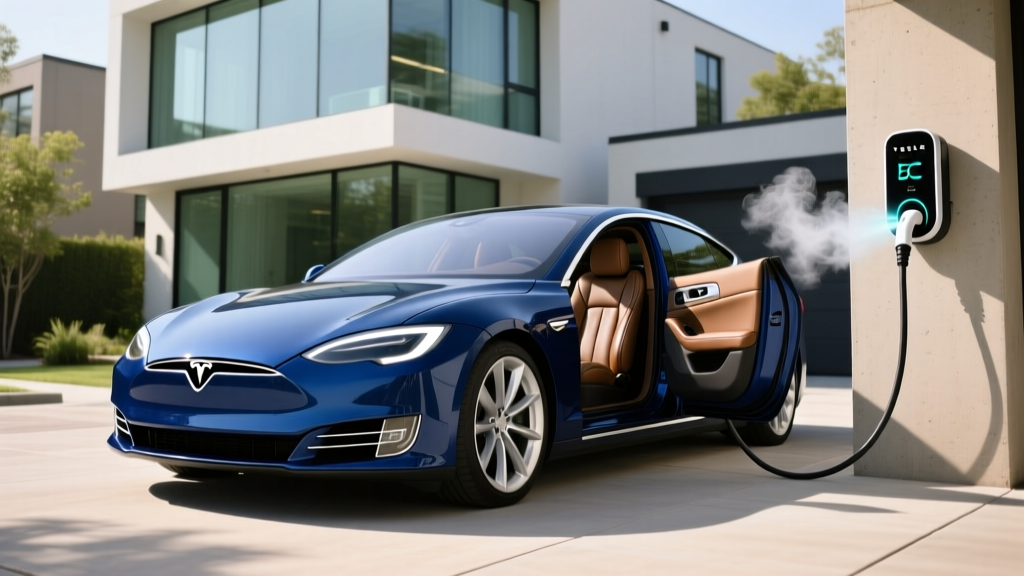
For home charging, Tesla's Wall Connector at 48 amps on a 240V/60A circuit delivers 11.5 kW — adding roughly 41 miles of range per hour. An overnight charge (8-10 hours) easily replenishes a full day's driving for most owners. Installation costs vary widely: expect $500-$2,000 if your electrical panel has capacity, or $2,500-$5,000+ if a panel upgrade to 200A service is needed.
Rear-Seat Comfort and Cargo: The Practical Side
The Tesla Model S rear cabin has improved substantially since the 2021 refresh. The current generation features a dedicated 8-inch rear touchscreen for climate and media control, ventilated rear outboard seats (available with the Premium Interior package), and improved cushioning over pre-refresh models.
Key interior dimensions:
- Rear legroom: 40.9 inches — competitive with the BMW 7 Series and superior to the Porsche Taycan (36.5 in)
- Rear headroom: 38.1 inches — adequate for passengers up to ~6'2", though the sloping roofline limits space for taller occupants
- Rear shoulder room: 56.9 inches — comfortably fits three adults on shorter trips, though the center position is firm
- Trunk (rear cargo): 28.0 cu ft (seats up) — expansive due to the hatchback/liftback design
- Front trunk (frunk): 5.3 cu ft — useful for charging cables or a small bag
- Total cargo (rear seats folded): ~79.3 cu ft — more than many compact SUVs
The hatchback liftback design is a significant practical advantage over traditional sedans like the Mercedes EQS or BMW i7. The wide opening swallows strollers, golf bags, and luggage sets that would require a sedan owner to fold seats and carefully maneuver items through a narrow trunk pass-through.
For family use, two rear-facing child seats install cleanly with LATCH anchors, and the flat floor (no transmission tunnel) gives a middle passenger reasonable foot space. The rear touchscreen keeps children occupied on road trips without requiring tablet mounts.
Performance and Driving Dynamics
The Model S Long Range delivers 670 horsepower from its dual-motor all-wheel-drive powertrain, reaching 60 mph in 3.1 seconds. That's supercar territory from just a few years ago, delivered silently and with instant torque.
The Plaid trim's tri-motor setup (one front, two rear) produces 1,020 hp and a claimed 1.99-second 0-60 time on a prepped surface with rollout subtracted — making it one of the quickest production cars ever built. In real-world conditions on unprepared pavement, expect 2.3-2.5 seconds, which is still violently quick.
Both trims feature adaptive air suspension with adjustable ride height, which lowers at highway speeds for aerodynamic efficiency and raises for rough roads or steep driveways. The steering is precise but light — this is a grand tourer, not a track car, despite the Plaid badge. Compared to the Porsche Taycan, the Model S prioritizes ride comfort and range over ultimate cornering grip.
Pricing, Trims, and Federal Tax Credit Eligibility
The 2026 Model S is offered in two trims:
- Long Range: $79,990 (before destination or options)
- Plaid: $94,990 (before destination or options)
Common options include the Premium Interior package ($2,500), 21-inch Arachnid wheels ($4,500, reduces range to ~372/366 mi), Full Self-Driving (Supervised) capability ($8,000 one-time or $99/month subscription), and various paint colors ($1,500-$2,500).
| Federal Tax Credit (§30D) Requirement | Model S Status |
|---|---|
| MSRP Cap (sedans: $55,000 max) | ❌ Exceeds cap — does NOT qualify |
| Buyer Income Cap ($150K single / $300K joint) | Varies by buyer |
| Battery Critical Minerals Sourcing | N/A (price disqualifies) |
| Battery Component Manufacturing (N. America) | N/A (price disqualifies) |
The Model S does not qualify for the $7,500 federal EV tax credit. Under IRS §30D rules, new sedans must have an MSRP at or below $55,000 to be eligible. The Model S starts at $79,990, well above this threshold. This is a significant consideration for buyers cross-shopping against the Lucid Air Pure ($69,900, also above cap) or the BMW i5 ($66,800, also above cap). Among luxury EVs that do clear the MSRP hurdle, the Tesla Model 3 ($38,990 base) and Hyundai Ioniq 6 ($37,500 base) remain eligible, subject to income and sourcing requirements.
Some buyers may qualify for state-level incentives (California's CVRP, Colorado's state credit, etc.) — check your state's energy office for current programs, as these change frequently and have their own income caps.
Technology and Driver Assistance
The Model S features a 17-inch center touchscreen with Tesla's latest UI, a 12.3-inch driver instrument cluster, and a yoke-style or traditional round steering wheel (buyer's choice at no extra cost since 2023). The infotainment system is responsive, supports Netflix/YouTube/theater-mode streaming while parked, and includes a 22-speaker premium audio system with active noise cancellation.
Tesla's Autopilot (standard) and Full Self-Driving Supervised ($8,000 option) are SAE Level 2 driver-assistance systems. The driver must remain fully engaged, hands on the wheel (or applying torque), and eyes on the road at all times. These systems do NOT make the vehicle self-driving. Only Level 4 services like Waymo operate without a human driver. Tesla's FSD Supervised handles highway interchanges, city streets, and parking maneuvers but requires constant supervision and can make errors at construction zones, unmapped intersections, or in adverse weather.
Standard Autopilot includes Traffic-Aware Cruise Control and Autosteer (lane-centering on marked highways). FSD Supervised adds Navigate on Autopilot (automatic highway on/off-ramp transitions), Auto Lane Change, Autopark, Summon, and Traffic Light/Stop Sign Control. Real-world reliability of FSD varies significantly by geography and road complexity — it excels on well-mapped suburban arterials but can struggle in dense urban environments with construction or non-standard signage.
Notable tech drawbacks: Tesla does not support Apple CarPlay or Android Auto, relying entirely on its proprietary infotainment. The absence of traditional physical buttons for climate and mirrors (adjusted via touchscreen) frustrates some buyers. Ultrasonic sensors were removed in favor of Tesla Vision (camera-only), which has improved but still occasionally struggles with tight parking-space detection in low light.
Pros, Cons, and Verdict
- Class-leading 402-mile EPA range (Long Range)
- Hatchback versatility — 79 cu ft cargo with seats folded
- Superior Supercharger network reliability (17,000+ US stalls)
- Best-in-class rear legroom vs. Taycan, e-tron GT
- Over-the-air updates add features post-purchase
- Plaid performance is genuinely supercar-level
- No federal tax credit (exceeds $55K MSRP sedan cap)
- 250 kW peak charge rate trails Hyundai/Kia's 350 kW E-GMP
- No Apple CarPlay / Android Auto
- Build quality inconsistency — panel gaps vary unit to unit
- Yoke steering polarizing; round wheel preferred for daily use
- Plaid price approaching $100K+ with options
Who Should Buy the Tesla Model S?
- You need maximum range for frequent 300+ mile road trips
- Rear-seat passengers are regular occupants (family, clients)
- Hatchback cargo flexibility matters more than sedan prestige
- You value Supercharger network access for cross-country travel
- Sub-2-second acceleration is a priority (track days, bragging rights)
- Budget allows $100K+ for an EV
- You accept the 6-mile range penalty for tri-motor performance
- Federal tax credit eligibility is essential to your purchase math
- You require Apple CarPlay or traditional luxury dealer service
- 350 kW ultra-fast charging (Hyundai Ioniq 5/6, Kia EV6/EV9) matters for your route
Frequently Asked Questions
What is the real-world range of the Tesla Model S?
The EPA rates the 2026 Model S Long Range at 402 miles and the Plaid at 396 miles. In real-world highway driving at 70-75 mph in moderate temperatures, expect 330-350 miles. In freezing conditions (below 32°F), that drops to roughly 270-300 miles. City and suburban driving with regenerative braking recovers more energy and can approach EPA figures.
How fast does the Model S charge?
On a Tesla V3 Supercharger (250 kW peak), the Model S charges from 10-80% in approximately 30 minutes. At home on a Level 2 Wall Connector (11.5 kW), it adds about 41 miles of range per hour, fully charging overnight in ~9 hours. Note that peak 250 kW only sustains between roughly 10-30% SoC; the rate tapers to ~120 kW by 60% and below 50 kW past 80%.
Does the 2026 Tesla Model S qualify for the federal EV tax credit?
No. The IRS §30D new clean vehicle credit caps sedan MSRP at $55,000. The Model S starts at $79,990 (Long Range) and $94,990 (Plaid), disqualifying both trims regardless of buyer income or battery sourcing. State incentives may still apply — consult your state energy office.
Is the Tesla Model S rear seat comfortable for adults?
Yes, for its class. The Model S offers 40.9 inches of rear legroom — more than the Porsche Taycan (36.5 in) and competitive with the BMW 7 Series. Headroom (38.1 in) accommodates passengers up to about 6'2" comfortably, though the sloping roofline limits space for taller riders. The 2021+ refresh added a rear touchscreen, improved cushioning, and available ventilated outboard seats.
How does the Model S compare to the Lucid Air?
The Lucid Air Pure ($69,900) offers 419 miles of EPA range (more than the Model S) and a more luxurious interior, but lacks access to the Supercharger network (though NACS adapters are becoming available). The Air's rear seat is slightly tighter, and its service network is far smaller. The Model S wins on charging infrastructure and cargo versatility; the Air wins on efficiency and interior material quality.
What is the battery warranty?
Tesla covers the Model S battery and drive unit for 8 years or 150,000 miles (whichever comes first), with a minimum 70% capacity retention threshold. If the battery degrades below 70% of its original capacity within the warranty period, Tesla will repair or replace it. Real-world data from high-mileage Model S owners suggests typical degradation of 10-15% over 100,000 miles — well within the warranty threshold.
Sources: EPA Fuel Economy, Tesla Model S Specifications, IRS Clean Vehicle Credits.