Quick Verdict: The Model S Remains Tesla's Benchmark EV
If you've ever searched "is Tesla electric" — the answer is yes, fully. Tesla builds only battery-electric vehicles (BEVs), and the Model S is where the company proves its engineering ceiling. For 2026, the Model S continues as a luxury performance sedan with class-leading efficiency, access to the Supercharger network, and a starting price that undercuts German rivals — though its interior execution and aging platform keep it from being a slam-dunk against fresher competitors like the Lucid Air and BMW i7.
This review covers the 2026 Tesla Model S Long Range and Plaid trims with exact EPA data, real-world range expectations, charging curves, battery chemistry, and current federal tax-credit eligibility.
| Spec | Long Range | Plaid |
|---|---|---|
| EPA Range | 402 mi | 359 mi |
| Battery (usable) | ~100 kWh (NMC) | ~100 kWh (NMC) |
| Drivetrain | Dual-Motor AWD | Tri-Motor AWD |
| Horsepower | 670 hp | 1,020 hp |
| 0–60 mph | 3.1 sec | 1.99 sec |
| Peak DC Fast Charge | 250 kW | 250 kW |
| 10–80% DC Time | ~27 min | ~27 min |
| Level 2 Home Charge | 11.5 kW (~41 mi/hr) | 11.5 kW (~41 mi/hr) |
| MPGe (combined) | 120 MPGe | 116 MPGe |
| Base MSRP | $74,990 | $89,990 |
Range & Efficiency: EPA Numbers vs. the Real World
Real-World Expectation: Plan for ~310–340 miles on highway road trips at 70–75 mph. In freezing temperatures (below 32°F), expect a 20–30% reduction, bringing usable range to roughly 250–280 miles for the Long Range trim. City driving with regenerative braking recovers energy and gets you closer to the EPA sticker.
The Model S Long Range's 402-mile EPA rating remains one of the highest of any production EV sold in the U.S. That figure comes from a ~100 kWh usable battery pack using NMC (nickel manganese cobalt) chemistry — chosen for its high energy density, which is critical in a sedan form factor where packaging space is limited.
Efficiency is where Tesla's powertrain engineering shows. At 120 MPGe combined (Long Range) and roughly 28 kWh per 100 miles, the Model S extracts more miles per kilowatt-hour than nearly every competing luxury EV. The Lucid Air Grand Touring edges it out at 131 MPGe, but most rivals — the BMW i7 xDrive60, Mercedes EQS 580 — trail significantly.
Source: EPA Fuel Economy — 2026 Tesla Model S
Charging Speed: Supercharger Network + Home Setup
| Level | Power | Miles Added per Hour | Notes |
|---|---|---|---|
| Level 1 (120V) | ~1.4 kW | ~3–4 mi/hr | Emergency/trickle only |
| Level 2 (240V, 48A) | 11.5 kW | ~41 mi/hr | Full charge in ~9.5 hrs |
| DC Fast (V3 Supercharger) | Peak 250 kW | ~200 mi in 15 min | 10–80% in ~27 min |
| DC Fast (V4 Supercharger) | Peak 250 kW* | Similar to V3 | *Model S limited to 250 kW |
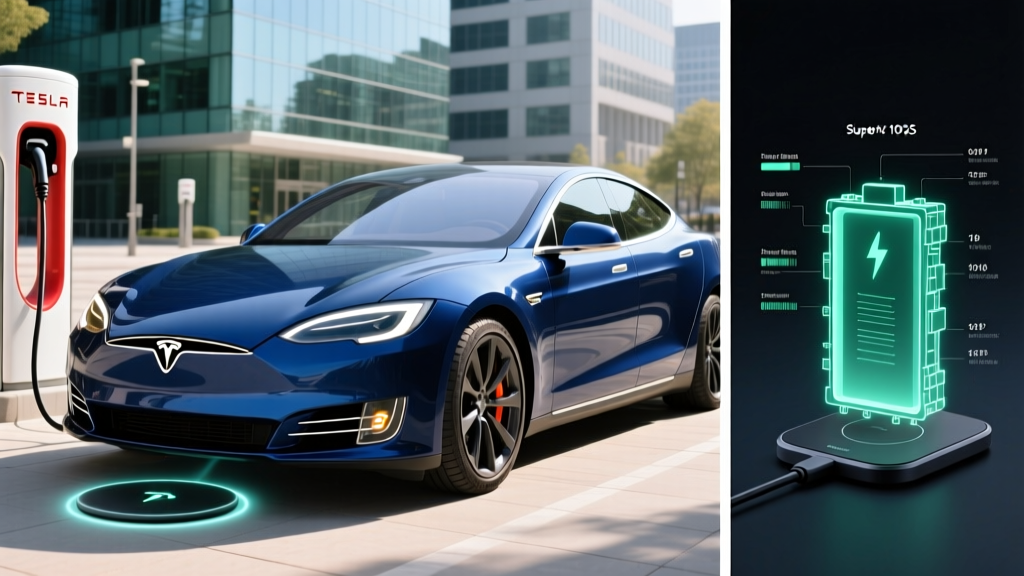
Tesla's Supercharger network remains the most reliable public charging infrastructure in the U.S., with over 6,000 stations and 65,000+ connectors. The Model S peaks at 250 kW on V3 and V4 Superchargers — a number that hasn't increased despite competitors now accepting 350 kW (Hyundai Ioniq 5, Porsche Taycan). The charge curve is well-managed: the car holds above 200 kW through roughly 50% SoC before tapering, which is why the 10–80% time of ~27 minutes is competitive even without a 350 kW peak.
Key nuance: kW is the rate of power delivery (how fast you're filling); kWh is energy capacity (the size of the tank). The Model S's 100 kWh battery at 250 kW peak would theoretically fill in 24 minutes at sustained peak — but charge curves always taper above 50–60% SoC to protect the NMC cells. That's why the 10–80% time is ~27 minutes, not 24.
For home charging, a 48-amp Level 2 wall connector on a 60-amp circuit delivers 11.5 kW, adding roughly 41 miles of range per hour. An overnight charge (8 hours) restores ~328 miles — more than enough for daily driving. Installation typically costs $800–$2,000 depending on panel proximity and local permitting. A licensed electrician should confirm your panel has capacity for a 60-amp breaker.
Performance: 670 hp or 1,020 hp, Your Choice
The Model S Long Range's dual-motor AWD setup delivers 670 horsepower and a 3.1-second 0–60 mph time — figures that would have been supercar territory a decade ago. The Plaid's tri-motor configuration (one front, two rear) pushes output to 1,020 hp and a 1.99-second 0–60, making it one of the quickest production cars ever built.
On the road, the instant torque delivery and low center of gravity (battery pack under the floor) make the Model S feel planted and responsive. The adaptive air suspension adjusts ride height and firmness, though ride quality on rough pavement still draws criticism compared to the BMW i7 or Mercedes EQS. The yoke steering wheel remains optional; a conventional round wheel is standard.
Interior, Tech & Driver Assistance
The Model S interior centers on a 17-inch landscape touchscreen running Tesla's proprietary infotainment OS. There is no Apple CarPlay or Android Auto — Tesla's ecosystem is self-contained, with built-in navigation, Spotify, Netflix (while parked), and a surprisingly capable gaming suite. A rear 8-inch screen handles climate and entertainment for back-seat passengers.
Cargo space: The Model S offers 28 cubic feet behind the rear seats (including the front trunk/frunk at 5.3 cu ft). Fold the rear seats and you get roughly 55 cu ft. Rear legroom measures 35.4 inches — adequate for adults but tighter than the Lucid Air (37.2 in) or BMW i7 (40.2 in).
Driver assistance: Tesla's Autopilot (standard) and Full Self-Driving Supervised ($8,000 option or $99/month) are SAE Level 2 systems. This means the driver must remain fully engaged, hands on the wheel, eyes on the road. FSD Supervised handles highway lane changes, on-ramp to off-ramp navigation, and some city-street maneuvers — but it is not autonomous driving. It does not replace driver attention, and NHTSA continues to investigate Tesla's Autopilot/FSD in certain crash scenarios.
Pricing, Trims & Federal Tax Credit Eligibility
| Trim | Base MSRP | Destination | Total Before Credit | §30D Federal Credit | Effective Price |
|---|---|---|---|---|---|
| Long Range | $74,990 | $1,390 | $76,380 | Up to $7,500* | ~$68,880* |
| Plaid | $89,990 | $1,390 | $91,380 | Up to $7,500* | ~$83,880* |
Federal EV tax credit (§30D) eligibility for the Model S: The credit is up to $7,500, but qualification depends on several IRS rules that change periodically. Key requirements for 2026 include:
- MSRP cap: Sedans must have an MSRP at or below $55,000. The Model S exceeds this cap at $74,990+, making it ineligible for the new-vehicle §30D credit as of current IRS guidance.
- Buyer income cap: AGI must not exceed $150,000 (single) / $300,000 (joint) — relevant if MSRP caps change.
- Battery sourcing: Critical mineral and battery component requirements phase in annually through 2029.
- Point-of-sale transfer: Eligible buyers can transfer the credit to the dealer for an immediate price reduction — but only if the vehicle qualifies.
Bottom line: As of 2026, the Tesla Model S does not qualify for the $7,500 federal tax credit because its MSRP exceeds the $55,000 sedan cap. Buyers should verify current rules at IRS.gov — Clean Vehicle Credits before purchasing, as regulations can shift.
Warranty & Long-Term Ownership
Tesla covers the Model S with a 4-year/50,000-mile basic warranty and an 8-year/150,000-mile battery and drive unit warranty (Long Range). The Plaid's battery warranty is 8 years/150,000 miles as well. Tesla guarantees the battery will retain at least 70% of its original capacity during the warranty period.
NMC battery degradation in Tesla vehicles has been well-documented by fleet data. Most Model S packs lose roughly 8–12% capacity in the first 50,000 miles, then plateau. At 150,000 miles, many packs retain 85–90% of original capacity — well above the warranty threshold. Out-of-warranty battery replacement runs approximately $13,000–$20,000 depending on the pack configuration, though this is rarely needed within the vehicle's typical lifespan.
Pros & Cons
- Class-leading 402-mile EPA range (Long Range)
- Access to 65,000+ Supercharger connectors — best public charging network
- Exceptional efficiency: 120 MPGe combined
- Blistering performance: 3.1 sec (LR) or 1.99 sec (Plaid) 0–60
- Over-the-air updates continuously add features
- Strong cargo capacity with frunk + hatchback design
- Does not qualify for $7,500 federal tax credit (MSRP exceeds sedan cap)
- Interior build quality and materials trail Lucid Air and German rivals
- No Apple CarPlay or Android Auto
- 250 kW peak DC charge rate lags 350 kW competitors
- Rear legroom tighter than full-size luxury sedans
- FSD Supervised costs $8,000 extra and remains Level 2
Who Should Buy the 2026 Model S?
Choose the Model S if: You want the longest-range luxury EV sedan available, you road-trip frequently and value Supercharger reliability above all, you need a hatchback-style cargo area, and you're drawn to Tesla's software ecosystem and OTA update cadence.
Look elsewhere if: Interior luxury and ride comfort are your top priorities (consider the Lucid Air Grand Touring or BMW i7), you need the fastest possible DC charging (Porsche Taycan at 350 kW), or you want to maximize federal tax credit eligibility (the Model 3 and Model Y may qualify under different MSRP rules).
Frequently Asked Questions
Is Tesla electric or hybrid?
Tesla manufactures only battery-electric vehicles (BEVs). Every Tesla model — Model S, Model 3, Model X, Model Y, and Cybertruck — runs exclusively on electricity with no gasoline engine or hybrid system.
What is the real-world range of the Tesla Model S?
The EPA rates the 2026 Model S Long Range at 402 miles. In real-world highway driving at 70–75 mph, expect approximately 310–340 miles. In cold weather (below 32°F), range can drop to 250–280 miles due to battery resistance and cabin heating demands.
How fast does the Model S charge at home and on the road?
On a 240V Level 2 home charger at 11.5 kW, the Model S adds about 41 miles of range per hour, fully charging overnight in roughly 9.5 hours. On a Tesla V3 or V4 Supercharger, it peaks at 250 kW and charges from 10–80% in approximately 27 minutes.
Does the 2026 Tesla Model S qualify for the federal EV tax credit?
No. Under current IRS §30D rules, new sedans must have an MSRP at or below $55,000 to qualify. The Model S starts at $74,990, exceeding this cap. Always verify current eligibility at IRS.gov before purchasing.
Is Tesla Autopilot self-driving?
No. Tesla Autopilot and Full Self-Driving (Supervised) are SAE Level 2 driver-assistance systems. The driver must remain fully attentive, with hands on the wheel and eyes on the road, at all times. These systems assist with steering, acceleration, and braking but do not replace the driver.
Is the Model S worth buying vs. the Lucid Air or BMW i7?
The Model S wins on range (402 mi vs. Lucid Air's 516 mi Grand Touring but at higher price), Supercharger access, and efficiency. The Lucid Air offers superior interior space and luxury; the BMW i7 delivers a more refined ride and traditional luxury feel. If charging infrastructure and software matter most, Tesla leads. If interior quality and ride comfort matter most, test-drive the Lucid and BMW.