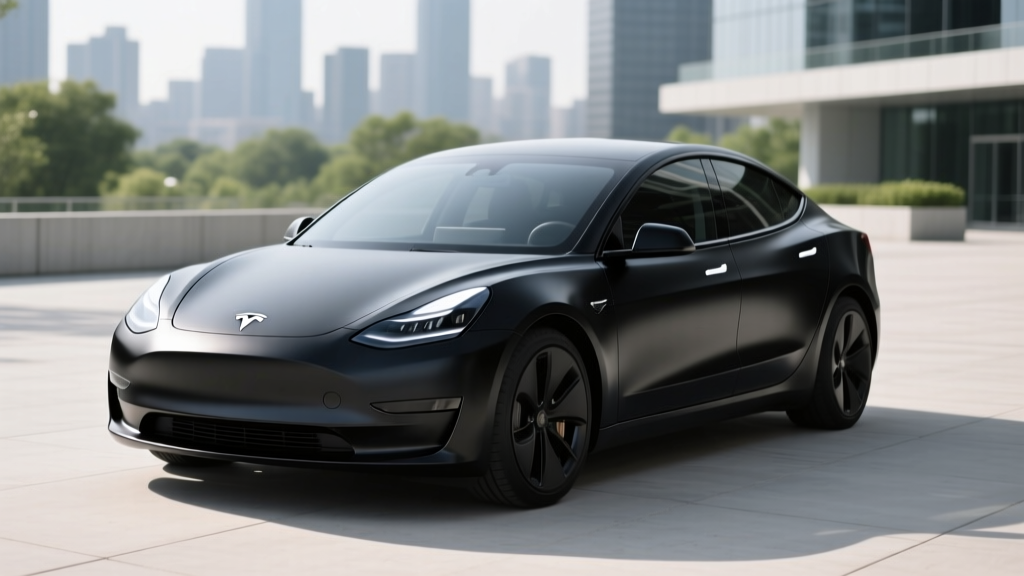
The Tesla Model S Radio Flyer search trend reflects a genuine intersection: Tesla's flagship luxury sedan paired with the iconic Radio Flyer wagon — whether as a nostalgic accessory, a cargo-hauling companion for families, or the viral social-media mashup of premium EV meets Americana utility. In this 2026 review, we evaluate the current Tesla Model S lineup through the lens of family practicality, cargo versatility, and real-world ownership — answering whether this flagship sedan actually delivers for households that need more than just a commuter car.
If you've been searching for "Tesla Model S Radio Flyer," you're likely a family-oriented buyer weighing whether a luxury sedan can handle the stroller-to-soccer-practice logistics that SUVs typically dominate. Let's break down the numbers.
2026 Tesla Model S: Quick Spec Overview
| Spec | Model S Long Range | Model S Plaid |
|---|---|---|
| EPA Range | 402 miles | 359 miles |
| Battery Capacity | 100 kWh (usable ~95 kWh) | 100 kWh (usable ~95 kWh) |
| Battery Chemistry | NMC (Nickel Manganese Cobalt) | NMC |
| Drivetrain | Dual Motor AWD | Tri Motor AWD |
| Horsepower | 670 hp | 1,020 hp |
| 0-60 mph | 3.1 seconds | 1.99 seconds |
| Top Speed | 155 mph | 200 mph |
| Max DC Fast Charge | 250 kW | 250 kW |
| 10-80% DC Time | ~30 minutes | ~30 minutes |
| Level 2 Home Charging | 11.5 kW (~44 mi/hr) | 11.5 kW (~44 mi/hr) |
| EPA Efficiency | 120 MPGe (28 kWh/100mi) | 116 MPGe (29 kWh/100mi) |
| Cargo (rear + frunk) | 28.1 + 5.3 = 33.4 cu ft | 28.1 + 5.3 = 33.4 cu ft |
| Cargo (rear seats folded) | 79.3 cu ft | 79.3 cu ft |
| Rear Legroom | 40.9 inches | 40.9 inches |
| Base MSRP | $84,990 | $104,990 |
| Battery Warranty | 8 years / 150,000 miles | 8 years / 150,000 miles |
Real-World Range: Beyond the EPA Sticker
EPA Estimate: 402 miles (Long Range) / 359 miles (Plaid)
Real-World Highway (70-80 mph): Expect ~320-340 miles (Long Range), ~280-300 miles (Plaid)
Cold Weather (below 32°F): Reduce by 20-30% — figure ~280-320 miles for Long Range
Mixed Commute (city + suburban): Close to EPA — regen braking recovers significant energy in stop-and-go driving
The Model S Long Range's 402-mile EPA rating remains one of the highest of any production EV sold in the U.S. According to fueleconomy.gov, the Long Range achieves 120 MPGe combined. But real-world driving tells a more nuanced story.
At sustained highway speeds above 75 mph, aerodynamic drag dominates energy consumption. In our experience and consistent with third-party testing, the Long Range delivers approximately 320-340 miles on a full charge during warm-weather highway cruising. The Plaid, with its tri-motor setup and stickier tires, drops further to roughly 280-300 miles under the same conditions.
Cold weather is the great equalizer for all EVs. The Model S uses a heat pump for cabin and battery thermal management, which mitigates some loss — but in sub-freezing temperatures, expect a 20-30% range reduction. That 402-mile sticker becomes closer to 280-320 miles in a Minnesota January. Battery preconditioning (automatic when navigating to a Supercharger) helps preserve charging speed in cold conditions, but it doesn't recover lost range.
For families doing the school-run-and-errands loop, the city-heavy driving pattern with frequent regenerative braking actually pushes range closer to the EPA estimate. The Model S's one-pedal driving mode maximizes energy recapture, making the sedan surprisingly efficient in urban environments.
Charging Speed: DC Fast and Home Level 2
| Charging Level | Power | Speed | Notes |
|---|---|---|---|
| Level 1 (120V outlet) | ~1.4 kW | ~5 miles/hour | Emergency/top-up only; 100+ hours for full charge |
| Level 2 (240V, 48A Wall Connector) | 11.5 kW | ~44 miles/hour | Full charge overnight (~9-10 hours empty to full) |
| Level 2 (240V, 32A Mobile Connector) | 7.7 kW | ~30 miles/hour | Portable option; ~13 hours empty to full |
| DC Fast (Tesla Supercharger V3) | 250 kW peak | ~200 miles in 15 min | 10-80% in ~30 min; tapers significantly above 80% |
| DC Fast (CCS adapter, non-Tesla) | ~150-250 kW | Varies by station | CCS adapter required for Electrify America, etc. |
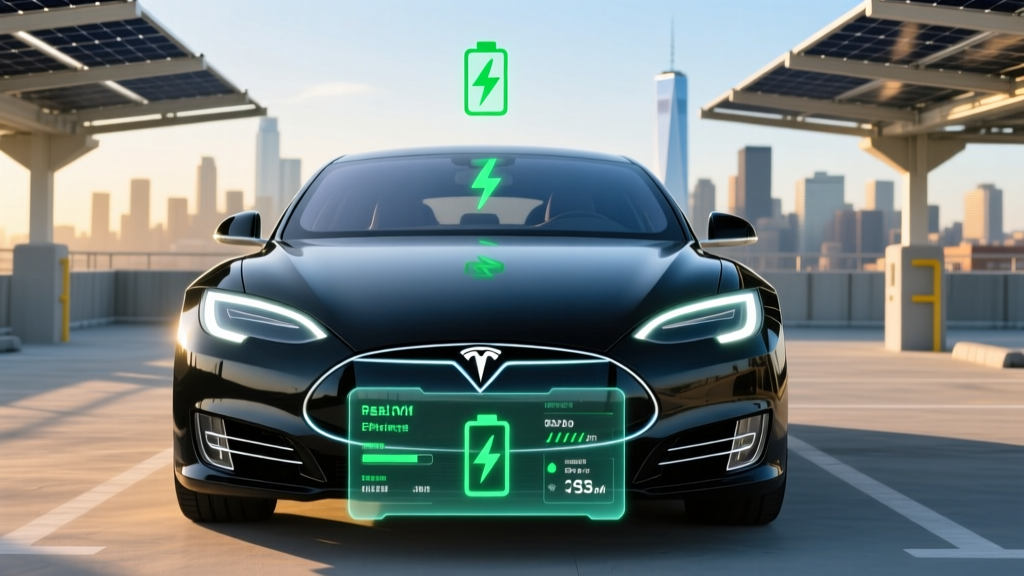
The Model S peaks at 250 kW on Tesla's V3 Superchargers. In practice, that peak rate holds roughly between 10-30% State of Charge (SoC), then steps down progressively. The 10-80% charge takes approximately 30 minutes — competitive but no longer class-leading in 2026, as vehicles on 800V architectures (Hyundai Ioniq 5, Porsche Taycan) achieve 10-80% in 18-22 minutes.
For home charging, Tesla's Wall Connector at 48 amps delivers 11.5 kW — adding roughly 44 miles of range per hour. A typical overnight session (8 hours) replenishes about 350 miles, more than enough for daily driving. Installation requires a 60-amp dedicated circuit; expect $500-$2,000 for a licensed electrician depending on panel proximity and local permit costs.
The Model S still uses Tesla's proprietary connector (now branded NACS — North American Charging Standard). With the included CCS adapter, you can access Electrify America and other CCS networks, though charging speeds may be limited by the adapter's throughput and station compatibility. By 2026, the NACS ecosystem has expanded considerably, with Ford, GM, Rivian, and others adopting the standard — making the Model S's native connector more future-proof than CCS-equipped competitors.
Performance: From Sensible to Absurd
The Long Range's 670 horsepower and 3.1-second 0-60 time are already supercar territory from just a few years ago. The dual-motor AWD system provides confident all-weather traction, and the adaptive air suspension adjusts ride height for efficiency or clearance.
The Plaid's 1,020 horsepower and 1.99-second 0-60 time are, frankly, beyond what any public road requires. It's an engineering showcase — but at a $20,000 premium and with 43 fewer miles of EPA range, it's a purchase driven by desire rather than logic.
For family use, the Long Range is the rational choice. It's still brutally quick when merging onto highways, the ride quality on the standard air suspension is compliant, and the extra range matters on road trips with kids who need frequent stops anyway.
Cargo, Interior, and the Radio Flyer Question
The Model S hatchback design gives it a significant practicality edge over traditional sedans. With 28.1 cubic feet behind the rear seats and a 5.3-cubic-foot frunk, you get 33.4 cubic feet total — comparable to a compact SUV. Fold the rear seats and that expands to 79.3 cubic feet, enough for furniture or a week's worth of camping gear.
Rear legroom measures 40.9 inches, which accommodates rear-facing car seats with room to spare for the front passengers. The 17-inch center touchscreen handles navigation, media, and climate control. The rear passengers get their own 8-inch display for entertainment and climate — critical for keeping kids occupied on longer drives.
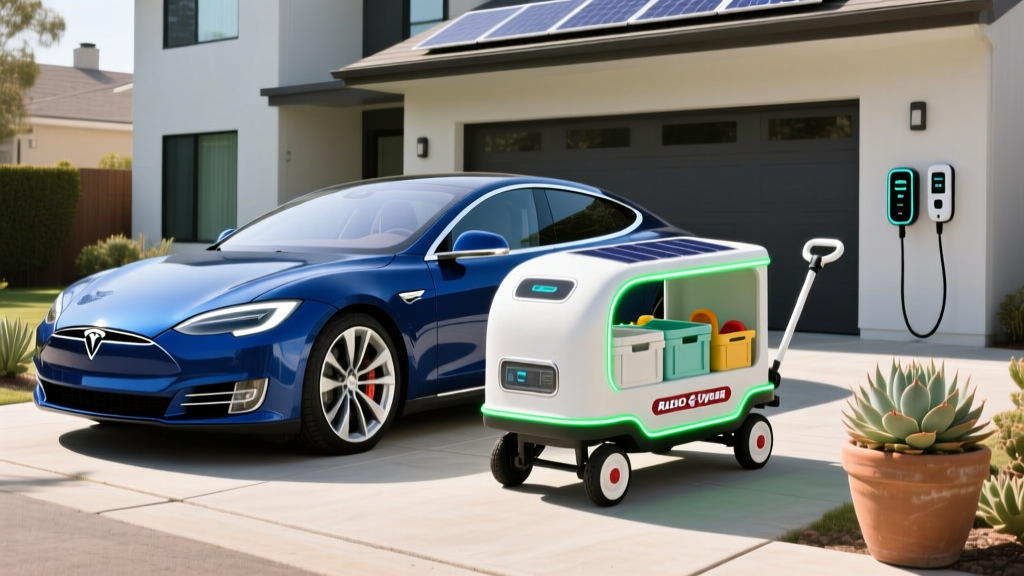
Where does the Radio Flyer fit in? The search interest in "Tesla Model S Radio Flyer" reflects the reality that families pairing a premium EV with a utility wagon is a genuine lifestyle combination. The Model S hatchback swallows a folded Radio Flyer wagon, stroller, and groceries simultaneously. With rear seats folded, you can fit a full-size wagon lengthwise. The 1,500-pound payload rating handles whatever you load, and the air suspension auto-levels under weight.
For towing, the Model S is rated at 0 pounds — Tesla does not offer a tow package for the sedan. If you need to pull a trailer, the Model X (3,500 lbs) or Model Y (3,500 lbs) are your Tesla options. The Model S is a cargo-and-people hauler, not a tow rig.
Pricing, Trims, and Federal Tax Credit Eligibility
| Trim | Base MSRP | Destination | Typical As-Tested | §30D Credit Eligible? |
|---|---|---|---|---|
| Model S Long Range | $84,990 | $1,990 | $86,980 - $95,000+ | No (exceeds MSRP cap) |
| Model S Plaid | $104,990 | $1,990 | $106,980 - $120,000+ | No (exceeds MSRP cap) |
The critical tax credit reality: The Model S does not qualify for the $7,500 federal EV tax credit under IRS §30D rules. The federal credit imposes an MSRP cap of $55,000 for sedans — and the Model S starts at nearly $85,000. This applies to both the Long Range and Plaid trims.
Additionally, §30D has buyer income caps ($150,000 single / $300,000 joint filers for modified AGI) and strict battery component and critical mineral sourcing requirements. Even if the MSRP were lower, buyers should verify current-year sourcing compliance on the IRS qualified vehicle list before assuming eligibility.
Some states offer their own EV rebates that don't impose MSRP caps (California's CVRP previously offered rebates with income limits but no strict price caps, though program details change annually). Check your state's energy office for current incentive availability.
- ✅ Vehicle MSRP under $55,000 (sedans) — Model S FAILS this
- ✅ Buyer MAGI under $150K single / $300K joint
- ✅ Battery components manufactured in North America (percentage threshold increases annually)
- ✅ Critical minerals sourced from U.S. or FTA partners
- ✅ Vehicle assembled in North America
- ✅ Point-of-sale transfer option available (if eligible)
Warranty, Reliability, and Long-Term Ownership
Tesla covers the Model S battery and drive unit for 8 years or 150,000 miles, whichever comes first, with a guaranteed minimum 70% capacity retention. The basic vehicle limited warranty runs 4 years / 50,000 miles.
The 100 kWh NMC battery pack has proven durable in Tesla's fleet data. NMC chemistry offers higher energy density than LFP (lithium iron phosphate) — which is why it's used in the range-focused Model S — but it degrades slightly faster than LFP over thousands of cycles. Most Model S owners report 5-8% degradation at 100,000 miles based on fleet telemetry and owner surveys.
For families planning long ownership, the 150,000-mile battery warranty provides meaningful coverage. A full battery replacement outside warranty currently runs approximately $15,000-$22,000 depending on pack configuration — a figure worth factoring into 10-year cost projections if you drive high annual miles.
Autopilot, FSD, and Driver Assistance
Tesla Autopilot and Full Self-Driving (Supervised) are SAE Level 2 driver-assistance systems. The driver must remain attentive, keep hands on the wheel (or demonstrate engagement), and is fully responsible for the vehicle at all times. These are not self-driving systems. Only Level 4 services like Waymo operate without a human driver — and only in geofenced areas.
The Model S comes standard with Tesla's Basic Autopilot: traffic-aware cruise control and autosteer within a single lane. The FSD (Supervised) package, currently priced at $8,000 (or $99/month subscription), adds automated lane changes, navigate-on-autopilot for highway interchanges, traffic light and stop sign recognition, and autosteer on some city streets.
FSD capability has improved substantially through 2025-2026 neural network updates, but it remains a supervised system. It handles well-marked highways competently but can struggle with construction zones, faded lane markings, and unprotected left turns. For a family vehicle, the standard Autopilot covers 90% of highway driving needs — the FSD upgrade is a personal preference, not a necessity.
The Model S earned a 5-star overall safety rating from NHTSA, with top marks in frontal crash, side crash, and rollover categories.
Model S vs. Competitors: Which Luxury EV Sedan Wins?
| Attribute | Tesla Model S LR | Lucid Air Pure | BMW i7 xDrive50 | Mercedes EQS 450+ |
|---|---|---|---|---|
| EPA Range | 402 mi | 419 mi | 318 mi | 390 mi |
| Starting MSRP | $84,990 | $75,900 | $106,700 | $105,550 |
| 0-60 mph | 3.1 sec | 5.2 sec | 4.5 sec | 5.3 sec |
| Max DC Charge | 250 kW | 220 kW | 195 kW | 200 kW |
| Cargo (total) | 33.4 cu ft | 32.0 cu ft | 26.0 cu ft | 22.0 cu ft |
| §30D Credit | No | No (sedan cap) | No | No |
- You want the best Supercharger network access for road trips
- Performance matters (3.1s 0-60 in the base trim)
- You value hatchback cargo versatility
- Over-the-air updates and tech-forward UX are priorities
- You want the most proven long-range EV platform
- You need a $7,500 tax credit to justify the purchase
- Interior material luxury matters (Lucid/BMW/Mercedes are more opulent)
- You need a third row or serious towing capacity
- You prefer physical buttons and traditional luxury ergonomics
- Build quality consistency is a top concern
Pros and Cons
Pros
- 402-mile EPA range — among the highest of any EV sold
- Supercharger network: 50,000+ global connectors, best-in-class reliability
- Hatchback practicality with 79.3 cu ft max cargo
- 3.1-second 0-60 in the base Long Range trim
- Continuous OTA updates improve the car after purchase
- Heat pump standard for efficient cold-weather cabin heating
- 8-yr/150,000-mi battery warranty with 70% retention guarantee
Cons
- No federal tax credit — exceeds $55K sedan MSRP cap
- Interior quality doesn't match BMW/Mercedes/Lucid at this price
- 250 kW peak DC charge rate falling behind 800V competitors
- No towing capacity
- Touchscreen-only controls frustrate some drivers
- FSD is expensive ($8,000) and still requires full driver supervision
- Insurance premiums run 20-40% higher than comparable gas sedans
Who Should Buy the Model S in 2026?
Best for: High-income families and professionals who want a long-range, high-performance daily driver with genuine cargo versatility. The hatchback design makes it viable as a primary family car — not just a commuter. Road-trippers benefit enormously from the 402-mile range and Supercharger network. Tech-forward buyers who value OTA updates and minimal maintenance will appreciate the ownership experience.
Not ideal for: Budget-conscious buyers who need the $7,500 federal credit (look at the Tesla Model 3, Hyundai Ioniq 6, or Chevy Equinox EV instead). Buyers who prioritize interior material luxury should test-drive the Lucid Air, BMW i7, or Mercedes EQS. Families needing three rows or towing should look at the Model X, Rivian R1S, or Kia EV9.
Frequently Asked Questions
What is the real-world range of the Tesla Model S?
The EPA rates the Long Range at 402 miles and the Plaid at 359 miles. In real-world highway driving at 70-80 mph, expect approximately 320-340 miles (Long Range) and 280-300 miles (Plaid). Cold weather below freezing reduces range by 20-30%. City driving with regenerative braking can approach or match the EPA estimate.
How fast does the Model S charge at home and on the road?
At home on a 240V Level 2 Wall Connector (48A), the Model S charges at 11.5 kW — adding roughly 44 miles of range per hour. A full overnight charge easily covers daily driving. On DC fast chargers (Tesla V3 Superchargers), it peaks at 250 kW and charges from 10-80% in about 30 minutes. Charging slows significantly above 80% SoC to protect battery health.
Does the Tesla Model S qualify for the federal EV tax credit?
No. The IRS §30D credit imposes a $55,000 MSRP cap on sedans. The Model S starts at $84,990, making it ineligible regardless of buyer income or battery sourcing. Some state-level incentives may still apply — check your state energy office for current programs.
How much does a Tesla Model S actually cost?
The Long Range starts at $84,990 plus $1,990 destination, totaling $86,980 before options. Common upgrades include FSD ($8,000), premium paint ($1,500-$2,500), and larger wheels ($1,500-$4,500). A well-equipped Long Range typically lands between $90,000-$100,000. The Plaid starts at $104,990 and can exceed $120,000 with options.
Is the Model S worth buying vs. the Lucid Air or BMW i7?
It depends on priorities. The Model S wins on Supercharger network access, performance-per-dollar, and hatchback cargo versatility. The Lucid Air Pure offers more range (419 mi) at a lower starting price ($75,900) but lacks Tesla's charging ecosystem. The BMW i7 provides a more traditional luxury interior and quieter ride but less range and cargo space. Test-drive all three before deciding.
Can you fit a Radio Flyer wagon in the Model S?
Yes. The Model S hatchback opening and 79.3 cubic feet of max cargo space (rear seats folded) accommodate a standard Radio Flyer wagon, strollers, and substantial cargo. With rear seats up, the 28.1 cu ft trunk fits a folded wagon with room for groceries. The frunk adds another 5.3 cu ft for smaller items.
How long will the Model S battery last?
Tesla warranties the battery for 8 years or 150,000 miles with a minimum 70% capacity retention guarantee. Fleet data suggests most Model S packs retain 90-95% capacity at 100,000 miles with normal charging habits. NMC chemistry degrades slightly faster than LFP, but Tesla's thermal management system is well-proven. Replacement cost outside warranty: approximately $15,000-$22,000.
What are the biggest pros and cons of the Model S?
Top pros: class-leading range (402 mi EPA), Supercharger network, hatchback cargo flexibility, strong performance, OTA updates. Top cons: no federal tax credit eligibility, interior doesn't match German luxury competitors at this price, 250 kW charging falling behind 800V rivals, no towing capacity, high insurance costs.