Quick Verdict: Still the Performance Sedan to Beat
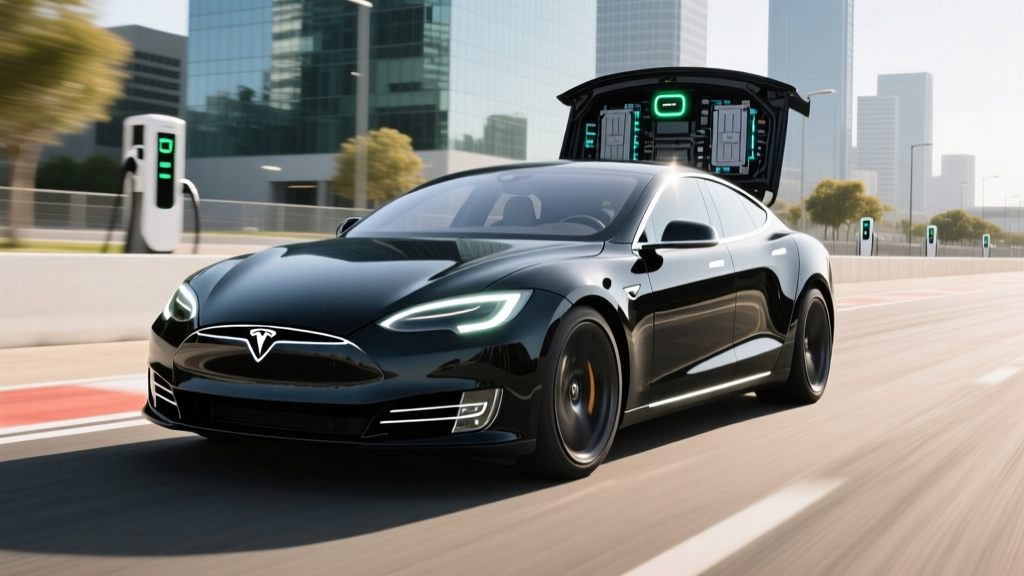
The 2026 Tesla Model S remains the benchmark for anyone searching for a luxury electric sedan that can embarrass supercars at a drag strip while delivering over 400 miles of EPA-estimated range. Whether you're researching the Tesla Model S quarter mile time out of sheer curiosity or genuinely considering this car as a daily driver, the numbers tell a compelling story: the Plaid variant hits 60 mph in 1.99 seconds and runs the quarter mile in approximately 9.2 seconds, while the Long Range version offers a more practical 3.1-second 0-60 and the lineup's best range at 402 miles EPA.
But straight-line speed is only part of the ownership equation. This review covers everything a serious buyer needs — real-world range expectations, DC fast-charging curves, battery chemistry, tax credit eligibility under current IRS §30D rules, and how the Model S stacks up against the Lucid Air, BMW i7, and Mercedes EQS in 2026.
2026 Tesla Model S Specifications at a Glance
| Spec | Long Range | Plaid |
|---|---|---|
| Base MSRP | $79,990 | $94,990 |
| EPA Range | 402 mi | 359 mi |
| Battery (usable) | ~95 kWh (NMC) | ~95 kWh (NMC) |
| Drivetrain | Dual-Motor AWD | Tri-Motor AWD |
| Horsepower | 670 hp | 1,020 hp |
| 0-60 mph | 3.1 sec | 1.99 sec |
| Quarter Mile | ~11.1 sec | ~9.2 sec |
| Top Speed | 155 mph | 200 mph |
| Peak DC Charge Rate | 250 kW | 250 kW |
| 10-80% DC Time | ~27 min | ~27 min |
| Level 2 Rate (48A) | ~44 mi/hr | ~44 mi/hr |
| MPGe (combined) | 120 MPGe | 116 MPGe |
| kWh/100 mi | 28 kWh | 29 kWh |
| Battery Warranty | 8 yr / 150,000 mi | 8 yr / 150,000 mi |
Range & Efficiency: EPA Sticker vs Real-World Miles
The Long Range Model S carries an EPA-estimated 402 miles on a full charge, placing it among the longest-range EVs available in 2026. The tri-motor Plaid sacrifices some efficiency for its extra motor, landing at 359 miles EPA. Both figures are based on the ~95 kWh usable battery pack using NMC (nickel manganese cobalt) chemistry — chosen for its higher energy density compared to LFP, which is critical for a sedan in this price class.
EPA Estimate: 402 mi (Long Range) / 359 mi (Plaid)
Highway (70-75 mph, 70°F): ~330-350 mi (Long Range) / ~290-310 mi (Plaid)
Cold Weather (20-30°F, mixed driving): ~280-310 mi (Long Range) / ~240-270 mi (Plaid)
City / Moderate Climate: ~380-400 mi (Long Range) — closest to EPA sticker
EVs lose 15-30% range in freezing temperatures due to battery resistance and cabin heating demands. The Model S heat pump mitigates some of this loss, but physics still applies. Highway driving at sustained speeds above 70 mph also reduces range more aggressively than the EPA combined cycle suggests.
Efficiency is rated at 120 MPGe combined for the Long Range (28 kWh per 100 miles) and 116 MPGe for the Plaid (29 kWh/100 mi), per fueleconomy.gov. These are strong figures for a 4,700+ lb sedan, and they reflect Tesla's continued improvements in motor efficiency and thermal management. On a practical level, expect to spend roughly $0.04-$0.06 per mile charging at home (depending on local electricity rates) versus $0.12-$0.16 per mile for a comparable gasoline sports sedan at $3.50/gallon.
Charging Speed: DC Fast Charge and Home Level 2
The Model S uses Tesla's proprietary NACS (North American Charging Standard) connector natively. With Tesla opening the Supercharger network to NACS-equipped competitors, Model S owners still benefit from the most reliable and extensive DC fast-charging infrastructure in North America — over 6,500 Supercharger stations as of early 2026.
| Charging Level | Power | Miles Added per Hour | Notes |
|---|---|---|---|
| Level 1 (120V / 12A) | ~1.4 kW | ~3-4 mi/hr | Emergency/trickle only |
| Level 2 (240V / 48A) | 11.5 kW | ~44 mi/hr | Home Wall Connector; full charge in ~9.5 hr |
| DC Fast (V3 Supercharger) | Peak 250 kW | ~200 mi in 15 min | 10-80% in ~27 min; tapers above 80% |
| DC Fast (V4 Supercharger) | Peak 250 kW* | Similar to V3 | *Model S limited to 250 kW; V4 supports higher rates for future platforms |
Understanding the charge curve: The 250 kW peak rate is not sustained across the entire session. The Model S typically holds peak rate from roughly 10-30% state of charge, then progressively tapers. By 60% SoC, you're seeing roughly 150-170 kW; by 80%, it drops to around 70-80 kW. This is why the 10-80% time of ~27 minutes is a more useful metric than the peak kW number alone. Charging from 80-100% adds another 20+ minutes — plan accordingly on road trips and charge to 80% unless you need the full range for the next leg.
For home charging, Tesla's Gen 2 Wall Connector at 48 amps (11.5 kW) adds approximately 44 miles of range per hour, meaning a depleted Long Range pack refills overnight in about 9.5 hours. Most owners charging nightly from 50-80% will see a full top-up in 3-4 hours. Installation typically requires a 60-amp dedicated circuit; budget $500-$2,000 for electrician labor depending on panel proximity and local permit requirements.
The Tesla Model S Quarter Mile: Performance Deep Dive
This is the metric that put the Model S Plaid on the map. The tri-motor Plaid produces 1,020 horsepower through two rear motors and one front motor, with torque vectoring across the rear axle. Tesla's claimed 1.99-second 0-60 mph time (with rollout subtracted) and ~9.2-second quarter mile at approximately 152 mph trap speed have been validated by multiple independent testers, including MotorTrend and Car and Driver, on prepped surfaces with drag radials or the stock Michelin Pilot Sport 4S tires.
Key performance context for buyers:
- Surface matters: The 9.2-second quarter mile is achievable on a prepped drag strip. On a typical unprepped street surface, expect 9.6-10.0 seconds. The instant torque of electric motors demands traction that public roads cannot legally or safely provide.
- Battery SoC dependency: Performance degrades noticeably below 50% state of charge. For maximum acceleration, precondition the battery and start above 80% SoC.
- Thermal management: The Plaid's cooling system allows multiple consecutive hard launches without significant power derating — a genuine advantage over internal-combustion supercars that heat-soak after 2-3 passes.
- Long Range quarter mile: The dual-motor Long Range runs approximately 11.1 seconds at ~125 mph — still quicker than most V8 muscle cars, and it delivers that performance silently with zero emissions at the tailpipe.
Beyond the drag strip, the Model S Plaid's track capability at venues like Laguna Seca and the Nürburgring demonstrates sustained performance that few EVs can match. The carbon-sleeve rotors (included with the Plaid track package) and revised suspension tuning allow consistent lap times, though the car's ~4,766 lb curb weight is always working against it in corners.
Interior, Cargo, and Technology
The 2026 Model S interior retains the minimalist 17-inch center touchscreen and 12.3-inch driver display introduced in the 2021 refresh, along with the yoke steering wheel (a conventional round wheel is available at no extra charge). Build quality has improved incrementally year over year, though panel gap consistency still trails the BMW i7 and Mercedes EQS.
Passenger space:
- Front legroom: 42.7 inches
- Rear legroom: 35.4 inches
- Front headroom: 39.3 inches
- Rear headroom: 38.1 inches
Cargo capacity:
- Rear trunk: 26.3 cu ft (seats up) / 64.9 cu ft (seats folded)
- Front trunk (frunk): 3.1 cu ft
- Total: 29.4 cu ft (seats up)
The Model S hatchback design makes it far more practical than traditional sedans like the EQS or i7 for loading bulky items. The rear seats fold 60/40, and the wide hatch opening accommodates golf bags, luggage sets, or a week's worth of groceries for a family of four.
Standout tech:
- Tesla Autopilot (standard) and Full Self-Driving Supervised ($8,000 option) — both are SAE Level 2 driver-assist systems requiring continuous driver attention
- 17-inch center display with Netflix, YouTube, and gaming (including Cyberpunk 2077 at full resolution)
- 22-speaker audio system with active noise cancellation
- HEPA air filtration with Bioweapon Defense Mode
- Over-the-air updates that continue to add features years after purchase
- Ventilated front seats, heated rear seats, and heated steering wheel standard
Pricing, Tax Credits, and Ownership Cost
| Trim | Base MSRP | Dest. | Federal §30D Credit | Effective Price |
|---|---|---|---|---|
| Long Range | $79,990 | $1,990 | $0 (exceeds MSRP cap*) | $81,980 |
| Plaid | $94,990 | $1,990 | $0 (exceeds MSRP cap*) | $96,980 |
Federal tax credit reality: Under current IRS §30D rules, new clean vehicle credits are capped at $80,000 MSRP for sedans. Both the Model S Long Range ($79,990 base, but $81,980 with destination) and the Plaid ($94,990) exceed this threshold once destination charges are included, meaning neither trim qualifies for the $7,500 federal EV tax credit in 2026. Even if a buyer found a Long Range at exactly $79,990 without destination, the additional critical-mineral and battery-component sourcing requirements would need to be met. Always verify current eligibility on the IRS website before purchasing.
Additional cost considerations:
- FSD Supervised: $8,000 one-time purchase or $99/month subscription
- Insurance: Expect $2,800-$4,200/year depending on state, driving record, and trim (Plaid commands a significant premium)
- Estimated 5-year maintenance: ~$1,500-$2,500 (cabin air filter, wiper fluid, tire rotations — no oil changes, spark plugs, or transmission fluid)
- Tire replacement: $1,200-$2,000 per set; performance tires on the Plaid wear faster, typically 20,000-30,000 miles
The battery and drive unit warranty covers 8 years or 150,000 miles (whichever comes first) with a minimum 70% capacity retention threshold. Tesla's historical battery degradation data suggests most Model S packs retain 85-90% capacity at 100,000 miles, though this varies with charging habits and climate. A full battery replacement out of warranty currently ranges from $13,000-$22,000 depending on pack configuration and service center.
Model S vs Key Competitors: Which Should You Buy?
| Spec | Tesla Model S LR | Lucid Air Pure | BMW i7 xDrive60 | Mercedes EQS 450+ |
|---|---|---|---|---|
| MSRP | $79,990 | $69,900 | $105,700 | $104,400 |
| EPA Range | 402 mi | 419 mi | 318 mi | 390 mi |
| 0-60 mph | 3.1 sec | 5.2 sec | 4.5 sec | 5.9 sec |
| Quarter Mile | ~11.1 sec | ~13.5 sec | ~12.8 sec | ~14.2 sec |
| Peak DC Charge | 250 kW | 200 kW | 195 kW | 200 kW |
| 10-80% Time | ~27 min | ~34 min | ~34 min | ~31 min |
| Supercharger Access | Native | NACS adapter | NACS adapter | NACS adapter |
| Federal Credit | No (MSRP cap) | Eligible (check sourcing) | No (MSRP cap) | No (MSRP cap) |
- You want sub-10-second quarter mile capability (Plaid) or sub-4-second 0-60 (Long Range)
- Supercharger network reliability is a top priority
- You value OTA updates and Tesla's software ecosystem
- Hatchback cargo versatility matters to you
- You want the fastest DC charging in this segment
- Interior luxury and ride quality are paramount (BMW i7, Mercedes EQS)
- You want maximum range at the lowest price (Lucid Air Pure at 419 mi / $69,900)
- Federal tax credit eligibility matters to your budget (Lucid Air Pure may qualify)
- You prefer a traditional luxury dealership experience
- Build quality and panel consistency are dealbreakers
Pros and Cons
- Class-leading 402-mile EPA range (Long Range)
- Fastest DC charging at 250 kW with mature Supercharger network
- Plaid's 9.2-second quarter mile is supercar territory
- Hatchback practicality with 29+ cu ft cargo space
- Continuous OTA updates add value over time
- Strong battery warranty at 8 yr / 150,000 mi
- Low running costs vs ICE performance sedans
- No federal tax credit (both trims exceed MSRP cap)
- Interior quality still lags German luxury competitors
- Plaid insurance premiums are steep ($3,500-$4,200/yr)
- Yoke steering wheel polarizing (round wheel available)
- FSD Supervised remains Level 2 despite the name and price
- Regenerative braking is not adjustable (one-pedal only)
- Service center wait times can be long in some metro areas
Frequently Asked Questions
What is the real-world range of the Tesla Model S?
The Long Range delivers an EPA-estimated 402 miles, but real-world highway driving at 70-75 mph typically yields 330-350 miles. In cold weather (20-30°F), expect 280-310 miles. The Plaid's 359-mile EPA rating translates to roughly 290-310 miles on the highway and 240-270 miles in winter. City driving in moderate temperatures comes closest to the EPA sticker.
How fast does the Model S charge at home and on the road?
At a V3 Supercharger, the Model S peaks at 250 kW and charges from 10-80% in approximately 27 minutes. At home with a Tesla Wall Connector (240V / 48A), it adds about 44 miles of range per hour, fully recharging in roughly 9.5 hours. A standard 120V outlet adds only 3-4 miles per hour and is suitable only for emergencies or very low daily mileage.
Does the Tesla Model S qualify for the federal EV tax credit?
No, as of 2026, neither the Long Range nor the Plaid qualifies for the §30D federal tax credit. The sedan MSRP cap is $80,000, and both trims exceed this threshold once destination charges are included. Additionally, buyers must meet income caps ($150,000 single / $300,000 joint for modified AGI) and the vehicle must satisfy critical-mineral and battery-component sourcing requirements. Always check IRS.gov for the latest rules before purchasing.
Is the Tesla Model S Plaid worth it over the Long Range?
If quarter-mile performance and track capability are priorities, the Plaid's 1,020 hp and 9.2-second quarter mile are unmatched in this price range. However, you sacrifice 43 miles of EPA range, pay $15,000 more, and face significantly higher insurance costs. For most buyers — even performance-oriented ones — the Long Range's 3.1-second 0-60 and 402-mile range offer an outstanding balance. The Plaid is a justifiable splurge only if you'll regularly exploit its tri-motor capability.
What is the Model S battery warranty and expected lifespan?
Tesla covers the battery and drive unit for 8 years or 150,000 miles, whichever comes first, guaranteeing a minimum 70% capacity retention. Real-world data from high-mileage Model S owners shows most NMC packs retain 85-90% capacity at 100,000 miles. Out-of-warranty replacement currently costs $13,000-$22,000. To maximize longevity, avoid frequent 100% charges and DC fast-charging in extreme heat without preconditioning.
Who is the Tesla Model S best suited for?
The Model S is ideal for performance-oriented drivers who also need daily practicality — commuters with long highway drives, tech-savvy professionals, and road-trippers who value Supercharger network reliability. The hatchback cargo space and 402-mile range make it viable as a one-car household. It's less suited for buyers who prioritize traditional luxury craftsmanship (consider BMW i7), need maximum rear-seat comfort for chauffeured use, or have a strict budget under $70,000 (consider the Lucid Air Pure or Tesla Model 3).