The Physics Problem: Tesla Model S Plaid Weight and Why It Matters
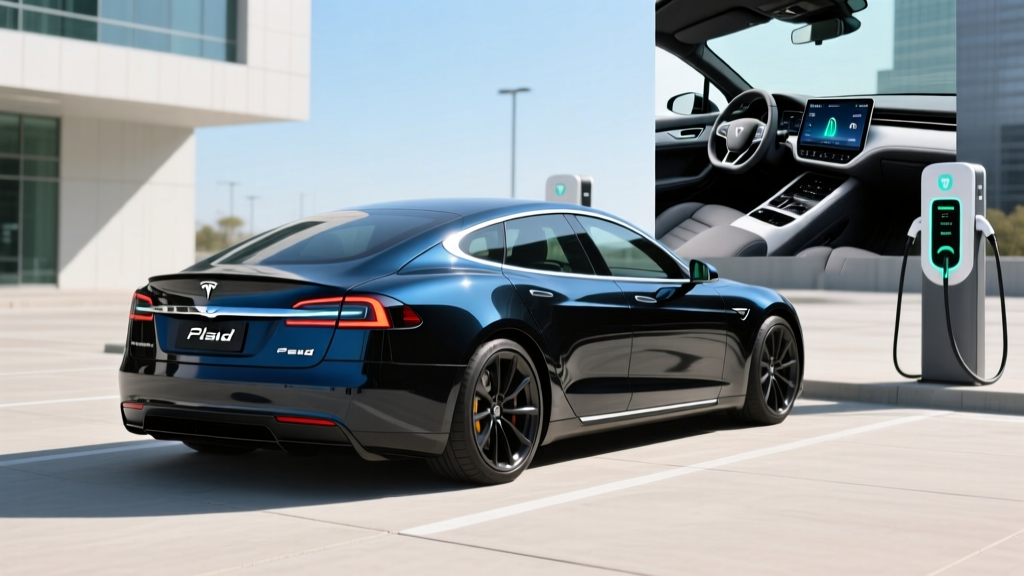
When Tesla launched the Model S Plaid, it reset expectations for what a four-door sedan could do. The headline 1,020 horsepower and sub-two-second 0-60 mph claim grabbed every headline. But the number that actually defines the ownership experience is a less glamorous one: the Tesla Model S Plaid weight. At approximately 4,766 lbs (2,162 kg), the Plaid is carrying serious mass — a direct consequence of its 100 kWh battery pack, tri-motor drivetrain, and reinforced chassis. That curb weight shapes everything from real-world range to tire wear, braking distances, and the way the car manages heat during repeated hard launches.
This review breaks down the 2026 Tesla Model S Plaid with the numbers that matter — EPA range versus what you'll actually see, charging curves at the Supercharger, interior practicality, and whether the $89,990 starting price still makes sense against a growing field of high-performance EVs.
| Spec | Value |
|---|---|
| Curb Weight | 4,766 lbs (2,162 kg) |
| Drivetrain | Tri-Motor AWD |
| Horsepower | 1,020 hp |
| 0-60 mph | 1.99 sec (with rollout) |
| Battery Capacity | ~100 kWh usable (NMC chemistry) |
| EPA Range | 396 miles (19" wheels) / 359 miles (21" wheels) |
| MPGe (combined) | 116 MPGe |
| Efficiency | 29 kWh/100 mi |
| Max DC Fast Charge | 250 kW (peak) |
| 10-80% DC Charge | ~27 minutes |
| Level 2 Charge Rate | 11.5 kW (~41 mi/hr) |
| Base MSRP | $89,990 |
| Battery Warranty | 8 years / 150,000 miles |
Real-World Range vs. the EPA Sticker
The EPA rates the Model S Plaid at 396 miles on the 19-inch Tempest wheels and 359 miles on the 21-inch Arachnid performance wheels. That's class-leading territory for a sedan with this much power. But the EPA test cycle is a blended profile that doesn't fully represent sustained highway driving or cold-weather conditions.
EPA Sticker: 396 mi (19") / 359 mi (21")
Highway (70-75 mph, moderate temps): ~310-340 mi (19") / ~280-310 mi (21")
Cold Weather (below 32°F, highway): ~250-280 mi (19") / ~230-260 mi (21")
City / Suburban Mixed: ~360-390 mi (19") — regen-heavy driving favors the Plaid's efficiency
At 70-75 mph on a flat interstate in 65-75°F weather, expect to consume roughly 30-33 kWh/100 mi, which translates to about 310-340 miles of range on the 19-inch wheel setup. The 21-inch Arachnids add unsprung weight and rolling resistance — plan on a 10-15% range penalty. In sub-freezing temperatures, the heat pump helps, but battery chemistry limitations and cabin heating still reduce usable range by 20-30%. The NMC (nickel manganese cobalt) chemistry in the Plaid's pack prioritizes energy density and power delivery over the cycle-life longevity you'd get with LFP, but it delivers the punch this car demands.
The 4,766-lb curb weight works against highway efficiency — more mass means more energy needed to maintain speed, especially on inclines. But in stop-and-go city driving, the tri-motor regen system recaptures energy effectively, and the Plaid's efficiency approaches its EPA rating more closely than on long road trips.
Charging Speed: DC Fast Charge and Home Level 2
Tesla's Supercharger network remains the gold standard for DC fast charging reliability, and the Model S Plaid takes full advantage of it — though with a notable caveat compared to 800V competitors.
| Charging Level | Power / Rate | Speed / Time |
|---|---|---|
| Level 1 (120V household) | ~1.4 kW | ~3-4 mi/hr |
| Level 2 (240V home, 48A) | 11.5 kW | ~41 mi/hr (full charge ~9 hrs) |
| DC Fast Charge (Supercharger V3) | Peak 250 kW | 10-80% in ~27 min; adds ~200 mi in 15 min |
| DC Fast Charge (CCS adapter, EA/Ionity) | Up to 250 kW | Similar to V3 Supercharger speeds |
The Model S Plaid runs on a 400V architecture, which limits peak DC charging to 250 kW. Competitors on 800V platforms — like the Porsche Taycan Turbo GT or the Hyundai Ioniq 5 N — can accept 320-350 kW at compatible chargers. The practical difference: the Plaid sustains roughly 250 kW from about 10-30% SoC, then tapers progressively. By 60% SoC, you're seeing around 150 kW, and above 80%, the rate drops to under 50 kW. That charge-curve taper means the 10-80% time lands around 27 minutes, which is respectable but no longer class-leading.
At home, the 11.5 kW onboard charger is generous. On a 48-amp Level 2 circuit (requiring a 60-amp breaker), you'll add roughly 41 miles of range per hour. An overnight charge from 20% to full takes about 8-9 hours. For daily driving, most owners charge to 80% (NMC best practice) and only go to 100% before road trips.
Performance: What 1,020 HP and 4,766 Lbs Actually Feels Like
The tri-motor setup — one front, two rear — delivers 1,020 horsepower and torque-vectoring capability that makes the Plaid's acceleration genuinely surreal. Tesla's claimed 1.99-second 0-60 mph time requires a 1-foot rollout (drag-strip convention) and prepped surface, but even rolling-start acceleration is violent. The car's weight is a physics challenge that Tesla manages through sophisticated traction control and the instant torque delivery of electric motors.
At 4,766 lbs, the Plaid is not a lightweight sports sedan, and that mass becomes apparent in corners and under heavy braking. The adaptive air suspension and carbon-ceramic brake option (included with the Track Pack) help manage the inertia, but this is a straight-line missile first and a canyon carver second. The steering is precise but light on feedback compared to a Taycan, and the brake pedal feel under blended regen/friction braking takes adaptation.
The carbon-sleeved rotors in the Track Package ($15,000 option) are essential if you plan to visit a track — without them, the stock brakes will fade quickly under the thermal load of slowing 4,766 lbs from 150+ mph. The Track Package also raises the top speed from 200 mph to 200 mph (the base Plaid is limited to 163 mph without it).
Interior, Tech, and Practicality
The 2026 Model S Plaid continues with Tesla's minimalist interior approach — the yoke steering wheel remains standard (a conventional round wheel is available at no cost), and the 17-inch center touchscreen dominates the dash. The rear passengers get their own 8-inch screen for climate and entertainment controls.
Cargo and passenger space:
- Front headroom: 38.8 inches
- Front legroom: 42.7 inches
- Rear headroom: 38.1 inches
- Rear legroom: 35.4 inches
- Trunk (rear): 26.3 cu ft (hatchback design)
- Frunk (front trunk): 3.1 cu ft
- Total cargo with rear seats folded: ~58 cu ft
The hatchback liftback design is a significant practicality advantage over traditional sedans like the Taycan or BMW i7 — loading luggage, groceries, or bulky items is far easier. The 26.3 cu ft trunk is generous, and the frunk, while small, handles charging cables and a soft bag.
Standout tech features:
- 17-inch center display with gaming-grade processor (Cyberpunk 2077 playable at charging stops)
- 22-speaker audio system with active noise cancellation
- HEPA air filtration with Bioweapon Defense Mode
- Over-the-air updates continuously adding features
- Tesla Vision-based Autopilot (cameras only, no radar or ultrasonic sensors)
Notable drawbacks:
- Yoke steering requires adaptation and is controversial for daily driving (round wheel available)
- No physical buttons for climate, wipers, or glovebox — all screen-controlled
- Build quality has improved but still shows occasional panel-gap inconsistencies
- Rear visibility is compromised by the sloping roofline and small rear window
- Tesla Vision (camera-only) has drawn criticism for phantom braking events
Autopilot and Full Self-Driving (Supervised) are SAE Level 2 driver-assistance systems. They require continuous driver supervision — hands on the yoke/wheel, eyes on the road. The Model S Plaid is not a self-driving vehicle. FSD (Supervised) costs $8,000 upfront or $99/month and adds automatic lane changes, traffic light/stop sign recognition, and city-street navigation assist, but the driver remains fully responsible at all times.
Pricing, Trims, and Federal Tax Credit Eligibility
The 2026 Tesla Model S Plaid starts at $89,990 (MSRP, before destination). There are no traditional trim levels — Tesla offers the Plaid as a single configuration with optional paint colors, wheel sizes, interior trims, and the Track Package.
| Item | Cost |
|---|---|
| Base MSRP (Plaid) | $89,990 |
| Destination Fee | $1,995 |
| Pearl White Multi-Coat Paint | $2,000 |
| 21" Arachnid Wheels | $4,500 |
| Full Self-Driving (Supervised) | $8,000 |
| Track Package | $15,000 |
| As-Tested (loaded) | ~$121,485 |
| Federal §30D Tax Credit | Not eligible (MSRP exceeds $55,000 sedan cap) |
Federal tax credit reality: The Model S Plaid does not qualify for the IRS §30D federal EV tax credit. Under current rules, sedans are subject to a $55,000 MSRP cap (SUVs, trucks, and vans have an $80,000 cap). At $89,990 base, the Plaid is well above that threshold. Additionally, buyer income caps apply to the credit ($150,000 single / $300,000 joint filers), and battery critical-mineral sourcing requirements must be met. Since the MSRP cap alone disqualifies the Plaid, income and sourcing are moot for this model. See the IRS clean vehicle credit page for the latest eligibility rules.
Some states offer additional rebates or HOV lane access regardless of federal eligibility — check your local DMV or energy office for state-specific programs.
Competitor Comparison: Plaid vs. Taycan vs. i7
The performance-luxury EV sedan segment gives buyers real alternatives now. Here's how the Plaid stacks up against its closest rivals on the metrics that matter.
| Spec | Tesla Model S Plaid | Porsche Taycan Turbo GT | BMW i7 M70 |
|---|---|---|---|
| Curb Weight | 4,766 lbs | 5,137 lbs | 6,175 lbs |
| Horsepower | 1,020 hp | 1,019 hp (Launch Control) | 650 hp |
| 0-60 mph | 1.99 sec | 2.1 sec | 3.5 sec |
| EPA Range | 396 mi (19") | 269 mi | 291 mi |
| Battery (usable) | ~100 kWh (NMC) | 97 kWh (NMC) | 101.7 kWh (NMC) |
| Max DC Charge | 250 kW | 320 kW | 195 kW |
| 10-80% Time | ~27 min | ~18 min | ~34 min |
| Base MSRP | $89,990 | $230,000 | $168,500 |
| Tax Credit Eligible | No | No | No |
The Plaid's advantages are clear: it's the fastest, has the longest range, and costs dramatically less than the Taycan Turbo GT or i7 M70. The Porsche fights back with superior handling dynamics, 800V charging architecture (18-minute 10-80%), and a more driver-focused interior. The BMW i7 M70 prioritizes luxury and space over outright pace. None of these competitors qualify for the federal credit due to MSRP caps.
- You want the fastest-accelerating production sedan under $100,000
- Range is a priority — 396 mi EPA is unmatched in the performance segment
- You rely on the Supercharger network for road trips
- You value OTA updates and tech-forward infotainment
- Track handling and steering feedback matter more than straight-line speed (Porsche Taycan Turbo GT)
- You want the fastest DC charging speeds available (Porsche's 800V / 320 kW)
- Traditional luxury materials and build quality are top priorities (BMW i7, Mercedes EQS)
- You want a physical button interface alongside the touchscreen
Warranty, Ownership Costs, and Longevity
Tesla covers the Model S Plaid with:
- Basic Vehicle Limited Warranty: 4 years / 50,000 miles
- Battery & Drive Unit Warranty: 8 years / 150,000 miles, whichever comes first, with minimum 70% battery capacity retention over the warranty period
The 150,000-mile battery warranty is longer than Tesla's Model 3/Y coverage (120,000 miles) and reflects the premium positioning. NMC batteries in high-performance applications tend to experience slightly faster degradation than LFP packs, especially if frequently charged to 100% or subjected to repeated high-current DC fast charging. Tesla's thermal management system is among the best in the industry, which helps mitigate long-term wear. According to fueleconomy.gov, the Plaid's combined efficiency of 116 MPGe (29 kWh/100 mi) means home charging costs roughly $0.04-$0.06 per mile depending on local electricity rates — dramatically less than a comparable gas-powered performance sedan.
Insurance costs are a real factor: the Plaid's combination of high repair costs, performance capability, and Tesla-specific body shop requirements pushes annual premiums into the $3,500-$5,500 range for most drivers. Get quotes before committing.
- Fastest-accelerating production sedan under $100K (1.99s 0-60)
- Class-leading 396-mile EPA range on 19" wheels
- Access to Tesla Supercharger network (most reliable DC charging)
- Hatchback cargo versatility (26.3 cu ft + frunk)
- Continuous OTA updates add features post-purchase
- 8-year / 150,000-mile battery warranty
- 4,766-lb weight limits handling agility vs. lighter sports sedans
- 250 kW max DC charge rate trails 800V competitors
- No federal tax credit eligibility (MSRP above $55K sedan cap)
- Yoke steering divisive; screen-only controls frustrating for some
- Tesla Vision phantom braking remains a concern
- High insurance premiums ($3,500-$5,500/yr typical)
- Track Package ($15,000) essential for sustained track use
Who Should Buy the Model S Plaid?
The Model S Plaid serves a specific buyer: someone who wants hypercar acceleration in a practical four-door package with genuine daily-driver range and road-trip capability. It's a commuter that can demolish a drag strip, a family sedan that covers 300+ real-world highway miles between charges, and a tech showcase that improves with OTA updates.
It's not the right choice for buyers who prioritize track-day handling precision over straight-line speed, who want the fastest possible DC charging for frequent road trips, or who expect traditional luxury-car build quality and physical controls. For those needs, the Porsche Taycan, Hyundai Ioniq 5 N, or BMW i7 respectively make stronger cases.
But if you want the most performance per dollar in an electric sedan — and you accept the weight, the charging speed, and the screen-centric interface — the Plaid remains a singular machine.
Frequently Asked Questions
What is the Tesla Model S Plaid weight and how does it affect performance?
The Model S Plaid has a curb weight of approximately 4,766 lbs (2,162 kg). This mass comes from the 100 kWh NMC battery pack, tri-motor drivetrain, and reinforced structure. The weight works against highway efficiency and cornering agility but is managed effectively by Tesla's traction control and torque vectoring for straight-line acceleration.
What is the real-world range of the Model S Plaid?
The EPA rates the Plaid at 396 miles (19" wheels) or 359 miles (21" wheels). In real-world highway driving at 70-75 mph, expect 310-340 miles on 19-inch wheels and 280-310 miles on 21-inch wheels. Cold weather (below 32°F) reduces range by an additional 20-30%.
How fast does the Model S Plaid charge at home and on DC fast chargers?
On a 48-amp Level 2 home charger, the Plaid charges at 11.5 kW, adding about 41 miles of range per hour (full charge in ~9 hours). On a V3 Supercharger, it peaks at 250 kW and charges from 10-80% in approximately 27 minutes. The 400V architecture limits peak speed compared to 800V competitors like the Porsche Taycan.
Does the Tesla Model S Plaid qualify for the federal EV tax credit?
No. Under IRS §30D rules, sedans must have an MSRP at or below $55,000 to qualify. The Model S Plaid starts at $89,990, well above the cap. Buyer income limits ($150K single / $300K joint) and battery-sourcing requirements also apply, but the MSRP cap alone disqualifies the Plaid. Check IRS.gov for the latest rules.
Is the Model S Plaid worth it compared to the Porsche Taycan Turbo GT?
The Plaid offers more range (396 vs. 269 mi EPA), faster acceleration (1.99s vs. 2.1s 0-60), and costs roughly $140,000 less. The Taycan Turbo GT delivers superior handling, faster DC charging (320 kW via 800V), and a more driver-focused interior. If straight-line speed and range are your priorities, the Plaid wins on value. If track dynamics and charging speed matter more, the Taycan is the better driver's car.
How long will the Model S Plaid battery last?
Tesla warrants the Plaid's battery for 8 years or 150,000 miles with a minimum 70% capacity retention. NMC batteries in high-performance use tend to degrade slightly faster than LFP, but Tesla's active thermal management helps. Most owners report 85-90% capacity retention after 100,000 miles. Avoiding frequent 100% charges and excessive DC fast charging extends longevity.
Can the Model S Plaid be used for road trips?
Yes — with 300+ real-world highway miles of range and access to the Supercharger network, the Plaid is one of the most capable road-trip EVs available. Plan for 25-30 minute charging stops every 250-280 miles on the highway. Preconditioning the battery (automatic when navigating to a Supercharger) is essential for achieving peak charging speeds.