Quick Verdict: The Fastest Sedan Money Can Buy
The Tesla Model S Plaid remains an engineering outlier in 2026: a four-door sedan that hits 60 mph in 1.99 seconds, carries a 200 mph top speed, and still delivers over 390 miles of EPA-rated range. No other production vehicle — electric or combustion — matches that combination of brute acceleration, top-end velocity, and daily-driver practicality. But at a starting MSRP of $89,990, and with competitors like the Lucid Air Sapphire and Porsche Taycan Turbo GT closing the gap, the Plaid's value proposition demands a hard look at real-world range, charging speed, and ownership costs.
This review breaks down every spec that matters — from the tri-motor powertrain to the 100 kWh battery pack, DC fast-charge curves, and federal tax credit eligibility — so you can decide whether the Model S Plaid earns a spot in your garage.
Spec Sheet: 2026 Tesla Model S Plaid at a Glance
| Specification | 2026 Model S Plaid |
|---|---|
| Base MSRP | $89,990 |
| As-Tested Price (with FSD) | $97,990 |
| EPA Range | 396 miles (19" wheels) |
| Battery Capacity | ~100 kWh usable (NMC chemistry) |
| Drivetrain | Tri-Motor AWD (1 front, 2 rear) |
| Horsepower | 1,020 hp |
| 0–60 mph | 1.99 seconds |
| Top Speed | 200 mph (with hardware update) |
| Quarter Mile | 9.23 seconds |
| Max DC Fast Charge | 250 kW (Supercharger V3) |
| 10–80% DC Charge Time | ~27 minutes |
| Level 2 Home Charge Rate | 11.5 kW (~41 mi/hr) |
| MPGe (Combined) | 116 MPGe |
| Energy Consumption | 29 kWh/100 mi |
| Cargo Volume | 28 cu ft (rear seats up) + 5.3 cu ft frunk |
| Rear Legroom | 35.4 inches |
| Battery Warranty | 8 years / 150,000 miles |
| Vehicle Warranty | 4 years / 50,000 miles |
Range & Efficiency: EPA Sticker vs. Real-World Miles
The EPA rates the Model S Plaid at 396 miles when equipped with the standard 19" Tempest wheels. Opt for the 21" Arachnid wheels and that figure drops to approximately 359 miles due to increased rolling resistance and aerodynamic drag. Efficiency lands at 116 MPGe combined, translating to roughly 29 kWh per 100 miles — respectable for a 4,766-pound sedan producing over 1,000 horsepower.
EPA Sticker: 396 miles (19" wheels) | 359 miles (21" wheels)
Expect in practice:
- Mixed city/highway driving (65–75 mph): ~330–360 miles
- Sustained 80+ mph highway: ~280–310 miles
- Cold weather (below 32°F): ~260–290 miles (battery resistance + cabin heating)
- Track/Paid mode use: Significantly reduced — expect 150–200 miles of equivalent range
The Plaid's heat pump and advanced thermal management help mitigate cold-weather losses compared to older EVs, but physics still applies: high-speed driving and low temperatures reduce range by 20–35%.
According to data from fueleconomy.gov, the Plaid's combined efficiency places it behind the standard dual-motor Model S (which achieves up to 405 miles and 120 MPGe) but well ahead of performance rivals like the Porsche Taycan Turbo GT (rated at roughly 283 miles and 86 MPGe). The tri-motor system's additional weight and power draw account for the slight efficiency penalty versus the dual-motor variant.
Charging Speed: DC Fast, Level 2, and the Supercharger Advantage
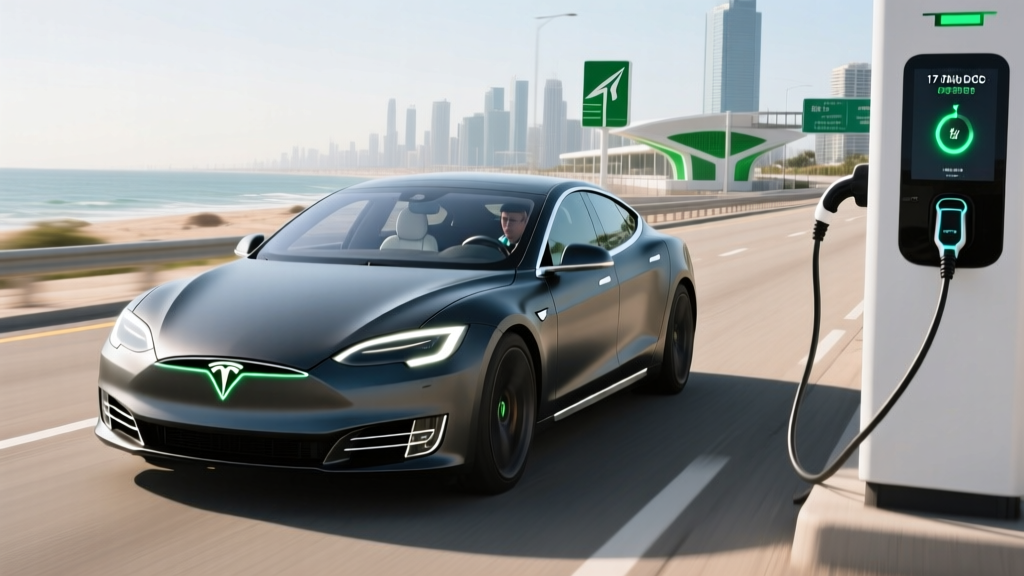
Tesla equips the Model S Plaid with a 250 kW peak DC fast-charge capability on Supercharger V3 stalls. While competitors like the Hyundai Ioniq 5 and Porsche Taycan can hit 350 kW on compatible chargers, Tesla's proprietary charge curve management and vast Supercharger network (over 60,000 stalls globally) deliver a practical advantage: you almost always get a working, fast stall when you need one.
| Charging Method | Power (kW) | Speed (miles added per hour) | Notes |
|---|---|---|---|
| Level 1 (120V household) | ~1.4 kW | ~4–5 mi/hr | Emergency/trickle only |
| Level 2 (240V, 48A home) | 11.5 kW | ~41 mi/hr | Full charge in ~9 hours |
| DC Fast (Supercharger V3) | 250 kW peak | ~200 mi in 15 min | 10–80% in ~27 min |
| DC Fast (CCS adapter + EA) | Up to 150–250 kW | Varies by stall | Requires Tesla CCS adapter |
The charge curve matters more than peak kW. The Plaid pulls near its 250 kW peak only between roughly 10–30% state of charge. From 30–60%, power tapers to approximately 150–180 kW, and above 80% it drops further to protect battery longevity. This is why Tesla quotes a 10–80% time of about 27 minutes rather than a misleading "full charge" number. On a road trip, plan for 20–25 minute stops every 200–250 miles to stay in the fast-charging sweet spot.
Home charging setup: With an 11.5 kW onboard charger, the Plaid adds about 41 miles of range per hour on a 240V/48A Level 2 circuit (such as a Tesla Wall Connector on a 60A breaker). A full overnight charge from 10% takes roughly 9 hours. If your home electrical panel only supports a 40A circuit (9.6 kW), expect about 34 miles per hour — still enough to fully recharge overnight for most drivers. Budget $500–$1,500 for a professional Level 2 installation, with potential panel upgrades adding $1,500–$3,000 if your home has a 100A service.
Performance: The Tesla Plaid Top Speed and Acceleration Story
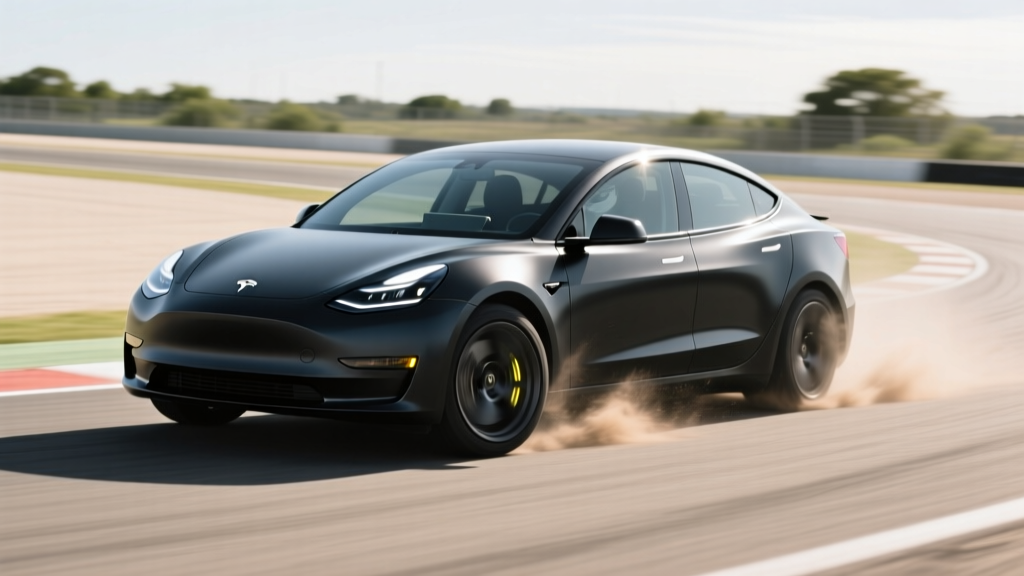
The headline number is 200 mph — the Tesla Model S Plaid top speed with the optional carbon-ceramic brake package and appropriate tire hardware. Without that package, the limiter sits at 175 mph. But top speed is only part of the story.
The Plaid's tri-motor architecture places one permanent-magnet reluctance motor on the front axle and two carbon-sleeve-rotor motors on the rear axle. Combined output: 1,020 horsepower and an estimated 1,050 lb-ft of torque. The 1.99-second 0–60 mph time (with rollout subtracted, on prepped surfaces) makes it one of the quickest production cars ever built. Independent testing by outlets like Motor Trend has verified sub-2.1-second runs on standard asphalt, with the quarter mile arriving in approximately 9.2–9.4 seconds.
The Model S Plaid ships with Tesla's basic Autopilot (traffic-aware cruise control + lane centering). Full Self-Driving (Supervised) adds automated lane changes, traffic light/stop sign recognition, and city-street navigation for an additional $8,000. Despite the name, FSD is an SAE Level 2 system — the driver must remain fully attentive, hands on or near the wheel, and ready to take over instantly. Only Level 4 robotaxi services like Waymo operate without driver supervision, and those are geofenced to specific cities.
The Plaid also features torque vectoring across all three motors, a lowered adaptive air suspension, and track mode with configurable stability control and cooling presets. The carbon-ceramic brake package ($15,000 option) is essentially required if you plan to use the car's full performance envelope at track events, as the standard steel rotors will overheat under repeated high-speed stops.
Interior, Tech, and Daily Practicality
The Model S interior received a significant refresh in the 2021 redesign and carries forward into 2026 with minor updates. The yoke steering wheel remains standard (a conventional round wheel is available as a no-cost option), and the 17-inch landscape touchscreen handles virtually all vehicle functions — climate, media, navigation, vehicle settings, and even gaming while charging.
Space and comfort:
- Front headroom: 39.7 inches
- Rear legroom: 35.4 inches — adequate for adults on shorter trips, tight for tall passengers on long hauls
- Cargo (rear hatch): 28 cu ft with seats up, expanding to ~79 cu ft with the 60/40 split folded
- Front trunk (frunk): 5.3 cu ft — useful for charging cables or a small bag
- Seating: 5-passenger capacity; ventilated front seats, heated rear seats standard
Infotainment and audio: A 22-speaker, 960-watt audio system is standard, along with wireless phone charging, HEPA air filtration (Bioweapon Defense Mode), and rear-seat entertainment via a second 8-inch screen. Navigation routes through Tesla's own mapping with real-time Supercharger availability and preconditioning.
Notable drawbacks: The yoke steering wheel remains polarizing for low-speed maneuvers and three-point turns. Build quality, while improved from earlier years, still shows occasional panel-gap inconsistencies. The lack of physical buttons for climate and wiper controls forces reliance on the touchscreen, which can distract during spirited driving. And at 175+ mph capability, tire replacement costs are steep — expect $1,500–$2,500 for a set of Michelin Pilot Sport 4S or equivalent high-performance rubber every 10,000–15,000 miles under aggressive use.
Pricing, Trims, and Federal Tax Credit Eligibility
The 2026 Model S Plaid carries a base MSRP of $89,990 before destination fees. Tesla has streamlined the Model S lineup to two trims: the dual-motor Long Range ($74,990, 405-mile range) and the tri-motor Plaid ($89,990, 396-mile range).
| Trim | MSRP | Key Upgrades vs. Long Range |
|---|---|---|
| Model S Long Range | $74,990 | 405 mi range, 670 hp, 3.1s 0–60 |
| Model S Plaid | $89,990 | 396 mi range, 1,020 hp, 1.99s 0–60, tri-motor, track mode |
| Plaid + Carbon Ceramic Brakes | $104,990 | 200 mph top speed enabled, track-rated rotors |
| Plaid + FSD (Supervised) | $97,990 | Full Self-Driving supervised software |
The Model S Plaid does NOT qualify for the $7,500 federal EV tax credit under current IRS rules. Here's why:
- MSRP Cap: §30D limits the credit to sedars priced at $55,000 or less. The Plaid at $89,990 exceeds this cap by a wide margin.
- Income Cap: Even if the price qualified, buyer AGI must be ≤ $150,000 (single) / $300,000 (joint). Many Plaid buyers exceed these thresholds.
- Battery Sourcing: Critical mineral and battery component sourcing requirements from IRS guidelines must also be met.
- Point-of-Sale Transfer: For qualifying vehicles, the credit can now be transferred to the dealer at purchase — but this doesn't apply to the Plaid given the MSRP cap.
Bottom line: Budget the full MSRP plus destination and any state registration fees. Some states (California, Colorado, Massachusetts) offer additional rebates or HOV lane access — check your local DMV or energy office for current programs.
Model S Plaid vs. the Competition: Is It Worth It?
The Plaid occupies a narrow but enviable segment. Here's how it stacks up against its closest rivals in 2026:
| Metric | Tesla Model S Plaid | Lucid Air Sapphire | Porsche Taycan Turbo GT |
|---|---|---|---|
| Price | $89,990 | $249,000 | $230,000 |
| Horsepower | 1,020 hp | 1,234 hp | 1,019 hp |
| 0–60 mph | 1.99s | ~2.0s | 2.1s |
| EPA Range | 396 mi | ~420 mi | ~283 mi |
| Max DC Charge | 250 kW | 300 kW | 320 kW |
| Charging Network | Supercharger (best coverage) | CCS (growing) | CCS + Electrify America |
| Top Speed | 200 mph | 205 mph | 190 mph |
- You want sub-2-second 0–60 performance at under $100K
- Supercharger network access is a priority for road trips
- You value over-the-air updates and integrated tech
- 396 miles of range matters more than 350 kW charging speed
- Budget is not a constraint and you want the absolute quickest sedan
- 420+ miles of range and 300 kW charging are worth the premium
- You prefer a more traditional luxury sedan interior
- Track handling precision and build quality matter more than straight-line range
- You prefer Porsche's driving dynamics and 800V architecture
- You're willing to trade 100+ miles of range for chassis feedback
Pros, Cons, and Ownership Realities
- 1.99s 0–60 and 200 mph top speed in a four-door sedan
- 396-mile EPA range — longest of any performance EV at this price
- Supercharger network: unmatched public charging reliability
- Over-the-air updates continuously add features
- Spacious hatchback cargo area (28 cu ft + frunk)
- Tri-motor torque vectoring provides exceptional corner exit grip
- 8-year / 150,000-mile battery warranty
- $89,990 MSRP — no federal tax credit eligibility
- 250 kW peak charge rate trails 350 kW rivals
- Yoke steering is divisive; not ideal for parking lots
- Touchscreen-dependent controls can distract while driving
- High-performance tire replacement costs ($1,500–$2,500 per set)
- Insurance premiums run 30–50% above comparable luxury sedans
- Rear seat space tight for tall adults on long trips
- Build quality still inconsistent compared to Porsche/Mercedes
Five-year ownership cost considerations: Electricity costs for the Plaid average roughly $0.04–$0.06 per mile at home (depending on your utility rate) versus $0.12–$0.18 per mile on public DC fast chargers. Compared to a BMW M5 or Mercedes-AMG GT 4-Door getting 16–18 mpg, the Plaid saves an estimated $3,500–$5,000 in fuel over five years at 15,000 miles/year. However, insurance (averaging $3,500–$4,500/year for the Plaid) and accelerated tire wear partially offset those savings. Depreciation on high-performance EVs has historically been steeper than mainstream models — expect 40–50% value retention at five years based on current market trends.
Who Should Buy the Tesla Model S Plaid?
The Model S Plaid is purpose-built for a specific buyer: someone who wants hypercar-rivaling acceleration in a vehicle that can still commute daily, carry four passengers, and road-trip on the Supercharger network without range stress. It's an excellent choice for:
- Performance enthusiasts who want track-capable acceleration without a trailer or a second car
- Tech-forward commuters who value OTA updates, Autopilot highway assist, and integrated navigation
- Road trippers who want 300+ miles of real-world range with fast, reliable charging infrastructure
It's a poor fit for buyers who prioritize luxury interior materials (look at Lucid or Mercedes EQS), need three-row seating, want the lowest possible cost of ownership, or require federal tax credit eligibility. For those buyers, the dual-motor Model S Long Range at $74,990 still doesn't qualify for §30D, but models like the BMW i5 eDrive40 or Hyundai Ioniq 6 may offer better total value.
Frequently Asked Questions
What is the real top speed of the Tesla Model S Plaid?
With the optional carbon-ceramic brake package ($15,000), the Model S Plaid achieves a verified 200 mph top speed. Without it, the electronic limiter holds at 175 mph. Achieving 200 mph requires appropriate tires, a suitable track or closed course, and adequate battery state of charge — Tesla's thermal management will limit repeated top-speed runs to protect the motors and battery.
What is the real-world range of the Model S Plaid?
The EPA rates the Plaid at 396 miles on 19" wheels. In real-world mixed driving at highway speeds (65–75 mph), expect 330–360 miles. In cold weather (below freezing), plan for 260–290 miles. On track or during repeated hard acceleration, range drops dramatically — treat 200 miles as a safe minimum for spirited driving sessions.
How fast does the Model S Plaid charge?
On a Tesla Supercharger V3, the Plaid peaks at 250 kW and can add approximately 200 miles of range in 15 minutes. A 10–80% charge takes about 27 minutes. At home on a 240V/48A Level 2 charger, it adds roughly 41 miles per hour, with a full charge taking about 9 hours.
Does the Tesla Model S Plaid qualify for the federal EV tax credit?
No. Under current IRS §30D rules, new clean vehicle credits are limited to sedans with an MSRP of $55,000 or less. The Plaid's $89,990 starting price far exceeds this cap. Buyer income limits ($150K single / $300K joint) also disqualify many potential purchasers. Check with a tax professional for your specific situation.
Is the Model S Plaid worth buying over the Lucid Air Sapphire or Porsche Taycan?
At $89,990, the Plaid offers roughly 90% of the Sapphire's performance for less than half the price, plus the Supercharger network advantage. The Porsche Taycan Turbo GT delivers superior handling precision and build quality but sacrifices over 100 miles of range and costs more than double. For most buyers wanting extreme performance with daily usability and road-trip capability, the Plaid remains the value leader in the hyper-sedan segment.
How long will the Plaid's battery last?
Tesla warranties the battery for 8 years or 150,000 miles, whichever comes first, with a minimum 70% capacity retention guarantee. Real-world data from high-mileage Model S owners suggests NMC packs in Tesla's thermal management system retain approximately 85–90% capacity at 100,000 miles with normal use. Avoid frequent 100% charges and DC fast charging when possible to maximize longevity. A full battery replacement out of warranty currently costs approximately $20,000–$25,000 including labor.