The Tesla Model S Plaid remains one of the quickest production cars on the planet, but beyond its 1.99-second 0-60 claim, buyers consistently search for one specific detail: the Tesla Plaid steering wheel situation. Tesla offers the Plaid with either a conventional round steering wheel or the controversial Yoke, and the choice fundamentally shapes the driving experience. This review covers the full 2026 Model S Plaid package — steering interface, range, charging, performance, pricing, and whether this flagship sedan still earns its place against newer luxury EV rivals.
Quick Verdict: Who Is the Model S Plaid For?
The Model S Plaid targets buyers who want hypercar acceleration in a practical four-door sedan with access to Tesla's Supercharger network. It suits tech-forward enthusiasts, long-distance commuters who value 359 miles of EPA range, and drivers who want over 1,000 horsepower without sacrificing cargo space. It is not ideal for buyers who prioritize traditional luxury materials (BMW i7, Mercedes EQS do that better) or those who want the latest Level 3/4 autonomous capability — Tesla's FSD (Supervised) remains a Level 2 driver-assist system requiring full driver engagement.
The Tesla Plaid Steering Wheel: Yoke vs. Round Wheel
The Tesla Plaid steering wheel comes in two configurations, and understanding the trade-offs is essential before ordering.
The Yoke
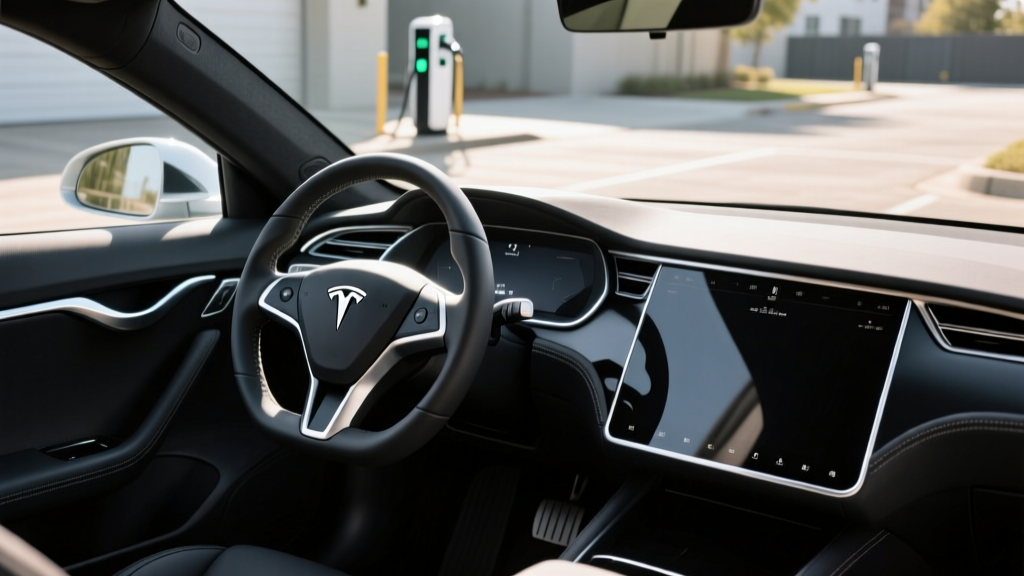
Tesla's Yoke replaces the upper rim of a traditional wheel with an open-top, aircraft-style control yoke. Benefits include an unobstructed view of the 12.3-inch instrument display, a futuristic aesthetic, and natural hand placement at 9-and-3 for highway cruising. The Yoke also forces a specific hand position that pairs well with the Plaid's ultra-quick 10:1 variable-ratio steering rack — you rarely need to shuffle hands for typical turns.
The Round Steering Wheel
After significant customer feedback, Tesla reinstated the conventional round wheel as a no-cost option. The round wheel is objectively better for low-speed maneuvers, tight parking structures, three-point turns, and roundabouts — anywhere requiring more than roughly 360 degrees of lock. With the fixed-ratio rack on the 2026 Model S, hand-over-hand rotation is necessary, and the Yoke makes this awkward and potentially unsafe.
Which Should You Choose?
If your driving is 80%+ highway commuting, the Yoke offers a clean, modern feel. If you navigate city streets, cul-de-sacs, or parking garages regularly, the round wheel is the pragmatic choice. You can swap between them at a Tesla Service Center, though parts availability varies.
Range, Battery, and Efficiency
| Spec | Value |
|---|---|
| EPA Range | 359 miles (19" wheels) / 320 miles (21" Arachnid) |
| Battery (usable) | ~95 kWh, NMC (nickel-manganese-cobalt) |
| Efficiency | 119 MPGe combined / 28 kWh/100 mi |
| Drivetrain | Tri-motor AWD (1 front, 2 rear carbon-sleeved rotors) |
| Horsepower | 1,020 hp |
| 0-60 mph | 1.99 seconds (with rollout) |
| Top Speed | 200 mph |
| Max DC Charge Rate | 250 kW peak |
| 10-80% DC Charge Time | ~30 minutes |
| Level 2 Home Charge | 11.5 kW (48A) — ~34 mi/hr |
| Cargo Volume | 28 cu ft (rear seats up) + frunk |
| Rear Legroom | 35.4 inches |
| Battery/Drive Unit Warranty | 8 years / 150,000 miles (70% minimum retention) |
The NMC chemistry in the Plaid provides higher energy density than Tesla's LFP packs (found in the Model 3 RWD), which is necessary to hit 359 miles in a heavy tri-motor sedan. However, NMC degrades slightly faster than LFP over time and Tesla recommends daily charging to 80-90% rather than 100% for longevity — reserving full charges for road trips. Per fueleconomy.gov, the Plaid's combined efficiency of 28 kWh/100mi is respectable for a 1,020-hp vehicle but trails the Lucid Air Grand Touring's superior efficiency.
Charging Speed: Supercharger and Home
| Level | Power | Speed (miles added/hr) | Notes |
|---|---|---|---|
| Level 1 (120V) | ~1.4 kW | ~4 mi/hr | Emergency/trickle only |
| Level 2 (240V, 48A) | 11.5 kW | ~34 mi/hr | Home Wall Connector; full charge in ~8.5 hrs |
| DC Fast (V3 Supercharger) | 250 kW peak | ~200 mi in 15 min | 10-80% in ~30 min; tapers above 80% |
| DC Fast (V4 Supercharger) | 250 kW (vehicle limited) | ~200 mi in 15 min | Plaid caps at 250 kW; CCS adapter needed for non-Tesla networks |
The Model S Plaid peaks at 250 kW on V3 and V4 Superchargers, which is strong but no longer class-leading — the Hyundai Ioniq 5 and Porsche Taycan can sustain higher rates via 800V architectures. Tesla's charge curve holds near peak rate from roughly 10-45% SoC, then tapers progressively. The 10-80% time of approximately 30 minutes is acceptable for road trips, where Tesla's onboard route planner automatically preconditions the battery for optimal charging speed at your destination Supercharger.
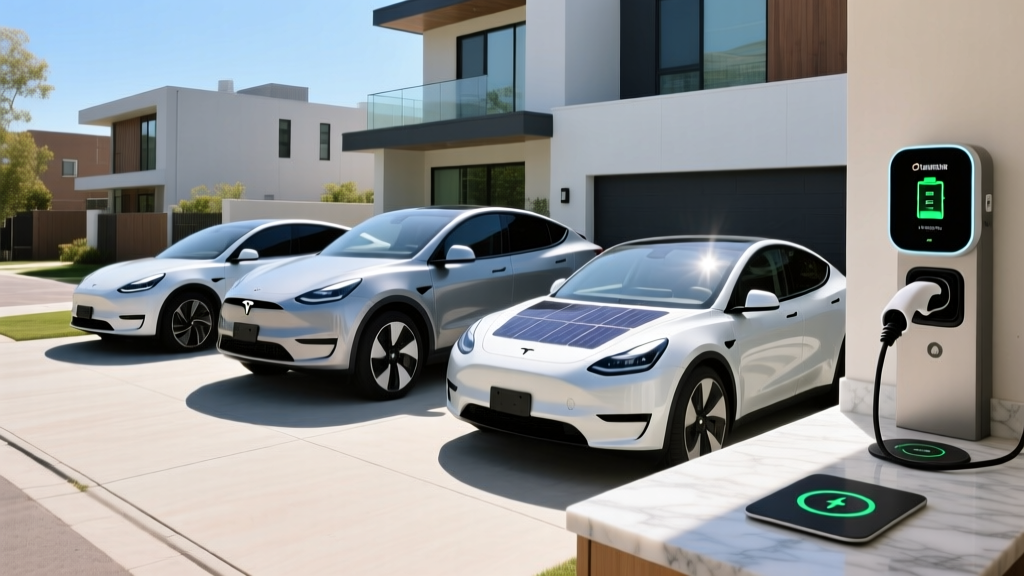
For home charging, the Tesla Wall Connector at 48 amps (11.5 kW) adds roughly 34 miles of range per hour, meaning a full overnight charge is easily achievable. The Mobile Connector with a NEMA 14-50 outlet delivers up to 32 amps (7.7 kW, ~23 mi/hr). Ensure your electrical panel has capacity for a 60-amp circuit before installation — panel upgrades can add $1,500-$3,000 to the typical $500-$1,200 installation cost.
Performance and Driving Dynamics
The Plaid's tri-motor powertrain — one front motor and two rear carbon-sleeved permanent-magnet motors — delivers 1,020 horsepower and a claimed 1.99-second 0-60 mph time (with a one-foot rollout subtracted, drag-strip style). Independent testing by outlets like Motor Trend has verified sub-2.0-second runs under optimal conditions with prepped surfaces. On a standard road surface, expect 2.1-2.3 seconds — still devastatingly quick.
The Plaid uses torque vectoring across the rear motors for cornering agility that belies its 4,766-pound curb weight. The adaptive air suspension lowers the car at speed for aerodynamic efficiency and can raise for driveways. Steering is precise with the 10:1 ratio rack, and the Plaid's carbon-ceramic brake option (included in the Track Package) provides fade-free stopping power during repeated high-speed runs.
On public roads, the Plaid's acceleration is genuinely difficult to use legally. Where it excels daily is the instant torque for merging, the quiet cabin at highway speeds, and the one-pedal driving feel from aggressive regenerative braking.
Interior, Tech, and Driver Assistance
The Model S interior received a significant refresh in 2021 and carries into 2026 with minor updates. The 17-inch center touchscreen (now tilted slightly toward the driver in recent builds) runs Tesla's infotainment OS, which includes Netflix, YouTube, gaming (the Plaid can run Cyberpunk 2077 at full settings while charging), and a 22-speaker audio system that rivals anything from Burmester or Bowers & Wilkins.
The 12.3-inch instrument cluster sits behind the yoke or round wheel, and a rear 8-inch touchscreen serves back-seat passengers for climate and media control. Build quality has improved noticeably since 2023, with better panel gaps and higher-quality materials, though it still trails the Mercedes EQS and BMW i7 in traditional luxury feel — leather alternatives, real wood, and massaging seats are absent.
Autopilot and FSD (Supervised)
Basic Autopilot (included) provides adaptive cruise control and lane-centering on marked highways. Enhanced Autopilot adds auto lane change, autosteer on highways, and Smart Summon. FSD (Supervised) extends capability to city streets with traffic light and stop sign recognition. In real-world use, FSD performs well on well-marked suburban roads but can struggle with construction zones, faded lane markings, and unprotected left turns. The driver monitoring system uses the cabin camera to ensure attention.
Pricing, Trims, and Federal Tax Credit
| Item | Amount |
|---|---|
| Base MSRP (Model S Long Range) | $79,990 |
| Plaid MSRP | $94,990 |
| FSD (Supervised) Add-On | $8,000 (or $99/mo) |
| Destination Fee | $1,995 |
| Typical As-Tested Price | $104,985 (Plaid + FSD + destination) |
| Federal Tax Credit (§30D) | Not eligible — exceeds $55,000 sedan MSRP cap |
The Model S Plaid does not qualify for the IRS §30D federal EV tax credit. The credit's MSRP cap for sedans is $55,000, and the Plaid's $94,990 base price far exceeds that threshold. Additionally, buyer income caps apply (§30D limits modified AGI to $150,000 single / $300,000 joint), and battery critical-mineral sourcing requirements must be met — but the MSRP cap alone disqualifies the Plaid regardless of income or sourcing.
Some state-level incentives may still apply (check your state's energy office for current rebates), and the Plaid may qualify for HOV lane access stickers in states like California, though these programs have income caps and phase-out schedules. Consult a tax professional for your specific situation.
Competitor Comparison: Is the Plaid Worth It?
| Spec | Tesla Model S Plaid | Lucid Air Grand Touring | Porsche Taycan Turbo GT |
|---|---|---|---|
| EPA Range | 359 mi | 512 mi | 269 mi |
| Horsepower | 1,020 hp | 819 hp | 1,019 hp (Launch Control) |
| 0-60 mph | 1.99 sec | 3.0 sec | 2.1 sec |
| Peak DC Charge | 250 kW | 300+ kW | 320 kW |
| Starting MSRP | $94,990 | $125,600 | $230,000 |
| Charging Network | Supercharger (native) | NACS adapter for Superchargers | NACS adapter for Superchargers |
Choose the Model S Plaid if: You want the best acceleration-per-dollar in a four-door, value native Supercharger access, and prefer Tesla's software ecosystem and over-the-air updates.
Choose the Lucid Air Grand Touring if: Maximum range (512 miles) and interior luxury are your top priorities, and budget allows for the higher MSRP.
Choose the Porsche Taycan Turbo GT if: Track-day performance, braking feel, and Porsche's build quality matter more than range or price.
Pros and Cons
Pros
- Sub-2-second 0-60 mph — quickest sedan available
- 359-mile EPA range is excellent for a 1,020-hp vehicle
- Native Tesla Supercharger network access (17,000+ stalls in North America)
- Over-the-air updates continually add features
- 28 cu ft cargo + frunk — practical daily driver
- 22-speaker audio system is reference-quality
- 8-year/150,000-mile battery warranty
Cons
- No federal tax credit (exceeds $55K sedan MSRP cap)
- Yoke steering is impractical for low-speed/parking use
- Interior materials lag behind Mercedes EQS, BMW i7
- 250 kW peak charge rate trails 800V competitors (Taycan, Ioniq 5)
- FSD (Supervised) is Level 2 only — not self-driving
- Rear seat comfort and headroom are tight for tall adults
- Insurance premiums are high ($3,500-$5,000+/year typical)
Frequently Asked Questions
What is the real-world range of the Tesla Model S Plaid?
EPA-rated at 359 miles (19" wheels), real-world highway driving at 70-75 mph yields approximately 290-320 miles in moderate temperatures. In freezing weather, expect 240-280 miles. The 21" Arachnid wheels reduce EPA range to 320 miles and worsen real-world results by roughly 5-8%.
How fast does the Model S Plaid charge?
The Plaid peaks at 250 kW on V3/V4 Superchargers, achieving a 10-80% charge in approximately 30 minutes with a preconditioned battery. At home on a Level 2 Wall Connector (11.5 kW / 48A), it adds ~34 miles per hour, fully recharging overnight in about 8.5 hours.
Does the Tesla Model S Plaid qualify for the federal EV tax credit?
No. The IRS §30D credit caps eligible sedans at $55,000 MSRP, and the Plaid starts at $94,990. It does not qualify regardless of buyer income or battery sourcing. Check your state's energy office for potential state-level rebates or incentives.
Is the Yoke steering wheel safe?
The Yoke is legal for road use and NHTSA has not issued restrictions. However, it requires adaptation for low-speed turns, parking, and emergency maneuvers where more than ~360 degrees of steering rotation is needed. Tesla's fixed-ratio 10:1 rack means hand-over-hand input is occasionally necessary, which the Yoke's open top makes awkward. Many owners switch to the round wheel for daily driving.
How does the Plaid compare to the Lucid Air?
The Plaid is quicker (1.99 vs. 3.0 sec 0-60) and less expensive ($94,990 vs. $125,600), but the Lucid Air Grand Touring offers vastly more range (512 vs. 359 miles) and a more luxurious interior. The Plaid wins on acceleration and Supercharger convenience; the Air wins on efficiency and comfort.
What is the battery warranty on the Model S Plaid?
Tesla covers the battery and drive units for 8 years or 150,000 miles, whichever comes first, with a minimum 70% capacity retention threshold. If the battery degrades below 70% of its original capacity within the warranty period, Tesla will repair or replace it. Real-world data from high-mileage Teslas suggests NMC packs typically retain 85-90% capacity at 100,000 miles with proper charging habits (80-90% daily limit, avoid prolonged 100% SoC).