Quick Verdict: The Fastest Sedan Still Evolves
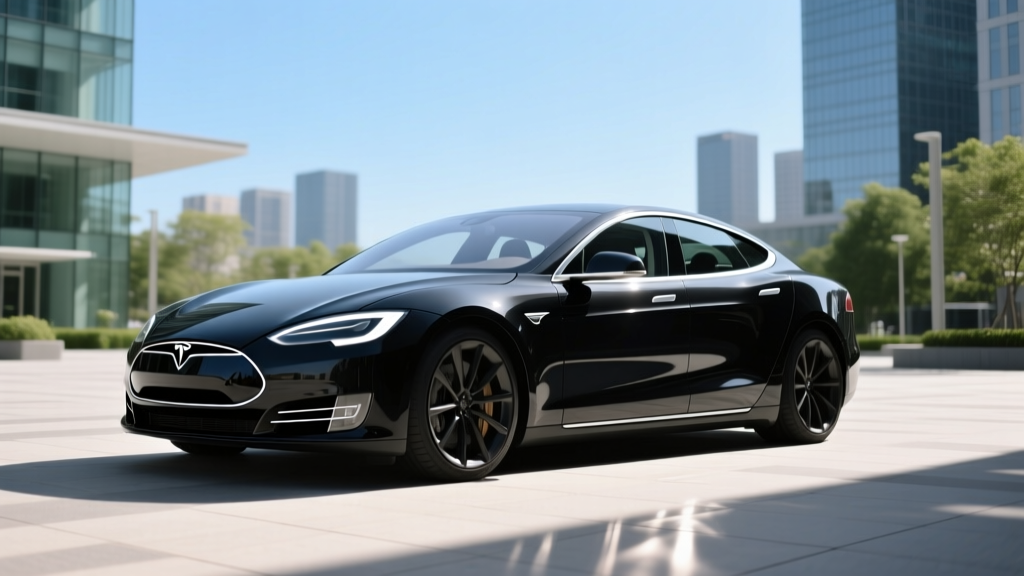
The 2026 Tesla Model S Plaid remains the benchmark for four-door electric performance. With 1,020 horsepower, a tri-motor all-wheel-drive powertrain, and a 0-60 mph time of 1.99 seconds, it competes with hypercars at a fraction of the price. But beyond the headline acceleration, the 2026 refresh brings meaningful interior updates — most notably redesigned Tesla Plaid seats that address one of the longest-standing criticisms of the Model S cabin. Combined with a usable 95 kWh NMC battery, EPA-estimated 396-mile range, and access to Tesla's 250 kW Supercharger network, the Plaid is a legitimate daily driver, not just a drag-strip novelty.
The question for most buyers at this price point is whether the Plaid's combination of range, performance, and daily usability still justifies a six-figure purchase against competitors like the Lucid Air Sapphire, Porsche Taycan Turbo GT, and BMW i7 M70. This review breaks down every spec that matters — from real-world range expectations to charging-curve behavior to the fine print on federal tax credit eligibility.
2026 Tesla Model S Plaid: Core Specifications
| Attribute | Value |
|---|---|
| EPA Range | 396 miles (19-inch wheels); 359 miles (21-inch Arachnid wheels) |
| Battery Capacity | ~95 kWh usable, NMC (nickel manganese cobalt) |
| Drivetrain | Tri-motor AWD (1 front, 2 rear) |
| Horsepower | 1,020 hp |
| 0-60 mph | 1.99 seconds (with rollout subtracted) |
| Top Speed | 200 mph (with hardware upgrade) |
| Max DC Fast Charge | 250 kW peak (V3 Supercharger) |
| 10-80% DC Charge Time | ~30 minutes |
| Level 2 Home Charge Rate | 11.5 kW (~44 miles/hr) |
| EPA Efficiency | 116 MPGe combined / 29 kWh/100 mi |
| Cargo Volume | 28.0 cu ft (rear); ~5.0 cu ft (frunk) |
| Rear Legroom | 35.4 inches |
| Base MSRP | $89,990 (before destination) |
| As-Tested Price | ~$97,490 (with 21" wheels, FSD, Ultra Red paint) |
| Battery Warranty | 8 years / 150,000 miles (min 70% retention) |
| Vehicle Warranty | 4 years / 50,000 miles (bumper-to-bumper) |
Sources: EPA fueleconomy.gov, Tesla Model S spec sheet.
Real-World Range: What to Actually Expect
Real-World Highway (70 mph, moderate climate): ~310–340 miles
Cold-Weather Highway (30°F or below): ~250–280 miles
City/Mixed Commuting (regenerative braking active): ~360–380 miles
The Model S Plaid's 95 kWh NMC battery delivers impressive range on paper, but real-world results depend heavily on driving style, wheel selection, and ambient temperature. The tri-motor setup and 1,020 hp carry a roughly 10% efficiency penalty compared to the dual-motor Model S Long Range, which is EPA-rated at 402 miles.
On highway loops at sustained 70-80 mph speeds, expect 310–340 miles before needing a charge in fair weather. The Plaid's carbon-sleeve rotors and aggressive powertrain calibration mean it consumes energy faster at high speeds than the Long Range variant. In cold weather (below 30°F), lithium-ion NMC chemistry experiences increased internal resistance, and cabin heating demands cut range further — plan for 250–280 miles of usable range on winter road trips.
The heat pump (standard since the 2021 refresh) significantly reduces cold-weather HVAC energy draw compared to older resistive heaters, but physics still applies. Preconditioning the battery while plugged in — a feature accessible through the Tesla app — recovers some of this lost efficiency by warming the pack before departure.
For context, the Lucid Air Grand Touring achieves 516 EPA miles on a 112 kWh pack, giving it a clear advantage for cross-country touring. The Plaid trades some range for acceleration and cost savings.
Tesla Plaid Seats: The 2026 Interior Refresh
The phrase "Tesla Plaid seats" has trended among owners and prospective buyers for good reason. Earlier Model S Plaid iterations (2021–2024) drew criticism for flat, thinly padded front seats that lacked the lateral support expected in a 1,020-hp performance sedan. The 2025 refresh introduced redesigned sport seats with improved bolstering, and the 2026 model year carries those forward with minor material updates.
The current Plaid front seats feature:
- Active bolstering: Pneumatic side bolsters that tighten during aggressive cornering (linked to drive mode selection)
- Ventilation and heating: Standard on both front seats; three-level ventilation
- Material options: Black or cream premium vegan leather, with an Alcantara-like suede option on the Plaid-specific interior
- 12-way power adjustment: Including lumbar, thigh extension, and seat cushion tilt
The rear seats remain a two-passenger bench configuration with a fixed center armrest. Rear cushion padding is adequate for adults on trips under two hours, but the sloping roofline limits headroom for passengers over 6'1". Rear legroom at 35.4 inches trails the BMW i7 (38.4 inches) and Lucid Air (36.2 inches) noticeably.
The 17-inch center touchscreen (landscape orientation) and rear 8-inch passenger screen remain the cabin's focal points. The yoke steering wheel is now optional rather than default — a round wheel is available at no extra charge, which most buyers will prefer for daily driving.
Charging Speed: DC Fast, Level 2, and the Charge Curve
| Charging Level | Power / Rate | Miles Added per Hour | Notes |
|---|---|---|---|
| Level 1 (120V household) | ~1.4 kW | ~5 miles/hr | Emergency/trickle only |
| Level 2 (240V home Wall Connector) | 11.5 kW | ~44 miles/hr | Full charge in ~8.5 hours |
| DC Fast (V3 Supercharger) | 250 kW peak | ~200 miles in 15 min | 10-80% in ~30 min |
| DC Fast (V4 Supercharger) | Up to 250 kW | Similar to V3 | CCS adapter not needed (native NACS) |
The Model S Plaid uses the NACS (North American Charging Standard) connector natively — no adapter required at Tesla Superchargers. The 250 kW peak charge rate on V3 Superchargers is strong but no longer class-leading. Competitors like the Hyundai Ioniq 5 (peak 350 kW on 800V architecture) and Lucid Air (peak 300 kW) charge faster at compatible stations.
Understanding the charge curve is critical. The Plaid hits its 250 kW peak only between approximately 5–15% state of charge (SoC). From 15–50%, it sustains roughly 180–220 kW. Above 60%, the rate tapers to ~120 kW, and above 80% it drops to ~60 kW as the battery management system protects cell longevity. This means a 10–80% session takes roughly 30 minutes, but an 80–100% top-off adds another 25–30 minutes. Road-trip strategy: charge to 80% and go.
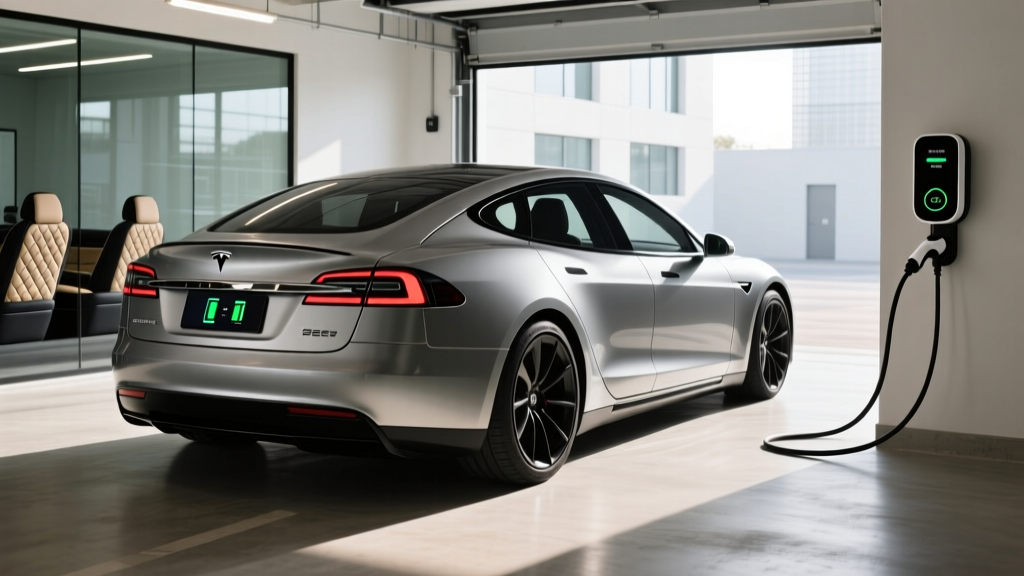
At home, the Tesla Wall Connector at 48 amps (11.5 kW) adds about 44 miles of range per hour. A full overnight charge from 20% to 90% takes approximately 6 hours on a 60-amp circuit. Installation typically costs $800–$2,000 depending on panel proximity and local permit requirements — always get a quote from a licensed electrician before committing.
Performance, Efficiency, and Daily Drivability
The tri-motor powertrain — one permanent-magnet motor up front and two induction motors in the rear — delivers 1,020 hp and enables torque vectoring across the rear axle. The 1.99-second 0-60 mph time (measured with a 1-foot rollout, as is industry convention) makes the Plaid one of the quickest production cars ever sold. For reference, the Lucid Air Sapphire (1,234 hp) hits 0-60 in 1.89 seconds, and the Porsche Taycan Turbo GT (1,092 hp) manages 2.1 seconds.
But the Plaid's real daily-driving advantage is its efficiency. At 116 MPGe combined (29 kWh/100 mi), it consumes less energy per mile than most competing performance EVs. The Porsche Taycan Turbo GT rates at roughly 79 MPGe combined, and the Lucid Air Sapphire at 105 MPGe combined. Over 12,000 annual miles, the Plaid's efficiency translates to roughly $580–$750 in home-charging costs (at $0.15/kWh national average), compared to $2,500+ in premium gasoline for a comparable BMW M5.
Ride quality is firm but compliant thanks to the adaptive air suspension, which offers adjustable ride height and damping. Track mode lowers the car and stiffens the dampers for circuit use, while the default comfort setting handles highway expansion joints and potholes without crashing through. Noise insulation is excellent — the Plaid is noticeably quieter at 80 mph than earlier Model S generations.
Pricing, Trims, and Federal Tax Credit Eligibility
| Item | Cost |
|---|---|
| Base MSRP (Model S Plaid) | $89,990 |
| Destination fee | $1,990 |
| 21" Arachnid wheels | $4,500 |
| Ultra Red premium paint | $2,500 |
| Full Self-Driving (Supervised) | $8,000 |
| As-tested total | ~$106,980 |
| Federal §30D tax credit | $0 (see below) |
| Estimated out-of-pocket | ~$106,980 |
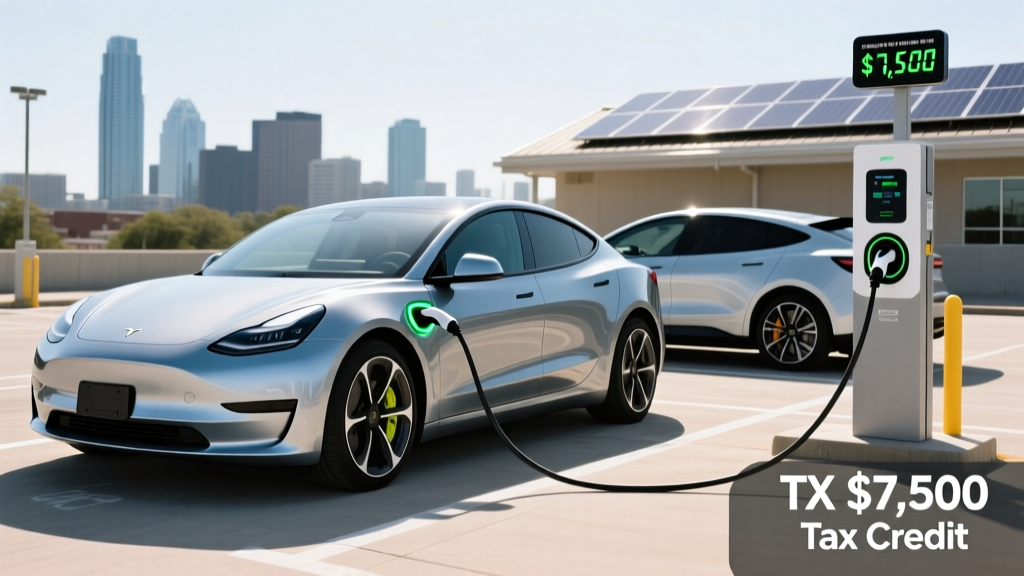
The 2026 Model S Plaid does not qualify for the federal §30D new clean vehicle tax credit. There are two reasons, either of which is disqualifying on its own:
- MSRP cap exceeded: §30D limits eligibility to sedars priced at or below $55,000 MSRP. The Plaid starts at $89,990 — well above this threshold. (IRS §30D rules)
- Buyer income cap: Even if the price qualified, §30D phases out for buyers with modified adjusted gross income (MAGI) above $150,000 (single) or $300,000 (joint). Most Plaid buyers exceed these limits.
- Battery sourcing: Critical mineral and battery component sourcing requirements further restrict eligibility for many vehicles, though this is moot given the MSRP disqualification.
Some state-level incentives may still apply — check your state's energy office or the AFDC state incentive database for current rebates. California's CVRP, for instance, has income-dependent rebates, but the Plaid's price often exceeds program caps.
Autopilot, FSD, and Smart Driving Features
Tesla Autopilot and Full Self-Driving (Supervised) require continuous driver attention and hands-on-wheel engagement. The driver is legally responsible for all vehicle operation. This is not autonomous driving. Only Level 4 services like Waymo operate without a human driver in defined geofenced areas.
The Model S Plaid ships with Tesla's latest HW4 (Hardware 4) sensor suite, including higher-resolution cameras and improved neural-net processing. Standard Autopilot provides adaptive cruise control and lane-centering on highways. The optional $8,000 Full Self-Driving (Supervised) package adds automatic lane changes, on/off-ramp navigation, traffic-light recognition, and city-street steering assistance.
In practice, FSD (Supervised) handles most highway scenarios competently but still requires intervention in construction zones, unprotected left turns, and poorly marked roads. City-street performance has improved substantially through 2025–2026 over-the-air updates, but it is not a substitute for an attentive driver. Expect to intervene 2–5 times per 30-minute urban drive based on current software versions.
Compared to GM's Super Cruise (hands-free on 750,000+ mapped miles of highway) or Ford's BlueCruise (hands-free in designated zones), Tesla's system offers broader geographic coverage but requires more active supervision. Each system has trade-offs — your preference depends on whether you value hands-free comfort (Super Cruise) or maximum route flexibility (FSD).
Competitor Comparison: Is the Plaid Worth It?
| Spec | Tesla Model S Plaid | Lucid Air Sapphire | Porsche Taycan Turbo GT |
|---|---|---|---|
| Base Price | $89,990 | $249,000 | $230,700 |
| Horsepower | 1,020 hp | 1,234 hp | 1,092 hp |
| 0-60 mph | 1.99 sec | 1.89 sec | 2.1 sec |
| EPA Range | 396 mi | 427 mi | 269 mi |
| Peak DC Charge | 250 kW | 300 kW | 320 kW |
| Battery | 95 kWh NMC | 112 kWh NMC | 105 kWh NMC |
| Efficiency | 116 MPGe | 105 MPGe | 79 MPGe |
| Rear Legroom | 35.4 in | 36.2 in | 32.5 in |
- You want sub-2-second acceleration under $100,000
- You prioritize Supercharger network access for road trips
- You value OTA software updates and integrated tech
- You need a practical daily driver with 396 miles of EPA range
- Budget is flexible ($249K+) and you want the absolute quickest sedan
- Maximum range (427 mi EPA) and rear-seat space are priorities
- Track handling, braking feel, and build quality matter more than straight-line acceleration
- You prefer traditional luxury dealership service over Tesla's mobile-ranger model
Ownership Costs and Long-Term Outlook
The Model S Plaid's 8-year/150,000-mile battery and drive-unit warranty provides solid long-term coverage with a guaranteed minimum 70% capacity retention threshold. Tesla's NMC cells have demonstrated strong longevity in real-world data — most Model S packs retain 90%+ capacity at 100,000 miles based on fleet telemetry.
Insurance costs are a real consideration. The Plaid's combination of high repair costs, aluminum-intensive construction, and extreme performance places it in a high-risk category. Expect annual premiums of $3,500–$5,500 depending on your driving record and state — roughly 2–3x a comparable Model 3. Always get an insurance quote before purchasing.
Depreciation is the silent ownership cost. The Model S historically loses 40–50% of its value in the first three years, driven by Tesla's frequent price adjustments and rapid technology iteration. If you plan to sell within 3–4 years, leasing may offer better financial predictability.
Tire costs add up quickly. The Plaid's 4,100-lb curb weight and instant torque wear through rear tires every 15,000–20,000 miles under normal driving. A set of four Michelin Pilot Sport 4S tires (the OEM fitment) runs approximately $1,600–$2,000 installed.
Pros and Cons
- 1.99-second 0-60 mph — hypercar acceleration at sedan pricing
- 396-mile EPA range covers most road trips with one charge stop
- Supercharger network remains the most reliable public charging option in North America
- Redesigned Plaid seats with active bolstering address prior comfort complaints
- 116 MPGe efficiency keeps charging costs low for the performance class
- Continuous OTA updates add features post-purchase
- No federal tax credit — $89,990+ MSRP exceeds §30D sedan cap
- Rear-seat space (35.4" legroom) trails Lucid Air and BMW i7
- 250 kW peak charge rate lags 800V competitors (Ioniq 5 at 350 kW)
- Insurance premiums are steep ($3,500–$5,500/yr)
- FSD (Supervised) at $8,000 still requires active driver attention
- High depreciation (40–50% in 3 years) hurts resale value
Frequently Asked Questions
What is the real-world range of the 2026 Tesla Model S Plaid?
Expect 310–340 miles on the highway in moderate temperatures, 250–280 miles in cold weather (below 30°F), and up to 380 miles in city driving with regenerative braking. The EPA sticker is 396 miles on 19-inch wheels, but real-world highway driving rarely matches that figure.
How fast does the Model S Plaid charge at home and on the road?
At home on a Level 2 Tesla Wall Connector (11.5 kW), you'll add about 44 miles of range per hour — a full overnight charge covers most daily needs. On a V3 Supercharger (250 kW peak), a 10–80% session takes roughly 30 minutes, though the charge curve tapers significantly above 60% SoC.
Does the 2026 Model S Plaid qualify for the federal EV tax credit?
No. The §30D tax credit caps eligible sedans at $55,000 MSRP, and the Plaid starts at $89,990. Additionally, buyer income limits ($150K single / $300K joint MAGI) would disqualify many Plaid purchasers regardless. Check your state's incentive database for any local rebates.
Are the 2026 Tesla Plaid seats actually comfortable now?
Yes — the redesigned sport seats with active pneumatic bolstering, 12-way power adjustment, and ventilation represent a major improvement over the 2021–2024 Plaid seats. They hold you firmly during hard cornering and remain comfortable on multi-hour drives. The rear seats are adequate for adults but not class-leading in legroom.
Is the Model S Plaid worth buying over the Lucid Air Sapphire or Porsche Taycan Turbo GT?
The Plaid offers the best value proposition: sub-2-second 0-60, 396-mile range, and Supercharger access for under $100,000. The Lucid Air Sapphire is faster and roomier but costs $249,000. The Porsche Taycan Turbo GT offers superior track handling and build quality but sacrifices range (269 mi EPA) and costs $230,700. For most buyers wanting daily-drivable extreme performance, the Plaid is the rational choice.
What does the Model S Plaid cost to own over 5 years?
Factor in roughly $3,500–$7,500 in home electricity (at $0.15/kWh, 12K miles/yr), $17,500–$27,500 in insurance, $4,000–$6,000 in tires, and $40,000–$50,000 in depreciation. Total 5-year cost of ownership typically lands between $75,000–$95,000 — expensive in absolute terms but competitive against six-figure gas performance sedans when fuel savings are factored in.