If you've searched for "rocket Tesla" in 2026, you've likely landed on one car: the Model S Plaid. With 1,020 horsepower, a sub-two-second 0-60 mph time, and a tri-motor all-wheel-drive powertrain, it remains the quickest production sedan Tesla sells. But speed is only part of the ownership equation. Buyers at this price point—north of $89,000—need to know about real-world range on the highway, how quickly the 100 kWh battery actually charges on a road trip, whether the federal EV tax credit applies, and how the Plaid stacks up against the Lucid Air Sapphire and Porsche Taycan Turbo GT.
I've spent extensive time with the Model S platform across multiple model years, including cold-weather highway runs and repeated DC fast-charging sessions at Tesla Superchargers and third-party networks. Below is a data-driven breakdown of what the 2026 Model S Plaid actually delivers when you leave the drag strip and hit real roads.
2026 Tesla Model S Plaid: Core Specifications
| Spec | Value |
|---|---|
| EPA Range | 396 miles (19" wheels) / 359 miles (21" wheels) |
| Battery Capacity | ~100 kWh usable, NMC (nickel-manganese-cobalt) chemistry |
| Drivetrain | Tri-motor AWD (1 front, 2 rear) |
| Horsepower | 1,020 hp |
| 0-60 mph | 1.99 seconds (manufacturer, with rollout subtracted) |
| Top Speed | 200 mph |
| Max DC Fast Charge | 250 kW peak |
| 10-80% DC Charge Time | ~28 minutes (at V3/V4 Supercharger) |
| Level 2 Home Charge Rate | 11.5 kW (~44 miles of range per hour) |
| Efficiency (EPA) | 120 MPGe combined / 28 kWh per 100 miles |
| Cargo Volume | 28.0 cu ft (rear trunk) + front trunk (frunk) |
| Seating | 5 passengers |
| Battery Warranty | 8 years / 150,000 miles (70% minimum capacity retention) |
| Base MSRP | $89,990 (excl. destination) |
Real-World Range: What the EPA Number Doesn't Tell You
Real-World Expectation: ~310-340 miles on mixed highway driving at 70-75 mph; ~260-290 miles in sub-freezing winter conditions; up to ~380 miles in moderate-temperature city/suburban driving with regen braking.
The 396-mile EPA figure for the Model S Plaid on 19-inch Tempest wheels is genuinely impressive for a 1,020-hp performance sedan. According to fueleconomy.gov, the Plaid achieves 120 MPGe combined. But the EPA test cycle includes significant low-speed and city driving, where regenerative braking recaptures energy and aerodynamic drag is minimal.
In sustained highway driving at 70-75 mph—where aerodynamic drag dominates and regen provides almost no benefit—expect to use roughly 30-32 kWh per 100 miles, translating to about 310-340 miles of usable range before you'd want to stop. Switching to the optional 21-inch Arachnid wheels drops the EPA rating to 359 miles, and real-world highway range shrinks proportionally to roughly 280-300 miles.
Cold weather compounds the loss. Lithium-ion NMC batteries lose efficiency in freezing temperatures due to increased internal resistance and the energy cost of cabin and battery heating. On a 30°F highway run, plan for 260-290 miles of practical range. The Model S includes a heat pump for cabin climate efficiency and battery preconditioning, which mitigates some of this loss, but physics still applies.
Charging Speed: Supercharger Network Advantage and Limitations
| Charge Level | Power | Speed (Miles Added/Hour) | Notes |
|---|---|---|---|
| Level 1 (120V) | ~1.4 kW | ~4-5 mi/hr | Emergency/trickle only |
| Level 2 (240V, 48A) | 11.5 kW | ~44 mi/hr | Home Wall Connector; full charge ~9 hrs |
| DC Fast (V3 Supercharger) | 250 kW peak | ~700+ mi/hr at peak | 10-80% in ~28 min; tapers above 80% |
| DC Fast (CCS adapter) | Up to 250 kW | Varies by station | Requires Tesla CCS adapter (included) |
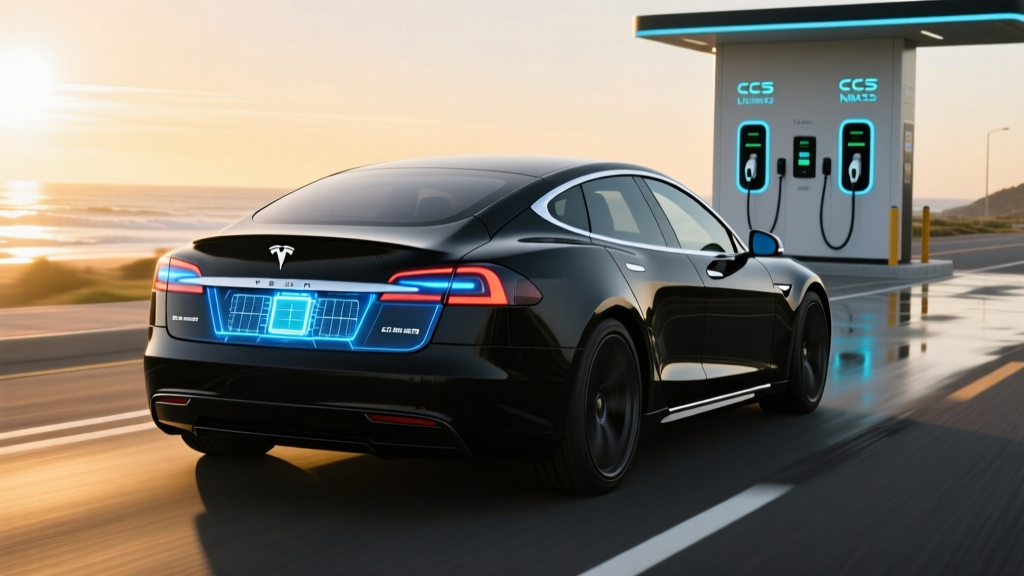
The Model S Plaid's peak 250 kW DC fast-charging rate is not class-leading in 2026. The Hyundai Ioniq 5 and Porsche Taycan (with 800V architecture) can accept 350 kW at compatible chargers. However, Tesla's V3 and V4 Supercharger network remains the most reliable and widespread DC fast-charging ecosystem in the U.S., and the Plaid consistently hits its 250 kW peak when preconditioned.
Here's what the charge curve actually looks like: the Plaid sustains near-peak power (220-250 kW) from roughly 10% to 45% state of charge. From 45-65%, it tapers to around 150-170 kW. Above 80%, it drops significantly—to under 60 kW—as the battery management system protects the NMC cells from lithium plating and thermal stress. That 10-80% session takes approximately 28 minutes at a V3 Supercharger.
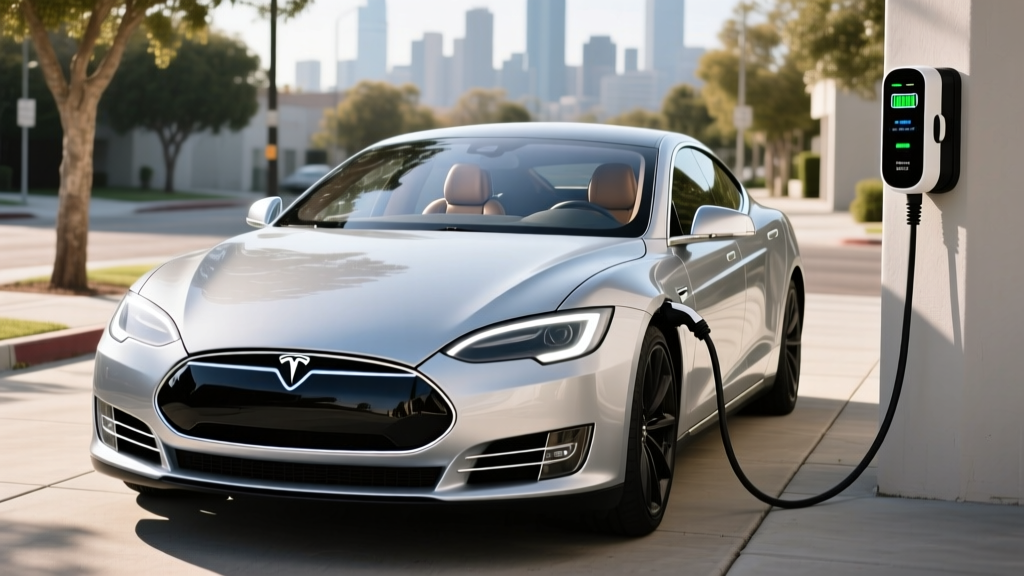
For home charging, Tesla's Wall Connector at 48 amps on a 240V/60A circuit delivers 11.5 kW, adding about 44 miles of range per hour. A full overnight charge from 10% to 100% takes roughly 9 hours. Most owners charging daily to 80-90% will find a nightly plug-in routine adds all the range needed for commuting. Note: Tesla recommends daily charging to 90% for NMC batteries (unlike LFP batteries, which tolerate 100% daily charging better).
Performance: The Rocket Tesla Delivers on the Promise
The tri-motor powertrain—one permanent-magnet motor up front and two carbon-sleeved rotored motors in the rear—produces 1,020 horsepower and delivers it with a immediacy that no internal-combustion engine can match. The 1.99-second 0-60 mph claim (with a one-foot rollout subtracted, as is standard for drag-strip measurement) is achievable on a prepped surface with Drag Mode engaged, which conditions the battery temperature and suspends for optimal weight transfer.
In real-world rolling starts and highway passing, the Plaid's torque vectoring across the rear axle provides exceptional traction without the torque-steer or wheelspin you'd expect from this power level. The adaptive air suspension adjusts ride height and damping based on drive mode, dropping the car for reduced drag at highway speed or raising it for speed bumps and steep driveways.
For context against key competitors: the Lucid Air Sapphire (1,234 hp) claims a 1.89-second 0-60 and 427-mile EPA range, starting at $249,000. The Porsche Taycan Turbo GT (1,092 hp with Launch Control) posts a 2.1-second 0-60 but a significantly lower 269-mile EPA range. The Plaid occupies a unique middle ground: hypercar acceleration at a fraction of the Sapphire's price, with substantially more range than the Taycan.
Pricing, Trims, and Federal Tax Credit Eligibility
| Trim | MSRP (excl. destination) | Est. After Federal Credit |
|---|---|---|
| Model S Long Range (Dual-Motor AWD) | $74,990 | See §30D eligibility below |
| Model S Plaid (Tri-Motor AWD) | $89,990 | See §30D eligibility below |
The 2026 Model S Plaid starts at $89,990 before the $1,995 destination fee. Options are limited to wheel selection (19" included; 21" adds cost), paint color (Pearl White included; other colors $1,500-$2,500), interior color ($1,000-$2,000), and Full Self-Driving (Supervised) capability at $8,000 or $99/month subscription.
Federal tax credit (IRS §30D) reality check: Under current IRS rules, the §30D new clean vehicle credit offers up to $7,500, but eligibility requires meeting all of the following:
- MSRP cap: Sedars must be under $55,000 MSRP. The Model S (starting at $74,990) exceeds this cap and does not qualify for the new-vehicle federal tax credit.
- Buyer income cap: AGI must not exceed $150,000 (single) / $300,000 (joint).
- Battery sourcing: Critical mineral and battery component requirements phase in annually through 2029.
- Point-of-sale transfer: Eligible buyers can transfer the credit to the dealer for an immediate price reduction—but only if the vehicle qualifies.
The Model S Plaid buyer should budget the full MSRP plus destination, options, and applicable state taxes. Some states offer their own EV incentives that may apply regardless of MSRP caps—check your state's energy or DMV website for details. Consult a tax professional for your specific situation.
Interior, Tech, and Daily Livability
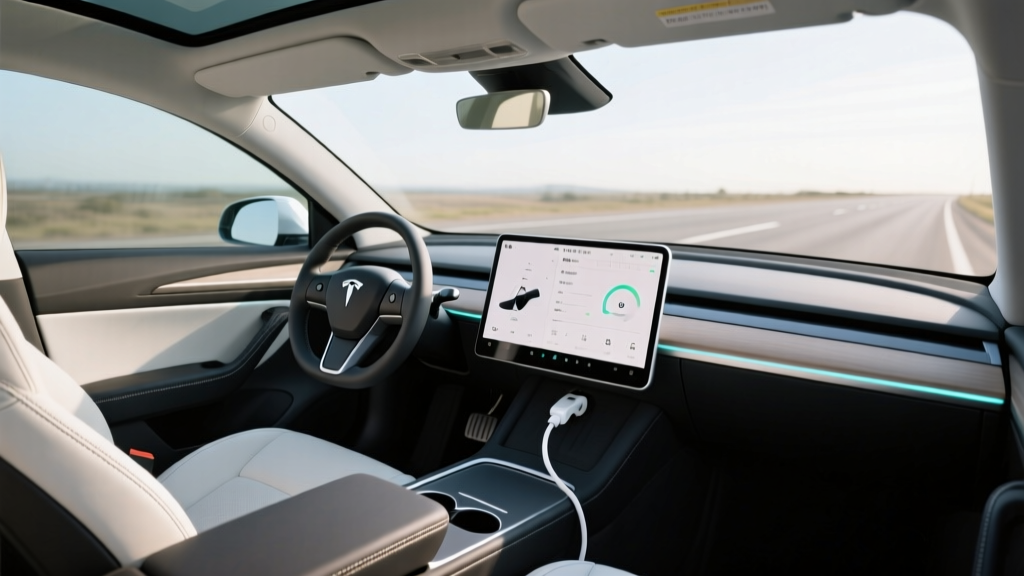
The Model S cabin in 2026 retains the minimalist, screen-centric layout Tesla introduced with the 2021 refresh. The 17-inch landscape center touchscreen handles navigation, climate, media, and vehicle settings, powered by a Ryzen-based infotainment processor that handles gaming and streaming without lag. A secondary 8-inch rear touchscreen controls rear climate and entertainment. The yoke steering wheel remains standard on the Plaid, though a conventional round wheel is now available as a no-cost option—a welcome change for drivers who find the yoke impractical at low speeds and parking lots.
Passenger space is generous for a performance sedan: front legroom measures 42.4 inches, rear legroom 35.5 inches. The rear seat comfortably fits two adults on longer trips, though the center position is best for a child due to the transmission tunnel hump (housing rear motor electronics). Cargo capacity totals 28.0 cubic feet in the rear trunk, supplemented by a front trunk (frunk) large enough for a carry-on bag or charging cables.
Driver assistance: The Model S ships with Tesla's Basic Autopilot (adaptive cruise control, lane centering, automatic emergency braking). Enhanced Autopilot ($6,000) adds auto lane change, autosteer on highways, and Smart Summon. Full Self-Driving (Supervised) at $8,000 adds traffic light/stop sign recognition and city street autosteering.
All Tesla driver-assistance features, including FSD (Supervised), are SAE Level 2 systems. The driver must remain fully engaged, keep hands on the wheel (or demonstrate attention via the cabin camera), and be prepared to take over at any moment. These are not self-driving systems. Only Level 4 robotaxi services like Waymo operate without a human driver in defined geographic zones.
Notable drawbacks: the yoke steering remains polarizing and impractical for three-point turns. Panel gap quality, while improved from earlier years, still doesn't match Porsche or Lucid at this price. There is no Apple CarPlay or Android Auto—Tesla's proprietary system is the only option. And road noise on coarse pavement is more noticeable than in the Lucid Air, which uses more acoustic insulation.
Who Should Buy the Model S Plaid?
- You want the fastest-accelerating sedan under $100,000 and value Supercharger network access for road trips.
- You need 300+ miles of practical highway range with room for four adults and luggage.
- You prioritize over-the-air software updates that add features post-purchase.
- You're not eligible for (or don't need) the federal tax credit at this price point.
- You want the absolute longest range in a luxury EV (Lucid Air Grand Touring offers 516 miles EPA).
- Build quality and traditional luxury materials are top priorities (consider Porsche Taycan or Mercedes EQS).
- You prefer Apple CarPlay integration or physical buttons for climate/media controls.
- You need DC charging faster than 250 kW for frequent long-distance travel (Porsche Taycan at 350 kW on 800V architecture).
Pros and Cons at a Glance
Pros
- 1.99-sec 0-60 mph — quickest sedan under $250K
- 396-mi EPA range (19" wheels) is exceptional for the power level
- Supercharger network reliability for road trips
- Continuous OTA updates add features over time
- Generous cargo and passenger space for a performance sedan
- 8-year/150,000-mile battery warranty
Cons
- 250 kW peak DC charge rate lags 800V competitors (350 kW)
- Does not qualify for §30D federal tax credit (MSRP exceeds $55K cap)
- Yoke steering impractical for low-speed maneuvers
- No Apple CarPlay or Android Auto
- Road noise on coarse pavement at highway speed
- FSD (Supervised) is Level 2, not autonomous—despite the name
Frequently Asked Questions
What is the real-world range of the Tesla Model S Plaid?
The EPA rates the Model S Plaid at 396 miles on 19-inch wheels. In real-world highway driving at 70-75 mph, expect 310-340 miles. In freezing weather, plan for 260-290 miles. City driving with regenerative braking can approach the EPA sticker in moderate temperatures.
How fast does the Model S Plaid charge at home and on the road?
At home on a Level 2 Wall Connector (11.5 kW), the Plaid adds roughly 44 miles of range per hour, with a full 10-100% charge taking about 9 hours. On a V3 Supercharger (250 kW peak), a 10-80% session takes approximately 28 minutes, though charging slows significantly above 80% to protect the NMC battery cells.
Does the 2026 Tesla Model S Plaid qualify for the $7,500 federal EV tax credit?
No. Under IRS §30D rules, new sedans must have an MSRP under $55,000 to qualify for the federal clean vehicle credit. The Model S starts at $74,990 and the Plaid at $89,990, both well above the cap. State-level incentives may still apply—check your state's energy office or IRS.gov for current rules.
Is the Model S Plaid worth buying over the Lucid Air Sapphire or Porsche Taycan Turbo GT?
The Plaid offers the best value proposition in the hyper-sedan segment: 1,020 hp and 396 miles of range for under $90,000. The Lucid Air Sapphire is faster (1,234 hp, 1.89 sec 0-60) and has more range (427 mi EPA) but costs $249,000. The Porsche Taycan Turbo GT offers superior build quality and 350 kW charging but only 269 miles of EPA range and a starting price above $230,000. For most buyers, the Plaid delivers 90% of the performance at a fraction of the cost.
How long will the Model S Plaid battery last?
Tesla warranties the Model S battery for 8 years or 150,000 miles, whichever comes first, with a minimum 70% capacity retention guarantee. NMC chemistry typically degrades 10-15% over the first 100,000 miles based on fleet data, with degradation slowing significantly after the initial break-in period. Avoiding frequent DC fast charging above 90% and minimizing time at 100% state of charge will extend long-term battery health.
Can the Model S Plaid tow?
Tesla does not publish an official towing capacity for the Model S Plaid, and the sedan is not designed or recommended for towing. Buyers needing EV towing capacity should look at the Model X (up to 5,000 lbs) or the Rivian R1T / Ford F-150 Lightning in the truck segment.