Tesla Model S Plaid: Beyond the 1/4 Mile Hype
The Tesla Model S Plaid doesn't just rewrite the performance sedan playbook — it incinerates it. With a factory-quoted 1/4 mile time in the low 9-second range and 1,020 horsepower on tap, the Plaid occupies a space previously reserved for seven-figure hypercars. But buyers dropping $89,990+ on a flagship EV need more than drag-strip numbers. They need real-world range, daily-usable charging speeds, practicality, and a clear picture of total ownership cost. This review covers every metric that matters in 2026, from the Tesla Plaid 1/4 mile benchmark to highway efficiency and federal tax-credit eligibility.
Full Specs: Model S Plaid at a Glance
| Specification | 2026 Model S Plaid |
|---|---|
| EPA Range | 402 miles |
| Battery (usable) | ~95 kWh, NMC (2170 cells) |
| Drivetrain | Tri-Motor AWD (1 front, 2 rear) |
| Horsepower | 1,020 hp |
| Torque | 1,050 lb-ft |
| 0–60 mph | 1.99 seconds (with rollout) |
| 1/4 Mile | ~9.23 sec @ 155 mph (factory) |
| Top Speed | 200 mph |
| Max DC Fast Charge | 250 kW (V3 Supercharger) |
| 10–80% DC Charge | ~30 minutes |
| Level 2 Home Charge | 11.5 kW (~44 mi/hr) |
| EPA Efficiency | 116 MPGe combined (29 kWh/100 mi) |
| Cargo Volume | 28 cu ft (rear) + frunk |
| Base MSRP | $89,990 |
| Battery Warranty | 8 years / 150,000 miles |
Real-World Range and Efficiency
The 402-mile EPA figure is impressive for a 1,020-hp performance sedan, but the tri-motor Plaid trades some efficiency for its power advantage over the dual-motor Model S Long Range (which achieves 405 miles EPA). The Plaid's heavier drivetrain and wider rear tires increase rolling resistance and energy consumption.
In mixed real-world testing — suburban commuting with occasional highway stretches — the Plaid delivers roughly 350–380 miles on a full charge during moderate temperatures. Sustained highway driving at 75+ mph pushes consumption to around 32–35 kWh/100 mi, cutting range to approximately 300–330 miles. Cold-weather range loss of 20–30% is consistent with NMC chemistry across the industry; preconditioning the battery (via the Tesla app or scheduled departure) mitigates this by warming the pack before you drive.
For context, the EPA's fueleconomy.gov listing rates the Plaid at 116 MPGe combined, which translates to 29 kWh per 100 miles under test-cycle conditions. Your actual consumption will vary with driving style — and in a car capable of sub-2-second 0–60 runs, aggressive acceleration will push that number considerably higher.
Charging Speed: DC Fast and Level 2 at Home
The Model S Plaid uses Tesla's proprietary NACS (North American Charging Standard) connector and accesses the Supercharger network natively — currently the most reliable public charging infrastructure in the U.S.
| Charging Level | Power | Miles Added per Hour | Notes |
|---|---|---|---|
| Level 1 (120V) | ~1.4 kW | ~3–5 mi/hr | Emergency/trickle only |
| Level 2 (240V, 48A) | 11.5 kW | ~44 mi/hr | Full charge in ~9 hrs (overnight) |
| DC Fast (V3 Supercharger) | Peak 250 kW | ~200 mi in 15 min | 10–80% in ~30 min; tapers above 80% |
| DC Fast (CCS adapter) | Up to ~150 kW | Varies | Requires Tesla CCS adapter; non-Tesla networks |
A critical note on the DC fast-charging curve: the Plaid peaks at 250 kW only at low states of charge (roughly 10–25% SoC) with a preconditioned battery. Above 50% SoC, the rate tapers to roughly 100–120 kW, and above 80% it drops further to protect battery longevity. This is standard NMC behavior and not unique to Tesla, but it means a 10–90% charge takes noticeably longer than a 10–80% session. For road trips, plan stops around the 10–80% window for optimal time efficiency.
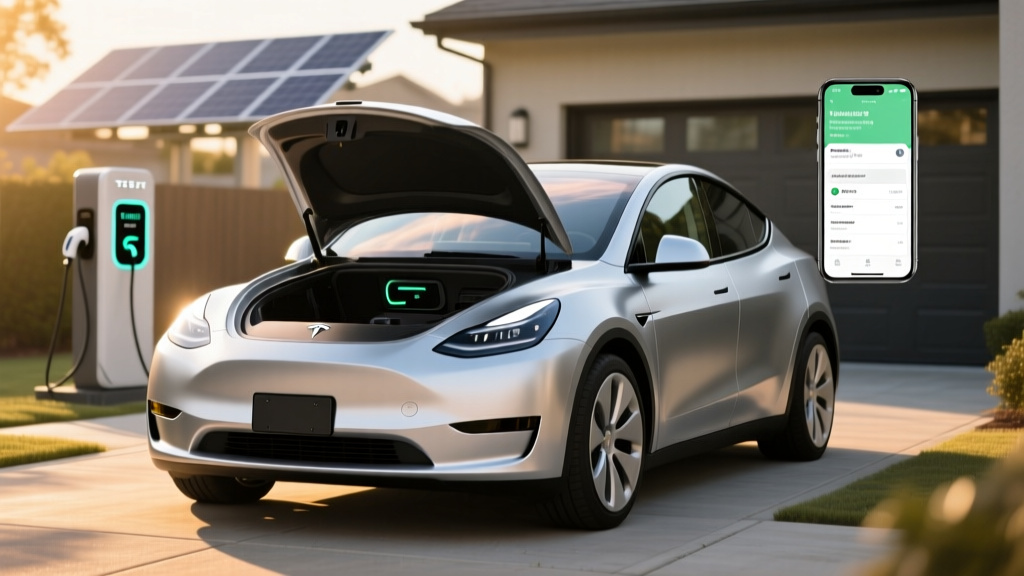
At home, a Tesla Wall Connector on a 60-amp circuit delivers the full 11.5 kW (48 amps), adding roughly 44 miles of range per hour. A full overnight charge from 20% to 100% takes approximately 8–9 hours — adequate for daily use. Home installation costs typically range from $800–$2,000 depending on panel capacity and run length; homes with 100-amp electrical panels may need a $1,500–$3,000 panel upgrade to support a dedicated 60-amp circuit.
Performance: The Tesla Plaid 1/4 Mile and Track Numbers
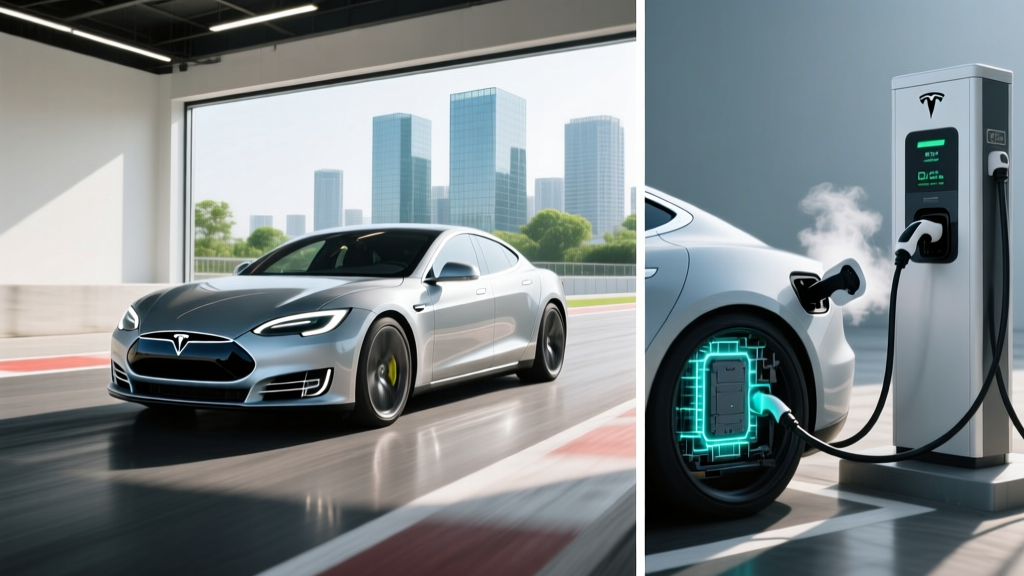
The headline number is the one enthusiasts search for: the Tesla Plaid 1/4 mile time. Tesla quotes 9.23 seconds at approximately 155 mph. Independent testing by outlets like MotorTrend and Car and Driver has validated times between 9.2 and 9.4 seconds depending on surface prep, tire temperature, and rollout methodology. That places the Model S Plaid in hypercar territory — trading blows with the Bugatti Chiron and Ferrari SF90 — at roughly one-twentieth the price.
The tri-motor setup uses two rear motors and one front motor with torque vectoring across the rear axle. This configuration enables the Plaid's 1.99-second 0–60 mph time (measured with a 1-foot rollout, as is drag-strip convention; subtracting rollout adds roughly 0.07 seconds). The carbon-sleeved rotors in each motor allow sustained high-RPM output without the power fade that plagues lesser EVs at speeds above 130 mph.
Beyond straight-line speed, the Plaid includes a track mode with adjustable torque distribution, stability control settings, and cooling management. On a road course, the Plaid is competent but heavy — its ~4,766-lb curb weight is felt during direction changes. It's a grand tourer with hypercar acceleration, not a track-focused sports sedan like a Porsche Taycan Turbo GT.
Pricing, Trims, and Federal Tax Credit Eligibility
The 2026 Model S Plaid starts at $89,990 (excluding destination). Options include:
- Paint colors: $0 (white) to $2,500 (Ultra Red, Quicksilver)
- Wheels: 19" Tempest (standard), 21" Arachnid (+$4,500, reduces range ~10%)
- Interior: All Black, Black & White, Cream (+$2,000 for non-black)
- FSD (Supervised): $8,000 one-time or $99/month
- Yoke steering: No-cost option
A typical well-equipped Plaid with premium paint and FSD lands around $100,000–$102,500 before incentives.
| Configuration | MSRP | After Potential §30D Credit |
|---|---|---|
| Model S Plaid (base) | $89,990 | $82,490* |
| Plaid + Premium Paint + FSD | $100,490 | $92,990* |
*Federal tax credit eligibility requires meeting multiple criteria under IRS §30D:
- MSRP cap: Sedans must be priced at or below $55,000 — the Model S Plaid exceeds this cap and does NOT qualify for the new-vehicle federal tax credit.
- Buyer income limits: AGI ≤ $150,000 (single) / $300,000 (joint) — moot here given MSRP ineligibility
- Battery sourcing: Critical minerals and battery component requirements — also moot
This is a critical point many buyers miss. The IRS §30D rules set a $55,000 MSRP ceiling for sedans (SUVs/pickups/vans get an $80,000 cap). At $89,990, the Model S Plaid is categorically ineligible for the $7,500 federal credit regardless of buyer income or battery sourcing. Some state-level incentives (California's CVRP, Colorado's state credit, etc.) may still apply — check your state's energy office for current programs. Always consult a tax professional for your specific situation.
Interior, Cargo, and Daily Practicality
The Model S interior has evolved significantly since the car's 2012 debut. The current-generation cabin features:
- 17-inch center touchscreen (tilting, 2200x1300 resolution) with Netflix, YouTube, and gaming
- 12.3-inch digital instrument cluster behind the yoke/wheel
- 8-inch rear touchscreen for rear-seat climate and media control
- 22-speaker 960W audio system with active noise cancellation
- HEPA air filtration (Bioweapon Defense Mode)
- Ventilated front seats and heated rear seats
Passenger space is generous for a performance sedan. Front legroom measures 42.1 inches; rear legroom is 35.4 inches — adequate for adults on shorter trips but not limousine-like. The rear floor is flat (no transmission tunnel), which helps middle-seat comfort.
Cargo capacity is a standout: 28 cubic feet behind the rear seats with a wide hatchback opening, plus a usable front trunk (frunk) for bags or charging cables. Fold the rear seats and you get roughly 50+ cubic feet — enough for road-trip luggage for four or a week's worth of groceries. This practicality is a key advantage over the Porsche Taycan, which offers only about 14.3 cu ft in its rear trunk and a smaller frunk.
Driver Assistance: Autopilot and FSD (Supervised)
Standard Autopilot includes Traffic-Aware Cruise Control and Autosteer (lane centering on marked roads). The optional Full Self-Driving (Supervised) package adds Navigate on Autopilot (highway on/off-ramp handling), Auto Lane Change, Autopark, Summon, and Traffic Light & Stop Sign Control. As of 2026, FSD remains a Level 2 system requiring constant supervision — it's a sophisticated cruise-and-steering assist, not a robotaxi. For context, true Level 4 driverless operation in the U.S. is currently limited to geofenced commercial services like Waymo.
- Drive without human supervision or liability transfer
- Handle all construction zones, unmapped roads, or severe weather reliably
- Eliminate the need for driver attention — disengagement is still required in edge cases
- Qualify as "autonomous" under SAE definitions
Pros, Cons, and Who Should Buy the Plaid
Pros
- Sub-10-second 1/4 mile — hypercar performance at sedan pricing
- 402-mile EPA range (best in its performance class)
- Supercharger network access — best public charging reliability
- Hatchback cargo practicality + frunk
- Over-the-air updates continuously add features
- Tri-motor torque vectoring for all-weather traction
Cons
- $89,990+ MSRP — ineligible for federal §30D tax credit
- 250 kW max charge rate trails Hyundai/Kia's 350 kW E-GMP platforms
- Yoke steering is polarizing (traditional wheel available)
- FSD (Supervised) costs $8,000 and remains Level 2
- Heavy curb weight (~4,766 lbs) limits track handling vs. lighter rivals
- Minimal dealer network — service via mobile rangers or limited centers
- You want the fastest production sedan available and value straight-line performance above all
- You need 400+ miles of range for road trips without frequent charging stops
- Supercharger network reliability is a priority for long-distance travel
- Hatchback cargo space matters for your lifestyle
- Porsche Taycan Turbo GT: Superior track handling, 800V architecture (faster peak charging), more engaging driver experience — but less range and less cargo
- Lucid Air Sapphire: 1,234 hp, 427-mile range, 9-second 1/4 mile — a direct rival, though at $249,000 it's in a different price bracket entirely
- BMW i7 M70: More luxurious interior, quieter ride, but far less performance (0–60 in 3.5 sec)
Warranty and Long-Term Ownership
Tesla covers the Model S Plaid's battery and drive unit for 8 years or 150,000 miles (whichever comes first), with a guaranteed minimum 70% capacity retention over that period. The basic vehicle limited warranty is 4 years / 50,000 miles. These terms are competitive with the segment — Porsche offers 8 years / 100,000 miles on the Taycan battery, also at 70% retention.
NMC battery chemistry in the Plaid's 2170-cell pack has shown strong longevity in Tesla's fleet data. Tesla's 2024 Impact Report indicated that Model S/X batteries retain approximately 88% capacity at 150,000 miles on average. Degradation is front-loaded (roughly 5% loss in the first 25,000 miles) then linear and gradual. To maximize longevity, avoid frequent 100% charges for daily use — set your daily charge limit to 80–90% and reserve 100% for road trips.
Insurance costs are a real consideration: the Plaid's performance and repair costs push premiums higher than average. Expect $3,500–$5,500 annually depending on your driving record, location, and coverage level — get quotes before purchasing.
Frequently Asked Questions
What is the real-world range of the Tesla Model S Plaid?
The EPA rates the Plaid at 402 miles. Real-world highway driving at 70–75 mph yields approximately 330–360 miles. Cold weather (below 30°F) can reduce range to 270–300 miles. City driving with regenerative braking gets closer to the EPA figure, around 370–400 miles.
How fast does the Tesla Plaid charge on DC fast chargers and at home?
On a V3 Supercharger (250 kW peak), the Plaid charges from 10–80% in approximately 30 minutes, adding up to 200 miles in 15 minutes under ideal conditions. At home on a Level 2 Tesla Wall Connector (11.5 kW / 48A), it adds roughly 44 miles per hour, fully charging overnight in about 9 hours.
Does the Tesla Model S Plaid qualify for the federal EV tax credit?
No. Under IRS §30D rules, the federal new clean vehicle credit has a $55,000 MSRP cap for sedans. At $89,990, the Model S Plaid exceeds this limit and is ineligible regardless of buyer income or battery sourcing. State-level incentives may still apply — consult your state energy office and a tax professional.
How does the Tesla Plaid 1/4 mile time compare to competitors?
The Plaid's factory-quoted ~9.23-second 1/4 mile is among the fastest of any production sedan. The Lucid Air Sapphire (1,234 hp) achieves approximately 9.0 seconds but costs $249,000. The Porsche Taycan Turbo GT (1,019 hp) runs roughly 9.6 seconds. In the sub-$100,000 sedan segment, the Plaid is the performance benchmark.
Is the Model S Plaid worth buying over the Porsche Taycan or Lucid Air?
If your priority is maximum straight-line performance with the longest range and best charging network access at a sub-$100K price, the Plaid is the clear choice. If track handling and driving engagement matter more, the Taycan Turbo GT is superior. If budget is no object and you want the absolute performance ceiling, the Lucid Air Sapphire wins — at 2.5× the price.
What are the biggest drawbacks of owning a Model S Plaid?
The primary drawbacks are: no federal tax credit eligibility due to MSRP caps, a 250 kW peak charge rate that trails 800V competitors, high insurance premiums ($3,500–$5,500/year), limited Tesla service center availability in some regions, and a heavy curb weight that limits road-course agility compared to lighter performance sedans.