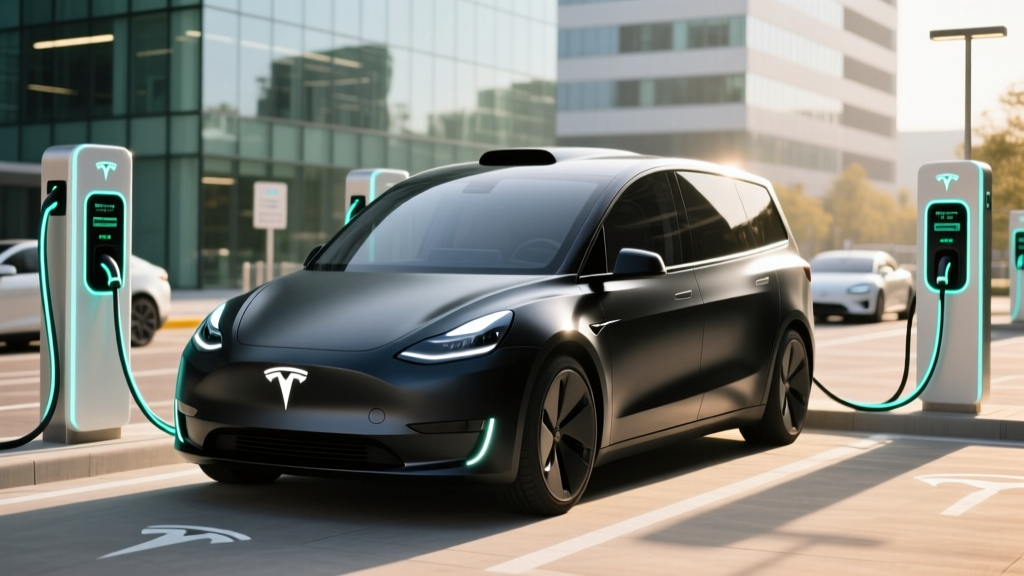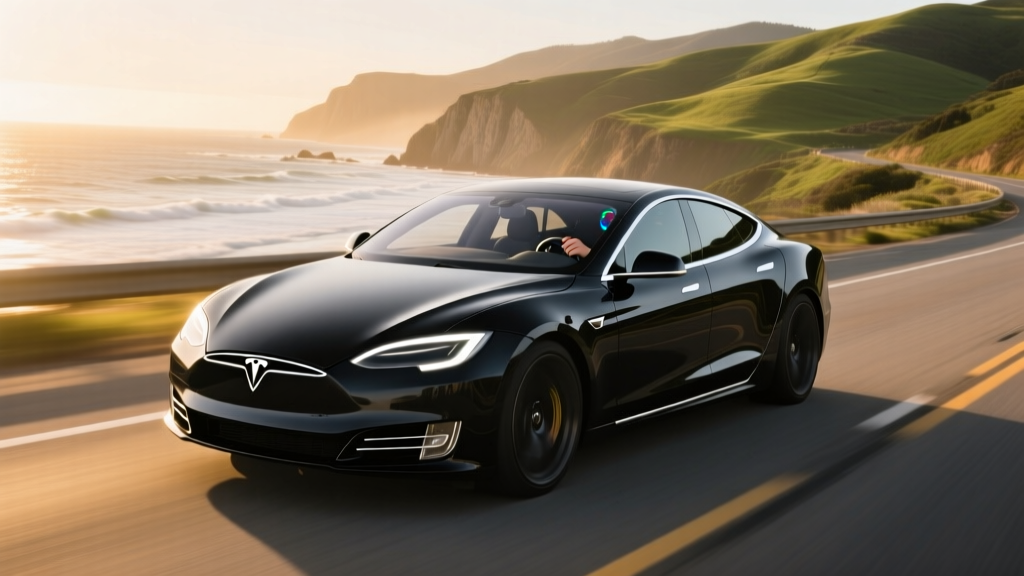
The Quick Verdict on the Tesla Model S Plaid
The Tesla Model S Plaid remains one of the fastest production sedans ever built — electric or otherwise. With a tri-motor all-wheel-drive powertrain producing 1,020 horsepower, Tesla claims a 1.99-second 0-60 mph time (with rollout subtracted) and, when equipped with the optional Track Package, a top speed of 200 mph. But buyers searching for the Tesla Plaid max speed should understand that hitting 200 mph requires specific hardware, specific conditions, and a significant price premium over the base Plaid.
Beyond the headline numbers, the 2025/2026 Model S Plaid is also a practical luxury sedan with up to 396 miles of EPA-estimated range, access to Tesla's Supercharger network, and a usable back seat and cargo area. This review breaks down every spec that matters — from real-world range and charging curves to tax-credit eligibility and whether the Plaid justifies its six-figure price against rivals like the Lucid Air Sapphire and Porsche Taycan Turbo GT.
Tesla Plaid Max Speed: 200 mph (With Caveats)
Let's address the keyword question directly. The Tesla Model S Plaid max speed depends on which configuration you order:
- Standard Plaid: Electronically limited to 200 mph — but only when equipped with the $4,500 Track Package, which includes carbon-ceramic brake rotors, upgraded calipers, and specific wheel/tire fitments rated for sustained high-speed use.
- Plaid without Track Package: Limited to 175 mph. This is the default top speed on the standard 19-inch Tempest or 21-inch Arachnid wheel configurations.
Achieving 200 mph in practice requires a long, controlled surface (such as a race track or closed runway), optimal tire temperatures, and sufficient battery State of Charge — Tesla recommends above 95% SoC for maximum power delivery. The tri-motor setup (one front, two rear) uses torque vectoring on the rear axle to manage traction, and the Plaid's heat-pump thermal management system works aggressively to keep the battery and drive units within their optimal temperature windows during repeated hard launches.
For context, the Lucid Air Sapphire (1,234 hp) claims a 205 mph top speed and a sub-2.0-second 0-60, while the Porsche Taycan Turbo GT with Weissach Package (1,019 hp in Launch Control) reaches 190 mph. The Plaid sits firmly in this hypercar-sedan tier, though at a lower starting price than either competitor.
| Spec | Value |
|---|---|
| EPA Range | 396 miles (19" wheels) |
| Battery Capacity | ~100 kWh usable (NMC lithium-ion) |
| Drivetrain | Tri-motor AWD (1 front, 2 rear) |
| Horsepower | 1,020 hp |
| 0-60 mph | 1.99 sec (with 1-ft rollout) |
| Top Speed (standard) | 175 mph |
| Top Speed (Track Pkg) | 200 mph |
| Max DC Fast Charge | 250 kW (V3 Supercharger) |
| 10-80% DC Charge | ~27 minutes |
| Level 2 Home Charging | 11.5 kW (~41 mi/hr) |
| MPGe (combined) | 120 MPGe |
| Efficiency | 28 kWh/100 mi |
| Cargo Volume | 28 cu ft (rear) + 3.1 cu ft (frunk) |
| Rear Legroom | 40.9 inches |
| Battery Warranty | 8 years / 150,000 miles (70% retention) |
| Base MSRP | $89,990 (before incentives) |
Real-World Range: What 396 EPA Miles Actually Means
EPA Estimate: 396 miles (19-inch Tempest wheels, Long Range dual-motor variant). The Plaid tri-motor is rated at 359 miles EPA on 19-inch wheels and 320 miles on 21-inch Arachnid wheels.
Real-World Expectation: Plan for 290-320 miles in mixed driving on the Plaid. Sustained highway speeds above 75 mph reduce range by roughly 15-20% versus the EPA sticker. In freezing temperatures (below 30°F), expect an additional 20-30% loss due to cabin heating demands and reduced battery chemistry efficiency — bringing effective range to approximately 220-260 miles in harsh winter conditions.
Tesla's NMC (nickel-manganese-cobalt) battery pack in the Plaid prioritizes energy density and power delivery over the LFP (lithium iron phosphate) chemistry found in the Model 3/Y Standard Range trims. NMC cells deliver higher specific energy, which is essential for a 1,020-hp sedan, but they are also more sensitive to sustained 100% State of Charge storage. Tesla recommends daily charging to 80-90% for NMC packs and saving 100% charges for road trips — a habit that meaningfully extends long-term battery health.
According to data from fueleconomy.gov, the Model S Plaid achieves 120 MPGe combined, which translates to 28 kWh per 100 miles. That efficiency figure is impressive for a 4,766-lb sedan with 1,020 hp, though it trails the Long Range dual-motor Model S (124 MPGe, 350 EPA miles) because the tri-motor Plaid carries roughly 150 additional pounds of drivetrain hardware and runs wider, stickier tires that increase rolling resistance.
Charging Speed: 250 kW Peak, but Read the Curve
The Model S Plaid supports up to 250 kW on Tesla's V3 Superchargers — the same peak rate as the Model 3 Long Range and Model Y. However, peak kW is not sustained kW. Here's what a typical Plaid DC fast-charging session looks like in practice:
| Charging Level | Power / Rate | Speed |
|---|---|---|
| Level 1 (120V household) | ~1.4 kW | ~5 miles per hour |
| Level 2 (240V home Wall Connector) | 11.5 kW | ~41 miles per hour |
| DC Fast (V3 Supercharger, 10-50%) | Up to 250 kW | ~180 miles in 15 min |
| DC Fast (V3 Supercharger, 10-80%) | Avg ~130 kW | ~27 minutes |
| DC Fast (V4 Supercharger) | Up to 250 kW (current vehicles) | Similar to V3 for Model S |
The critical detail: the Plaid's charge curve tapers significantly above 50% SoC. You'll see 250 kW only in a narrow band between roughly 10-30% SoC with a preconditioned battery. From 50-80%, the rate drops to approximately 80-100 kW. This is normal for NMC chemistry at high states of charge — the battery management system protects cell longevity by reducing current.
Preconditioning matters. When you navigate to a Supercharger in the Tesla navigation system, the car automatically warms or cools the battery to its optimal charging temperature before you arrive. Without preconditioning (for example, if you drive to a third-party CCS charger using an adapter), peak charge rates can drop by 30-50% in cold weather.
For home charging, Tesla's Gen 3 Wall Connector on a 60-amp circuit delivers 11.5 kW, adding roughly 41 miles of range per hour. An overnight charge from 20% to 80% takes approximately 6 hours — perfectly suited to a nightly routine. Installation costs vary widely; expect $500-$2,000 for the electrician and permit if your panel supports a 60-amp dedicated circuit, or $2,500-$5,000+ if a panel upgrade to 200A service is needed.
Performance Engineering: Tri-Motor AWD and Track Capability
The Plaid's tri-motor layout is the core of its performance identity. Two rear motors independently drive each rear wheel, enabling true torque vectoring — the car can send more torque to the outside rear wheel in a corner, effectively rotating the car and reducing understeer. The single front motor provides all-wheel-drive traction for launches and regenerative braking on the front axle.
Key performance specifications:
- 0-60 mph: 1.99 seconds (Tesla's figure includes a 1-foot rollout, standard in drag racing. Without rollout, expect ~2.1 seconds.)
- Quarter mile: 9.23 seconds at 155 mph (Tesla-claimed, verified by multiple independent tests)
- Top speed: 175 mph standard / 200 mph with Track Package
- Drag coefficient: 0.208 Cd — one of the lowest of any production sedan, contributing directly to range and high-speed stability
The Track Package ($4,500) is mandatory if you intend to use the Plaid's 200 mph capability. It includes carbon-ceramic brake rotors that resist fade during repeated high-speed braking — a necessity when a 4,766-lb vehicle decelerates from 150+ mph. Without carbon ceramics, the standard steel rotors are adequate for street driving and occasional spirited runs but will fade quickly on a road course.
The Plaid also features a unique "yoke" steering wheel as standard (a conventional round wheel is available at no extra charge). The yoke provides an unobstructed view of the 12.3-inch driver display but requires an adjustment period for low-speed maneuvers and hand-over-hand turns. For track use, the yoke's lock-to-lock ratio works well; for daily driving, preference varies.
Pricing, Trim Levels, and Federal Tax Credit Eligibility
The Model S Plaid is offered as a single trim level — there is no "Standard Range" or lesser Plaid variant. Pricing for the 2025 model year:
| Item | Cost |
|---|---|
| Model S Plaid Base MSRP | $89,990 |
| Track Package | +$4,500 |
| 21" Arachnid Wheels | +$4,500 |
| Full Self-Driving (Supervised) | +$8,000 |
| Destination Fee | $1,990 |
| As-Tested (with Track Pkg, 21" wheels) | ~$100,980 |
| Federal EV Tax Credit (§30D) | See eligibility below |
Does the Model S Plaid Qualify for the Federal EV Tax Credit?
This is where the news is unfavorable for most Plaid buyers. Under current IRS §30D rules, the federal clean vehicle credit has several requirements that create barriers for the Plaid:
- MSRP cap: Sedans must have an MSRP of $55,000 or less. The Model S Plaid at $89,990 far exceeds this cap, making it ineligible for the new-vehicle §30D credit.
- Buyer income limits: Even if the price cap were met, adjusted gross income cannot exceed $150,000 (single) / $300,000 (joint). Most Plaid buyers likely exceed these thresholds.
- Battery sourcing and critical minerals: Separate requirements govern the $3,750 battery component and $3,750 critical minerals portions of the credit. These are moot for the Plaid given the MSRP disqualification.
Bottom line: The Model S Plaid does not qualify for the $7,500 federal EV tax credit due to its MSRP exceeding the $55,000 sedan cap. Buyers should not factor any federal incentive into their purchase calculation. Some states offer additional incentives that may apply regardless of MSRP — check your state's energy office or the Alternative Fuels Data Center for current state-level programs.
Interior, Technology, and Daily Livability
The Model S interior received a significant refresh for the 2022+ generation and continues into 2025/2026 with a minimalist, screen-forward design. Key features:
- 17-inch center touchscreen (landscape orientation) — controls virtually all vehicle functions including climate, media, navigation, and vehicle settings. Resolution and responsiveness remain class-leading.
- 12.3-inch driver instrument cluster — displays speed, range, navigation, and ADAS visualization.
- Rear-seat 8-inch touchscreen — for rear passenger climate and media control, plus gaming.
- 22-speaker audio system with active noise cancellation — one of the best factory audio systems in any luxury sedan.
- Ventilated front seats, heated front and rear seats, heated steering wheel — all standard.
- Glass roof — provides an airy cabin but lacks a retractable shade; solar heat gain in summer is noticeable.
Cargo capacity: The Model S offers 28 cubic feet of rear cargo space (hatchback-style liftgate) plus a 3.1 cubic-foot front trunk (frunk). That's generous for the class — more than the Porsche Taycan (14.3 cu ft rear) and comparable to the Lucid Air (32 cu ft). The hatchback design makes loading bulky items practical.
Rear-seat space: 40.9 inches of rear legroom is ample for adults, though the floor-mounted battery pack raises the floor height, creating a somewhat knees-up seating position. Three adults across the rear bench is tight; two passengers are comfortable.
Driver Assistance: Autopilot and FSD (Supervised)
SAE Automation Level: Level 2. Tesla Autopilot and Full Self-Driving (Supervised) are Level 2 driver-assistance systems. The driver must remain fully attentive, keep hands on the wheel (or yoke), and be prepared to take over at any moment. These systems are not "self-driving" and do not absolve the driver of responsibility.
Standard Autopilot includes Traffic-Aware Cruise Control and Autosteer (lane centering) on highways. The optional FSD (Supervised) package ($8,000 one-time purchase or $99/month subscription as of 2025) adds automated lane changes, navigation-guided on/off-ramp transitions, traffic light and stop sign recognition, and city-street autosteer. FSD capability has improved substantially through neural-network-based software updates, but it remains a supervised assist system — not autonomous driving.
Who Should Buy the Tesla Model S Plaid?
Buy the Model S Plaid if:
- You want supercar-level acceleration in a four-door sedan you can drive daily
- You value access to the Tesla Supercharger network (17,000+ stations in North America) for road trips
- You want a 359-mile EPA range that makes 300-mile highway legs feasible without extreme range anxiety
- Track days or high-speed driving events are part of your plan (with the Track Package)
- You prefer over-the-air software updates that add features post-purchase
Consider alternatives if:
- You need the longest possible range — the Lucid Air Grand Touring offers 512 EPA miles
- You want traditional luxury materials and build quality — the Porsche Taycan or Mercedes EQS feel more premium inside
- You need a federal tax credit — no luxury sedan above $55,000 MSRP qualifies under current §30D rules
- You want a conventional round steering wheel without having to specifically request it
Pros, Cons, and the Competitive Picture
Pros
- 1,020 hp tri-motor AWD with 1.99-sec 0-60 — among the fastest production cars, period
- 359-mile EPA range (19" wheels) is excellent for a performance sedan
- Supercharger network access — the most reliable DC fast-charging ecosystem in North America
- 250 kW peak DC charging adds ~180 miles in 15 minutes
- Spacious hatchback cargo area (28 cu ft) and usable rear seat
- Over-the-air updates continuously improve the vehicle
- Class-leading drag coefficient (0.208 Cd) aids efficiency and high-speed stability
Cons
- 200 mph top speed requires $4,500 Track Package — not standard
- Build quality (panel gaps, interior trim consistency) still lags Porsche and Lucid
- No federal tax credit eligibility due to $89,990 MSRP exceeding $55,000 sedan cap
- 250 kW peak charging is not class-leading — Lucid Air supports ~300+ kW on compatible chargers
- Yoke steering wheel is divisive; requires adjustment for low-speed driving
- Glass roof without shade increases cabin heat in summer
- NMC battery requires 80-90% daily charge limit for longevity (unlike LFP packs)
Key Competitors at a Glance
The Plaid's most direct rivals are the Lucid Air Sapphire ($249,000, 1,234 hp, 427-mile EPA range, 205 mph top speed) and the Porsche Taycan Turbo GT ($230,000+, 1,019 hp, 272-mile EPA range, 190 mph). Both are substantially more expensive. The Plaid's value proposition is delivering 90-95% of their performance at roughly one-third the price, with the practical advantage of Supercharger access.
Frequently Asked Questions
What is the real-world range of the Tesla Model S Plaid?
The EPA rates the Plaid at 359 miles on 19-inch wheels and 320 miles on 21-inch wheels. In real-world mixed driving, expect 290-320 miles. Highway-only driving at 80+ mph reduces this to approximately 260-290 miles. In freezing weather, plan for 220-260 miles due to battery and cabin-heating losses.
How fast does the Model S Plaid charge at home and on the road?
At home on a Level 2 Tesla Wall Connector (11.5 kW), the Plaid adds about 41 miles of range per hour, or a full 20-80% charge in roughly 6 hours. On a V3 Supercharger, the peak rate is 250 kW, with a 10-80% session taking approximately 27 minutes. The charge curve tapers significantly above 50% SoC.
How much does the Model S Plaid cost after tax credits?
The base MSRP is $89,990, and the Model S Plaid does not qualify for the $7,500 federal §30D tax credit because it exceeds the $55,000 MSRP cap for sedans. Your out-of-pocket cost is the full purchase price plus destination, minus any applicable state or local incentives. A fully optioned Plaid with Track Package, 21-inch wheels, and FSD approaches $101,000 before taxes and fees.
Is the Tesla Model S Plaid worth buying vs. competitors?
If you want a sub-2-second 0-60 sedan with 350+ miles of range, Supercharger access, and a sub-$100,000 starting price, the Plaid has no direct rival at its price point. The Lucid Air Sapphire is faster and has more range but costs $249,000. The Porsche Taycan Turbo GT offers superior build quality and chassis dynamics but starts above $230,000 and has less range. For the money, the Plaid is the performance-per-dollar leader in the hyper-sedan segment.
What are the biggest pros and cons of the Model S Plaid?
The biggest pros are its extraordinary acceleration, strong range, Supercharger network access, and practical sedan packaging. The biggest cons are the required Track Package for 200 mph capability, panel-gap quality that doesn't match its price, no federal tax credit, and the divisive yoke steering wheel.
Does the Model S Plaid qualify for the federal EV tax credit?
No. Under current IRS §30D rules, new clean vehicle credits are limited to sedans with an MSRP of $55,000 or less. The Model S Plaid starts at $89,990, well above this threshold. Buyer income caps ($150K single / $300K joint) and battery-sourcing requirements are additional hurdles, though the MSRP cap alone disqualifies the Plaid. Always verify current rules at irs.gov, as regulations can change.
How does the Plaid's battery warranty compare?
Tesla covers the Model S Plaid battery and drive unit for 8 years or 150,000 miles, whichever comes first, with a minimum 70% capacity retention guarantee. This is competitive with the industry standard (most EVs offer 8 years / 100,000 miles). Real-world NMC degradation data from Tesla's fleet suggests approximately 10-15% capacity loss over 150,000 miles when owners follow recommended charging practices (daily 80-90% limit, 100% only for trips).